Mallards on Iowa River Backwaters
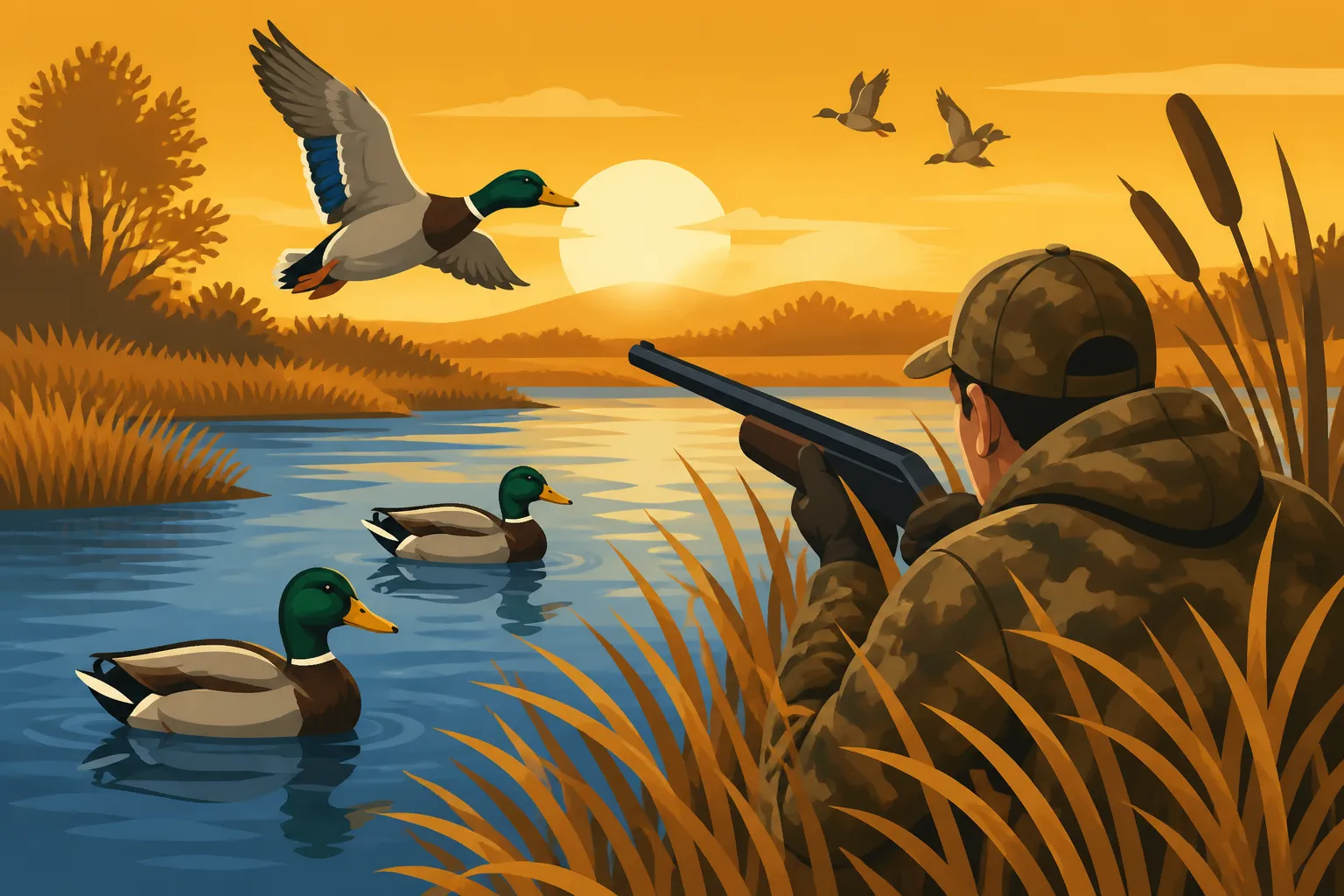
Hunting mallards on Iowa's expansive river backwaters can feel like a riddle wrapped in an enigma, especially when those cunning greenheads seem to vanish or appear exactly where you aren't. It's a challenging but incredibly rewarding pursuit, offering some of the most memorable waterfowl experiences Iowa has to offer, if you know how to navigate these often-tricky environments. This guide is dedicated to unraveling the mysteries of pursuing mallards in these unique river systems, providing you with the insights and tactics to increase your odds of success and make your time on the water truly count.
Understanding Iowa's River Backwaters for Mallards
Iowa's major river systems, like the Mississippi and the Missouri, along with their numerous tributaries, aren't just channels for water; they're intricate ecosystems. For mallards, these backwaters are vital stopovers and wintering grounds, providing both food and refuge. But what makes these areas so attractive, and how do they change throughout the hunting season?
What Defines a River Backwater System for Ducks
Think of a river backwater as the quieter, often shallower parts of a river system that aren't directly in the main current. These can be old oxbows, sloughs, abandoned river channels, flooded timber, or even expansive marshes connected to the main flow. Unlike a static pond or lake, backwaters are dynamic, influenced heavily by the river's ebb and flow. They often feature abundant aquatic vegetation, submerged timber, and shallower depths perfect for dabbling ducks like mallards to feed. The relative calm of these areas provides a crucial resting and feeding habitat away from the powerful current and constant boat traffic of the main channel. Mallards prefer these spots because they offer easier access to food sources, protection from strong winds, and safer roosting areas.
The presence of diverse food sources is a huge draw. Backwaters are often rich in submerged aquatic vegetation, seeds from smartweed or millet, and various invertebrates, all of which are on a mallard's menu. Unlike diving ducks that chase fish, mallards are dabblers, meaning they tip up their tails to feed on the surface or just beneath it. This makes the shallower, often mucky bottoms of backwaters ideal foraging grounds. The structure of these areas, with deadfall, standing timber, and varied shoreline, also provides crucial escape cover from predators and hunters alike. It's an all-in-one package for a weary migrating duck looking for sustenance and security.
Seasonal Changes and Water Levels
The biggest variable in Iowa's river backwaters is undoubtedly water level. Early in the season, during warmer September and October days, water levels might be relatively stable, and the vegetation is still thick. As fall progresses and particularly after heavy rains or snowmelt upstream, river levels can fluctuate dramatically. A rising river can flood new areas, creating temporary feeding opportunities in normally dry fields or timber, but it can also make familiar spots too deep or fast-moving. Conversely, falling water levels can expose mud flats, drawing in ducks for easy picking of seeds and invertebrates, but also making access difficult for hunters. Keeping an eye on river gauges is not just helpful; it's absolutely critical for successful backwater hunting. A spot that was hot last week might be bone dry or too flooded today.
The changing seasons also dictate food availability. In early fall, natural vegetation is abundant. As winter approaches, many plants die back, and the ducks shift their focus to more consistent food sources, often waste grain in flooded fields adjacent to the backwaters or areas with hardier seeds. Freezing and thawing cycles add another layer of complexity. Early ice can push birds out of smaller, shallower backwaters, concentrating them on larger, deeper sections that remain open or forcing them to migrate further south. Later in the season, consistent ice cover can shut down most backwater opportunities, but sometimes persistent current will keep small pockets open, becoming magnets for the remaining birds. Understanding these dynamics is paramount to consistently finding birds. You can learn more about general duck movement in different conditions in Iowa Duck and Goose Migration Timing.
Key Flyways and Migration Patterns
Iowa sits smack in the middle of the Mississippi Flyway, a superhighway for migrating waterfowl. Mallards use these river backwaters as critical refueling and resting points on their journey south. While the main river channel might serve as a broad migratory corridor, individual backwater complexes act as preferred pit stops. Ducks often follow the contours of the main river, but they'll peel off into the quieter backwaters to rest and feed. Understanding these micro-flyways within the larger system is key. Ducks tend to follow consistent routes, especially when moving between roosting areas (often large, undisturbed bodies of water) and feeding areas. These routes might be over specific timber lines, along natural levees, or through open stretches of water.
Mallards aren't just passing through; many will spend weeks or even months in Iowa's backwaters if conditions are favorable. Local populations mix with migrants as the season progresses. Weather fronts play a huge role in triggering migration waves. A strong cold front pushing down from the north will bring fresh birds, often filling up previously empty backwaters. Conversely, a prolonged warm spell can hold birds in northern areas, delaying their arrival in Iowa. Paying attention to weather patterns both locally and to our north can give you a significant advantage in predicting when and where new waves of mallards might appear. This regional perspective is something savvy hunters always factor into their scouting and planning. For more on waterfowl in general, look into Mississippi River Backwater Waterfowl.
Scouting and Location Strategies for Backwater Mallards
Finding the "X" on backwater mallards is rarely a matter of luck. It's a dedicated process of observation, analysis, and getting your boots (or waders) wet. The sheer scale and complexity of river backwater systems can be overwhelming, but with a systematic approach, you can narrow down your search and identify prime hunting locations.
E-Scouting and Map Analysis
Before you even leave your couch, modern technology can give you a significant head start. High-resolution satellite imagery is an invaluable tool for identifying potential backwater hotspots. Look for areas with a mix of shallow water, emergent vegetation, and timber. Oxbow lakes, sloughs, and areas where small creeks feed into larger backwaters are often productive. Pay close attention to features that might act as pinch points or natural funnels for duck movement, such as narrow timber strips, islands, or changes in water depth that create natural travel lanes. I often spend hours poring over maps, marking potential access points and areas that look "ducky."
A detailed mapping platform, like GoHunt, can layer public land boundaries, topo maps, and satellite imagery, making this process even more efficient. You can identify potential public access points, cross-reference them with current water levels (if the app integrates that data, or by checking external river gauges), and even mark areas that might be too shallow for a boat, indicating good wading opportunities. Looking at historical imagery can also show you how water levels fluctuate and where vegetation typically grows. It's about building a mental map before you step foot on the ground, allowing you to prioritize your in-person scouting efforts. Remember, the goal isn't just to find water, but to find water that has the right depth, cover, and food to attract and hold mallards.
Boots-on-the-Ground Reconnaissance
E-scouting is just the first step; nothing beats good old-fashioned boots-on-the-ground reconnaissance. This means physically visiting potential spots, preferably a few days before you plan to hunt, and ideally around dawn or dusk when ducks are most active. Look for fresh sign: tracks in the mud, droppings, and most importantly, listen for vocalizations. If you hear mallards chattering and feeding, you're likely in the right spot. Observe how ducks enter and exit the area. Are they flying low over the timber, or coming in high from an open field? This intelligence is crucial for setting up decoys and positioning your blind effectively.
When scouting, pay attention to the little details. Is there a subtle current pulling through a certain channel? Are there submerged logs or stumps that could foul up decoys or your boat? What's the bottom like – hard sand, soft muck? These factors will influence your hunting setup and access strategy. Also, consider human pressure. If you see numerous duck blinds or signs of heavy traffic, those birds might be educated and wary. Sometimes, the less accessible spots, requiring a longer walk or more effort, are the ones that hold unpressured birds. Learn how to minimize your impact during scouting with tips from Scouting Iowa Public Land Before the Opener.
Here's a quick guide to backwater scouting signs:
| Sign Category | Specific Indicators | What it Tells You |
|---|---|---|
| Visual | Fresh droppings on banks/logs | Active feeding/resting area |
| Water ripples/splashes (no wind) | Ducks are actively dabbling/moving | |
| Plumage feathers on water/bank | Ducks are present, likely preening | |
| Tracks in soft mud | Regular entry/exit points | |
| Auditory | Mallard quacks, feed calls | Birds are comfortable and feeding |
| Whistling wings (early morning/late evening) | Ducks flying into/out of the area | |
| Habitat | Shallow water (6-18 inches) | Ideal dabbling depth |
| Emergent vegetation (smartweed, millet) | Food source, cover | |
| Submerged timber/cover | Roosting, protection from elements | |
| Wind-protected pockets | Resting areas, especially on windy days |
Reading Wind and Current
Wind and current are your best friends and worst enemies in backwater duck hunting. Mallards almost always land and take off into the wind. This knowledge is paramount for decoy placement and blind setup. You want your decoys positioned so that incoming birds will cup their wings and commit to landing into the wind, directly in front of your blind. If the wind is at your back, ducks will be landing behind you, potentially flaring or landing out of range. Understanding Reading Wind on a River Backwater can truly elevate your hunting game.
The current, even in backwaters, can be subtle but significant. It influences how decoys move, how ducks orient themselves, and even how your boat handles. A gentle current can make your decoys look more lifelike, bobbing and weaving naturally. However, a strong current can tangle lines, pull decoys out of position, and make boat control difficult. When scouting, observe small debris or leaves on the water to gauge the current's direction and speed. You might find that one side of a slough has a noticeable current, while the other is relatively still. This can dictate where ducks prefer to sit and where you should set up your spread. Don't underestimate the power of these invisible forces; mastering their interpretation is a hallmark of a successful backwater hunter.
Effective Hunting Tactics for Iowa River Backwater Mallards
Once you've done your scouting homework and found a promising spot, it's time to put a plan into action. Hunting backwater mallards effectively involves a careful blend of decoy strategy, calling, and concealment tailored to the specific environment.
Decoy Spreads and Placement
Decoy placement in river backwaters is more art than science, constantly adapting to the wind, current, and terrain. The goal is to create a realistic, inviting scene that mimics a relaxed flock of mallards. For most backwater scenarios, a spread of 1-2 dozen mallard decoys, mixed with drakes and hens, is a good starting point. You might add a few diver decoys (like bluebills or buffleheads) on the fringes to simulate a mixed flock, which can sometimes attract wary mallards. Consider adding a few feeder butt decoys to suggest contented ducks actively foraging.
The most common and effective spreads include the "J-hook" or "U-shape" with your blind at the bend or top of the "U." This creates a landing zone directly in front of you. Always place your decoys upwind of your blind, leaving an open water "kill hole" where you expect ducks to land. If there's current, set your decoys on longer lines, perhaps with a slight downstream bias, so they swing naturally and don't clump up. Motion decoys, like spinning wing decoys or jerk strings, can add crucial realism, especially on calm days. Position spinning wing decoys slightly away from the main spread, perhaps on a log or a muskrat house, to simulate ducks coming in for a landing. Remember to keep your kill hole clear of any obstacles that could prevent ducks from landing. For detailed decoy strategies, you can refer to Decoying Ducks on a Backwater Slough.
Calling Strategies for Mallards in Backwaters
Calling is the voice of your spread, and in backwaters, less is often more. Mallards in these quieter, often more secluded spots can be very responsive to subtle, realistic calling. Start with soft greeting calls and feed chuckles. If ducks are circling, a series of short, excited comeback calls can often seal the deal. Avoid overcalling, especially with loud, aggressive calls, as this can make wary birds suspicious. Listen to the ducks; let them tell you what they want to hear. If they respond to a feed call, give them more of that. If they seem interested in a long hail, try that.
Vary your calls and volume. On calm mornings, soft quacks carry far enough without sounding unnatural. On windy days, you might need a bit more volume, but always aim for realism. A good calling sequence might start with a low, contented feed chuckle to passing birds, then a soft greeting if they show interest. If they turn, a few short, sharp comeback calls, and then back to soft feed chuckles as they work their way closer. The goal is to reassure them that your spread is a safe, inviting place to land. Practice your calling, not just the sounds, but the rhythm and cadence, to sound like a real flock of mallards.
Concealment and Blind Selection
Effective concealment is non-negotiable for backwater mallards. These ducks are incredibly sharp-eyed, especially if they've been hunted before. Your blind needs to blend seamlessly into the natural surroundings. For backwater hunting, options range from natural cover to portable blinds. If you're in flooded timber, a simple setup against a large tree, breaking up your outline, might be all you need. In areas with emergent vegetation like cattails or reeds, a layout blind or a portable panel blind brushed in heavily can be very effective. The key is to disappear.
Think about your approach to the blind too. Your access route should be as stealthy as possible, minimizing disturbance to the area. If you're wading, move slowly and quietly. If you're using a boat, approach from a direction that won't spook birds already in the backwater. The outline of your boat, especially if left in open water, can be a dead giveaway. Consider tucking it into heavy cover or covering it with a camo net. Don't forget about your face and hands – wear a face mask or paint, and gloves. Any shine or unnatural movement can flare ducks at the last second. Remember, the best blind is one the ducks don't even know is there. You might find some adaptable ideas in Layout Blinds in Iowa Stubble even if the environment is different.
Essential Gear and Safety for Backwater Hunts
Hunting Iowa's river backwaters often means dealing with cold water, unpredictable conditions, and potentially challenging terrain. Having the right gear and prioritizing safety are crucial for a successful and enjoyable hunt.
Waders, Boats, and Retrieval
Your choice of conveyance and attire for backwater hunting largely depends on the specific spot. For shallower backwaters with good wading access, a sturdy pair of chest waders is indispensable. Opt for insulated waders if hunting in cold weather, as standing in chilly water can quickly lead to discomfort. Ensure they fit well and allow for easy movement over uneven terrain. Good wader boots with aggressive tread are important for navigating muddy, slippery bottoms. You can get more insight into choosing footwear for wet conditions from Boots for Wet Iowa Timber.
For deeper backwaters or those requiring more extensive travel, a shallow-draft boat – like a jon boat or a canoe/kayak – might be necessary. Equip it with a reliable motor (electric trolling motors are often ideal for quiet access) and ensure you have all required safety gear: life jackets for everyone, oars, an anchor, and a light. A retriever dog is an invaluable asset for backwater hunts, not only for efficient bird recovery but also for minimizing disturbance and reducing the risk of losing downed birds in thick cover or current. If you don't have a dog, a sturdy retrieving pole or an extra-long landing net can aid in getting birds out of tricky spots. Always prioritize safe navigation and retrieval, especially in unfamiliar or moving water. More on general water access can be found in Wading Access on Iowa Streams.
Cold Weather Gear and Layering
Iowa's late fall and winter weather can be brutally cold, especially when combined with water. Layering is your best defense against the chill. Start with a good base layer that wicks moisture away from your skin, followed by insulating mid-layers like fleece or down. Your outer layer should be waterproof and windproof, protecting you from the elements. Don't forget your extremities: a warm hat, insulated gloves (perhaps a thin pair for calling and shooting, and a heavier pair for between flights), and warm, waterproof socks are critical. Hand warmers can be a lifesaver, tucked into gloves or pockets.
Sitting still in a blind, perhaps with wet feet or hands, can quickly lead to hypothermia. Always err on the side of bringing too many layers. It's easier to shed a layer if you get warm than to conjure one out of thin air if you're freezing. Consider bringing a small thermos of hot coffee, tea, or soup. Staying hydrated and fueled will also help your body generate heat. For a more comprehensive guide to dressing for the elements, check out Cold Weather Clothing for Iowa Deer Season.
Safety Considerations
Safety should always be your top priority on any hunt, but especially when dealing with water and cold. Always let someone know where you're going and when you expect to return. Hunt with a partner if possible, especially in remote or challenging backwater areas. Wear your life jacket, even if you're a strong swimmer, particularly when traveling in a boat or wading in unfamiliar water. The risk of falling into cold water, even if shallow, can quickly become life-threatening due to hypothermia.
Be aware of ice conditions. Early or late season ice can be thin and extremely dangerous. Never venture onto ice you're not absolutely sure is safe. If using a boat, be mindful of submerged obstacles like logs or stumps that can damage your propeller or hull. Carry a first-aid kit, a fully charged cell phone (in a waterproof bag), and a whistle. Know the location of the nearest emergency services. If hunting with others, be acutely aware of shooting lanes and always identify your target and what's beyond it. River backwaters often have varying depths, hidden currents, and slippery bottoms – take your time, be cautious, and don't take unnecessary risks.
Disclaimer
This article is for general informational purposes only and does not constitute professional advice. Laws, prices and regulations vary by location and change over time. Consult a qualified professional for guidance on your specific situation.