Hanging Stands on Iowa Public Ground
Finding the perfect spot for a deer stand on public ground in Iowa can feel like cracking a secret code. You're trying to outsmart mature whitetails, but you're also navigating regulations, respecting other hunters, and constantly wondering if that perfectly placed hang-on will even be there tomorrow. This guide dives deep into the art and science of hanging stands on Iowa's public hunting lands, giving you the practical strategies and regulatory insights needed to hunt effectively and responsibly.
Understanding Iowa's Public Land Regulations for Stands
Hunting public land successfully in Iowa starts with a deep understanding of the rules. It's not enough to just know what you can do; you need to know the nuances of what's allowed and, just as importantly, what's often overlooked. Ignoring these details can lead to fines, confiscated gear, or even losing your hunting privileges.
Permissible Stand Types and Use Periods
When it comes to putting up a stand on Iowa public ground, you can't just throw up anything you want and leave it indefinitely. The Iowa Department of Natural Resources (DNR) has specific rules to ensure fairness, minimize environmental impact, and prevent property abandonment. Generally, portable tree stands and ground blinds are permitted. The key word here is "portable." This means no permanent structures or anything that causes lasting damage to the tree or land. This often rules out stands that require lag bolts or heavy-duty drilling, focusing instead on designs that use straps, chains, or ropes.
Think about the structure itself. Is it designed to be easily removed? Does it leave minimal impact? These are the questions to ask. For example, some older, heavier ladder stands might be considered too permanent if left for extended periods, even if secured with straps. Always consult the current Iowa Hunting Regulations booklet or the DNR website for the most up-to-date specifics. The rules regarding when stands can be put up and when they must be removed are also critical. Often, stands can only be placed a certain number of days before a season opens and must be removed shortly after it closes. This prevents stands from becoming abandoned eyesores or safety hazards for others using the land. Ignoring these dates means your stand could be removed by the DNR, and you could be cited. It's a real bummer to find your prime setup gone because you missed a deadline.
Marking and Leaving Stands Overnight
This is where many public land hunters run into trouble. Iowa has clear guidelines for stands left overnight. Generally, any stand left unattended on public land must be clearly marked with the hunter's Iowa DNR customer number or name and address. This isn't just a suggestion; it's a requirement. The idea is that if a stand is found, authorities can identify its owner. Not marking your stand is an invitation for it to be removed as abandoned property. It's not uncommon for DNR officers to patrol public hunting areas and check stands for proper identification.
Beyond the identification, there are also rules about how long a stand can remain in place. For instance, stands might be allowed for the entire deer season or specific segments, but often must be removed within a certain timeframe after the season concludes. The goal is to prevent the long-term occupation of prime spots and ensure that public resources are shared. While it might be tempting to leave a stand out all year to "claim" a spot, doing so is almost always against regulations and will likely lead to its confiscation. If you're wondering about the specifics, you can often find details on "Overnight Stand Storage on Public Ground" in the Iowa hunting regulations. Always err on the side of caution and adhere strictly to these rules to avoid any issues.
Respecting Boundaries and IHAP Rules
Iowa's public land system is a mosaic of different types of properties, each with its own quirks. You have state forests, wildlife management areas (WMAs), federal lands, and the increasingly popular Iowa Habitat and Access Program (IHAP) tracts. While they all fall under "public land," the specific rules can vary. For example, some WMAs might have unique restrictions on vehicle access or certain hunting methods that other public lands don't. It's your responsibility to know the specific regulations for the piece of ground you're hunting. Using tools like the Iowa DNR hunting atlas or private land apps like GoHunt can be invaluable for understanding property boundaries and specific access rules.
One area that causes particular confusion is IHAP land. These are privately-owned lands leased by the DNR to provide public hunting access. While they offer fantastic opportunities, they often come with specific access dates and rules. You might be wondering, "When Iowa IHAP Tracts Open in Fall" – and the answer can vary. It's crucial to check the signs at the access points of these properties. They often outline what is and isn't allowed, including rules about stands, parking, and weapon types. Always be mindful of property lines. Even if you're standing on public ground, a shot across a private property line without permission is trespassing, and recovering game from private land without permission is a serious offense. Double-checking your maps and being absolutely certain of where you are is non-negotiable.
Types of Stands Best Suited for Public Land
The choice of stand for public land is often a compromise between portability, comfort, and security. Unlike private land where a heavy, permanent stand might be feasible, public land demands equipment that can be moved efficiently and withstand potential theft or damage.
Mobile Saddle Hunting Setups
Saddle hunting has exploded in popularity, especially among public land hunters, and for good reason. It embodies the ultimate in mobile, low-impact hunting. Instead of a traditional stand platform, you hunt from a tree saddle, which is essentially a harness that you sit or lean back into, supported by a rope and a small platform or steps for your feet. This setup is incredibly lightweight, often weighing just a few pounds for the saddle itself, plus climbing sticks or an aider. The entire system can be packed into a small backpack, allowing you to walk miles into remote public areas without breaking a sweat. If you're looking for extreme mobility, "Saddle Hunting on Iowa Public Land" is an excellent method.
The beauty of saddle hunting on public land is its versatility and stealth. You can quickly ascend and descend a tree, often in just minutes, making it ideal for run-and-gun tactics or adjusting to shifting wind conditions. Since you're essentially camouflaged against the tree trunk, your silhouette is broken up, and you present a smaller profile than in a traditional stand. This can be a huge advantage when hunting pressured public land bucks that are wary of anything out of place. Furthermore, the minimal gear means less impact on the environment and less likelihood of leaving a "footprint" that might alert other hunters to your presence. While there's a learning curve to mastering the system, the advantages for public land hunting in Iowa are undeniable.
Lightweight Hang-On Stands and Climbing Sticks
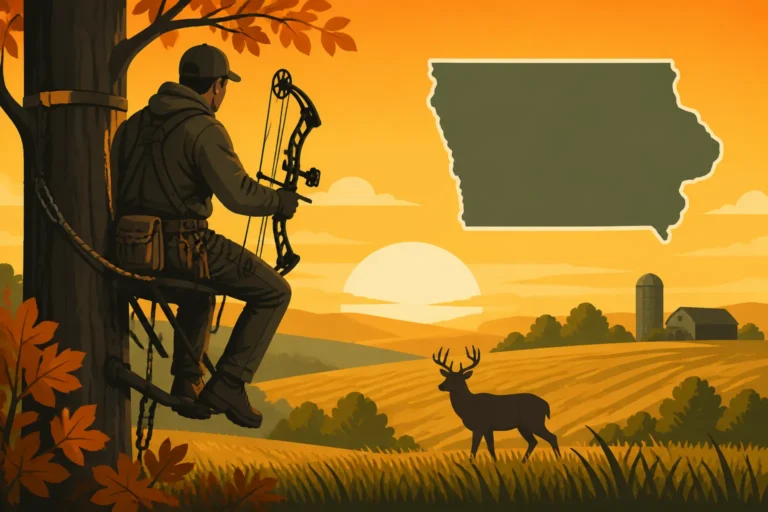
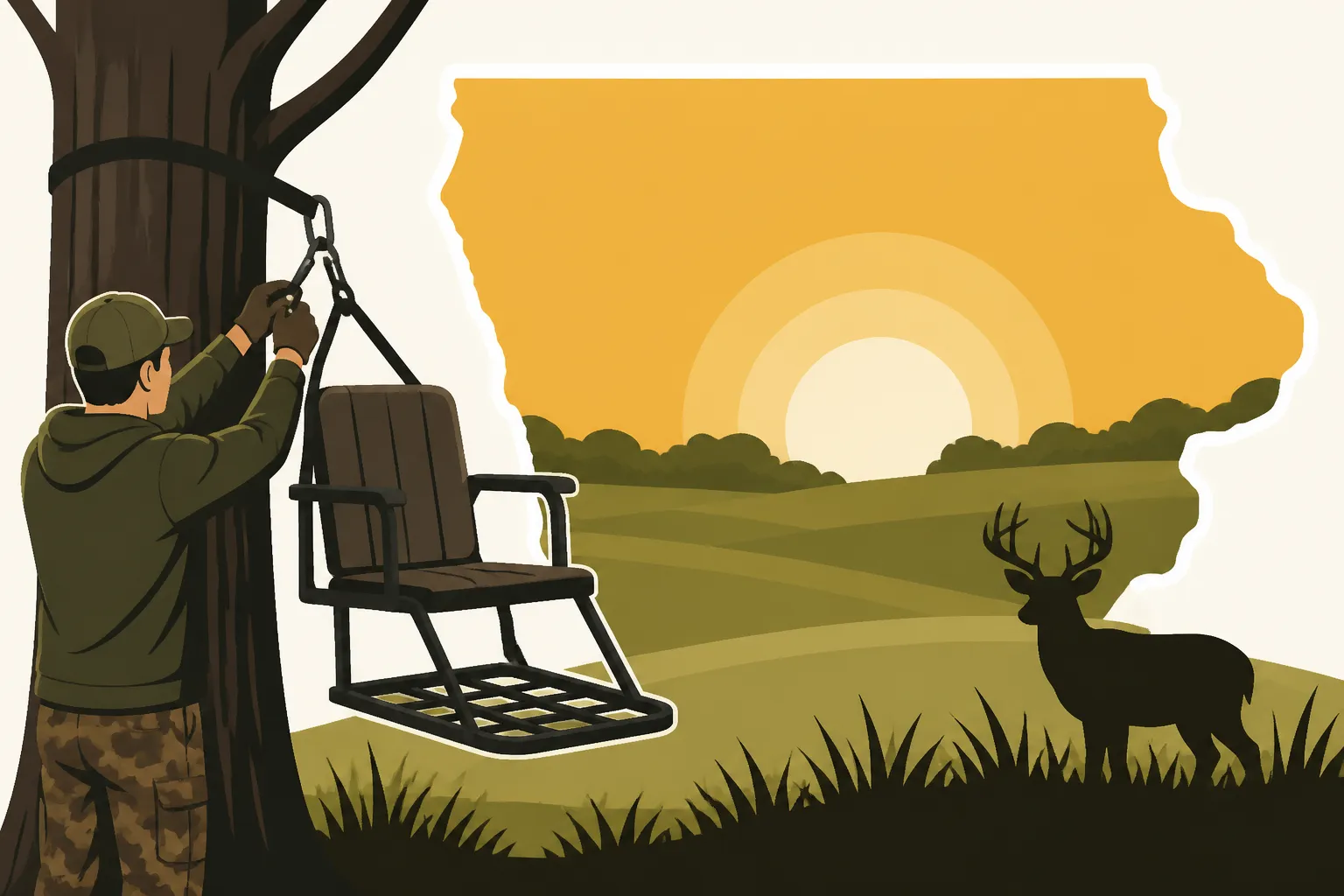
For those who prefer a more traditional seated position but still need mobility, lightweight hang-on stands paired with climbing sticks are an excellent choice. Modern hang-ons are designed to be streamlined, quiet, and relatively light, making them manageable for longer walks into public tracts. Brands like Lone Wolf, XOP, and Summit offer excellent options that prioritize portability without sacrificing safety or comfort. When you combine these with lightweight climbing sticks – often carbon fiber or aluminum – you have a system that's adaptable and can be set up in a wide variety of trees. You might be weighing "Climbing Sticks Versus a Climber", and for public land, sticks often win due to their versatility in crooked or multi-limbed trees.
The advantage of a hang-on and stick setup on public land is its ability to get you into a specific tree quickly and quietly. You can often climb higher than with a typical climbing stand, offering better vantage points and helping to get your scent above a deer's nose. While not as ultra-mobile as a saddle, a well-chosen hang-on and three to four climbing sticks can still be packed in and out daily, or left for a few days according to DNR regulations, minimizing the risk of theft and ensuring you're not leaving permanent equipment on communal hunting grounds. The key is to practice setting up and taking down your system at home so you can do it efficiently and silently in the field.
Ground Blinds as a Portable Alternative
While not a "tree stand" in the traditional sense, a portable ground blind offers a fantastic alternative for public land hunting, especially in areas where suitable trees are scarce or for hunters who prefer to keep their feet on the ground. Modern pop-up ground blinds are incredibly lightweight, easy to set up, and provide excellent concealment. They're perfect for hunting field edges, small timber patches, or areas with thick brush where an elevated stand just isn't practical. This makes them highly versatile for many Iowa public land scenarios.
The benefits of a ground blind on public land extend beyond just concealment. They offer shelter from the elements, which can be a huge advantage during late-season hunts in cold or wet weather. They also provide a comfortable, spacious shooting platform, making them ideal for youth hunters or those who prefer to hunt with a crossbow or rifle. The key to success with a ground blind on public land is proper placement and brushing it in effectively to blend with the natural surroundings. A blind that stands out like a sore thumb will quickly be avoided by pressured deer. Consider where you'll be shooting from, the wind direction, and how deer will approach the area. A well-placed and camouflaged blind can be just as effective, if not more so, than a tree stand, especially in agricultural landscapes or open grasslands common in Iowa. Just remember to check specific public land rules; some areas might have restrictions on leaving blinds unattended overnight.
Here's a quick comparison of stand types for public land:
| Stand Type | Portability | Concealment | Setup Time | Comfort | Damage to Tree | Best Use Case |
|---|---|---|---|---|---|---|
| Saddle Hunting | Excellent | Excellent (against tree) | Fast | Good (leaning) | Minimal | Highly mobile, deep timber, pressured deer |
| Hang-On + Sticks | Very Good | Good | Moderate | Good | Minimal | Flexible tree choice, day hunts, short overnight stays |
| Climbing Stand | Good | Good | Moderate | Good | Minimal | Straight, limbless trees, consistent locations |
| Ground Blind | Good (packable) | Excellent (brushed in) | Fast (pop-up) | Excellent | None | Open country, bad weather, youth hunting, no trees |
Strategic Stand Placement for Public Land Whitetails
Hanging a stand is one thing; hanging it in the right spot is another entirely, especially on public land where deer are more likely to be pressured and wary. It requires a combination of scouting, understanding deer behavior, and adapting to ever-changing conditions.
E-Scouting and On-the-Ground Reconnaissance
Before you even step foot in the timber with your stand, the real work begins at home. E-scouting, using aerial imagery, topographic maps, and other digital tools, is your first and most crucial step in identifying potential stand locations on public ground. Platforms like Google Earth, onX Hunt, and GoHunt allow you to zoom in on terrain features that indicate deer travel, bedding, and feeding. Look for pinch points, inside corners of crop fields, creek bottoms, and changes in timber density. These are all potential magnets for deer movement. If you're hunting vast agricultural areas, learning "E-Scouting Iowa Farm Country From Home" can save you countless hours. Pay close attention to subtle elevation changes, as even a small ridge or ditch can funnel deer.
Once you have a few promising spots identified on your digital maps, it's time for on-the-ground reconnaissance. This is where you verify your e-scouting findings and discover the real-world details that maps can't show. Walk the areas you've pinpointed, looking for fresh deer sign: rubs, scrapes, heavily used trails, and droppings. Identify potential bedding areas, often dense cover or thickets, and locate natural funnels created by terrain or vegetation. This ground truthing is critical because what looks good on a map might be a bust in person, or vice-versa. Pay attention to how deer are likely entering and exiting these areas. Your goal is to find a tree that provides good cover, a clear shot at expected deer travel, and an undetectable access route.
Identifying High-Traffic Corridors and Bedding Areas
On public land, deer are masters of evasion. They'll use the thickest cover and most subtle terrain features to avoid human contact. Your job is to identify these high-traffic corridors and adjacent bedding areas. Look for natural funnels created by dense cover meeting open fields, creek bottoms winding through timber, or even fence lines that act as highways. These corridors are where deer feel safe traveling between bedding and feeding areas, especially during daylight hours on pressured land. A great resource for understanding these travel routes is to learn "Reading an Iowa Timber Draw for Deer Sign".
Bedding areas are often overlooked, but they are critical. These are typically dense thickets, cedar groves, CRP grass, or points of timber that offer security cover. Deer will bed down in these spots during the day, only moving out to feed in the evenings or cruise during the rut. Your stand placement should ideally be on the downwind side of a travel corridor leading to or from a bedding area, or within a subtle transition zone that bucks use to scent-check for does. Avoid placing your stand directly in a bedding area unless you have a completely undetectable entry and exit, as you'll likely bump deer and ruin the spot. The goal is to catch them as they're relaxed and moving naturally, not as they're blowing out of their beds.
Playing the Wind and Thermals in Diverse Terrain
This is arguably the most critical factor for successful stand placement, especially on public land where deer are highly sensitive to human scent. The wind must be in your favor for every sit. Period. If the wind isn't right for your chosen stand, don't hunt it. It's better to hunt a less-than-ideal spot with the right wind than a perfect spot with the wrong wind. Understand the prevailing winds for your hunting area and time of year. Position your stand so your scent cone blows away from where you expect deer to approach or travel. This means placing your stand downwind of trails, pinch points, and bedding areas.
Beyond just prevailing wind, you need to consider thermals, especially in hilly or river bottom terrain. Thermals are air currents created by temperature changes throughout the day. In the mornings, as the ground warms, air rises, causing thermals to pull scent uphill. In the evenings, as the ground cools, air sinks, pushing scent downhill. If you're hunting a ridge or a creek bottom, these thermal drafts can easily betray your presence. Learning about "Wind and Thermals in River Breaks" is vital. For example, in a creek bottom, a morning hunt might be best on the uphill side with the thermal pulling your scent up and over. An evening hunt in the same location might require being on the opposite side, allowing your scent to drop into the creek bottom away from approaching deer. Always factor in both the prevailing wind and the daily thermal shifts when choosing your tree.
The "Leave No Trace" Ethos and Mobile Hunting
Public land hunting comes with a responsibility: to leave the land as you found it, or better. This "Leave No Trace" ethos is particularly important when hanging stands, as it impacts not only the environment but also the experience of other hunters.
Minimizing Disturbance During Stand Installation
When you're hanging a stand on public ground, your approach should be surgical. Every step you take, every branch you break, and every bit of scent you leave behind can educate a wary public land deer. The goal is to be as quiet, efficient, and low-impact as possible. Choose a day to hang your stand when conditions are in your favor – perhaps a day with some wind or light rain to help cover your noise and scent. Avoid hanging stands during prime hunting times unless absolutely necessary; mid-day or even the off-season (while still adhering to regulations) can be better.
Think about your access route to the stand tree. Is it direct? Is it noisy? Try to minimize brush cutting and unnecessary disturbance. When installing climbing sticks or a hang-on, work slowly and deliberately. Use rubber-coated chains or straps to reduce metallic sounds. Avoid breaking branches unnecessarily, and if you must, make clean cuts with a small saw rather than snapping them. The less you disturb the immediate area around your stand, the less likely deer will associate that spot with human intrusion. This mindfulness extends to your scent: wear clean clothes, use scent-free products, and handle your gear with gloves to minimize the transfer of human odor to the tree and ground. This dedication to low impact is part of "Leaving No Trace on Iowa Walk-In Ground".
When and How to Remove Stands
As mentioned earlier, Iowa DNR regulations dictate specific timelines for stand removal. It's not just a rule to follow; it's a critical part of being a responsible public land hunter. Failure to remove your stand can result in it being considered abandoned property, leading to confiscation and potential fines. Set a reminder in your phone or on your calendar for the exact dates. Removing your stand promptly ensures the land is clear for other users, whether they are hikers, bird watchers, or other hunters.
When it's time to remove your stand, approach it with the same care and stealth you used during installation. If possible, choose a day with unfavorable hunting conditions (like high winds or rain) to minimize your impact. Take down your sticks and stand quietly, packing everything out. Do a thorough sweep of the area to ensure you haven't left any garbage, straps, or other discarded items. Leave the tree and the surrounding area exactly as you found it, without any permanent scarring or leftover debris. This commitment to removal is crucial for maintaining good relationships with land managers and ensuring continued access for all.
Maintaining Stealth from Entry to Exit
The hunt doesn't begin when you climb into your stand and it doesn't end when you climb down. Every step of your journey on public land, from parking your vehicle to walking back to it, should be done with stealth in mind. Public land deer are accustomed to human presence, but they are also highly attuned to abnormal activity. This means your entry and exit routes are just as important as your stand placement. Always plan your approach to avoid known bedding areas or high-traffic zones, especially in low light. If you can avoid passing through prime deer habitat, do so. This is a crucial aspect of "Access Routes That Avoid Bedding Areas".
Move quietly through the woods, minimizing noise and disturbance. Use terrain features and existing cover to mask your movement. Avoid using flashlights or headlamps unnecessarily in the woods, especially once you're close to your hunting area, as this can alert deer to your presence. The goal is to slip in and out undetected, leaving deer unaware that a hunter was even there. This includes careful consideration of scent; even on your walk-in and walk-out, your scent can educate deer for future hunts. The more careful you are about your entire hunting process, the better your chances of encountering unpressured deer on public land.
Logistics and Safety for Public Land Stand Hunting
Hunting public land is a demanding endeavor that requires careful planning beyond just finding a good spot. Logistics and safety are paramount, especially when you're often miles from your vehicle and potentially in unfamiliar terrain.
Essential Gear and Safety Practices
When you're venturing onto Iowa's public hunting lands, your gear needs to be reliable, functional, and appropriate for the conditions. Beyond your stand and weapon, essential items include a high-quality map application on your phone (like GoHunt or onX Hunt, with downloaded offline maps), a GPS unit, a headlamp with extra batteries, a small first-aid kit, and enough water and snacks for your entire hunt. Layered clothing is crucial for fluctuating Iowa weather, from warm early season days to frigid late-season sits. Consider durable, quiet fabrics that won't snag or make noise when you move. For scent management, many hunters rely on products that eliminate or reduce human odor. While some swear by "Scent Control Products and What They Do", remember that playing the wind is always your best defense.
Safety, however, is non-negotiable. Anytime you are in an elevated stand, you must wear a full-body safety harness. This is not optional. Falls from treestands are a leading cause of hunting injuries, many of which can be fatal or life-altering. Always stay tethered to the tree from the moment your feet leave the ground until they touch back down. Use a lineman's belt when ascending or descending with climbing sticks to keep both hands free and secure. Ensure your stand is properly installed and secure before putting your full weight on it. Inform someone of your hunting plans: where you're going, when you expect to return, and who to call if you don't check in. Public land often means hunting alone in remote areas, so being prepared for an emergency is crucial.
Planning Access Routes and Extraction
One of the biggest challenges of public land hunting is getting to your spot without disturbing the deer you're trying to hunt, and then safely and efficiently extracting your game. Your access route should be planned not just for convenience, but for stealth. Look for routes that utilize natural cover, creek beds, ditches, or existing trails that minimize noise and visibility. Avoid walking through open fields during daylight hours if possible, and definitely avoid walking directly through known bedding areas. Early morning and late evening walks should be done with extra caution, as deer are often most active during these times.
Extraction planning is equally important. If you're fortunate enough to harvest a deer, how will you get it out? Public land can be rugged, and dragging a deer several miles is an exhausting task. Consider packing a deer cart, even a lightweight collapsible one, if your terrain allows. If the terrain is too rough, you might need to quarter the deer in the field and pack it out in game bags. This requires proper knives and boning techniques, but it can be a lifesaver for long hauls. Always have a plan for how you'll get your deer out and cooled, especially during warmer early-season hunts, to ensure the meat doesn't spoil. This is particularly relevant when you're faced with "Getting a Deer Out of an Iowa Creek Bottom".
Dealing with Other Hunters and Pressure
Public land in Iowa, especially during peak seasons, can see significant hunting pressure. While you might try to find the most remote spots, the reality is you'll likely encounter other hunters. The key is to be prepared for it and respond respectfully. Having a good understanding of "Hunting Pressure Patterns on Iowa Public Land" can help you choose less crowded areas or adjust your hunting times. Always assume other hunters are in the woods with you. Wear blaze orange during gun seasons, even if just walking to and from your stand, to ensure maximum visibility and safety.
If you encounter another hunter, a friendly wave or quiet greeting is usually best. Avoid confrontations. Everyone has a right to use public land. If someone is in your spot, move on and find another. Having multiple spots scouted and ready to hunt for different wind directions and pressure levels is a smart strategy for public land success. This adaptability is key to consistent success. Often, pressured deer will move to the thickest, nastiest cover, and the hunters willing to go into those areas are the ones who find success. Patience, respect, and adaptability will make your public land hunting experience more enjoyable and successful, even when sharing the woods.
Disclaimer
The information provided in this guide is for general informational purposes only and does not constitute legal advice. Hunting regulations, laws, and safety guidelines can change. Always consult the official Iowa Department of Natural Resources (DNR) regulations and local ordinances for the most current and accurate information before engaging in any hunting activities. Adherence to all applicable laws and safety practices is the sole responsibility of the individual hunter.