Small Timber Drives With Two Hunters
It’s incredibly frustrating when you’re staring at a perfect-looking finger of timber, a dense brush pile, or a small slough bottom, knowing a deer is probably bedded in there, but you’re only with one hunting buddy. It feels too small for a traditional "deer drive" with a big crew, and too thick to simply sit and wait. This guide will walk you through how to effectively execute small timber drives with just two hunters, maximizing your chances of moving deer into shooting lanes safely and efficiently.
The Art of Reconnaissance: Pre-Drive Scouting for Two Hunters
Success in a two-man drive, especially in Iowa’s often sparse timber, isn't about brute force; it's about smart planning and understanding the terrain. You're not just kicking the bushes; you're orchestrating a subtle push. This means doing your homework before you even step foot in the woods with your gun or bow. The goal is to predict how deer will react and escape, then position yourselves accordingly.
Identifying Ideal Small Timber Spots
Not every piece of cover is right for a two-man drive. You’re looking for specific characteristics that make it manageable and predictable. Think about those isolated patches of timber, the thick hedgerows dividing crop fields, or small, overgrown creek bottoms that are a bit too far from your usual stand locations. These are often overlooked by larger hunting parties, making them perfect hideouts for pressured deer.
Look for areas roughly 5 to 20 acres, though even a dense 2-acre thicket can hold a good buck. What’s crucial is the density of the cover. We're talking about places so thick with multiflora rose, honeysuckle, cedars, or downed timber that a deer would rather slip out the back than try to bust through you. These are the spots where a deer feels secure, knowing they're hard to get to. Also, consider the edges – do they abruptly meet open fields or wide-open timber? These sharp transitions create natural escape routes that you can exploit. A great example might be a timber point extending into a cornfield, where deer are likely to skirt the edge. For more on what to look for, check out our guide on Reading an Iowa Timber Draw for Deer Sign.
Mapping Deer Escape Routes
Once you’ve identified a promising patch, it's time to become a detective. Deer, especially mature bucks, are creatures of habit. They will almost always have a preferred way out when pressured. You need to predict these escape routes. Before you even think about pushing, walk around the perimeter of the timber block. Look for well-used trails, especially those that seem to lead away from prevailing winds or towards heavier cover.
Using a mapping app like GoHunt is invaluable here. Zoom in and study the aerial imagery. Look for natural funnels, pinch points, fence crossings, or subtle changes in elevation that might guide a deer's movement. Are there ditches, creek beds, or overgrown fencelines that offer concealed travel? Deer will often follow the path of least resistance or the path of most cover. Note down these potential exit points. Your blocker's success hinges entirely on accurately anticipating where the deer will try to go. If the timber is situated along a river, understanding Wind and Thermals in River Breaks can give you an edge in predicting movement.
Wind Direction and Approach Planning
The wind is your third hunter in a two-man drive; use it wisely. You always want the driver to push with the wind at their back, or at least quartering to them, to carry their scent into the timber. This nudges the deer forward, without alerting them prematurely to the blocker's presence. Conversely, the blocker should be positioned downwind of the anticipated escape route, allowing their scent to blow away from the approaching deer. This makes it far less likely that the deer will smell the blocker before they are within shooting range.
This also plays into your approach. How will you get to your positions without alerting every deer in the county? Plan your Access Routes That Do Not Bump Deer. Walk the long way around if you have to, utilizing ditches, field edges, or creek beds to keep your scent and noise minimized. This pre-planning minimizes the chances of a deer busting out the back before the drive even begins, or worse, running past the blocker before they're ready.
Defining Roles and Executing the Push
With your scouting done and escape routes mapped, it’s time to put the plan into action. This isn't about running through the woods screaming; it's a calculated, almost rhythmic dance between two hunters. Each role is critical, and any deviation can spoil the whole effort.
The Driver's Strategy: Slow and Deliberate
The driver’s job is not to scare deer into a full sprint but to nudge them gently and predictably towards the blocker. Think of yourself as a slow, steady current. Start at the upwind side of the timber, making your presence known, but not overtly aggressive. A slow walk, occasionally pausing, shuffling your feet, and even a soft cough or a few gentle verbal calls are often more effective than crashing through like a bull in a china shop. The idea is to make the deer feel uncomfortable, not panicked.
Walk in a zigzag pattern, covering the densest pockets of cover. Pay close attention to any subtle signs of deer moving ahead of you – a flick of an ear, a snapping twig, or a sudden rustle. If you see movement, adjust your path slightly to funnel that deer towards your buddy. If you push too fast, deer will often circle back behind you or burst out in an unpredictable direction. A slow, steady push allows deer to ease out of their beds and trot towards what they perceive as safety – right into the blocker's lap. This is particularly important for Shotgun Season Drives in Small Timber where shots are often taken at closer ranges.
The Blocker's Position: Strategic Stand Placement
The blocker has perhaps the most critical role, and the most patient one. Their success depends entirely on their ability to remain unseen, unheard, and unscented. Based on your scouting, the blocker should be set up well in advance of the driver's push, ideally in a portable stand or saddle for an elevated advantage. Being elevated helps with visibility and also helps carry your scent above the deer's nose. Look for natural ambush points: a small timber point, a fence crossing, or where a dense thicket necks down. These are often the Best Stand Locations in Rolling Timber.
The blocker needs to be absolutely still and silent, eyes and ears constantly scanning the anticipated escape routes. Cover, both for concealment and scent control, is paramount. Position yourself so the wind is carrying your scent away from the approach of the deer. Pay attention to shooting lanes. You want clear shots at the expected escape routes, but also be prepared for a deer that might try to sneak out a different way. Patience is key; often, the deer will walk out cautiously, offering a great shot opportunity if you remain undetected.
Communication is Key
Even with just two people, effective communication is non-negotiable. Before you split up, establish clear signals. This could be specific texts (e.g., "Starting now," "Halfway," "Approaching end"), or if cell service is spotty, distinct calls like a hawk shriek or a hoot owl call. Just make sure you practice them and that they're not easily mistaken for actual wildlife.
Agree on a precise start time, a general route for the driver, and the exact position of the blocker. Discuss "no-shoot" zones if there are any buildings or roads nearby. After the drive, if a deer is shot, coordinate your approach to the downed animal and any necessary tracking efforts. This clear, concise communication ensures both safety and efficiency, and reduces the chance of surprises. For example, if the driver hits a dense patch of cover and anticipates a momentary delay, a quick signal can keep the blocker aware and ready.
Safety First: Critical Considerations for Two-Man Drives
Anytime you introduce movement and firearms into a hunting scenario, safety becomes the absolute paramount concern. With only two hunters, the dynamics are a bit different than a large group, but the need for vigilance is just as high, if not higher. You are each other's only backup, and accountability rests squarely on both your shoulders.
Establishing Safe Zones of Fire
Before anyone moves, clearly define the "safe zones of fire" for both the driver and the blocker. This means discussing the trajectory of your shots and what lies beyond your target. For the blocker, this is usually easier, as they're stationary. Their zone of fire will be the specific escape routes they're watching. They need to ensure no shot will travel towards the driver's direction or towards any property lines or potential hazards like roads or houses.
For the driver, it's more dynamic. Often, the driver's primary role is to push, not to shoot, especially in thicker cover where visibility is limited. However, if a deer breaks unexpectedly to the side or behind, a safe, clear shot might present itself. The critical rule is never to shoot in the direction of your partner or any unknown territory. Always know what's beyond your target. This is where pre-drive planning and clear communication about expected movement paths pays off. For group hunts, broader considerations for Party Hunting Rules and Safe Drives can be invaluable.
Blaze Orange and Visibility
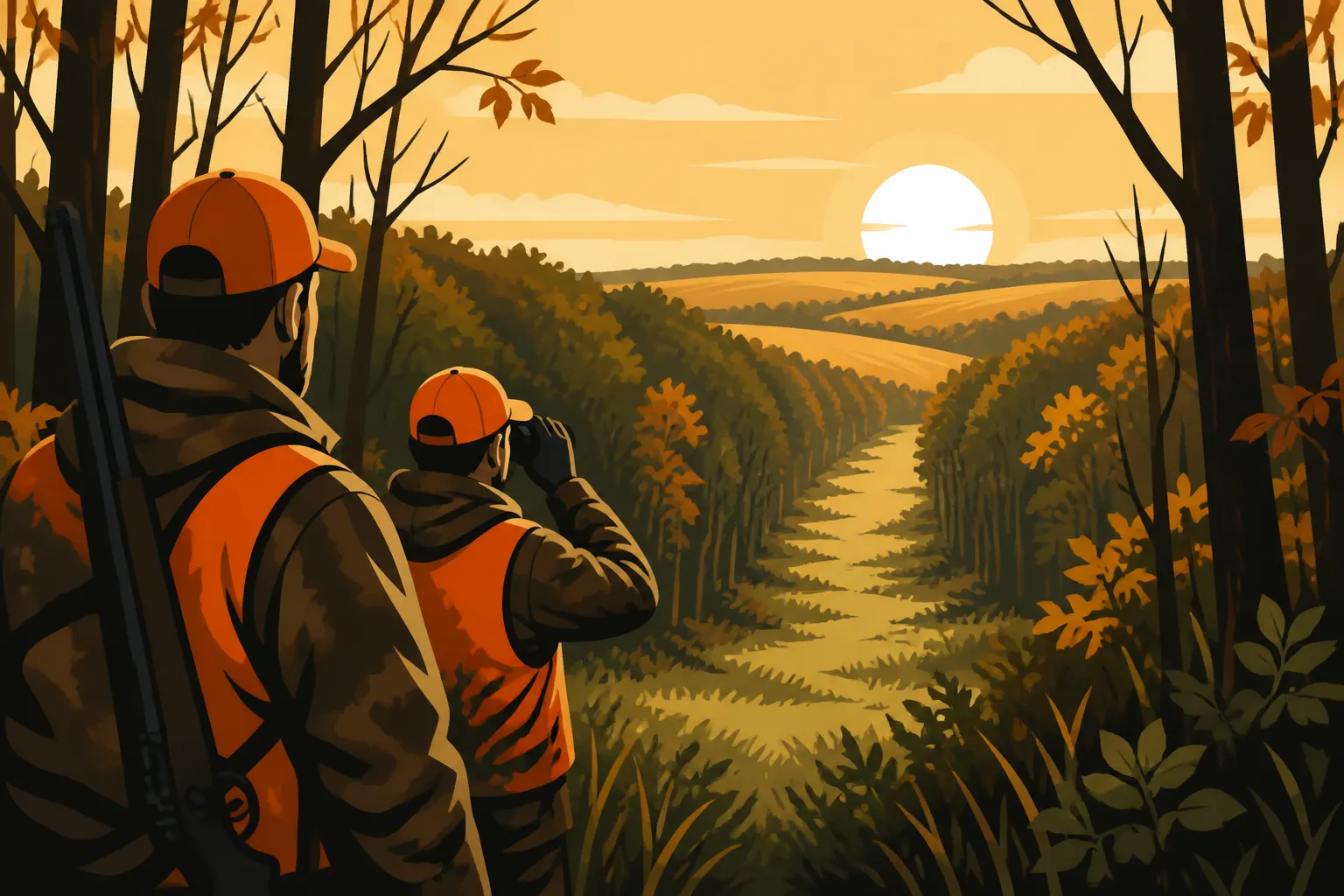
In Iowa, especially during the shotgun and muzzleloader seasons, blaze orange is not just a suggestion; it's a legal requirement and a common-sense safety measure. Both the driver and the blocker should wear a significant amount of blaze orange to be easily seen by each other and any other hunters who might be in the vicinity. A blaze orange vest and hat are the minimum. Consider adding blaze orange to your backpack if you're the driver.
Even during archery season, when blaze orange isn't legally mandated, consider wearing a small amount, like an orange hat or an arm band, especially if you're in an area where gun season overlaps or other hunters might be present. In a two-man drive, being visible to your partner is crucial for safety, confirming positions, and preventing accidents. Familiarize yourself with all Blaze Orange Rules During Iowa Gun Season before heading out.
Post-Shot Protocol and Recovery
So, you’ve executed the drive perfectly, and the blocker has successfully harvested a deer. What now? The immediate protocol is crucial. The blocker should confirm the shot and, if possible, watch the deer's direction of travel. The driver should hold their position briefly, listening for any further shots or signals. Once communication is re-established, the driver can slowly and carefully join the blocker.
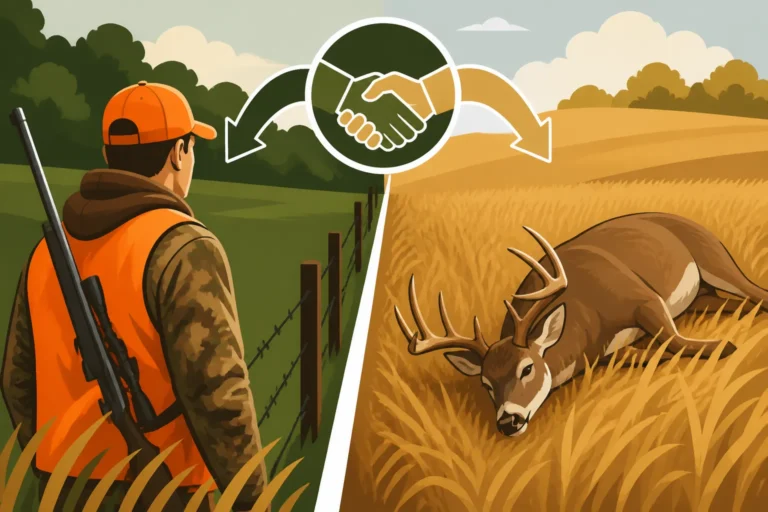
Before you approach the deer, make sure it’s completely down and still. If it’s not, follow up with another safe, ethical shot. Then, begin the process of blood trailing. Even if you saw the deer drop, always verify. For more detailed advice on aiming, see our article on Shot Placement on a Whitetail at Twenty Yards. Be prepared for a challenging track, especially if the deer makes it into thicker cover. Have a good flashlight, and consider waiting a bit before taking up the trail, especially if the shot wasn't ideal. If the deer crosses a property line, remember to understand your rights and the rules regarding Recovering a Deer Across a Property Line. Once recovered, remember proper care, especially when Field Dressing in Warm October Weather.
| Role | Key Responsibilities | Core Objective | Critical Safety Consideration |
|---|---|---|---|
| Driver | Slow, deliberate push; funnel deer; maintain awareness | Nudge deer towards blocker's anticipated position | Always know where the blocker is; avoid blind shots |
| Blocker | Patient waiting; precise shot placement; concealed | Intercept deer on escape route; capitalize on opportunity | Ensure clear backdrop; avoid shooting towards driver |
Disclaimer
Hunting is an inherently dangerous activity. This guide provides tactical information for educational purposes only. Always prioritize safety, adhere to all local, state, and federal hunting regulations, and ensure you have the necessary licenses and permits. Be aware of your surroundings, know your target and what lies beyond it, and never consume alcohol or drugs while hunting. Always inform someone of your hunting plans and expected return time.