Are Screw-In Steps Legal in Iowa?
It’s a tale as old as time, isn't it? You’re trying to be the best, most efficient hunter you can be, looking for every edge to get into that perfect setup, only to be met with a maze of regulations that can feel overwhelming. Figuring out what gear is legal, especially when it comes to attaching things to trees on public ground, can be a real headache. This guide is here to clear up the confusion about screw-in steps in Iowa and help you navigate the rules for ethical and legal stand placement.
The Straightforward Answer on Screw-In Steps in Iowa
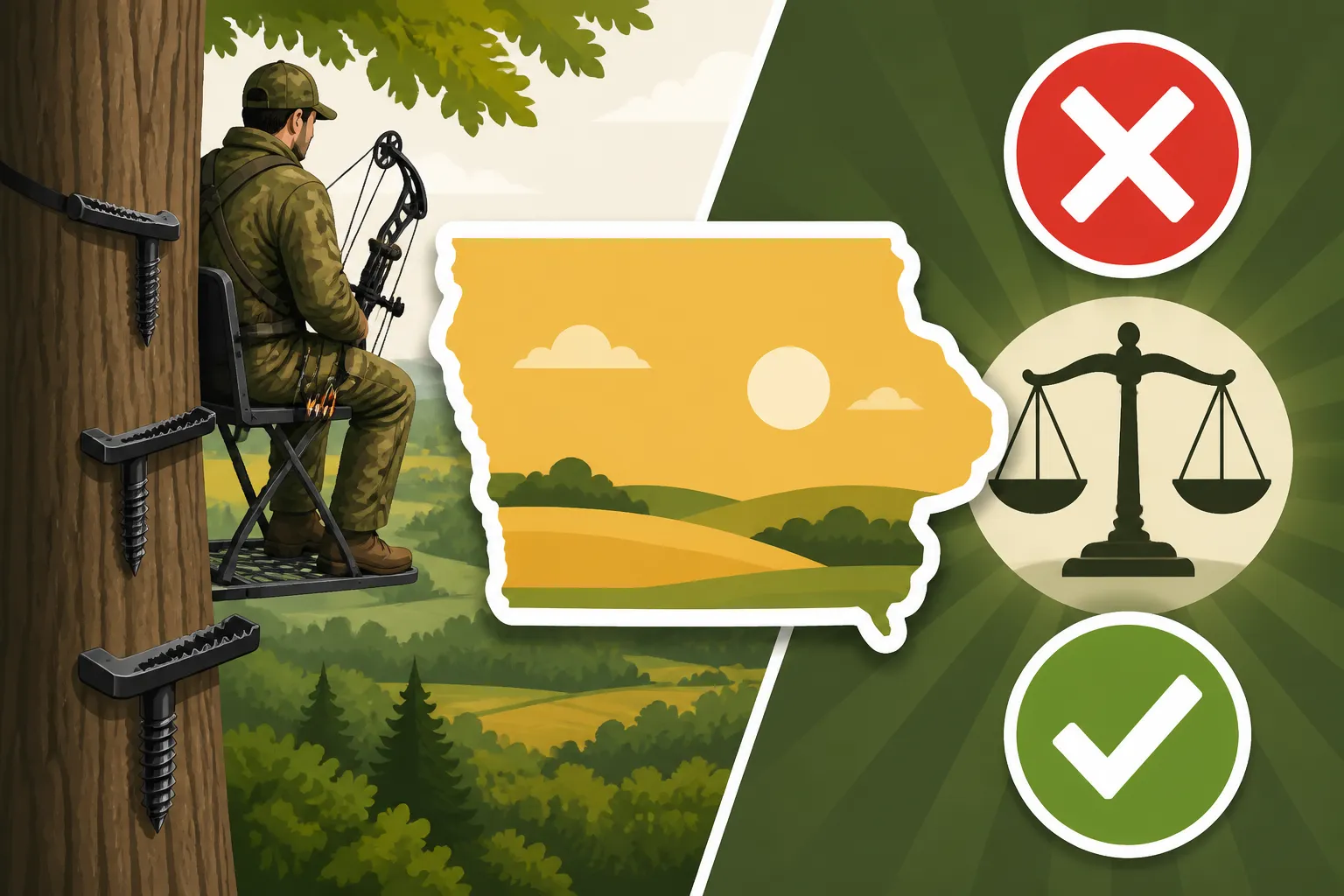
Let's cut right to the chase because nobody likes beating around the bush when it comes to hunting regulations. If you're planning to hunt on public land in Iowa, screw-in steps are not legal for attaching to trees. This is a critical rule to understand, and it's one that the Iowa Department of Natural Resources (DNR) takes seriously. The rationale behind this rule is simple: to protect the trees and the natural habitat from damage caused by permanent or semi-permanent fixtures. Public land is a shared resource, and the regulations are designed to ensure its health and accessibility for everyone, for generations to come.
Iowa DNR Regulations on Tree Damage
The Iowa DNR's regulations are pretty clear when it comes to altering or damaging state-owned or managed property, and that absolutely includes trees. Any device that requires screwing, nailing, or bolting into a tree is considered damaging. Even if you think it's just a small hole, over time, repeated use of screw-in steps by numerous hunters can weaken trees, create entry points for disease, and simply leave unsightly scars on the landscape.
Think about it from the perspective of managing hundreds of thousands of acres of timber across the state. If every hunter used screw-in steps, the cumulative impact would be devastating. This is why the rules prohibit any method of attachment that penetrates the bark or cambium layer of the tree. This isn't just a suggestion; it's a hard and fast rule designed to maintain the integrity of Iowa's precious woodlands. These rules apply universally to all state-managed public hunting areas, including Wildlife Management Areas (WMAs), state forests like Stephens State Forest, and various other parcels. You might think, "Well, it's just one step," but the DNR has to enforce it as a blanket rule to prevent widespread damage.
Why These Rules Exist for Public Land
The very core of these regulations boils down to conservation and ensuring sustainable use of our natural resources. Public hunting land in Iowa is a treasure, offering opportunities for everyone from seasoned veterans to young hunters just starting out. When we all respect the land, it remains productive and beautiful.
The environmental impact of screw-in steps is more significant than many realize. Each hole creates a wound in the tree, making it vulnerable to insects, fungi, and bacteria. Over time, these wounds can lead to decay, structural weakness, and even the death of a tree. Furthermore, the aesthetic impact cannot be ignored. Hunters, and all outdoor enthusiasts, value pristine natural environments. Seeing trees peppered with old screw-in step holes detracts from the wild feel of the forest. The DNR aims to keep these areas as natural as possible, and that means minimizing human-caused alterations to the landscape.
The rules also prevent the "claiming" of hunting spots. If hunters could leave screw-in steps in trees year-round, it would essentially establish permanent stands, which goes against the principle of public access. Most public land rules require all stands and blinds to be removed at the end of the season, and sometimes even daily. This ensures that every hunter has an equal opportunity to find and hunt prime locations. It's about preserving both the environment and the spirit of fair chase and equal access.
Legal and Ethical Alternatives for Elevated Hunting in Iowa
So, if screw-in steps are out, what's a hunter to do when they want to get elevated? Thankfully, there are plenty of excellent, legal, and ethical options available that won't damage the trees or violate public land regulations. These alternatives are designed for portability and minimal impact, perfectly suiting the needs of the mobile hunter or anyone who wants to leave no trace.
Climbing Sticks and Platforms
This is probably the most popular and versatile alternative for getting into a tree on public land. Climbing sticks are segments that attach to the tree using straps or ropes, without penetrating the bark. They are designed to be easily set up and taken down, allowing you to access various heights safely.
There are many different types of climbing sticks on the market, from lightweight aluminum sticks perfect for long walks in to more robust steel options. Brands like Lone Wolf, Hawk, and XOP offer a range of reliable climbing sticks. Most hunters use 3-5 sticks to reach a comfortable hunting height, often around 15-20 feet. Once you're up, you can either attach a small, separate platform or use a lightweight hang-on stand. The key is that all components rely on straps, cam buckles, or ropes to secure them, ensuring no damage to the tree. This method is incredibly adaptable, letting you set up in different trees throughout the season based on deer movement, wind direction, or pressure. You can read more about the distinctions in Climbing Sticks Versus a Climber and the mechanics of Climbing Sticks and Platforms for a deeper dive.
| Climbing Method | Legality (Iowa Public Land) | Tree Impact | Portability | Common Use Case |
|---|---|---|---|---|
| Screw-In Steps | Illegal | High | High | Private Land (w/ permission) |
| Climbing Sticks | Legal | None | High | Mobile public land hunting |
| Ladder Stands | Legal (seasonal) | None | Low-Medium | Semi-permanent private/public (removed daily/seasonally) |
| Hang-On Stands | Legal (seasonal) | None | Medium | Mobile or semi-permanent public/private |
| Tree Saddles | Legal | None | Very High | Ultra-mobile, minimalist hunting |
| Climber Stands | Legal | None | Medium | Public land with straight, limbless trees |
Mobile Hunting with a Saddle
Tree saddles have revolutionized mobile hunting for many, offering an ultra-lightweight and stealthy approach to hunting from an elevated position. A saddle is essentially a harness that you wear, which then connects to a single attachment point on the tree. You use climbing sticks (or sometimes specialized one-stick methods) to ascend the tree, and once at height, you lean back into your saddle, using a small platform or ring for your feet.
The beauty of saddle hunting is its minimal footprint. You carry less gear, and your setup leaves virtually no trace once you descend. It allows for 360-degree shooting around the tree, making it incredibly versatile for maneuvering around branches or adjusting for shot angles. For hunters who prioritize stealth, speed, and covering a lot of ground, saddle hunting is an exceptional choice. Many hunters are embracing this method on Iowa's public lands to stay nimble and adaptive. If you're looking to explore this, our guide on Saddle Hunting on Iowa Public Land and Mobile Saddle Hunting in Iowa offers a ton of helpful information. It’s truly a game-changer for those long walks in on large public tracts.
Ladder Stands and Hang-On Stands
While less portable than climbing sticks or saddles, ladder stands and hang-on stands are also legal options for getting elevated on public land, with some important caveats. The main rule here is that they must be completely removed from the tree at the end of the day or hunting season, depending on specific area regulations. You can't just leave them up indefinitely. This is detailed in guidelines like Portable Stand Rules on Iowa Public Ground and Overnight Stand Storage on Public Ground.
- Ladder Stands: These offer a comfortable and stable platform, often with a rail for safety and shooting support. They are bulkier and heavier, making them less ideal for deep woods hikes but excellent for spots with easier access where you might set up for multiple hunts.
- Hang-On Stands: These are usually more compact than ladder stands and attach directly to the tree using a strap or chain. They require climbing sticks or a climbing aid to get into. While they are lighter than ladder stands, they still require a bit more effort to transport and set up than a pure saddle or stick system.
Both types provide a secure and non-damaging way to hunt from a height, as long as you adhere to the removal rules. Always check the specific regulations for the Wildlife Management Area or state forest you plan to hunt, as some areas might have stricter rules on stand types or removal deadlines.
The Nuances of Public Versus Private Land
It's crucial to understand that the rules we've been discussing primarily pertain to public hunting land. The landscape of regulations changes significantly when you step onto private property. This distinction is paramount and often where confusion can arise.
Private Land Considerations
On private land, the legality of using screw-in steps falls primarily to the landowner. If you own the land, or if you have explicit permission from the landowner, you can use screw-in steps. However, just because it's legal doesn't necessarily mean it's the best practice.
Many landowners, even on their own property, choose not to use screw-in steps due to the potential for tree damage. If you're leasing ground or hunting with permission, always have a direct conversation with the landowner about their expectations regarding stand placement and tree alterations. Some might be perfectly fine with screw-in steps on certain trees, while others might prefer you stick to non-damaging methods like climbing sticks or ladder stands. It’s all about respecting their property and their wishes. A damaged tree can also be a liability, so it’s wise to consider the long-term health of the timber on private ground as well.
Ethical Hunting Practices Beyond Legality
Even when screw-in steps are technically permissible on private land, it's worth considering the broader ethical implications. As hunters, we are stewards of the land, and part of that stewardship means minimizing our impact wherever possible. "Leaving no trace" is a principle that extends beyond just public land.
Think about the long-term health of the trees. A few holes might not kill a mature oak today, but accumulated damage over years can certainly take a toll. Furthermore, the visual impact of abandoned screw-in steps or scarred trees can negatively affect the public perception of hunting. We want to demonstrate respect for nature, not indifference. Embracing non-damaging methods, even on private land, sends a powerful message about our commitment to conservation. This commitment is central to what we do, and topics like Leaving No Trace on Iowa Walk-In Ground resonate deeply with this philosophy. It's about being responsible, whether a regulation forces your hand or not.
Planning Your Public Land Access with Regulations in Mind
Navigating Iowa's public hunting lands requires a bit of forethought, especially when it comes to stand placement. Knowing the rules about screw-in steps upfront will save you a lot of grief and ensure you're hunting legally and ethically. Proper scouting and equipment choices are key to success.
Utilizing Scouting Tools and Tree Selection
Before you even step foot in the woods, modern scouting tools can be invaluable. Many of us use invaluable tools like GoHunt or other mapping apps like onX Hunt to virtually scout potential hunting locations. These apps allow you to identify promising timber edges, creek bottoms, and funnels from the comfort of your home. You can mark potential stand trees, considering factors like canopy cover, prevailing winds, and proximity to bedding and feeding areas.
Once you're on the ground, your scouting shifts to finding the right tree for your non-damaging stand setup. Look for trees that are straight enough for climbing sticks or a climber, and have good cover. Avoid trees with excessive lower limbs that might impede climbing or shooting lanes. With tools like GoHunt, you can often identify potential stand trees even before your boots hit the dirt, helping you strategize your approach and stand placement in a way that respects the regulations. Understanding the lay of the land, as discussed in Scouting Iowa Public Land Before the Opener, is paramount. This initial work, combining technology and boots-on-the-ground assessment, ensures you're set up for success without breaking any rules.
Minimizing Impact and Pressure
Adhering to regulations like the ban on screw-in steps isn't just about avoiding a ticket; it's also about effective hunting. By using portable, non-damaging methods, you inherently minimize your impact on the land. This "leave no trace" approach is vital on public ground, where hunting pressure can be a significant factor.
When you don't leave permanent fixtures, you prevent other hunters from easily identifying your spots, reducing competition. More importantly, you minimize human scent and disturbance, which can quickly educate deer. Constantly moving your stand setup and leaving minimal evidence of your presence helps keep deer patterns more natural. This thoughtful approach contributes to a better hunting experience for everyone and prevents the over-pressuring of specific areas. Understanding Hunting Pressure Patterns on Iowa Public Land is key to staying ahead of the game, and your gear choices play a huge role in that strategy. Remember, being a good steward of the land makes you a better hunter, too.
Disclaimer
Please note that hunting regulations, including those concerning equipment and stand placement, can change. While this guide provides the most up-to-date information at the time of writing, it is always the hunter's responsibility to consult the official Iowa Department of Natural Resources (DNR) hunting regulations annually before heading into the field.