Southern Iowa Deer Counties
For many hunters, the mention of "Southern Iowa" conjures images of massive whitetails, prime habitat, and the dream of a lifetime buck. But knowing where to focus your efforts within this legendary region can feel like trying to find a needle in a haystack, leaving many feeling overwhelmed by the choices and uncertainties of unfamiliar territory. This guide is here to cut through the confusion, helping you understand the specific characteristics that make southern Iowa's deer counties so special and how you can approach hunting them, whether you're seeking public land adventure or private land opportunities.
Understanding Southern Iowa's Deer Hunting Allure
Southern Iowa isn't just a geographical region; it's a deer hunting phenomenon. For decades, it has consistently produced some of the largest whitetails in North America, earning a reputation that draws hunters from across the globe. But what exactly makes this area such a hotspot for trophy-class deer? It's a combination of diverse habitat, rich agricultural resources, and a long-standing commitment to quality deer management.
The Landscape Advantage: Timber, Cover, and Crops
Imagine a patchwork quilt of dense timber, winding creek bottoms, vast agricultural fields, and CRP (Conservation Reserve Program) grasslands. That's the typical landscape of southern Iowa, and it's a whitetail's paradise. The timbered ridges and creek corridors provide essential bedding areas, travel routes, and thermal cover, especially during harsh Iowa winters. These timber blocks often break up into fingers and points that extend into crop fields, creating natural pinch points and funnels that deer use daily.
Adjacent to these wooded areas are the expansive corn and soybean fields that define much of Iowa's agriculture. These crops aren't just food; they are an incredible source of nutrition, fueling rapid antler growth and robust body weights. A buck in southern Iowa essentially lives in a giant buffet, with easy access to high-protein, high-energy forage for much of the year. This abundant food supply, coupled with varied escape cover, allows deer to mature to older age classes, a critical factor in producing trophy antlers. You can often find deer moving between Standing Corn and Bean Field Deer Patterns as seasons change.
Genetic Potential and Management Philosophies
While habitat and nutrition are paramount, the genetic makeup of Iowa's deer herd certainly plays a role. Over generations, the selective pressures and consistent food supply have contributed to a herd with excellent inherent potential for large body sizes and impressive antlers. However, it's not just genetics at play; a significant part of southern Iowa's success lies in its deer management philosophy. Iowa has historically managed its deer herd with a focus on quality, often through a limited nonresident tag system and a strong emphasis on balancing the buck-to-doe ratio.
Many resident hunters, particularly those with access to private ground, have adopted voluntary quality deer management (QDM) practices, choosing to pass on younger bucks to allow them to reach their full potential. This collective approach, both at the state and individual level, means that bucks have a higher likelihood of surviving multiple hunting seasons, giving them the time needed to grow those impressive racks that make Iowa famous. The limited hunting pressure on some private tracts further allows these animals to age naturally, often reaching ages of 4.5 years or older, which is when antler growth truly peaks. Understanding Why Iowa Grows Trophy Whitetails can give you an edge.
Historical Reputation Versus Current Reality
Southern Iowa's reputation as a trophy whitetail mecca is well-deserved, but it's important to approach it with a realistic perspective. While the potential for giant deer is undeniably high, it's not a guarantee. The reality is that hunting pressure, land access, and localized deer densities can vary significantly from one county to the next, and even within different areas of the same county.
There was a time when certain southern Iowa counties were virtually unheard of, yet consistently yielded massive deer. With the advent of mapping technology like onX Hunt and the widespread sharing of hunting information, very few "secrets" remain. This means that highly productive public land parcels, once quiet, now see increased pressure. Similarly, desirable private land can be tightly held or leased at premium prices. While the quality is still there, hunters need to be more strategic and put in more effort than ever before. It’s no longer enough just to be "in southern Iowa"; you need to know where to be and how to hunt it effectively. Don't assume every timber patch holds a Boone and Crockett buck just because you're in the right part of the state.
Top-Tier Southern Iowa Deer Counties to Consider
When hunters talk about "Southern Iowa," they often have a specific cluster of counties in mind. These areas have consistently produced high-scoring whitetails and offer some of the best habitat combinations in the state. However, understanding the subtle differences between them and knowing where to look beyond the well-known names can be key to a successful hunt.
The Boone and Crockett Hotbeds
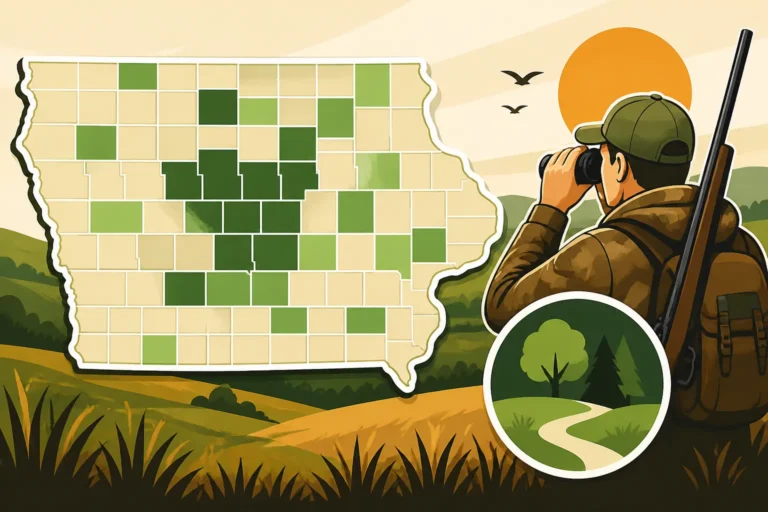
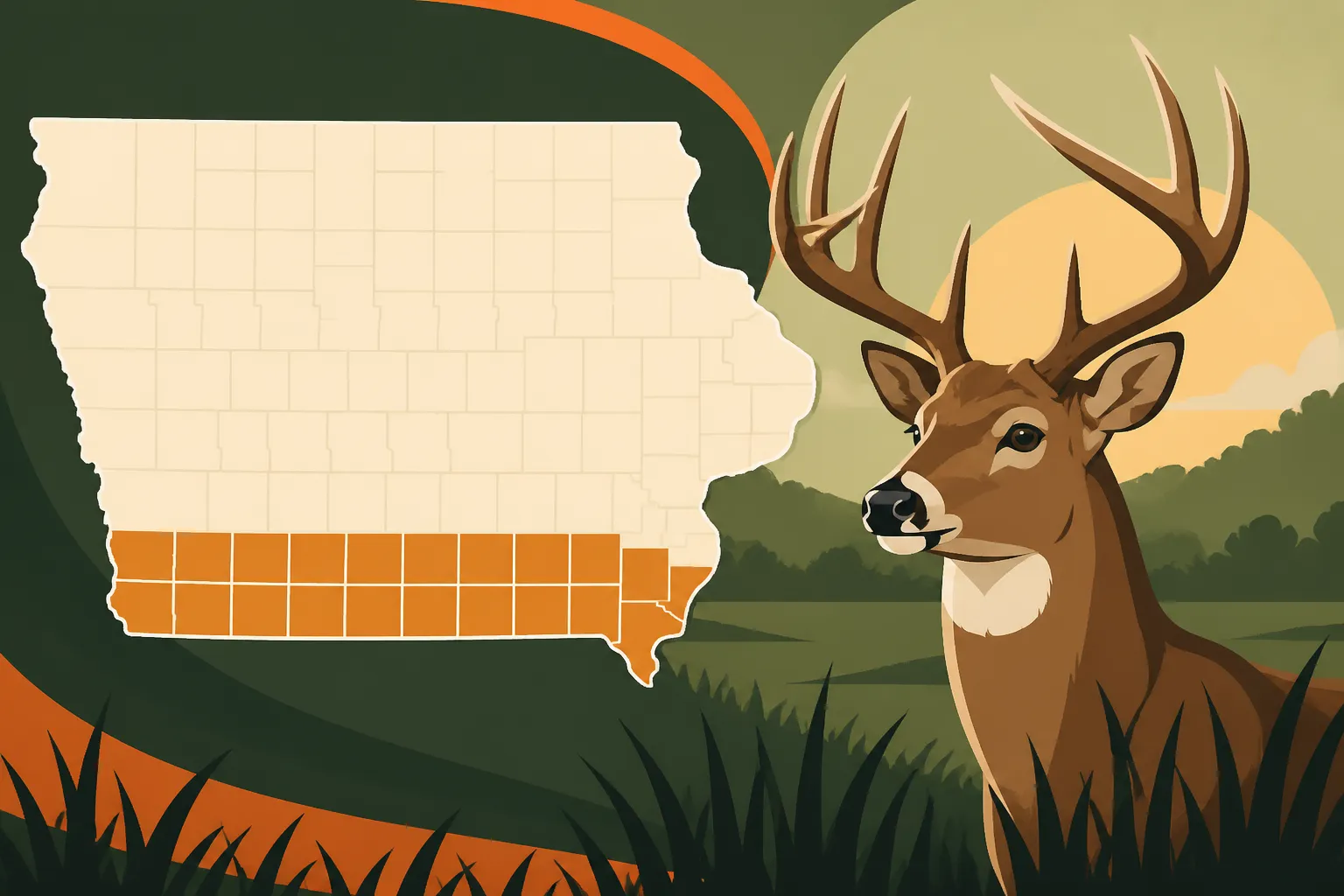
Certain southern Iowa counties consistently rank high in Boone and Crockett entries, and they are the ones most frequently discussed in hunting circles. Counties like Appanoose, Monroe, Lucas, Wayne, Decatur, Davis, and Van Buren are almost legendary. Appanoose County, for example, is famous for producing world-class bucks, including the incredible Tony Lovstuen non-typical. These counties share common traits: large expanses of timber, particularly along river and creek systems, and a high percentage of fertile agricultural land. The rolling topography creates natural funnels and bedding areas that are difficult for hunters to access, providing sanctuaries for mature deer.
These hotbeds often have a long history of landowners practicing QDM, which has allowed the deer herd to flourish and bucks to reach maturity. However, this notoriety also comes with increased hunting pressure, especially on public lands or smaller private parcels. Nonresident hunters often focus their applications on these specific counties, driving up the number of preference points required to draw a coveted tag. For nonresidents, understanding Iowa Preference Points and How They Work is crucial for these areas. Success here often means meticulous scouting, securing quality access, and being prepared to hunt pressured deer.
Hidden Gems: Counties with Less Pressure but Great Potential
While the aforementioned counties are deservedly famous, looking a little further afield can sometimes yield excellent results with potentially less competition. Counties like Jefferson, Henry, Washington, and even parts of Clarke or Union, while perhaps not as widely celebrated for their record-book entries, still possess excellent habitat and the potential for mature deer. These counties might have slightly less contiguous timber or a different mix of agriculture, but they can offer fantastic hunting, particularly if you're willing to do your homework.
The advantage of these "hidden gems" is often lower hunting pressure. This can translate to more natural deer movement, bucks that are less wary, and easier access to private land if you're able to knock on doors. A hunter willing to put in the time scouting these areas, utilizing tools like onX Hunt to identify unpressured timber blocks or overlooked habitat pockets, can often find success comparable to the more famous counties without facing the same level of competition. It's about finding those less obvious areas that still provide ample food, water, and cover, which are the fundamental requirements for big deer.
Analyzing Trophy Potential Versus Hunter Opportunity
When selecting a southern Iowa county, it's vital to weigh the absolute trophy potential against the actual hunter opportunity. A county might have an amazing reputation for monster bucks, but if the public land is extremely limited and private land access is impossible to secure, your opportunity to actually hunt those deer might be low. Conversely, a county with a slightly less flashy reputation might offer more public land options, easier private land permission, or simply more available deer, increasing your opportunity for a successful hunt, even if the average antler size is slightly lower.
| County Type | Trophy Potential | Hunter Opportunity | Typical Characteristics | Key Consideration |
|---|---|---|---|---|
| B&C Hotbeds | Very High | Moderate to Low | Extensive timber, fertile ag, strong QDM ethos | High pressure, difficult access, point heavy draw |
| Hidden Gems | High | Moderate to High | Diverse habitat, good ag, less concentrated timber | Less pressure, easier access, more available tags |
| Fringe Counties | Moderate to High | High | Patchy timber, good ag, often closer to urban areas | Can offer good local hunting, but less consistent |
For many, the goal is simply to harvest a mature whitetail, regardless of whether it makes a record book. In that scenario, focusing on counties that offer greater access and less pressure, even if they aren't the absolute top for B&C entries, often makes more sense. Researching Deer Density by Iowa County can provide insights into local herd numbers, which directly impacts opportunity. It’s a balance between ambition and realism, and sometimes, the best hunt is the one where you actually get to put your boots on the ground in a promising spot.
Navigating Public and Private Land Access
Access is arguably the biggest challenge for hunters in southern Iowa, particularly for nonresidents. With a vast majority of land being privately owned, understanding your options and developing a strategy for securing hunting ground is paramount.
Public Land Options and Their Challenges
While Iowa is largely a private land state, there are still significant public hunting opportunities in the southern counties, primarily through State Forests, Wildlife Management Areas (WMAs), and the Iowa Habitat and Access Program (IHAP) lands. State forests like Stephens State Forest or Shimek State Forest, found in the southern tier, offer large, contiguous blocks of timber that can hold tremendous deer. These areas, however, tend to see significant hunting pressure, especially during gun seasons and the first few weeks of archery season. To be successful, you need to be willing to walk further, delve into overlooked pockets, and understand Hunting Pressure Patterns on Iowa Public Land.
IHAP lands are another fantastic option. These are private lands that landowners open to public hunting through an agreement with the Iowa DNR, providing "walk-in only" access. They are often smaller tracts, but can be diamonds in the rough, offering prime habitat with less pressure than larger WMAs if you pick the right ones. The key to public land success in southern Iowa is thorough e-scouting with tools like onX Hunt to identify potential bedding areas, travel corridors, and access points that might deter other hunters. Then, follow up with boots-on-the-ground scouting before the season, keeping in mind portable stand rules on Iowa public ground or Overnight Stand Storage on Public Ground.
Strategies for Gaining Private Land Permission
For many, the ultimate goal in southern Iowa is private land access. With about 97% of Iowa being privately owned, a successful hunt often hinges on securing permission from a landowner. This isn't easy, and it requires persistence, respect, and often, a bit of luck. The most effective strategy often involves directly asking landowners for permission well in advance of the season. Start early, ideally in late winter or early spring after deer season closes, when farmers are less stressed with planting or harvest.
A face-to-face conversation is always best. Be polite, dress neatly, and offer to help with chores if appropriate. Highlight your respect for their property, your commitment to safety, and your willingness to hunt specific does if they have crop damage issues. Asking an Iowa Landowner for Permission can be intimidating, but a respectful approach can go a long way. Building a relationship, rather than just asking for a place to hunt, can lead to long-term access. Remember that many landowners in southern Iowa are themselves hunters or have family who hunt, so approaching them as a fellow outdoors enthusiast can sometimes open doors.
Leveraging Technology for Access
In today's hunting landscape, technology is an indispensable tool for finding and evaluating hunting areas, especially in southern Iowa. Mapping applications like onX Hunt are game-changers. They allow you to instantly identify property boundaries, landowner names, public land parcels, and various habitat features, all from your phone or computer. Before you even set foot in the state, you can e-scout potential timber blocks, identify creek drainages, and locate those crucial inside corners of crop fields.
Using the layers available on platforms like onX Hunt, you can overlay topographical maps with aerial imagery to pinpoint saddles, benches, and thick bedding cover. This is especially useful for targeting specific travel corridors for Hunting Saddles and Pinch Points in Rolling Timber or finding those subtle terrain features that can concentrate deer. For those considering a nonresident tag, GoHunt can provide valuable insights into draw odds and unit breakdowns, helping you make informed decisions about where to apply your hard-earned preference points. These tools don't guarantee success, but they significantly reduce the guesswork and allow you to make the most of your limited time in the field.
Key Habitat Features to Scout in Southern Iowa
Southern Iowa's deer population thrives because of its diverse and abundant habitat. Knowing what to look for, both on a map and on the ground, can drastically improve your chances of locating and patterning mature whitetails. It's all about understanding how deer use the landscape to their advantage.
Timbered River Bottoms and Creek Corridors
Perhaps the most iconic and productive habitat feature in southern Iowa is its extensive network of timbered river bottoms and creek corridors. These areas are magnets for deer for several crucial reasons. First, they provide excellent security cover, often consisting of mature hardwoods mixed with dense undergrowth, making it difficult for hunters to penetrate silently. Second, they act as natural travel corridors, allowing deer to move significant distances undetected, connecting bedding areas to food sources. Third, these low-lying areas often offer stable food sources, from mast crops like acorns in the timber to browse along the edges, and access to water, particularly during dry spells.
When scouting these areas, pay close attention to where smaller drainages or finger ridges meet the main river or creek bottom. These junctions often create natural funnels or pinch points where deer movements are concentrated. Look for heavily used trails, rub lines, and scrapes along these edges. In larger river systems, islands and sandbars can also be overlooked bedding areas, especially if they offer thick cover. Learning how to effectively scout these areas is key, and resources like Scouting Iowa Timber and River Bottoms can offer more in-depth advice.
CRP Fields and Thick Security Cover
Beyond the timber, Conservation Reserve Program (CRP) fields are another critical habitat component in southern Iowa. These fields, often planted with tall native grasses and wildflowers, provide incredible bedding and fawning cover. They act as dense, impenetrable sanctuaries where deer can feel safe from predators and human disturbance. Mature bucks, in particular, will often bed down in CRP fields during the day, emerging at dusk to feed in adjacent crop fields or move through the timber.
The challenge with CRP is that it's often so thick that it's difficult to hunt effectively, especially without bumping deer. The trick is to identify the edges, corners, and slight elevation changes within these fields that funnel deer movement. Look for areas where a timber edge meets a CRP field, or where a slight depression in the field creates a natural travel lane. In some cases, a small brushy draw or a line of cedars cutting through a large CRP expanse can serve as a primary bedding location. Understanding CRP Grass and Where Bucks Bed can help you interpret these subtle cues. E-scouting can reveal the contours and access points around these fields, helping you plan entry and exit routes that minimize disturbance.
Food Sources: Ag Fields and Mast Crops
Southern Iowa is defined by its agriculture, and corn and soybean fields are the primary food sources for deer for much of the year. During the early season, deer will readily feed on standing soybeans, which are high in protein, and transition to corn as it matures. After the harvest, the waste grain left in these fields becomes a crucial energy source, especially as winter approaches. Identifying actively used feeding areas, particularly those adjacent to thick cover, is a fundamental part of scouting. Look for heavily traveled trails leading from bedding areas into crop fields, and pay attention to which fields are being frequented.
However, don't overlook natural food sources, particularly mast crops like acorns. In years of heavy acorn production, deer will often prioritize these over agricultural crops, especially in the timbered areas. Pinpointing active oak groves can be a game-changer, as deer will often abandon crop fields for a prime acorn drop. During the late season, after crops are harvested and acorns are gone, persistent standing corn fields or winter food plots become absolute magnets for deer, making them prime hunting locations. Recognizing these seasonal shifts in food preference is vital for successful hunting. Late-Season Food Source Hunting in Iowa specifically covers this.
Hunting Strategies Tailored for Southern Iowa
Hunting in southern Iowa requires adaptability and a deep understanding of whitetail behavior as the seasons progress. What works in early October might be completely ineffective in mid-November or late December. Developing a season-long strategy will maximize your chances of success.
Early Season: Focusing on Food and Water
The early archery season in southern Iowa, typically in October, can be warm and the deer patterns are often heavily dictated by food and water. Bucks are still largely in bachelor groups or just starting to disperse, and their primary focus is on feeding to build reserves for the upcoming rut. Prime locations often involve hunting over lush soybean fields, particularly those with a gradual slope or inside corner where deer feel secure entering. Water sources, like small ponds or creek crossings, can also be dynamite spots, especially during dry periods. Early-Season Bowhunting Over Water highlights the importance of this resource.
The key to early season success is to be as low-impact as possible. Deer are still very predictable in their movements between bedding and feeding, but they are also less accustomed to hunting pressure. Get in and out cleanly, paying close attention to wind direction to avoid blowing your scent into bedding areas. Hang stands well in advance if possible, or use mobile sets, to minimize disturbance. This is also a great time to implement trail cameras (respecting Trail Camera Rules on Iowa Public Land) to pattern specific bucks before the rut scrambles their predictable movements.
The Rut: Intercepting Cruising Bucks
The Iowa rut is legendary, and for good reason. From late October through mid-November, buck activity explodes as they actively search for does. This is the time when those big, reclusive bucks become vulnerable, often moving during daylight hours in areas they wouldn't normally frequent. During the peak of the rut, roughly the first two weeks of November, strategies shift from strictly food-focused to intercepting cruising bucks. When the Iowa Rut Peaks is a critical piece of knowledge for any Iowa hunter.
Prime rut locations include saddles, pinch points between timber blocks, creek crossings, and field edges that bucks use as travel corridors while scent-checking for does. Calling tactics, such as rattling and grunting, can also be highly effective during this period. Setting up mock scrapes or using scent lures can draw in curious bucks. The most successful hunters during the rut are often those who spend all day on stand, as buck activity can be sporadic and unpredictable, with a big deer potentially showing up at any hour. This is also a prime time for mobile hunting with a saddle, allowing you to quickly move and adapt to deer movement.
Late Season: Adapting to Cold and Limited Food
After the rut winds down and especially after the shotgun seasons conclude in mid-December, late season hunting in southern Iowa presents a different set of challenges. Deer are often pressured, recovering from the rut, and now primarily focused on finding reliable food sources to survive the winter. The landscape has also changed, with most crops harvested and natural food sources dwindling.
The best late-season strategy revolves around identifying the most appealing, undisturbed food sources. This often means focusing on unharvested standing corn fields, secluded food plots, or thick browse in dense timber. Thermal cover also becomes critical, and deer will often bed on south-facing slopes or in dense cedar thickets to escape the cold winds. Hunters need to adapt their clothing for extreme cold, practicing Staying Warm on a December Sit, and often employ different tactics, such as hunting from well-brushed ground blinds on the edge of prime food sources. Long-range glassing from a distance can help pinpoint activity without pressuring deer. The deer that are left are smart, so stealth, patience, and a keen eye for subtle food and cover advantages are paramount.
Disclaimer
This article is for general informational purposes only and does not constitute professional advice. Laws, prices and regulations vary by location and change over time. Consult a qualified professional for guidance on your specific situation.