Motorised Access on Iowa Wildlife Areas
Navigating public hunting lands in Iowa can sometimes feel like a puzzle, especially when you’re trying to figure out where you can and can’t take a vehicle. It’s a common frustration: you've got gear, maybe a treestand, or even a deer down, and the thought of an easy ride out is tempting, but the rules aren't always crystal clear. This guide is here to shed some light on the reality of motorized access on Iowa Wildlife Areas, helping you understand the regulations so you can plan your hunts effectively and avoid any unpleasant surprises.
The General Rule: Hands and Feet (Mostly)
Let's get right to it: for the vast majority of Iowa's public hunting ground, including Wildlife Management Areas (WMAs), the expectation is that you'll be accessing the property on foot. This means parking your vehicle in a designated spot and then relying on your own two feet, or perhaps a bicycle or a non-motorized cart, to get where you're going. It can be a rude awakening for those accustomed to driving right up to their hunting spots, but it's a fundamental aspect of public land hunting in the Hawkeye State.
Why the Restrictions Exist
The reasons behind these motorized access restrictions are pretty solid when you think about it. First and foremost, it’s about conservation and resource protection. Allowing vehicles to drive freely across these areas would lead to habitat destruction, soil erosion, and damage to sensitive ecosystems. Imagine a dozen trucks churning up a wetland edge or tearing through a young timber stand; it wouldn't take long before the area was ruined for wildlife and other hunters alike. The Iowa Wildlife Management Area Acres are managed with delicate balances in mind, and uncontrolled vehicle traffic disrupts those efforts.
Beyond the environmental impact, there's also the hunter experience to consider. Most public land hunters are seeking a sense of wilderness, a quiet escape from the constant hum of machines. Allowing motorized vehicles everywhere would diminish that experience, replacing the sounds of nature with engines and tires. It also helps distribute hunting pressure more evenly, encouraging hunters to venture deeper into properties rather than just sticking to easily accessible fringes. This is why tactics for Hunting Iowa Walk-In Ground Without Burning It Out are so crucial.
What "Motorized Vehicle" Means
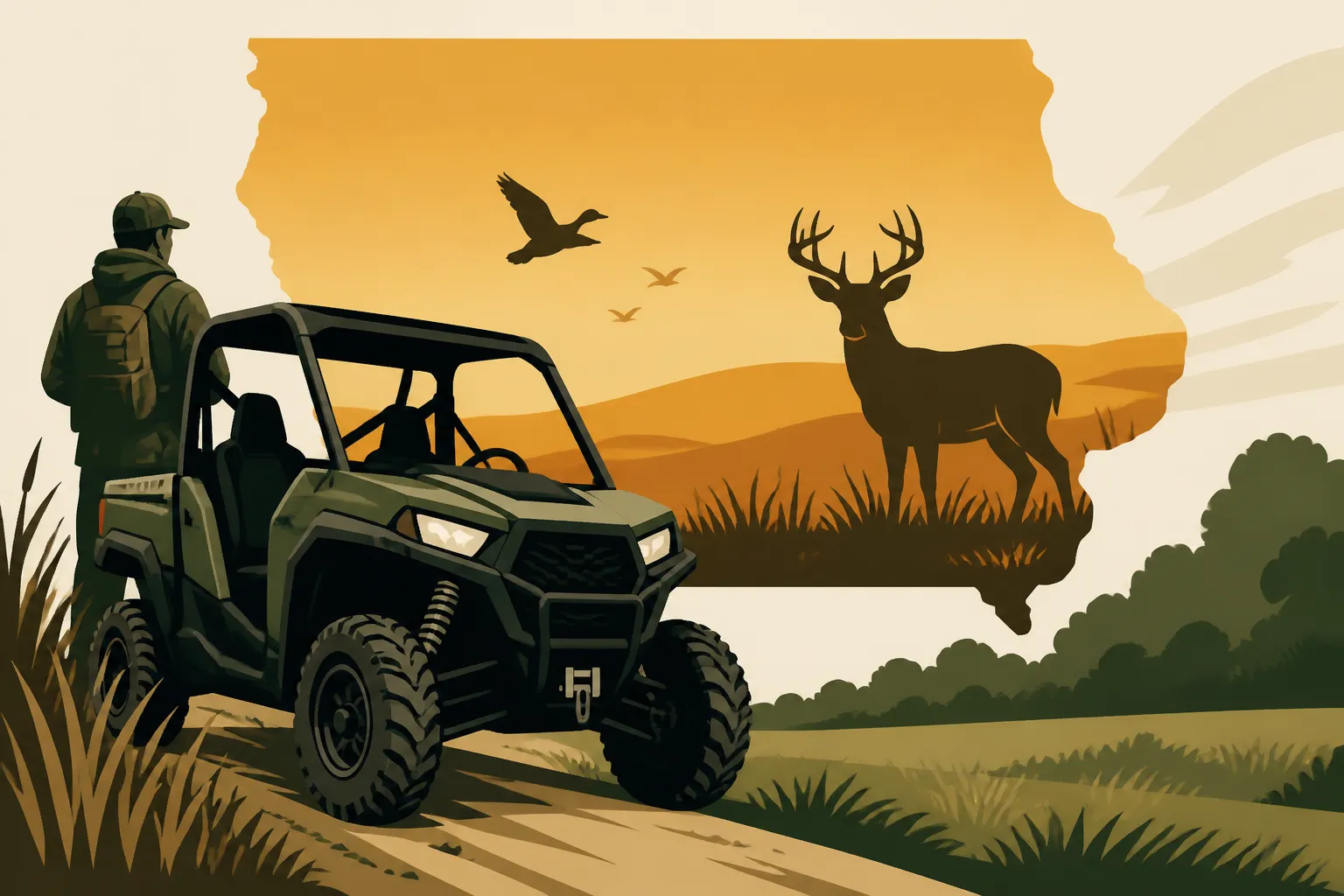
When Iowa's regulations talk about "motorized vehicles," they're generally referring to a broad category of transportation. This isn't just about your everyday pickup truck or SUV, although those are certainly included. It extends to ATVs (All-Terrain Vehicles), UTVs (Utility Task Vehicles, often called side-by-sides), dirt bikes, and even electric bicycles that provide assistance beyond a certain speed or power output, depending on the specific area and how they're classified. The key takeaway is to assume that if it has an engine or a motor and isn't specifically exempted, it's probably not allowed beyond the parking lot. Don't try to find loopholes; when in doubt, default to non-motorized access.
Permitted Exceptions and Designated Access Points
While the general rule is "no motorized vehicles beyond designated parking," there are specific exceptions and situations where limited vehicle access is permitted. These aren't free-for-alls, but rather controlled allowances designed for particular purposes.
Designated Parking Areas
This is the most common form of "motorized access" you'll encounter. Iowa's Wildlife Management Areas and other public hunting grounds almost universally feature designated parking lots or pull-offs. These areas are explicitly marked and are the only places where you can leave your vehicle. From these points, you transition to foot travel. It might seem obvious, but it's surprising how many people push the envelope, driving just a little further onto a two-track trail they shouldn't. Always err on the side of caution and use only clearly marked, established parking.
For instance, at a place like Rathbun Wildlife Area in southern Iowa, you'll find numerous gravel parking spots off the main roads, but beyond that, it's all walking. You'll need to use your map tools like the Using the Iowa DNR Hunter Atlas or onX Hunt to identify these official parking spots and plan your walk-in routes from there.
Accessible Trails for Hunters with Disabilities
Iowa does make provisions for hunters with certain disabilities, recognizing that physical limitations shouldn't completely bar someone from enjoying the outdoors. The Iowa Department of Natural Resources (DNR) may issue permits that allow eligible individuals to use an ATV or UTV on specific, designated trails within certain public hunting areas. These aren't blanket permits for all public lands, and they typically require a specific application and approval process.
If you or someone you hunt with qualifies, it's crucial to contact the Iowa DNR well in advance of your hunt to understand the exact requirements, available areas, and how to obtain the necessary permit. This is not something you can just decide to do on opening morning. There's usually a list of approved areas and specific routes where such access is permitted, and it's strictly enforced to prevent abuse.
Administrative/Maintenance Roads
You might occasionally see what looks like a well-maintained gravel or dirt road leading off into a WMA, perhaps with a gate. These are typically administrative or maintenance roads, used by DNR staff or authorized contractors for managing the property – think prescribed burns, habitat work, or monitoring wildlife. They are almost universally off-limits to the public for motorized access.
Even if a gate is open, or it looks like others have driven down it, don't assume it's public access. These roads are integral to effective land management and keeping them free of public vehicle traffic helps ensure that operations can run smoothly without interference or damage. Always assume these are closed unless explicitly marked otherwise, which is rare.
Practical Implications for Hunters
Understanding the motorized access rules isn't just about avoiding a ticket; it fundamentally shapes how you approach your hunt on Iowa public lands. It influences everything from the gear you pack to how you handle a successful harvest.
Hauling Your Harvest: The Real Challenge
Let's be honest, this is often the biggest concern for hunters on foot-access-only land. Dropping a deer a mile or two from the truck can quickly turn a moment of triumph into an hour-long, sweat-soaked ordeal. Without a UTV to zip in and out, you need a plan.
Many seasoned public land hunters rely on game carts. These two-wheeled devices can significantly reduce the strain of dragging a deer, especially across relatively flat terrain or through open timber. However, they can still be a beast in thick cover, deep mud, or over fallen logs. For those really deep penetrations, or when facing challenging terrain like creek bottoms, quartering your deer in the field and packing it out in game bags is often the most practical solution. This is a skill worth mastering, and there are plenty of resources on efficient field dressing techniques. Check out articles like Getting a Deer Out of an Iowa Creek Bottom for tips on tricky recoveries. For general purpose hauling, read up on Deer Carts on Iowa Walk-In Ground to see what options might work for you.
| Method of Game Retrieval | Pros | Cons | Best Use Case |
|---|---|---|---|
| Dragging | No extra gear needed, simple. | Extremely physically demanding, tough on rough terrain, slow. | Short distances, relatively flat ground, small deer. |
| Game Cart | Reduces physical strain, faster than dragging. | Can be cumbersome in thick brush, narrow trails, or very uneven ground. | Moderate distances, established trails, fields, open timber. |
| Quartering/Backpacking | Easiest for long distances or rugged terrain, less visible for transport. | Requires more time in the field, extra gear (game bags, sharp knife), can be messy. | Long distances, steep hills, thick cover, creek bottoms. |
Scouting and Stand Placement
The "walk-in" nature of many Iowa WMAs profoundly impacts your scouting and stand placement strategies. You can't just drive around looking for fresh sign; you have to put in the miles on foot, much like the deer do. This means focusing on efficient Scouting Iowa Public Land Before the Opener, identifying natural travel corridors, and understanding how deer use different types of cover.
Your choice of treestand or blind will also be influenced. Heavy, cumbersome ladder stands or large ground blinds might not be practical if you have a long walk in. This is where lightweight, mobile setups shine. Many hunters opt for hang-on stands that can be quickly put up and taken down, or they embrace tactics like Mobile Saddle Hunting in Iowa which offers extreme portability and flexibility. Every ounce matters when you're carrying it a mile or more.
Understanding Maps and Boundaries
Because you're relying on foot travel, having a solid understanding of property lines and access points is paramount. This is where modern mapping applications become invaluable. Tools like onX Hunt (and others like GoHunt) provide detailed satellite imagery, property ownership overlays, and, crucially, clearly mark public land boundaries. Many of these apps also highlight designated parking areas and, in some cases, even delineate areas with special access rules.
Before you ever set foot on a WMA, spend time studying the area on your map. Identify the legal access points, map out potential routes you'll walk in, and mark any areas that might present access challenges (e.g., dense timber, creek crossings). Using onX Layers for Iowa Land Status can help you visualize the terrain and avoid inadvertently trespassing or entering a restricted zone. Planning your entry and exit routes meticulously will not only keep you legal but also make your hunt more efficient and enjoyable.
Staying Informed and Respecting the Rules
Ultimately, responsible public land hunting hinges on being well-informed and respecting the regulations in place. These rules are designed for the long-term health of the wildlife and habitat, and for the benefit of all users.
Checking Official Sources
While this guide offers a general overview, the specific rules for any given Iowa Wildlife Area can vary and may be updated. Always, always consult the official Iowa Department of Natural Resources (DNR) regulations and specific signage at the WMA you plan to hunt. The Iowa DNR website is an excellent resource, and many WMAs have kiosks at parking areas with maps and rules posted. Don't rely solely on what you think you remember or what someone else told you. A quick check of the official sources can save you a lot of hassle.
The Ethics of Public Land Use
Adhering to motorized access rules isn't just about compliance; it's about good stewardship. When we respect these guidelines, we contribute to the preservation of these precious public resources for future generations of hunters and outdoor enthusiasts. Driving where you shouldn't, even just a little bit, can damage fragile ecosystems and create negative impressions that could lead to even stricter regulations down the line.
Think about the bigger picture. When you see someone breaking the rules, it doesn't just reflect poorly on them; it reflects on all hunters. By being diligent and thoughtful in our use of these areas, particularly when it comes to vehicle access, we help ensure that Iowa's public lands remain vibrant and accessible. This commitment to conservation and ethical conduct is part of the hunting heritage we all share. It's about Leaving No Trace on Iowa Walk-In Ground and ensuring these areas remain pristine.
Disclaimer
This article is for general informational purposes only and does not constitute professional advice. Laws, prices and regulations vary by location and change over time. Consult a qualified professional for guidance on your specific situation.