Blinds and Stands on Iowa IHAP Ground
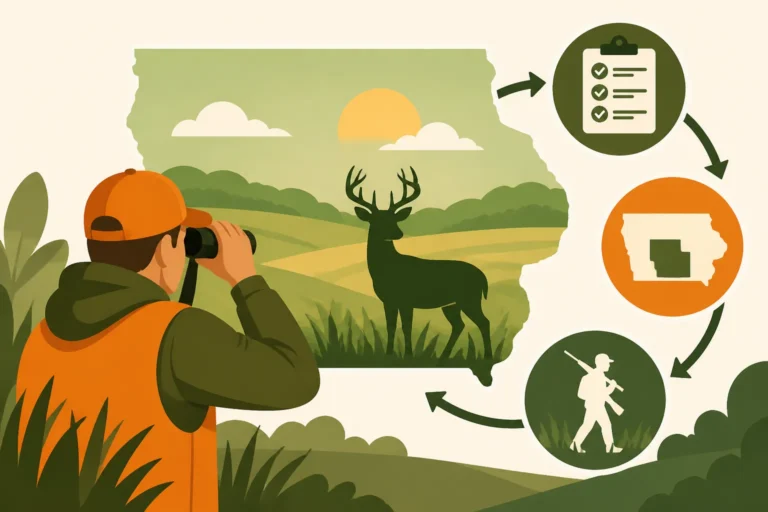
Navigating the regulations for setting up elevated treestands and pop-up ground blinds on Iowa Habitat and Access Program (IHAP) lands can feel overwhelming for both resident and out-of-state hunters. While these walk-in properties offer incredible access to private agricultural borders, strict state rules dictate how, when, and where gear can be deployed. This guide covers legal restrictions, mobile hunting strategies, gear selection, and boundary awareness so you can hunt IHAP parcels effectively without risking fines or lost equipment.
Understanding IHAP Rules for Elevated Stands and Ground Blinds
Hunting on IHAP ground is a unique privilege because these properties remain privately owned while being leased by the state for public recreational access. Because of this private-public partnership, regulations regarding equipment are enforced strictly to protect landowner relations, timber value, and wildlife habitat. Knowing how the law treats temporary structures on these tracts is the first step toward a successful hunt.
The Legal Framework for Temporary Structures on Walk-In Ground
When you step onto an IHAP tract, you are standing on private property that is managed under public hunting rules. The state agreements mandate that all gear brought onto the land must be strictly temporary. You cannot construct permanent wood platforms, nail boards into trees, or dig pits for waterfowl or deer blinds. Understanding How Iowa IHAP Works helps clarify why these properties have such rigid gear guidelines compared to traditional county or federal land.
Every stand or blind must be completely portable and capable of being removed without leaving lasting marks on the terrain. It is vital to remember that landowners still harvest timber, graze cattle, or rotate crops on adjacent acres. Installing permanent hardware or leaving trash behind damages the relationships that keep these lands open to the public.
Screw-In Steps Nails and Tree Damage Restrictions
One of the most common mistakes hunters make on public walk-in areas is using tree-damaging gear. In Iowa, any device that penetrates the bark of a tree beyond a minor surface scratch is strictly illegal on state-managed and leased lands. If you are wondering Are Screw-In Steps Legal in Iowa?, the answer is an absolute no on IHAP properties.
Screw-in steps, T-reaper hooks, screw-in bow holders, and lag bolts break the tree’s outer cambium layer. This introduces rot, reduces saw-log value for the landowner, and violates public land usage terms. Instead, hunters must rely on webbed strap-on climbing sticks, rope-attached steps, or friction-based climbing systems. Even trail cameras must be attached using fabric straps or specialized cables rather than lag screws driven into tree trunks.
Leaving Gear Overnight vs Daily Removal Rules
A major point of confusion for hunters transitioning from state Wildlife Management Areas to walk-in leases is whether gear can remain in the woods overnight. On standard state WMAs, portable stands can often be left up within specific date windows if properly tagged. However, walk-in leased lands operate under tighter constraints. Reviewing Portable Stand Rules on Iowa Public Land and Overnight Stand Storage on Public Ground before setting out ensures you stay on the right side of the law.
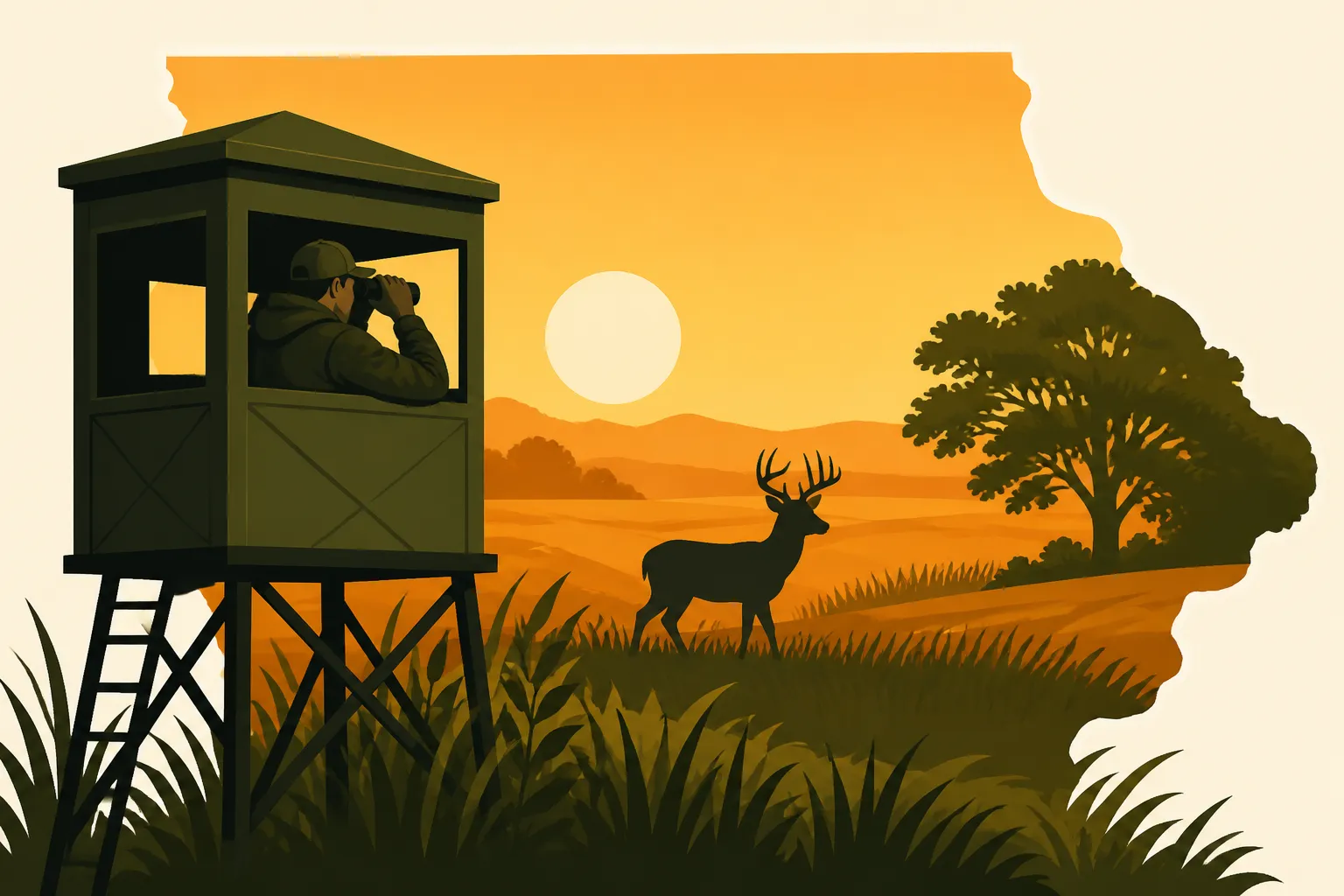
On many IHAP properties, leaving stands or blinds overnight is either heavily restricted or entirely prohibited depending on specific county agreements and seasonal guidelines. Even where overnight placement is permitted during peak seasons, stands must be tagged with your DNR customer number and cannot be left indefinitely. As a safe practice, adopting a daily pack-in, pack-out mobile strategy prevents theft, avoids landowner friction, and guarantees you are compliant everywhere you hunt.
TABLE PLACEHOLDER – REPLACED WITH GITHUB PIPE TABLE BELOW
| Setup Type | Portability | Tree Damage Risk | Best Used For | Regulations to Keep in Mind |
|---|---|---|---|---|
| Hunting Saddle | High (5–8 lbs) | None (Strap-on sticks) | Deep timber, pinch points, river bottoms | Must use strap-on climbing steps; no screw-in gear. |
| Lightweight Hang-On | Moderate (10–15 lbs) | Low (Strap attachment) | Pre-scouted funnels, funnel edges | Requires DNR ID tag if left during permitted hours. |
| Pop-Up Ground Blind | Moderate (12–18 lbs) | None | Standing corn edges, CRP borders | Natural brushing only; do not cut live trees or crops. |
| Ladder Stand | Low (30–60+ lbs) | Low (if strapped properly) | Long-term sits (where permitted) | Highly visible; risky on walk-in land due to overnight rules. |
Choosing the Right Mobile Stand and Blind Setup for IHAP Parcels
Because IHAP tracts vary from small twenty-acre grass corners to multi-hundred-acre timber bottoms, flexibility is key. Carrying heavy, cumbersome ladder stands or bulky fixed-position setups down long walk-in access corridors quickly drains your energy and limits your ability to adjust to wind shifts.
Saddle Hunting and Lightweight Hang-On Systems
For the public land bowhunter targeting rolling timber or narrow creek corridors, mobile saddle setups have revolutionized how hunters approach walk-in land. Saddle Hunting on Iowa Public Land allows you to pack your entire elevated setup in a single standard backpack. Combined with lightweight aluminum climbing sticks secured with rope or webbing, a saddle setup leaves zero trace on the tree and takes under ten minutes to set up quietly.
If you prefer a traditional platform under your boots, a ultra-lightweight aluminum hang-on stand combined with quick-attach straps offers a similar advantage. The goal is to remain agile. When field sign indicates deer have shifted their travel from picked bean fields to interior white oak ridges, a mobile setup allows you to move immediately without making multiple noisy trips back to your truck.
Brushing In Ground Blinds Without Altering Native Habitat
Ground blinds are exceptionally effective along fence lines, standing corn, and tall grass patches. However, setting up a ground blind on walk-in land requires a cautious approach to habitat modification. You cannot clear shooting lanes by cutting down live limbs, saplings, or agricultural crops owned by the farmer.
When Brushing In a Ground Blind, rely exclusively on dead, downed limbs, fallen branches, or surrounding native brush that has already dropped to the ground. If you are tucked into a brushy draw or a cedar thicket, weave dead limbs into the exterior straps of the hub blind to break up its geometric outline. Never cut standing timber or crop stalks to camouflage your blind. Doing so damages private property and can lead to immediate revocation of public hunting access for that tract.
Navigating Access Rules and Boundary Lines
Understanding where public access begins and ends is critical on walk-in properties. IHAP boundaries are marked with bright green signposts, but these markers are often spaced hundreds of yards apart along dense fence lines or overgrown ditches. Accidental trespass onto adjacent private ground that is not enrolled in the program is one of the most common infractions logged by conservation officers.
Before heading out, familiarize yourself with Walk-In Only Access on IHAP Ground guidelines. All vehicles must remain in designated parking pull-offs or public road ditches; driving trucks, ATVs, or UTVs onto the property to drop off heavy ground blinds or treestands is strictly illegal. Every piece of equipment you intend to use must be hand-carried or carted in from the designated entry point.
Practical Strategies for Locating and Setting Up on IHAP Parcels
To maximize your time on walk-in properties, your scouting and setup strategies must align with local deer movement and hunter pressure patterns. Because these properties are open to the public, deer on IHAP tracts quickly adapt to human intrusion.
E-Scouting Crop Edges Ditches and CRP Interfaces
Effective mobile hunting begins at home on a screen. By using mapping applications such as onX Hunt or GoHunt, you can analyze property boundaries, elevation contours, and vegetation changes before setting foot on the parcel. Platforms like onX Hunt allow you to toggle aerial imagery overlays that highlight the distinct line where native CRP grass meets standing row crops or timbered draws.
Look for subtle funnel features like ditch crossings, narrow timbered pinch points between two fields, and inside corners of crop borders. When using GoHunt or similar satellite tools, pay close attention to access points. The areas farthest from the designated parking zones usually receive the least pressure, making them prime candidates for hanging a mobile stand or tucking in a stealthy ground blind. Combine your digital research with E-Scouting Iowa Farm Country From Home to build a primary and secondary hunting plan before opening morning.
Setting Up Near Public Limits and Private Boundary Fences
Many IHAP parcels are long, narrow strips following waterways, disused rail corridors, or field edges sandwiched between intensely managed private farms. Whitetails frequently bed on neighboring private sanctuary ground and cross onto IHAP land to feed during evening hours, or vice versa.
When setting up near a property line fence:
* Keep your stand elevated high enough to blend into the canopy without overhanging the neighbor’s property.
* Ensure your shooting lanes are strictly within the IHAP boundary.
* Never shoot across a boundary fence onto non-enrolled private land without explicit, prior permission from that landowner.
* Position ground blinds so that pop-up hubs or open window flaps do not extend across fence lines.
If a wounded deer crosses the property line onto private land not included in the program, you must obtain landowner permission before crossing the fence to retrieve it. Always keep contact numbers for surrounding landowners handy or reach out to your regional DNR conservation officer if you run into recovery issues.
Gear Maintenance Tagging and Etiquette on IHAP Parcels
Operating respectfully on walk-in ground protects the program for future seasons. Beyond legal compliance, basic public land etiquette ensures everyone experiences a high-quality hunt.
Tagging and Identifying Your Equipment Legally
If state and local regulations permit you to leave a stand or blind overnight on an IHAP tract, it must be clearly identified. Iowa law requires that any stand or blind left unattended on state-managed or leased land must display the owner’s full legal name and address, or their official DNR Customer Identification Number.
This information must be clearly legible and written on a durable, weather-resistant tag attached directly to the frame of the stand or hub of the blind. Unmarked gear is treated as abandoned property and can be confiscated by DNR staff or local wardens. Tagging your gear also protects you in the event another hunter stumbles upon your setup in the dark.
Managing Hunter Density and Respecting Existing Setups
Public walk-in ground operates on a first-come, first-served basis. Finding another hunter’s stand or ground blind in a prime pinch point can be frustrating, but handling the situation with courtesy is mandatory.
- Never disturb another hunter’s setup: Do not climb into, move, or tamper with a stand or blind that belongs to someone else.
- Have a backup plan: Always have two or three secondary stand sites selected via mapping apps like
onX Huntin case your primary spot is occupied. - Maintain distance: If you walk into a timber point and see a flashlight or an occupied stand, quietly back out and head to your secondary location without blowing out the area.
- Follow access dates: Be mindful of IHAP Walk-In Access Dates to ensure you are only present during authorized hunting windows.
By strictly practicing principles of Leaving No Trace on Iowa Walk-In Ground, removing all gear at the end of your hunt, and respecting the land, you help build a positive reputation for hunters and encourage private landowners to keep their acreage enrolled in the Iowa Habitat and Access Program for years to come.
Disclaimer
This article is for general informational purposes only and does not constitute professional advice. Laws, prices and regulations vary by location and change over time. Consult a qualified professional for guidance on your specific situation.