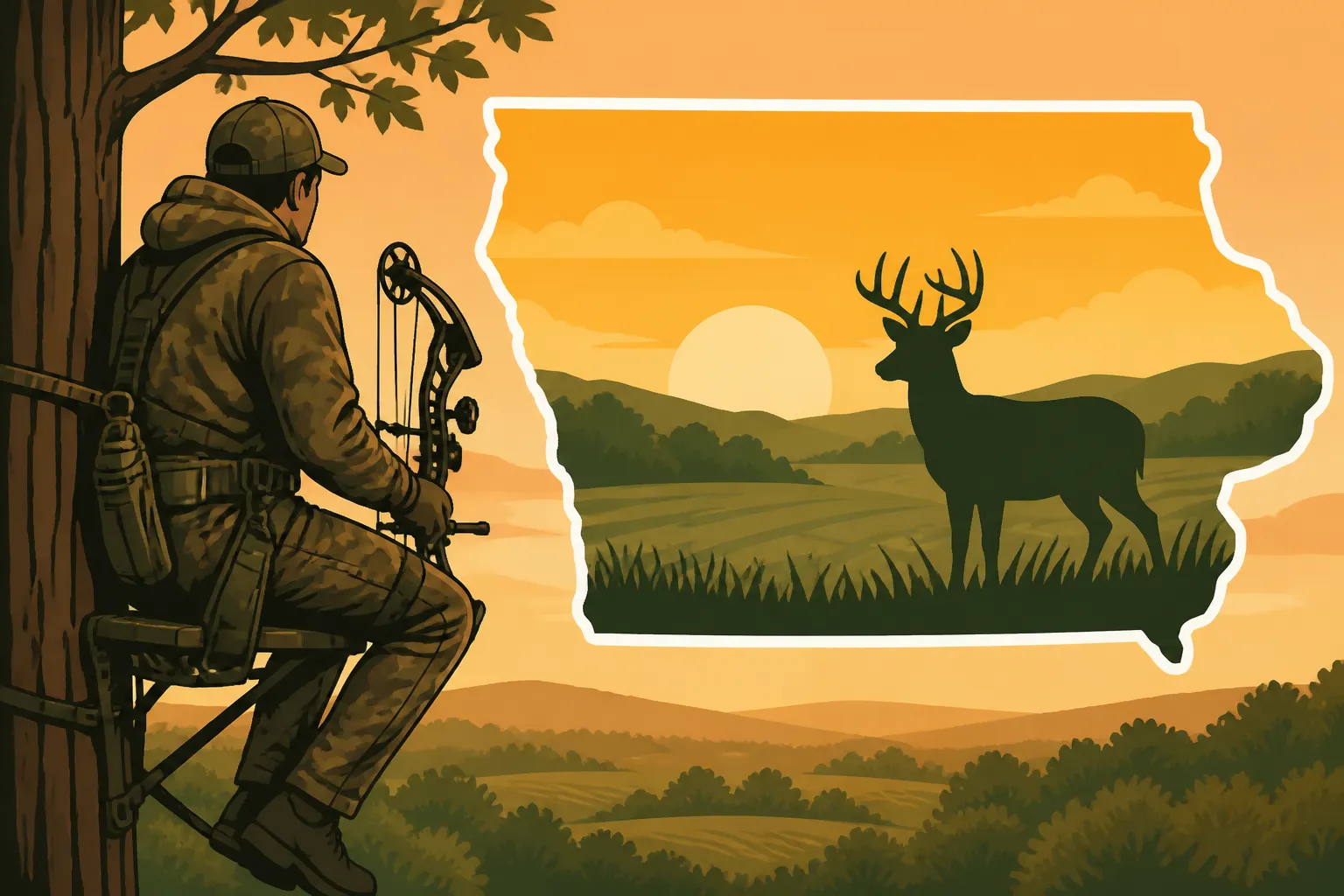
Saddle Hunting on Iowa Public Land
Hunting Iowa's public land can feel like an uphill battle. You’re often competing with other hunters, dealing with pressured deer, and struggling to find that perfect, unmolested spot. It's frustrating to hike in miles only to find someone else beat you to your favorite treestand tree. This guide dives deep into saddle hunting, a highly effective, low-impact method that gives you the agility and stealth to outsmart pressured whitetails on Iowa’s public tracts.
Why Saddle Hunting is a Game Changer for Iowa Public Land Hunters
Let's face it, traditional ladder stands or even big hang-ons can be a real pain, especially when you’re venturing onto public land. You lug them in, struggle to hang them, and then worry about leaving them out there for others to find, or worse, steal. Saddle hunting changes that entire dynamic, offering unparalleled advantages for the savvy Iowa hunter looking to beat the crowds and find success in overlooked areas. It’s not just a different piece of gear; it’s a whole different mindset.
Unmatched Mobility and Stealth
One of the biggest frustrations on public land is rigidity. You scout a spot, hang a stand, and then the deer shift their patterns, or a cold front changes everything, and you're stuck. Saddle hunting frees you from this. You're not committed to a single location. With a lightweight saddle setup, you can literally pick up and move your entire setup deeper into cover, relocate to a better wind, or chase a fresh sign without breaking a sweat. This agility means you can go where others won't, exploring those thick, nasty creek bottoms or hidden oak ridges that larger, heavier stands can’t easily reach. Imagine being able to set up in less than 15 minutes, allowing you to react to what you’re seeing in real-time. This can be critical when you're trying to avoid Hunting Pressure Patterns on Iowa Public Land.
Versatility in Tree Choice
How many times have you found the perfect deer sign—heavy rubs, fresh scrapes, hot tracks—only to look up and realize there isn't a single "treestand-friendly" tree within 50 yards? Traditional stands often require a specific tree size, shape, and limb configuration. This is where saddle hunting truly shines. Because you're facing the tree and using it for support, you can get into much smaller, more crooked, or limby trees that a traditional stand would never allow. This versatility opens up a whole new world of ambush points, letting you set up exactly where the deer want to be, not just where the trees cooperate. You can tuck yourself into dense cover, using the tree itself as additional concealment, making you practically invisible.
Reduced Public Land Impact
Iowa’s public land sees a lot of traffic, and leaving behind stands or even obvious trails can educate deer and give away your spots. Saddle hunting inherently reduces your footprint. You carry everything in and out with you, leaving no trace. This "pack in, pack out" mentality is not only good for conservation but also means you're not burning out areas by leaving your scent or equipment behind. It's a respectful way to hunt that ensures those pristine public parcels remain wild and productive for everyone. This minimal impact also directly aligns with the ethos of Leaving No Trace on Iowa Walk-In Ground, which is crucial for sustainable hunting.
Essential Gear for Your Iowa Saddle Setup
Diving into saddle hunting requires a few key pieces of gear that are different from a traditional treestand setup. Don't worry, you don't need to break the bank, but having the right tools for the job will make your hunts safer, more comfortable, and ultimately more successful. Think lightweight, silent, and efficient.
The Saddle Itself
This is the heart of your mobile setup. A hunting saddle is essentially a padded harness that you wear, allowing you to lean into the tree rather than sit directly on a platform. Look for saddles that prioritize comfort for long sits, especially in colder Iowa weather. Key features include a wide bridge that connects you to the tree (adjustable is a plus), and plenty of attachment points for your gear. Brands like Tethrd, Treehopper, and Aerohunter offer excellent options that are popular among mobile hunters. Consider one with enough storage pockets for small essentials like your rangefinder, grunt tube, or even a compact pair of binoculars. The material should be durable and quiet, resisting snags on brush as you walk in.
Climbing Methods: Sticks, Aiders, and the One-Stick
Getting up the tree is where the real work happens. Your climbing method dictates how fast and how high you can get.
- Climbing Sticks: These are the most common. Lightweight aluminum or carbon fiber sticks attach to the tree in sections, allowing you to ascend quickly. Many hunters use 3-4 sticks to get to 15-20 feet, which is often plenty high for most Iowa setups. They pack down efficiently, making them ideal for long walks. You can find detailed comparisons on options when researching Climbing Sticks Versus a Climber.
- Aiders: These are fabric loops that attach to your climbing sticks, essentially giving you an extra "step" per stick. They can significantly reduce the number of sticks you need to carry, thus cutting down weight and bulk. However, they require practice to use safely and efficiently.
- The One-Stick Method: This advanced technique uses a single climbing stick or even a lightweight climbing aid combined with a rope mod and platform to ascend the tree. It’s incredibly fast and light, but definitely has a steeper learning curve and demands more practice to master. If you’re truly looking to be minimalist and swift, exploring the One-Stick Method for Mobile Hunting could be your ultimate goal.
Ropes, Carabiners, and Safety
Safety is paramount, especially when you're operating high in a tree, often in low light or adverse weather.
- Rope Management System: You’ll need a robust rope system to connect your saddle to the tree. This typically involves a "bridge" line (from your saddle to the tree) and a "tether" line (from your saddle to a safety rated carabiner, which then connects to your climbing rope or tree strap). Quality rope that is quiet, flexible, and rated for climbing is non-negotiable.
- Carabiners: Only use climbing-rated carabiners. They are designed to withstand significant loads and have locking mechanisms to prevent accidental opening. You’ll need several for your bridge, tether, and potentially for clipping accessories to your saddle or pack.
- Safety Line/Lifeline: When setting up your sticks and getting into your saddle, you should always be tied into the tree. A separate safety line, often called a lineman's belt or bridge, secures you to the tree as you climb and place sticks. This ensures you're never unclipped from the tree at any point during your ascent or descent. Always prioritize reputable brands for all safety equipment.
Pack Considerations for Mobility
Your pack is an extension of your mobile setup. Since you're carrying all your gear in and out, you need something lightweight, streamlined, and quiet.
- Size and Capacity: A day pack in the 1500-2500 cubic inch range is usually sufficient. You’ll need space for your saddle, sticks, platform, extra layers, water, snacks, and any calls or optics. Overpacking defeats the purpose of being mobile.
- Accessibility: Look for a pack with external pockets or lash points for quick access to your sticks or water bottles. A system that allows you to quietly retrieve items from your saddle once aloft is also a huge plus.
- Weight Distribution: A good pack should distribute weight comfortably across your hips and shoulders, minimizing fatigue during those long hikes into remote corners of Iowa's public land. Brands like Mystery Ranch and Kuiu make excellent hunting packs, but there are also more budget-friendly options that perform well. Think about how your pack integrates with your saddle when walking; you don't want straps or bulk interfering with your climbing.
Strategic Deployment on Iowa Public Land
Saddle hunting isn't just about the gear; it's about the strategy behind it. On Iowa's public lands, where deer are often wary and pressured, smart deployment is what separates successful hunters from those who go home empty-handed. This means more than just finding a tree; it means understanding the landscape and the deer that inhabit it.
Reading the Terrain and E-Scouting
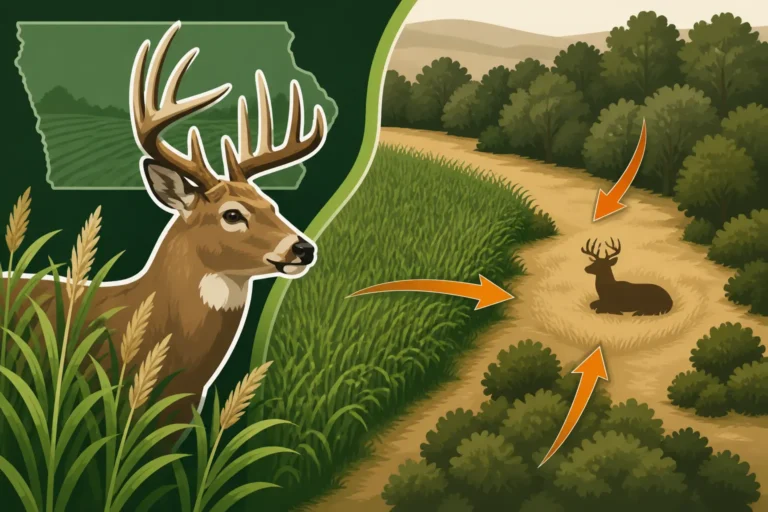
Before you ever step foot in the woods, your hunt begins at home. Utilizing tools like GoHunt maps, or other online mapping software, is crucial for E-Scouting Iowa Farm Country From Home. This allows you to identify potential travel corridors, bedding areas, food sources, and most importantly, access points that will put you in position without alerting deer. Look for pinch points, saddles, creek crossings, and subtle changes in topography. Iowa's landscape, with its mix of timber, CRP, and agricultural fields, often creates predictable deer movement patterns. A river bend, a narrow timber finger between two fields, or a secluded brush pile can act as natural funnels that deer use daily. Pay close attention to how deer might move with prevailing winds and thermals in these areas.
Picking the Right Tree
This is where the versatility of the saddle really shines. Forget those perfectly straight, limbless giants required for a traditional stand. With a saddle, you can gravitate towards more unconventional trees that offer better concealment or a strategic shooting lane.
- Concealment: Choose a tree with a decent amount of cover, whether it's evergreen branches, thick canopy, or a cluster of smaller saplings around it. Your goal is to break up your outline, making you blend seamlessly into the background.
- Shooting Lanes: While concealment is important, don't sacrifice clear shooting lanes. Once you're up the tree, you can use a small hand saw or pruners to create a few vital lanes, but try to minimize cutting. Aim for 360-degree shooting opportunities if possible, as deer on public land can come from anywhere.
- Wind and Thermals: Always consider the wind direction relative to your chosen tree and the anticipated deer movement. In Iowa, especially in river bottoms or hilly areas, thermals can play a significant role. Warm air rises in the morning, and cool air falls in the evening. Position yourself accordingly to keep your scent out of known bedding and travel areas.
Setting Up Quietly and Efficiently
The speed and quietness of your setup are critical, especially when you're moving in on a fresh sign or trying to beat the sunrise.
- Practice, Practice, Practice: The more you practice setting up your saddle and sticks in your backyard, the faster and quieter you'll become in the field. Muscle memory is your friend here. Work on minimizing any metal-on-metal noise and develop a consistent sequence for attaching your sticks and tether.
- Pre-Set Equipment: Have your sticks and saddle organized in your pack so they can be deployed quickly. Consider using bungee cords or straps to keep sticks from clanking together during your walk-in.
- Approach: When approaching your chosen tree, move slowly and deliberately, paying attention to leaf litter and broken twigs underfoot. Many times, your setup will occur in near darkness, so having a good headlamp with a red light option is essential. Once you're at the tree, work methodically, keeping noise to an absolute minimum. Remember, any sound you make carries much further in the stillness of the pre-dawn woods.
Navigating Iowa's Public Land Regulations with a Saddle
Hunting public land in Iowa comes with specific rules and regulations, and saddle hunting is no exception. Understanding these nuances is vital to avoid fines, ensure ethical hunting, and maintain access for everyone. The Iowa Department of Natural Resources (DNR) publishes a comprehensive hunting and trapping guide each year, which should be your first point of reference.
Portable Stand Rules
In Iowa, on most public hunting grounds managed by the DNR, portable stands are generally permitted, but with strict rules. The key word here is "portable."
- Removal Requirements: This is critical: portable stands, including saddle setups, must be removed from the tree and the property at the end of each hunting day. You cannot leave your climbing sticks, platform, or saddle components in a tree overnight. This regulation is in place to prevent damage to trees, minimize litter, and ensure equitable access for all hunters. Failing to remove your gear can result in citations or confiscation of equipment. For detailed information, consult Portable Stand Rules on Iowa Public Ground.
- Tree Damage: While saddle hunting is generally low-impact, using screw-in steps or certain types of climbing sticks can cause damage to trees. The DNR prohibits any activity that causes permanent damage to trees on public lands. This means no screwing anything into trees, no cutting large limbs, and no using climbing methods that girdle the tree bark. Stick to strap-on climbing aids and platforms that leave the tree unharmed.
Leaving No Trace
The principle of "Leave No Trace" is not just good outdoor etiquette; it’s often codified into public land rules. With a saddle setup, it’s relatively easy to adhere to this, but it requires mindfulness.
- No Permanent Alterations: Beyond not damaging trees, avoid making permanent alterations to the hunting area. This includes things like cutting extensive shooting lanes, marking trees with paint or ribbon (unless explicitly allowed for surveying or official purposes), or leaving trash. Your goal should be that once you leave, no one would know you were there. This is a core tenet discussed in Leaving No Trace on Iowa Walk-In Ground.
- Scent Control: While not a "trace" in the physical sense, being mindful of your scent is also part of reducing your impact. Thorough scent control practices, from showering with scent-free soaps to wearing clean hunting clothes, helps reduce your presence and keeps deer from associating human activity with their core areas.
Property Lines and Access
Public land in Iowa is often interspersed with private land, and knowing where one ends and the other begins is paramount to staying legal.
- Mapping Apps: This is where digital mapping tools like GoHunt or onX Hunt become invaluable. Use these apps to clearly identify public/private land boundaries. They often color-code parcels, making it easy to see where you can legally hunt and where you need permission.
- Accidental Trespass: Even an accidental trespass can lead to issues. If your climbing stick inadvertently crosses a property line, or if your retrieved animal crosses onto private ground, you could be in violation. Always err on the side of caution. If there's any doubt about a boundary, choose a different spot.
- Access Routes: Pay attention to how you access public land. Some public tracts might be landlocked or only accessible via specific easements. Ensure your chosen Access Routes That Do Not Bump Deer are also legal access points.
A Typical Public Land Saddle Hunt Scenario
Let's walk through a common scenario for a saddle hunter tackling Iowa's public land. Picture this: it’s late October, the pre-rut is heating up, and you’ve identified a promising timber point bordering a picked cornfield using GoHunt’s aerial imagery and topography layers. This funnel looks like the perfect spot for cruising bucks.
The Pre-Dawn Walk-In
Your alarm chirps at 4:30 AM. You’ve checked the wind for the tenth time – a consistent northwest, ideal for slipping into your chosen timber point. Your pack is ready, saddle, sticks, and platform already attached and cinched down. After a quick, scent-free shower and a light breakfast, you’re out the door. The truck ride is quiet, the anticipation building. You park in a designated public parking area, far from your intended setup spot to minimize any early morning disturbance. Your headlamp on its red light setting, you begin the mile-long walk in, following a faint deer trail along the field edge, mindful of every step to avoid snapping twigs. You know from your scouting there’s a small creek bottom you need to cross, and your plan is to use that to mask your entry scent.
Quick, Quiet Setup
As you near the timber point, the glow of dawn begins to paint the eastern sky. You pick out a sturdy oak, not too large, with a few low-hanging limbs that will offer great concealment. Crucially, this tree sits exactly where the deer trail bottlenecks down to cross a small drainage. You slowly unstrap your sticks and platform. First, your lineman's belt goes around the tree, securing you for the climb. The first stick goes on, then the second. You ascend silently, placing your platform and then securing your tether to the tree at your desired hunting height, around 18 feet. In less than 15 minutes, you’re clipped in, comfortable in your saddle, and ready. The sun is just starting to peek over the horizon, casting long shadows. You’ve done it before first light, a huge advantage on pressured public ground.
Adapting to Deer Movement
The first hour is quiet, just the rustle of leaves and the chirp of early birds. Around 7:30 AM, you catch movement downwind – a doe and two fawns, browsing casually, completely unaware of your elevated presence. They pass through, and you confirm your wind advantage. Suddenly, a flicker of white in the distance. Through your binoculars, you spot a mature buck, nose to the ground, crossing the cornfield and heading directly toward your timber funnel. He’s scent-checking, looking for does.
This is where the saddle's flexibility is key. If that buck were to slightly alter his path, your 360-degree range of motion in the saddle would allow you to pivot, lean, and find the perfect shot angle without making any creaking noises or unnatural movements. You silently draw your bow, letting the buck walk into your shooting lane. He stops, raises his head, and lets out a soft grunt. You seize the moment. Your arrow flies true. The buck bolts, and you track him with your eyes until he crashes a short distance away in a thicket. You remain still, taking a moment to compose yourself, appreciating the successful culmination of stealth, strategy, and mobile hunting.
| Climbing Method | Advantages | Disadvantages | Ideal For |
|---|---|---|---|
| Climbing Sticks | Fast, relatively easy to learn, secure. | More weight/bulk than one-stick or ropes. | Most saddle hunters, consistent height, varying tree types. |
| One-Stick Method | Extremely lightweight, minimalist, fast once learned. | Steep learning curve, requires practice and confidence. | Experienced mobile hunters, long walks, small trees. |
| Rope Access System | Very lightweight, adaptable to any tree. | Longest setup time, most difficult to master, requires knots. | Ultra-light backpackers, very specific trees, advanced users. |
| Ladder Sticks | Very stable, easy climbing, good for beginners. | Heaviest, bulkiest, least mobile, noisy. | Fixed sets, close to vehicle access, less suitable for public land mobility. |
Remember, your success will largely depend on your ability to Scouting Iowa Public Land Before the Opener effectively and then adapt on the fly, a core strength of saddle hunting.
Disclaimer
The information provided in this guide is for general informational purposes only and does not constitute legal advice. Hunting regulations, seasons, and licensing requirements in Iowa can change. Always consult the most current Iowa Department of Natural Resources (DNR) hunting regulations and local ordinances before engaging in any hunting activity. Safety is paramount; ensure all equipment is used correctly and maintained, and always hunt with a clear understanding of your surroundings and local laws.