Wind and Thermals in River Breaks
Hunting in Iowa's river breaks can be absolutely maddening when it comes to predicting wind. Just when you think you've got it figured out, the air currents start swirling, blowing your scent right to where that big buck is bedded. This guide dives deep into the complex world of wind and thermals in these tricky river bottom environments, helping you understand how air moves so you can make smarter, more successful hunting decisions.
Understanding the Basics of Wind and Thermals in River Breaks
River breaks are unique topographical features that create their own microclimates when it comes to air movement. It's not just about what the weather app tells you for the "wind direction." In these areas, elevation changes, timber density, and the presence of water all combine to create swirling, unpredictable currents that can leave even seasoned hunters scratching their heads. Getting a handle on the fundamental forces at play is your first step to mastering these challenging hunting grounds.
True Wind Versus Thermal Current
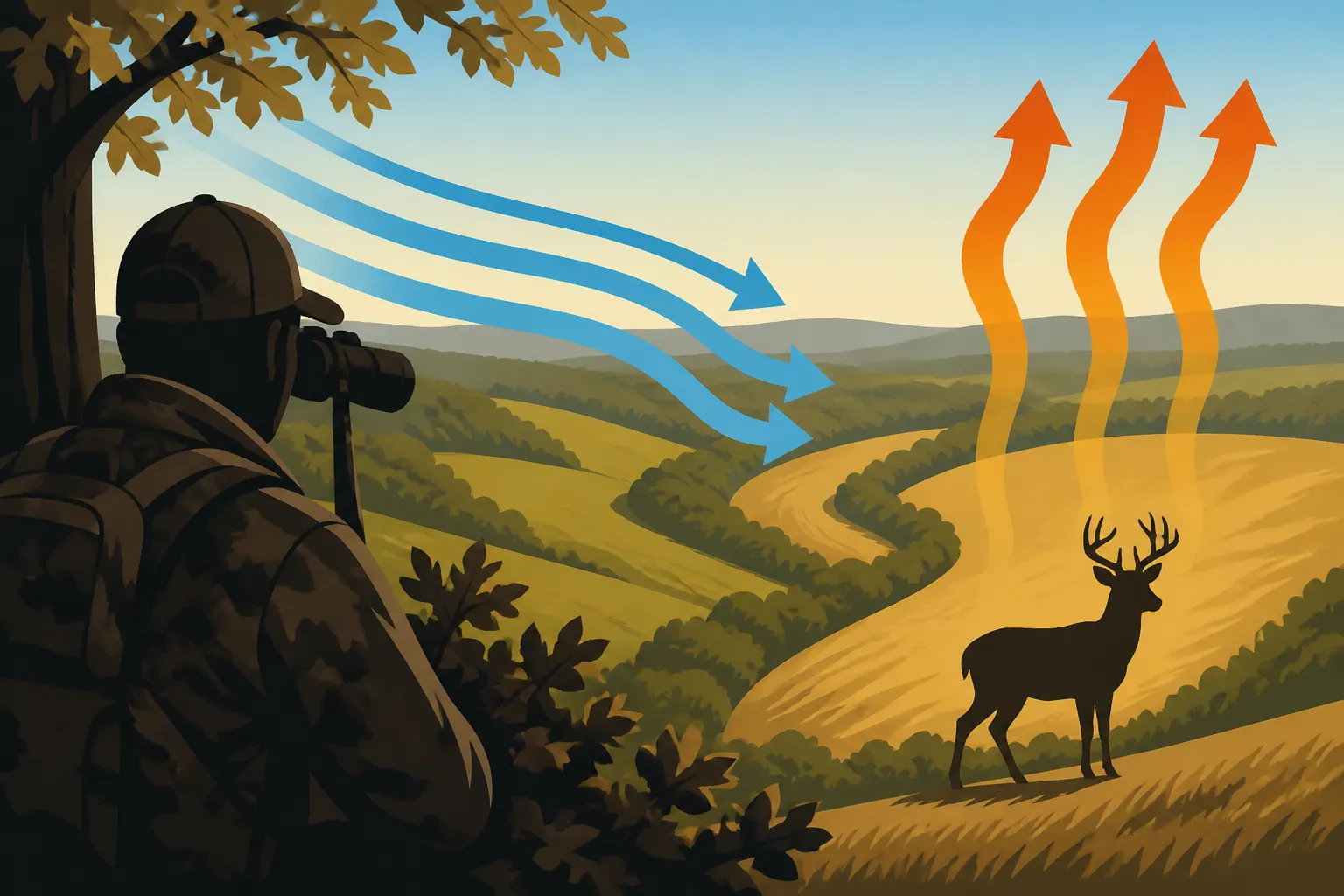
When we talk about wind, most of us think about the broad, regional air movement reported by meteorologists. This is your "true wind," the prevailing breeze influenced by large-scale weather patterns. However, in river breaks, you're dealing with something far more localized: thermal currents. Thermals are essentially localized air movements driven by temperature differences. As the sun rises, it warms the ground, causing air to rise (an "upslope thermal"). As the sun sets, the ground cools, and air descends (a "downslope thermal"). The frustrating part? These thermals can completely override or at least heavily influence the true wind, especially in the mornings and evenings, leading to incredibly unpredictable scent dispersal. It's not uncommon to feel a strong westerly wind at ridge-top, only to have your scent getting blown uphill from the creek bottom an hour later due to a strong thermal.
The "Thermal Belt" Phenomenon
One of the most elusive and often misunderstood aspects of hunting river breaks is the "thermal belt." This isn't a physical place but rather a zone within the topography where air masses often become stable and stagnant for periods, typically after thermals have risen or fallen. In river breaks, these thermal belts often occur on benches or specific elevations along a hillside where the upslope or downslope thermal dissipates or slows down. Deer, being the incredible masters of their environment they are, often bed in these thermal belts. Why? Because the air movement is minimal, their scent doesn't carry far, offering a built-in layer of protection. This means that even with a "perfect" true wind, if you're hunting below a thermal belt where deer are bedded, your scent could be hanging directly in their sanctuary for hours. Identifying these zones, often through careful scouting and a lot of trial-and-error with milkweed or powder bottles, can be a game-changer for your strategy in the timber and creek corridors as deer cover.
Reading the River Break Landscape for Airflow
Understanding the scientific principles is one thing; applying them to the chaotic reality of an Iowa river bottom is another entirely. The terrain itself, with its steep hills, dense timber, and meandering waterways, acts as a giant baffle, directing and disrupting air currents in complex ways. Learning to "read" the landscape and anticipate how air will flow through it is a skill developed over seasons, but there are specific features you can look for that provide significant clues.
Identifying Funnels and Swirls
River breaks are notorious for creating wind funnels and swirling currents. A "funnel" is often where two topographical features, like steep ridges, converge, compressing the wind and causing it to accelerate or shift direction rapidly. A saddle between two points, a narrow pinch point, or even a tight bend in a creek bottom can act as a natural wind funnel. Conversely, "swirls" typically happen in more open, bowl-shaped areas or behind obstructions like large hills or dense pockets of timber, where the wind loses its linear path and simply tumbles around. When you're scouting, pay close attention to the way leaves and debris collect – this can be a subtle indicator of prevailing mini-funnels or areas where wind frequently swirls. Imagine a strong north wind hitting a river break: it might flow cleanly over the ridge, but as it drops into the valley, it could hit a steep south-facing slope, causing it to bounce and swirl back north, or get channeled directly downstream. This is where understanding wind and thermals in river breaks really pays off.
Timber Density and Canopy Effects
The type and density of timber in a river break significantly impact how wind and thermals behave. Dense stands of mature hardwoods or thick cedar and locust thickets as bedding cover create a more significant obstruction than sparse, open woods. A thick canopy acts like a roof, preventing thermals from rising or falling freely and often creating a calm zone underneath, even when a stiff breeze is blowing overhead. This is why you might feel no wind on the forest floor, only to have a sudden, strong gust hit you unexpectedly. Conversely, in areas with more open timber or where logging has created breaks in the canopy, thermals can rise and fall more dramatically, interacting more directly with the true wind. Always consider the vertical profile of the timber you're hunting. A good strategy might be to set up just on the edge of a thick bedding area, where the prevailing wind pushes your scent away, but be aware that any shifts in canopy-influenced thermals could betray you.
Water Features and Their Influence
The river itself, along with any feeder creeks, backwaters, or ponds, plays a crucial role in modifying local air currents. Water has a different thermal capacity than land, meaning it heats up and cools down at a different rate. On a cool morning, the water in a river might be warmer than the surrounding land, causing air to rise directly above it, influencing upslope thermals nearby. In the evening, the river might retain its warmth longer than the cooling land, creating localized rising air currents that can pull your scent towards the water. Similarly, the river or creek channel acts as a natural corridor for air, often channeling true winds directly along its path. A narrow creek corridor can become a wind tunnel, while a wide river oxbow might create a larger area for swirling. Pay close attention to these water features when you're scouting or using a mapping tool like GoHunt to visualize the terrain, as they can be major determinants of airflow.
Tactical Adjustments for Hunting River Breaks
Once you understand the chaotic nature of wind and thermals in river breaks, the next step is to adapt your hunting tactics. This isn't about fighting the wind; it's about flowing with it, using its unpredictability to your advantage, or at the very least, mitigating its negative effects. Success here often comes down to meticulous planning, flexible execution, and a willingness to move.
Setting Up for Success
When selecting a stand location in a river break, you need to think beyond just the prevailing wind direction. Instead, consider multiple wind directions and thermal shifts. Often, the best stand locations are those that provide a "safe zone" for your scent, where even if the wind swirls or a thermal kicks in, your scent is carried into an area where deer are unlikely to be. This might mean setting up on a subtle point that funnels deer past you, with your scent blowing down into a steep, inaccessible ravine, or out over a large open field with no immediate deer activity. Remember, the goal is to get your scent out of the deer's nose, not just past them. Consider a stand placement that has a consistent thermal drift in the morning away from bedding areas, allowing you to get in clean, and then a consistent thermal drift in the evening away from travel corridors, allowing you to stay undetected while deer move. For example, a stand on a timber point between two fields could be great if the wind carries your scent out over the field rather than back into the timber.
| Time of Day | Thermal Movement in River Breaks | Ideal Setup Consideration |
|---|---|---|
| Early Morning | Air descends (downslope) as land cools. | Set up low, on bottom 1/3, with scent blowing into creek/valley. Allows clean entry to higher ground. |
| Mid-Morning | Air begins to rise (upslope) as sun warms ground. | Set up on sidehill, away from bedding, letting scent rise above deer. Or higher up for later activity. |
| Midday | Strong upslope thermals, can interact with true wind. | Hunt higher elevations, benches, or focus on bedding areas if wind is very stable. Use GoHunt to identify key terrain. |
| Late Afternoon | Upslope thermals weaken, prepare for transition. | Start moving towards evening feed; set up to catch deer moving downhill as thermals begin to drop. |
| Evening | Air descends (downslope) as land cools rapidly. | Set up high, on ridge/upper 1/3, with scent blowing over valley into safety. Allows clean exit. |
Entry and Exit Strategies
Your entry and exit routes are just as critical, if not more so, than your stand location. You can have the perfect stand, but if your scent spooks deer on the way in or out, your hunt is over before it begins. In river breaks, this means often utilizing those very thermals and wind currents to your advantage. For a morning hunt, plan an approach that keeps you below bedding areas, relying on those downslope thermals to carry your scent away from where deer are sleeping. As thermals reverse and begin to rise with the sun, your scent will be carried above them. Conversely, for an evening hunt, an entry route along a ridge or higher elevation might be best, letting your scent drift harmlessly down into the valley as thermals descend. The key is to constantly monitor wind and thermals, even as you walk, and be prepared to abandon a planned route if conditions aren't right. Always consider your access routes that do not bump deer and how they interact with terrain and air movement.
Stand Selection for Shifting Air
Given the inherent unpredictability of river break winds, flexibility in stand selection is paramount. Many successful hunters employ a "run-and-gun" or mobile hunting approach in these areas, rather than relying on a single fixed stand. Mobile saddle hunting in Iowa is particularly effective, allowing you to quickly adjust your position based on real-time wind observations. When choosing a stand location, look for areas with multiple wind options, meaning you might have two or even three trees pre-scouted where you could hang a stand, each suited for a slightly different wind direction. This allows you to adapt to those subtle shifts that are so common. It's also wise to favor stands that offer a good backdrop and opportunities to adjust your height, allowing you to get above or below unpredictable thermal currents as needed. For example, a saddle between two ridges might be a prime travel corridor, but if the wind is swirling, you'll want to be able to move quickly to the leeward side or adjust your height.
Seasonal Variations and Their Impact on Thermals
The Iowa landscape is a dynamic beast, constantly changing with the seasons, and these changes have a profound effect on how wind and thermals behave in river breaks. What works in early October might be a complete disaster in late November. Understanding these seasonal nuances is key to consistent success and avoiding frustrating "why did my wind suddenly switch?" moments.
Early Season Challenges
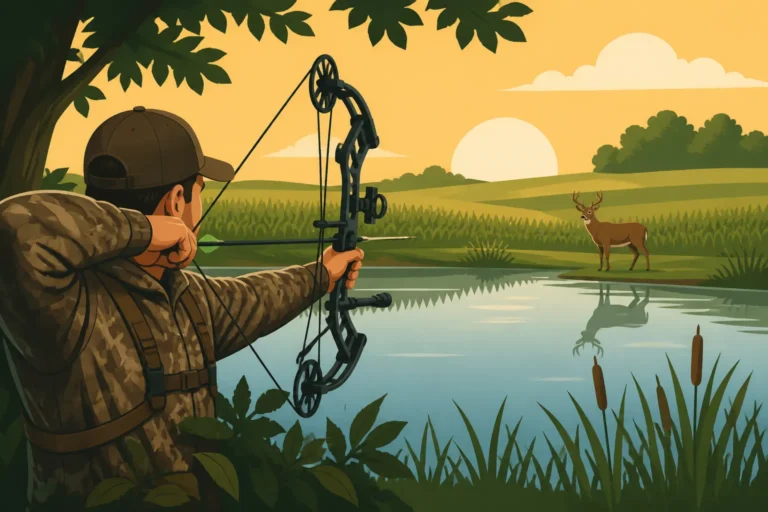
Early bow season in Iowa, particularly September and early October, often brings warmer temperatures. This means stronger, more consistent thermals. On a warm, still morning, upslope thermals will be robust and predictable, carrying scent high and away from creek bottoms. This can be great for approaching bedding areas from below. However, the midday heat also makes deer less active, and those strong thermals can dissipate or become less distinct as the air stabilizes. Another challenge is foliage. The dense leaves on trees create a much thicker barrier to wind and thermals, making air movement on the forest floor even more sluggish and prone to swirling. Your scent might just hang in the humid air. When dealing with early-season bowhunting over water, for instance, you need to consider how the cooling water might create its own micro-thermals that interact with the overall warm-air thermals. This is where diligent use of a milkweed puffer or scent detector is crucial – don't assume anything.
Rut and Late Season Considerations
As autumn progresses into the rut and then late season, the landscape changes dramatically. Falling leaves open up the canopy, allowing true winds to penetrate deeper into the timber. Thermals might still exist, but they are often weaker and more easily overridden by the prevailing true wind due to cooler temperatures and less intense sun. This can be a double-edged sword: while true wind might be more consistent, the open canopy also means your scent isn't buffered as much. During the rut, bucks are cruising constantly, often using those very river breaks as travel corridors. This increased movement means more opportunities, but also more chances for a buck to catch your scent from an unexpected direction.
Late season, with its often freezing temperatures and sparse foliage, presents its own set of challenges. Air is typically denser and colder, leading to weaker thermals overall. True wind becomes the dominant factor, but don't underestimate how cold air can sink into valleys and pool, creating cold air drainage that acts like a downslope thermal, even at midday. For late-season food source hunting in Iowa, you'll often be set up on the edges of fields adjacent to river breaks, which means paying close attention to how those cold, dense air currents might drift down from the timber into the food plots.
Tools and Techniques for Predicting Wind in River Breaks
Gone are the days when a wet finger in the air was your only wind indicator. While still useful, modern technology and refined field techniques can give you a significant edge in predicting and reacting to the complex air currents of river breaks. Leveraging these tools effectively can mean the difference between seeing that trophy buck and him winding you from afar.
Using Scent Checkers and Apps
Never, ever head into an Iowa river break without a reliable scent checker. Milkweed seeds, a squeeze bottle of scentless powder, or even a small feather can give you instant, real-time feedback on local air currents, even the subtle ones. These are invaluable for detecting those frustrating swirls and micro-thermals that your weather app won't tell you about. Carry multiple types if you want to be extra precise; milkweed will float further and indicate direction, while powder shows intensity and swirls up close.
Beyond field tools, several excellent hunting apps can aid in wind prediction. Apps like Spartan Forge, BaseMap, or onX Hunt (which is fantastic for e-scouting Iowa farm country from home) integrate weather data with topographical maps. They often show projected wind direction at various elevations, allowing you to visualize how the wind might flow over ridges and into valleys. While these apps provide generalized predictions, they are an excellent starting point for planning your approach and identifying potential stand locations. Just remember, these are predictions; always verify with a physical scent checker on site.
On-the-Ground Observation
No app or forecast can replace keen on-the-ground observation. As you walk into your stand, and certainly once you're settled, constantly pay attention to subtle cues. Watch how leaves rustle, how cobwebs hang, or how dust moves on the trail. If you have any small, wispy spider silk strands, toss them into the air. Observe how the fine hairs on your arm move, or even the steam from your breath on a cold morning. These small, constant observations will train your senses to detect minute shifts in air currents that could betray your position. It's a skill that improves with practice, and it's essential for detecting those localized thermals that can pop up unexpectedly. This kind of observational skill also helps you better understand wind and thermals in river breaks on a deeper level.
Digital Mapping for Elevation
Modern digital mapping tools are absolutely indispensable for understanding river breaks. Programs like GoHunt allow you to view topographical lines, elevation changes, and terrain features in incredible detail. By studying contour lines, you can identify saddles, benches, ravines, and funnel points that will inevitably influence air movement. Look for areas where contour lines are tightly packed, indicating steep slopes where thermals will be strong, or where they spread out, indicating flatter areas where wind might be more consistent. Many mapping apps even offer 3D views, allowing you to visualize how air might flow over and around terrain features. Pay particular attention to how different elevations might create microclimates. For instance, a subtle bench 50 feet below a ridgetop might be a perfect thermal belt where deer bed, while the true wind blows cleanly over the ridge.
Common Mistakes and How to Avoid Them
Even with the best preparation, river breaks can humble any hunter. The complexity of air currents in these areas leads to common pitfalls that can ruin a hunt. Being aware of these mistakes and actively working to avoid them is crucial for consistent success.
Ignoring Subtle Air Currents
Perhaps the most common mistake is simply ignoring the subtle air currents. Many hunters check their weather app, feel the wind on their face, and assume that's the end of the story. They might hang a stand with a perfect west wind, only to realize too late that a morning upslope thermal is carrying their scent uphill to the east, right into a bedding area. Or they might feel no wind on the forest floor, assuming they're scent-free, when in reality, the air is swirling unpredictably around them. The solution is constant vigilance. Never assume the wind is doing what you expect. Use your scent checker religiously, not just when you get to your stand, but throughout your sit. Pay attention to how your breath travels, or how a single piece of milkweed drifts. These subtle cues are telling you a story about the complex air movements that could be the difference between success and a bust.
Over-Relying on a Single Wind Direction
Another significant error is becoming too fixated on one "perfect" wind direction for a specific stand. While it's great to have a stand for a north wind, a south wind, etc., river breaks often demand more flexibility. The wind can shift, thermals can dominate, and what was ideal at 7 AM might be detrimental by 9 AM. If you've only scouted a single setup for a specific wind, you limit your options drastically. This is why having multiple stand options, or being set up for mobile saddle hunting in Iowa, is so valuable in these environments. Instead of waiting for the "perfect" wind, focus on understanding the prevailing wind and the thermal dynamics, then choose the best available option that offers the highest chance of keeping your scent out of a deer's nose, even if it's not absolutely perfect. Sometimes, it means accepting a slightly less ideal shot opportunity to maintain your concealment. Think about access routes that avoid bedding areas from multiple directions, ensuring you have a clean approach regardless of the day's conditions.
Disclaimer
The information provided in this guide is for informational purposes only and is not a substitute for official Iowa Department of Natural Resources regulations. Hunting regulations, seasons, and requirements can change, and it is always the hunter's responsibility to consult the most current Iowa DNR hunting digests and laws before heading afield.