How Many Sticks for a Twenty-Foot Set
Getting your treestand to that perfect hunting height can feel like a real puzzle, especially when you’re dealing with tricky trees or trying to keep your profile low on public ground where every advantage counts. We've all been there, wondering if we've packed enough sticks for that ideal 20-foot vantage point, only to find ourselves a few feet short or lugging too much weight. This guide is here to demystify the process, helping you figure out exactly how many climbing sticks you'll need for a solid 20-foot set, ensuring you're ready for whatever Iowa's whitetails throw your way.
Defining Your "Twenty-Foot Set" for Treestand Hunting
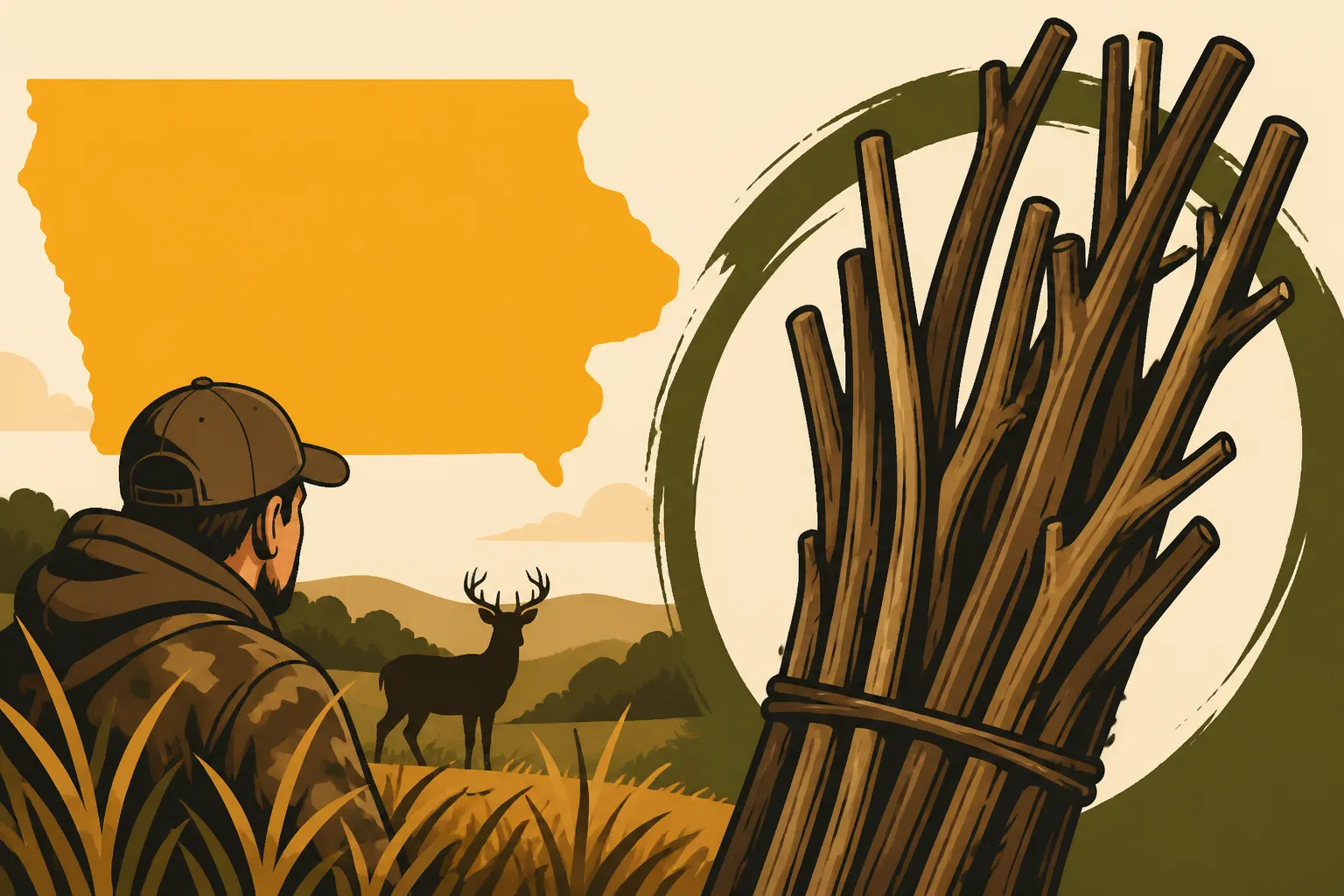
When we talk about a "20-foot set" in treestand hunting, it's easy to get caught up thinking it means exactly 20 feet of climbing stick length. However, that's often not the case. What most hunters are actually aiming for is a platform height of roughly 20 feet off the ground. This distinction is incredibly important because the total length of your sticks doesn't directly translate to your platform height. There are gaps between sticks, and your stand platform itself adds a bit of height.
Think about it like building a staircase. You need steps that allow you to reach the next level, but each step isn't stacked flush against the last. The goal isn't to create a solid column of sticks reaching 20 feet, but rather a series of secure steps that safely get you and your gear up to your stand's hunting position. This ideal height helps you get above a deer's primary line of sight, offers a better shot angle into their vitals, and can help your scent disperse more effectively, especially with swirling winds. It’s also important to remember that the first step is often a good three to four feet off the ground to deter curious eyes or unwanted visitors.
The actual number of sticks you need will depend heavily on the length of each individual stick you use and how you space them. Some hunters prefer shorter sticks for closer spacing and a more ladder-like climb, while others opt for longer sticks to reduce the total number they have to carry. We’ll dive into those specifics, but understanding that 20 feet refers to your stand platform height is the critical first step.
Key Factors That Influence Your Climbing Stick Count
Deciding on the exact number of climbing sticks for your 20-foot treestand setup isn't a one-size-fits-all answer. Several variables come into play, and understanding them will help you make a more informed choice, saving you frustration (and unnecessary weight) in the timber.
Individual Stick Length
This is arguably the most significant factor. Climbing sticks come in a variety of lengths, and each brand might have slightly different measurements. You'll find popular options ranging from around 20 inches to over 32 inches per stick. Naturally, the longer your individual sticks are, the fewer you'll need to reach your desired height.
For example, a hunter using 32-inch sticks will require fewer sticks than someone using 20-inch sticks to achieve the same 20-foot platform height. While shorter sticks might feel more stable or easier to pack in some situations, they add up quickly in number and weight if your goal is significant elevation. Conversely, longer sticks can be a bit more cumbersome to carry through thick brush but deliver a quicker ascent with fewer pieces. It's a trade-off that often comes down to personal preference, the type of terrain you're hunting, and how mobile you plan to be.
Your Personal Reach and Stride
This is a factor many hunters overlook, but it's incredibly important for safety and efficiency. Your personal height and leg stride dictate how far apart you can comfortably and safely space your sticks. If you have a longer stride, you might be able to space your sticks a bit further apart, effectively making each stick contribute more to your overall height gain. However, if your sticks are spaced too far apart, especially in cold weather with bulky clothing or when carrying a heavy pack, the climb can become strenuous, unstable, and dangerous.
Think about how you naturally climb a ladder. You want consistent, manageable steps. Before you head to the woods, try practicing in your yard. Set a stick, then see how far you can comfortably reach to set the next one. This "comfortable reach" is your practical maximum spacing. Remember, what feels fine on flat ground in good weather might be completely different on a slick tree in the dark or with a bow in hand. For planning your hunts with tools like those offered by GoHunt, you can even factor in the terrain to anticipate awkward stick placements, helping you map out safer access routes.
Tree Characteristics and Stand Type
The tree you choose can also impact your stick count. Are you climbing a perfectly straight oak, or a leaning cottonwood with branches and bumps? Irregularities in the tree trunk can sometimes force you to space sticks closer together or further apart, depending on where you can get a secure bite with your stick's strap. A perfectly straight, limbless trunk allows for consistent spacing, while a gnarly, branch-filled tree might mean you need an extra stick just to navigate an obstacle.
The type of treestand you're using also matters. Some stands have larger platforms that might require you to set your final stick a bit lower, to provide ample foot room when stepping onto the platform. Other stands are more compact, allowing for a higher final stick placement. Consider where your stand's platform will sit relative to your body once you step onto it. You want to be able to comfortably reach the top of your final stick to step down onto your platform, not stretch precariously to step up. When you're Hanging Stands on Iowa Public Ground, these small details can make a huge difference in your setup.
Calculating Your Ideal Number of Sticks for a 20-Foot Set
Now for the nitty-gritty: how do you actually calculate the number of sticks you need? This isn't just guesswork; a little math can save you a lot of hassle in the field. Remember, the goal is a 20-foot platform height, and that typically means your feet are around 20 feet up.
Step-by-Step Calculation Method
Let's break down the calculation. The critical measurement is the vertical distance gained by each stick, not just the stick's total length.
- Determine Your Starting Height: You usually want your first climbing stick's platform (or step) to be a safe distance off the ground to prevent easy access and hide your entry. A common starting point is having the first step 3-4 feet high. Let's assume you aim for 4 feet.
- Calculate Remaining Height: If your desired platform height is 20 feet, and your first step starts at 4 feet, you need to gain an additional 16 feet of vertical distance (20 feet – 4 feet = 16 feet).
- Measure Usable Stick Length (Vertical Gain): This is where it gets tricky. If your sticks are, say, 30 inches long (2.5 feet), you won't gain 2.5 feet per stick if you're spacing them consistently for climbing. Instead, you're looking at the vertical distance between the steps of your sticks. For many modern sticks, if you set them one above the other in a comfortable climbing stride, you might gain around 24-28 inches (2 to 2.3 feet) per stick, depending on your reach and how the stick is designed. Let's assume a realistic vertical gain of 26 inches (approx. 2.17 feet) per stick for a 30-inch stick.
- Divide Remaining Height by Vertical Gain per Stick:
- Total additional height needed: 16 feet
- Vertical gain per stick: 2.17 feet
- Number of sticks needed: 16 / 2.17 = ~7.37 sticks.
- Since you can't use a fraction of a stick, you'd round up to 8 sticks.
- Add the First Stick: Remember, the calculation above was for the additional height after your first stick. So, you'd add that first stick back into your total. In this example, 8 sticks + 1 (the initial stick) = 9 sticks total.
It's always better to bring one extra stick than to be one short, especially if you encounter a limb or an uneven tree section that throws off your planned spacing. This level of preparation is key for Mobile Saddle Hunting in Iowa or any rapid setup.
A Quick Reference Table for Common Stick Lengths
To give you a clearer picture, here's a table showing approximate stick counts for a 20-foot platform height, assuming a first step at 4 feet and a realistic average vertical gain per stick.
| Stick Length (approx.) | Vertical Gain Per Stick (approx.) | Sticks Needed for 16 ft (rounded up) | Total Sticks for 20 ft Platform | Notes |
|---|---|---|---|---|
| 20 inches (1.67 ft) | 16 inches (1.33 ft) | 16 / 1.33 = 12 sticks | 13 sticks | Compact, but more pieces to carry. |
| 25 inches (2.08 ft) | 20 inches (1.67 ft) | 16 / 1.67 = 10 sticks | 11 sticks | Good balance of size and count. |
| 30 inches (2.5 ft) | 24 inches (2.00 ft) | 16 / 2.00 = 8 sticks | 9 sticks | Less common, but fewer pieces. Requires longer stride. |
| 32 inches (2.67 ft) | 26 inches (2.17 ft) | 16 / 2.17 = 8 sticks | 9 sticks | Popular for efficiency, but larger to pack. |
Note: These are approximations. Your actual vertical gain per stick will vary based on your personal stride, the tree, and the specific design of your sticks.
When you're planning your hunt, whether it's Scouting Iowa Public Land Before the Opener or just choosing a spot, using a tool like GoHunt's mapping features can help you visually assess potential trees and even mark them for future reference, so you know what kind of climb to expect. This can help you decide if you need to pack an extra stick or two based on the terrain and tree type.
Practical Tips for a Safe and Efficient Stick Set
Getting up to 20 feet safely and efficiently requires more than just knowing how many sticks to bring. There are several practical considerations that can make your climb smoother, quieter, and ultimately, more successful.
Proper Spacing and Leveling
Consistency is key when placing your climbing sticks. Try to maintain an even stride between each stick. If one step is too short and the next is too long, it can throw off your balance and make the climb unnecessarily difficult, especially if you're trying to be quiet in the dark. Use a small level if your sticks don't have built-in leveling features. A crooked stick not only feels unstable but can also put uneven pressure on the strap, potentially causing it to slip.
When you start your climb, ensure the first stick is rock-solid and level. This foundational piece sets the tone for the entire ascent. As you go higher, continue to check your footing and the stability of each stick before putting your full weight on it. Remember, you'll be carrying gear, and possibly maneuvering a bow or firearm. A safe, level climb is a quiet climb, and that's crucial when you're trying to avoid alerting deer in the immediate area. Don't forget your Safety Harnesses and Lifelines – always be connected to the tree while ascending and descending.
Navigating Tricky Trees and Obstacles
Iowa timber isn't always perfectly manicured. You'll encounter branches, knots, and leaning trunks that can make stick placement challenging. This is where having a little flexibility in your stick count comes in handy. If a limb is blocking your ideal path, you might need to adjust your spacing for a stick or even skip a section, necessitating an extra stick to get past the obstruction.
Sometimes, you might have to slightly alter your climbing path around a feature of the tree, which can slow you down. This is where scouting ahead, even with apps like GoHunt, pays off. If you've identified a specific tree during the off-season, you can mentally (or physically) plan your stick placement, noting any potential issues. This pre-planning helps you adapt quickly when you're in the moment, minimizing noise and movement.
Leaving No Trace and Stand Security
On public land, leaving no trace is more than just good etiquette; it's often a rule. This means no screw-in steps, and being mindful of how your sticks impact the tree. Choose sticks that use reliable strapping systems that don't damage the bark. When you're done hunting, make sure you take all your gear with you. Leaving No Trace on Iowa Walk-In Ground is paramount to ensure these hunting opportunities remain available for everyone.
Security isn't just about stealth; it's about protecting your investment. If you're leaving your stand and sticks for multiple days, ensure they are securely fastened and out of plain sight if possible. Check regulations for Overnight Stand Storage on Public Ground in Iowa, as rules can vary by specific hunting area. Some hunters even use security cables or locks on their stand and sticks to deter theft. The more mobile you are with your stick set, the less you have to worry about leaving gear overnight.
By thoughtfully calculating your stick needs, practicing safe climbing techniques, and respecting the land, you'll be well on your way to a successful 20-foot treestand setup in Iowa's deer woods. Whether you're chasing that elusive buck during When the Iowa Rut Peaks or sitting tight in December Cold Front Deer Movement, a solid, safe stand setup is your foundation.
Disclaimer
This article is for general informational purposes only and does not constitute professional advice. Laws, prices and regulations vary by location and change over time. Consult a qualified professional for guidance on your specific situation.