Safety Harnesses and Lifelines
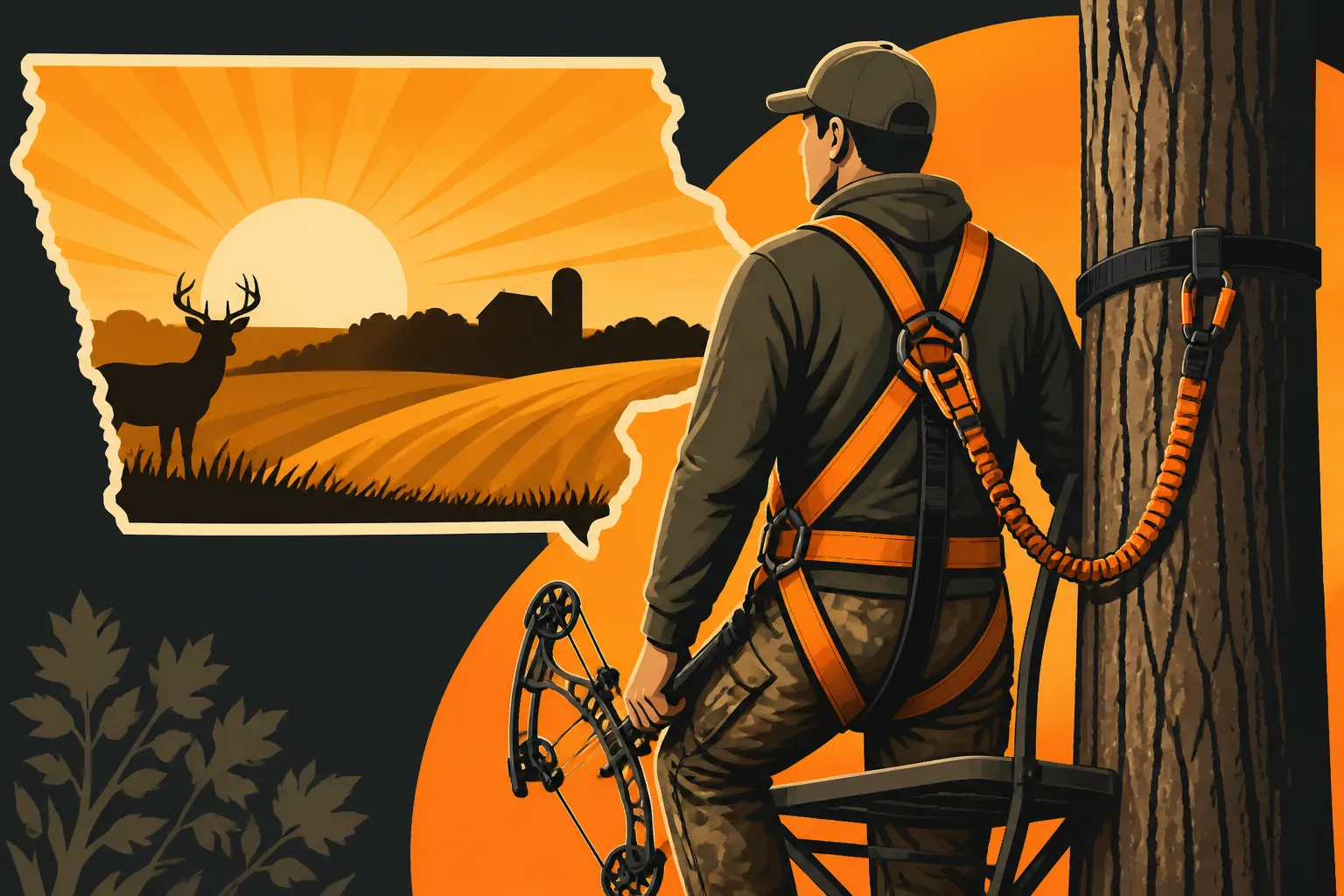
Falling from a treestand is one of the most terrifying thoughts for any hunter, and yet, it happens with alarming frequency, often catching even the most seasoned outdoorsmen off guard. The ground feels so far away when you're perched twenty feet up, but in a split second, a misplaced foot, a slippery branch, or a faulty piece of equipment can send you plummeting. This guide isn't here to scare you, but to equip you with the knowledge and confidence to ensure that a day in your stand hunting big Iowa bucks is always a safe one, focusing on the absolute essentials: a full-body safety harness and a robust lifeline.
The Unspoken Danger: Why Treestand Safety is Non-Negotiable
It's easy to get caught up in the excitement of a new season or the thrill of the chase, but we owe it to ourselves, and our families, to prioritize safety above all else. Treestand hunting, while incredibly effective for deer in Iowa's diverse landscapes, carries inherent risks that simply cannot be ignored. The moment you leave the ground, you enter a realm where gravity is an unforgiving adversary.
The Startling Statistics of Treestand Falls
You might think treestand falls only happen to careless or inexperienced hunters, but the reality is far more sobering. Statistics from various hunting organizations consistently show that treestand accidents are a leading cause of serious injury and even fatalities among hunters. Many of these incidents occur at relatively low heights, often under 15 feet, and frequently involve hunters who consider themselves veterans. It’s not about how many years you've been hunting; it's about constant vigilance and proper procedure every single time. The moment you assume "it won't happen to me" is often the moment you let your guard down, and that's when accidents are most likely to strike. We're talking about real people, often hunting alone, who find themselves in critical situations because of a moment of distraction or complacency.
Imagine setting up your stand in a prime timber point between two fields, ready for the morning hunt. You’ve done your scouting, found the perfect tree, and you're confident in your location. But as you climb, perhaps carrying too much gear, you slip. Without a safety harness and lifeline, that slip can instantly turn into a catastrophe, leaving you injured and alone, miles from help.
Instant Consequences: What Happens in a Fall
A fall from a treestand isn't just a bump or a bruise; it can be life-altering. The impact with the ground, even from a seemingly modest height, can result in broken bones, spinal injuries, internal bleeding, or head trauma. Even if you're lucky enough to survive the initial impact, being injured and unable to move in a remote hunting location presents a whole new set of dangers. Hypothermia, shock, or simply being unable to call for help can turn a bad situation into a fatal one very quickly.
Then there's the less discussed, but equally dangerous, risk of suspension trauma if you are wearing a harness but become suspended for too long. While a harness will save your life by preventing you from hitting the ground, hanging motionless can restrict blood flow, leading to serious medical complications if you're not able to relieve the pressure or get down quickly. This is why having a plan for recovery, even when suspended, is just as vital as wearing the harness itself.
Dispelling the "It Won't Happen to Me" Myth
This myth is perhaps the most insidious enemy of treestand safety. We often hear stories of hunters who have been climbing trees for decades without a harness, never had an issue, and therefore believe they are immune. But gravity doesn't care about your experience level or how many big bucks you've tagged. It's an indiscriminate force. Maybe you're tired after a long week at work. Maybe the branch you usually step on has broken, or it's slick with morning dew. Perhaps your boots are muddy, or you're adjusting your pack and lose your balance.
The reality is that a fall can happen to anyone at any time. The key is to be prepared for the worst-case scenario every single time you leave the ground. Think about it: we wear seatbelts in cars even though we don't expect to crash, and we wear life jackets on boats even if we're strong swimmers. Treestand safety gear is no different. It's a fundamental piece of your hunting setup, just as important as your bow or shotgun, especially when you consider that many of us are hunting Iowa Whitetail Hunting Tactics Through the Rut, when excitement is at an all-time high.
Understanding Your Full-Body Safety Harness
Alright, let's talk about the hero of our story: the full-body safety harness. This isn't your daddy's old climbing belt; modern harnesses are engineered with your safety and comfort in mind. Investing in a good quality harness isn't just about adhering to rules; it's about investing in your life.
Components of a Modern Safety Harness
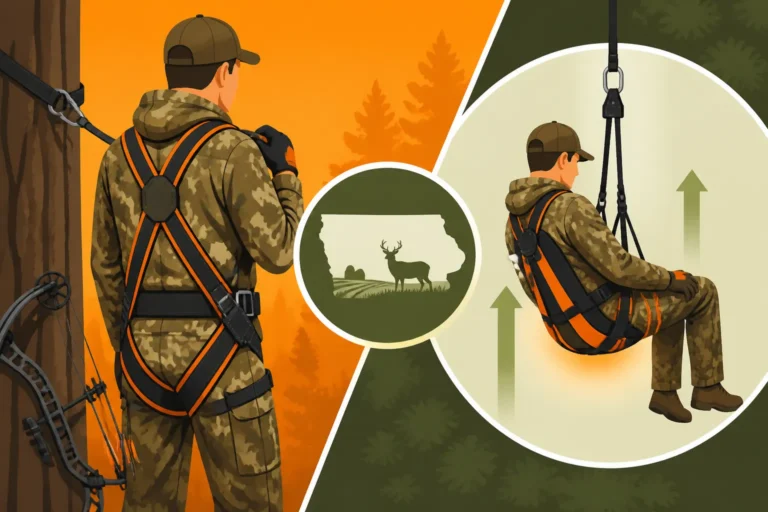
A quality full-body safety harness is a meticulously designed piece of equipment, far more complex and protective than simple waist belts of yesteryear. Typically, it consists of a series of heavy-duty webbing straps that go over your shoulders, around your chest, and through your legs, connecting at a central point, usually in the middle of your back. This design is crucial because it distributes the forces of a fall across your entire body, rather than concentrating it in one area.
You'll find various components: the main torso straps, adjustable leg straps, a chest strap that keeps the shoulder straps in place, and a tether strap, often with an elastic section, that connects to your lifeline. The attachment point for the tether is almost always on the back, between the shoulder blades, ensuring that if you fall, you remain upright and stable. Buckles can vary from traditional pass-through designs to quick-connect versions, which are often preferred for their ease of use, especially when you're bundled up in Cold Weather Stand Clothing. A strong carabiner or specialized quick-link is usually provided to attach the tether to the lifeline.
How a Harness Distributes the Load
The genius of a full-body harness lies in its load distribution. In the event of a fall, the force of your body being abruptly stopped isn't concentrated on your lower back or abdomen, which can lead to severe internal injury. Instead, the harness's design spreads that impact across your shoulders, chest, and upper legs. This significantly reduces the peak forces on any one part of your body, minimizing the risk of serious trauma. Think of it like a spiderweb catching a fly, spreading the tension rather than one single thread breaking.
Furthermore, a properly worn harness ensures that you remain in an upright or slightly reclined position if you become suspended. This orientation is critical for preventing suspension trauma, a condition where blood flow to the lower extremities is restricted, which can occur if you're left hanging vertically for an extended period without proper support or movement. Many harnesses now include a suspension relief device or strap, which you can deploy to stand on and periodically relieve pressure on your femoral arteries, giving you precious time to signal for help or execute a self-rescue.
Comfort and Fit for Long Iowa Sits
Let's be real: if a harness isn't comfortable, you're less likely to wear it, or you'll be constantly fidgeting, which is no good for hunting. Modern harnesses have come a long way in terms of ergonomics. Look for models with padded shoulder straps and leg loops, especially if you anticipate long hours in the stand during Iowa's chillier seasons. The key is adjustability. Every strap should be adjustable to ensure a snug but not restrictive fit. A harness that's too loose won't function properly, and one that's too tight will cut off circulation or just be plain miserable.
When trying on a harness, wear the layers you typically hunt in. Sit down, stand up, and simulate climbing movements. Can you reach your release? Can you comfortably draw your bow? Can you shoulder your rifle without interference? A properly fitted harness should feel like a part of you, allowing full range of motion without pinching or binding. Brands like GoHunt often review various harness designs, giving you insights into comfort and features from other hunters' perspectives. Remember, comfort contributes directly to compliance, and compliance means safety.
Lifelines and How They Keep You Connected
A harness is only half the equation. Without a lifeline, you're still taking a huge gamble every time you ascend or descend your treestand. The lifeline is your continuous connection to the tree, ensuring that from the moment your feet leave the ground until they touch back down, you are secure.
Treestand Lifelines: The Crucial Link
So, what exactly is a treestand lifeline? Simply put, it's a rope system that typically consists of a long, durable rope, often with a pre-sewn loop on one end, that you feed around your treestand's tree and secure with a knot, usually a figure-eight or fisherman's knot, at the other end. Crucially, it comes with a prusik knot or similar sliding rope grab, which you attach your harness tether to. This prusik knot slides freely up and down the main rope when pushed, but locks securely when weight is applied, like in a fall.
The lifeline essentially creates a vertical safety track up and down the tree. It’s designed to be installed before you ever step onto your stand platform, usually when you're still safely on the ground or just above it. Once installed, you can attach your harness tether to the prusik, and from that point on, you are connected to the tree, providing constant protection throughout your ascent, time in the stand, and descent. This system is truly revolutionary in treestand safety, filling the critical gap between climbing and being seated.
Continuous Connection from Ground to Stand
This is perhaps the most critical aspect of treestand safety that many hunters overlook. The vast majority of treestand falls happen during the moments of transition: climbing up to the stand, getting onto the stand platform, or getting off the stand and beginning the descent. These are the moments when you're often manipulating equipment, reaching, stretching, and are most vulnerable to losing your balance.
With a lifeline, you clip in before your feet ever leave the ground. As you climb your climbing sticks or ladder sections, your prusik knot slides up the lifeline with you, keeping your tether taut. If you slip at any point, the prusik instantly grabs the rope, stopping your fall. You maintain that continuous connection as you transition from your climbing sticks to the treestand platform, and then when you reverse the process to come down. This means there's never a moment when you are completely unsecured from the tree. This continuous connection dramatically reduces your risk profile. It's truly a game-changer for safe treestand hunting, complementing careful access routes like those described in Access Routes That Do Not Bump Deer.
Different Types of Lifelines and Their Features
While the basic concept of a lifeline remains the same, you'll find a few variations and features to consider. The most common is a single-rope system, which works perfectly for individual stands. Some systems might come with multiple prusik knots if you're using it for two people (e.g., teaching a youth hunter), though typically each hunter should have their own individual lifeline for optimal safety.
Length is an important consideration; ensure your lifeline is long enough for the height you plan to hang your stand. It needs to reach from the ground, up the tree, and have enough slack at the top to tie a secure knot above your head when seated. Materials are also key – look for durable, weather-resistant ropes that won't fray easily. Most reputable brands use high-strength kernmantle ropes, similar to what climbers use, ensuring reliability. Some lifelines might even come with reflective tracers woven in, making them easier to locate in the pre-dawn darkness or after dusk, which can be a real blessing when you're setting up in new spots after scouting Iowa Timber and River Bottoms.
Proper Use and Maintenance for Maximum Protection
Having the best safety gear in the world won't do you a bit of good if you don't use it correctly and keep it in top shape. Just like checking your bow string or cleaning your shotgun, safety harness and lifeline care is part of your pre-hunt ritual.
Step-by-Step Harness Donning and Adjustment
Putting on your full-body harness correctly is the first critical step to ensuring it will function as intended. It’s not just about getting it on; it’s about getting it on right. Start by shaking out the harness to untangle any straps. Most harnesses are designed to be stepped into, with the leg straps first. Guide your legs through the loops, making sure they aren't twisted. Then, pull the harness up over your torso, sliding your arms through the shoulder straps like a backpack.
Next, you need to adjust every strap for a snug fit. The leg straps should be tight enough to support you but not so tight that they cut off circulation. You should be able to slide your flat hand between your leg and the strap, but not your fist. The chest strap should be centered on your sternum and tight enough to keep the shoulder straps from slipping off your shoulders. Finally, adjust the shoulder straps so that the harness feels secure and the tether attachment point on your back is between your shoulder blades. Take your time, do it right, and practice in your hunting clothes at home before you're fumbling in the dark before an early morning sit.
Attaching Your Harness to the Lifeline
Once your harness is properly donned and adjusted, and you've hung your stand and climbing sticks, it's time to install and connect to your lifeline. The lifeline rope needs to be securely attached around the tree, ideally above the level of your treestand platform when you're seated. Many hunters prefer to tie the top loop of the lifeline around the tree and then feed the free end through the loop, securing it with a knot like a fisherman's bend or a figure-eight knot. The goal is a solid, immovable connection at the top.
With the lifeline in place, you then attach your harness tether to the prusik knot on the lifeline. The carabiner or quick-link on your harness tether should be clipped securely to the loop of the prusik. Ensure the gate of the carabiner is fully closed and locked. Now, as you climb your sticks, slide the prusik knot up the lifeline with one hand, keeping your tether taut. When you reach your stand, make sure the prusik is above your head when seated, giving you maximum freedom of movement while ensuring minimal slack in case of a fall. Remember, the goal is always a continuous connection from the ground up and back down.
Inspecting Your Gear: Before and After Every Hunt
Your safety gear is subjected to the elements, wear and tear, and sometimes even critter damage. Before every hunt, take a few moments to thoroughly inspect your harness and lifeline. Look for any signs of fraying, cuts, tears, or excessive wear on the webbing straps and ropes. Check all buckles, stitching, and metal components (carabiners, quick-links) for cracks, corrosion, deformation, or any signs of malfunction. Ensure all moving parts operate smoothly.
After your hunt, especially if it was wet or muddy, give your gear a quick once-over. Remove any mud or debris, and allow it to air dry completely before storing. Pay particular attention to any areas that might have rubbed against the tree or other equipment. Rodents can be a real problem too, so check for chew marks. If you notice any significant damage or wear that makes you doubt the integrity of the gear, replace it immediately. Your life is not worth the risk of using compromised equipment.
Storage and Care for Longevity
Proper storage and care are essential for extending the lifespan of your safety harness and lifeline. Never leave your harness or lifeline out in the elements unnecessarily. UV light from the sun can degrade webbing and rope over time, weakening the material even if it doesn't look visibly damaged. Moisture can lead to mold, mildew, and corrosion of metal components.
Store your gear in a cool, dry place, away from direct sunlight, extreme temperatures, and harsh chemicals. A gear bag or plastic tote kept in a closet or garage is ideal. Avoid tossing it into the back of your truck where it can get tangled with other gear, exposed to oil or gas, or potentially damaged. If your gear gets wet, let it air dry completely before storing it away. Most manufacturers also specify a recommended lifespan for their harnesses and lifelines (often 5-10 years), even if they appear to be in good condition, due to material degradation over time. Check the tags on your specific gear and adhere to these guidelines.
Common Mistakes and How to Avoid Them
Even with the best intentions and the right gear, mistakes can happen. Recognizing these common pitfalls is the first step to avoiding them and ensuring your safety in the tree.
The One-Handed Climb and Why It's Dangerous
We've all been there: trying to juggle a backpack, your bow or firearm, and maybe a rangefinder or grunt tube, all while attempting to climb into your stand. This "one-handed climb" is a recipe for disaster. When one hand is occupied, you lose a crucial point of contact and balance, dramatically increasing your risk of a fall. Your focus shifts from safe climbing to managing your gear, which is a dangerous distraction.
The solution is simple: use a haul rope. Tie a sturdy rope to your bow, firearm, or backpack on the ground after you've clipped into your lifeline. Secure the other end of the rope to your belt or harness. Climb into your stand with both hands free, maintaining three points of contact (two hands, one foot; or one hand, two feet) at all times. Once you're safely on your platform and clipped into your harness with minimal slack, you can then use the haul rope to slowly and safely pull your gear up to you. This might add an extra minute or two to your setup, but that small investment of time is priceless when it comes to your safety. When considering One-Stick Method for Mobile Hunting, this discipline is even more critical.
Not Staying Connected at All Times
This mistake is perhaps the most common and often leads to the most severe accidents. Many hunters diligently wear their harness but then disconnect from the lifeline at crucial moments:
- Transitioning from climbing sticks to the stand: This is a wobbly, high-risk maneuver where balance can easily be lost.
- Moving from the stand to the climbing sticks for descent: Again, a moment of vulnerability.
- Adjusting the stand or equipment: Reaching for a camera arm or pulling a branch out of the way can cause you to lean too far.
- Connecting/disconnecting the haul rope: Another moment where focus is diverted.
The rule is simple and unwavering: Stay connected from the moment your feet leave the ground until they are back on solid earth. Your prusik knot on the lifeline should be your constant companion, sliding with you, keeping tension, and ready to catch you if you slip. Never, ever unclip your harness tether until you are safely on the ground. This mantra should be ingrained in every treestand hunter's mind. For those Hanging Stands on Iowa Public Ground, this is particularly important, as you might be dealing with unfamiliar trees and conditions.
Ignoring Gear Damage or Expiration
We talked about inspection, but ignoring the results of that inspection is a critical error. That small fray on the rope, that slightly sticky buckle, or that harness that's past its manufacturer's recommended lifespan – these are not minor issues. They are potential points of failure that could cost you your life. Hunting gear, especially safety gear, is not meant to last forever. Sunlight, moisture, temperature fluctuations, and simple wear and tear all degrade materials over time.
Develop a strict policy: if your safety gear shows any signs of damage, or if it's past its expiration date, it gets replaced immediately, no questions asked. Don't try to "make it work" for one more season. The cost of a new harness or lifeline is minuscule compared to the cost of a catastrophic injury or worse. Treat your safety gear with the respect it deserves as a life-saving device.
Misjudgment of Tree Condition and Stand Placement
Your safety system starts with the tree itself. Hanging a stand in a dead, decaying, or unstable tree is asking for trouble, regardless of how good your harness is. The tree is the anchor for your entire system. Before you even think about climbing, thoroughly inspect the tree you intend to use. Look for dead branches, loose bark, signs of disease, insect damage, or rot. Give it a good shake if possible.
Choose a healthy, live tree that is strong and stable enough to support your weight and the weight of your stand. Ensure the diameter of the tree is appropriate for your stand's design – too small and it might flex too much, too large and the stand might not cinch down properly. When scouting for Best Stand Locations in Rolling Timber, also evaluate tree health and suitability. A solid tree is the foundation of your safety system.
Choosing the Right Gear for Your Iowa Hunts
With so many options on the market, how do you pick the right safety harness and lifeline for your Iowa hunting adventures? It boils down to a few key considerations that prioritize safety, comfort, and practicality.
Features to Look for in a Quality Harness
When you're shopping for a new harness, keep these features in mind:
- Ease of Use: Can you put it on quickly and correctly, even in the dark or with cold fingers? Quick-connect buckles are often a huge advantage here.
- Comfort: Look for padding on the shoulders and leg straps. Adjustable straps are a must for a personalized fit.
- Weight Capacity: Ensure the harness is rated for your weight, including your hunting clothes and any gear you might be carrying on your person.
- Suspension Relief Device: This is critical. A built-in strap or loop that allows you to stand up in your harness if suspended can prevent suspension trauma. Don't compromise on this.
- Quality Materials and Construction: Heavy-duty webbing, robust stitching, and strong metal components are indicators of a well-made harness.
Consider a harness that is lightweight if you're doing a lot of hiking into public land spots or engaging in Mobile Saddle Hunting in Iowa. Some minimalist designs offer excellent safety with less bulk. Brands often highlight these features in their product descriptions, and hunter reviews can give you real-world insights into their performance and comfort during long days in the stand.
Selecting the Right Lifeline Length and Material
Your lifeline should match the height of your typical treestand setups. If you usually hunt 15-20 feet high, a 30-foot lifeline gives you plenty of slack for tying off above your stand. If you occasionally go higher, opt for a longer one. It's always better to have a bit more length than not enough.
As for material, look for high-strength, low-stretch rope. Kernmantle construction, where an inner core is protected by a woven outer sheath, is ideal for durability and resistance to abrasion. This type of rope is designed to handle dynamic loads, making it perfect for treestand safety. Ensure the prusik knot that comes with the lifeline is specifically designed for that rope diameter to ensure reliable gripping. You can also research different options for your specific stand setup, as some manufacturers offer integrated systems designed to work seamlessly with their treestands.
Budget-Friendly Options That Don't Compromise Safety
You don't need to break the bank to be safe. There are many reputable brands that offer excellent safety harnesses and lifelines at various price points. The most expensive harness isn't necessarily the safest, and a more affordable option from a certified manufacturer can provide just as much protection. The key is to look for products that meet industry safety standards, often indicated by an ATA (Archery Trade Association) or TMA (Treestand Manufacturers Association) certification.
Prioritize function and reliability over fancy features or camouflage patterns. A basic, well-constructed harness with a suspension relief device and a durable lifeline will serve you far better than a feature-rich model that doesn't meet fundamental safety requirements. Sometimes, less is more, especially if it means you're more likely to use it consistently. Consider checking online retailers like GoHunt for reviews and comparisons of different brands and models to find a balance between cost and essential safety features.
Considering Your Hunting Style Fixed vs. Mobile
Your preferred hunting style should influence your gear choices.
- Fixed Stands: If you primarily use ladder stands or hang-on stands that you leave up for the season, a robust, comfortable harness with slightly more padding might be suitable since you won't be carrying it in and out every time. You'll likely need a lifeline for each stand location, which can add up, but it's a non-negotiable cost for safety. For permanent stand setups, consider leaving the lifeline attached year-round, inspecting it thoroughly before each use. Make sure to check regulations on Overnight Stand Storage on Public Ground if applicable.
- Mobile Hunting: If you're a mobile hunter, moving your hang-on stand and sticks frequently, or employing strategies like Climbing Sticks Versus a Climber and Mobile Saddle Hunting in Iowa, then a lightweight, streamlined harness is a priority. Every ounce counts when you're packing in miles. Look for designs that fold down small and don't restrict movement. Some mobile hunters even use a single, extra-long lifeline that they install and remove with each sit, making the entire setup modular and portable.
Regardless of your style, the core principles remain the same: wear your harness, use your lifeline, and stay connected. Safety should always be your top priority, whether you're still Practicing Shots From a Treestand in the backyard or sitting in your prime rut stand.
Disclaimer
This article is for general informational purposes only and does not constitute professional advice. Laws, prices and regulations vary by location and change over time. Consult a qualified professional for guidance on your specific situation.