Shooting Sticks for Ground Blind Hunting
We've all been there: crammed into a ground blind, a big buck steps out, and you realize your perfect shooting angle is suddenly awkward. Trying to balance your gun on your knee or a tiny pack often leads to wobbly shots and missed opportunities. This guide will walk you through how shooting sticks can turn those tricky ground blind scenarios into confident, steady shots for your Iowa hunts, no matter the situation.
Why Shooting Sticks Are a Game-Changer for Ground Blind Hunting
Hunting from a ground blind offers so many advantages in Iowa's diverse landscape. You can stay hidden, warm, and comfortable, especially during those frosty late-season hunts or in a surprise drizzle. But let's be honest, the interior of a blind isn't exactly designed for precision shooting. You're often dealing with limited space, awkward window heights, and a need to pivot quickly. This is where a good set of shooting sticks truly shines, providing that critical stability you just can't get otherwise.
The Challenge of Awkward Angles and Limited Space
Picture this: you've got your blind set up perfectly, brushed in tight along a field edge bordering a thick timber stand. You followed all the advice from our guide on Brushing In a Ground Blind, and it looks like a natural part of the landscape. But suddenly, a mature whitetail steps out at an unexpected 70-yard angle, just outside your primary shooting lane. You try to lean against the blind's window frame, but it's wobbly. You try to rest your rifle on your knee, but your leg is cramping. That precious few seconds tick by, and the deer either spooks or moves on.
This scenario is far too common for ground blind hunters. The blind's interior, while great for concealment, rarely offers natural, rock-solid rests for your firearm. Whether you're using a shotgun during one of Iowa's popular gun seasons, or a straight-wall cartridge rifle, a stable platform is key to ethical, accurate shooting. Shooting sticks provide a stable, adjustable rest that can adapt to those strange angles and varying distances, helping you consistently achieve Shot Placement on a Whitetail at Twenty Yards and beyond, even when the deer doesn't cooperate with your ideal setup.
Eliminating Wobble and Maximizing Accuracy
The truth is, even the most experienced hunter can introduce wobble when trying to hold a rifle or shotgun perfectly steady for an extended period. Adrenaline certainly doesn't help! From a ground blind, you might be contorted, leaning on soft material, or simply holding your gun freehand. Any of these situations can lead to a less-than-perfect shot, especially when you're taking advantage of the longer ranges a straight-wall rifle might offer.
Shooting sticks virtually eliminate much of that human-induced wobble. They act as an extension of the ground, creating a solid point of contact for your firearm. This stability is absolutely crucial, whether you're taking a quick 30-yard shot or trying to reach out to the edge of your effective range with a slug gun. Remember, Iowa's deer are tough, and clean kills are paramount. A stable rest allows you to focus on your breathing, trigger control, and sight picture, dramatically increasing your chances of a clean harvest. When you're spending time scouting, setting up, and patiently waiting, you want every advantage possible when the moment of truth arrives.
Understanding Different Types of Shooting Sticks
Just like there are different hunting situations, there are various types of shooting sticks, each with its own benefits and drawbacks. Knowing which type will best suit your ground blind hunting style in Iowa is important, because what works great for a mobile archer might not be ideal for someone sitting in a blind with a slug gun.
Monopods: Lightweight and Quick
A monopod is essentially a single pole with a rest at the top for your firearm. They are incredibly lightweight and quick to deploy, making them a favorite for hunters who prioritize mobility or need to make fast adjustments. Think about those situations where you're quickly trying to get set up for a shot inside a blind when a deer suddenly appears. You can quickly extend a monopod, brace it on the ground, and have a decent rest in seconds.
However, the trade-off for speed and weight is stability. A monopod still relies heavily on the shooter to maintain balance. While it's certainly better than no rest at all, it won't offer the same rock-solid stability as a bipod or tripod. For ground blind hunting, a monopod might be best if you often find yourself needing to shift positions rapidly, or if you're using a lighter firearm and are already a very steady shot. Many compact options designed for blind hunting allow for quick adjustments between kneeling and sitting positions, which can be useful when you need to shoot through different window heights.
Bipods: A Great Balance of Stability and Portability
Bipods, with their two-legged design, offer significantly more stability than monopods while still being reasonably portable. They are a fantastic choice for ground blind hunters who want a stable rest without too much bulk. Many bipods are designed to attach directly to your firearm's sling swivel stud or a Picatinny rail, meaning they move with the gun. Others are free-standing, which can be ideal for the confines of a blind.
A free-standing bipod can be set up in front of you, providing two points of contact with the ground, plus your shoulder. This triangulation greatly reduces wobble. They are particularly effective when you anticipate shooting from a seated position, which is common in many Ground Blinds in Iowa Farm Country. You can set the bipod to the ideal height, rest your gun, and then make small adjustments as needed. For hunters concerned about accuracy, especially if you're working within the Slug Range Limits on a Deer Drive or using a straight-wall rifle that offers more reach, a bipod provides a solid foundation. Brands like GoHunt often feature reviews of various bipod options, helping you understand the differences in attachment methods and height ranges.
Tripods: Maximum Stability for All-Day Sits
When maximum stability is your top priority, a tripod is the way to go. With three points of contact on the ground, a tripod offers an incredibly steady shooting platform, often allowing for nearly hands-free glassing or waiting. This is particularly advantageous for those long, cold sits in a ground blind during late muzzleloader season when every movement feels like a monumental effort. You can set your rifle in the rest, and it stays perfectly stable, allowing you to relax a bit more between sightings without losing your shooting readiness.
The main downsides of a tripod are its weight and bulk, which can be cumbersome if you have a long walk to your blind, and the time it takes to set up. However, once in place inside your blind, a tripod is unmatched for its stability. Many modern hunting tripods also double as spotting scope or binocular rests, adding versatility to your setup. For hunters who prioritize precision and confidence for every shot from their blind, especially when setting up for a full day of hunting, a good tripod can be an invaluable investment. Resources like GoHunt regularly test different tripod models, providing insights into their stability and portability for serious hunters.
| Shooting Stick Type | Pros | Cons | Best for Ground Blind Hunting |
|---|---|---|---|
| Monopod | Lightweight, very quick to deploy, compact | Least stable, still requires significant shooter support | Highly mobile hunters, quick target acquisition, short range shots, or when space is extremely tight |
| Bipod | Good stability, reasonable portability, quick deployment for attached models | Can be bulky if free-standing, less versatile for extreme height changes than a tripod | Most situations, offers good balance of stability and readiness for varied shots |
| Tripod | Maximum stability, hands-free options, very precise for long shots | Heaviest and bulkiest, slowest to deploy, can be cumbersome in tight blind spaces | Long, stationary sits, long-range precision shooting, glassing for extended periods, cold weather hunts |
Setting Up and Using Shooting Sticks in Your Blind
Having the right shooting sticks is only half the battle; knowing how to set them up and use them effectively in the unique environment of a ground blind is crucial. It’s not just about pointing and shooting; it’s about creating a repeatable, stable shooting platform that becomes second nature when the pressure is on.
Optimizing Your Blind's Interior for Stability
Before you even think about placing your shooting sticks, take a moment to assess and optimize the interior of your ground blind. First, clear out any unnecessary gear that could get in the way or create noise. Those extra layers of Cold Weather Stand Clothing or stray snacks can quickly become obstacles. Ensure the ground beneath your shooting stick’s feet is as level and firm as possible. If you’re on soft ground, a small, flat piece of plywood or a hard rubber mat can provide a more stable base, preventing the sticks from sinking or shifting. Many hunters fail to consider the flooring inside their blind, and a wobbly base for your sticks will translate to a wobbly shot.
Consider your seating arrangement. A comfortable, stable chair is paramount for ground blind hunting, not just for comfort, but for your shooting posture. Position your chair so that your primary shooting lanes are easily accessible without extreme twisting or leaning. Think about your preferred shooting height for each window. You’ll want your shooting sticks to be easily adjustable to these heights. Practicing this setup at home, even without your firearm, can save valuable time and stress when you’re out in the field. When you’re Hunting From a Blind Without Movement, every little detail contributes to your overall success and ability to remain undetected.
Proper Shooting Posture and Technique
Once your sticks are in place, focus on your shooting posture. Whether you're using a monopod, bipod, or tripod, a good foundation begins with you. Sit squarely in your chair, with your feet flat on the ground. Your body should be relaxed but attentive. Position the shooting sticks so that they support the fore-end of your firearm, allowing you to comfortably reach the trigger and maintain a clear sight picture. For shotguns and straight-wall rifles, this usually means having your arm resting on your knee or another stable point, creating a secondary point of contact.
When using shooting sticks, remember that they are there to support the firearm, not to hold it rigidly in place. You should still be actively holding the weapon, applying light, consistent pressure into the rest. This creates a solid "bone-on-bone" connection from the ground up through the sticks, your firearm, and ultimately, your shoulder. Practice this at home, adjusting the height of your sticks for various shooting positions – sitting high for a clear view over tall grass, or low for a shot through a small window opening. This preparation is key for Sighting In Before Shotgun Season or any other weapon, ensuring that practice translates to performance in the field.
Choosing and Maintaining Your Shooting Sticks
Investing in a good set of shooting sticks is a decision that will pay dividends in the field. But with so many options out there, how do you pick the right ones for Iowa hunting, and how do you ensure they last season after season? It comes down to understanding key features and giving them a little love.
Features to Look For: Weight, Adjustability, and Material
When you're sifting through options, think about the specific demands of your Iowa hunting style. If you're someone who often hunts Iowa public land deer from October to January and might have a decent walk to your blind, weight is a significant factor. Carbon fiber sticks are incredibly light but come with a higher price tag. Aluminum options offer a good balance of durability and affordability.
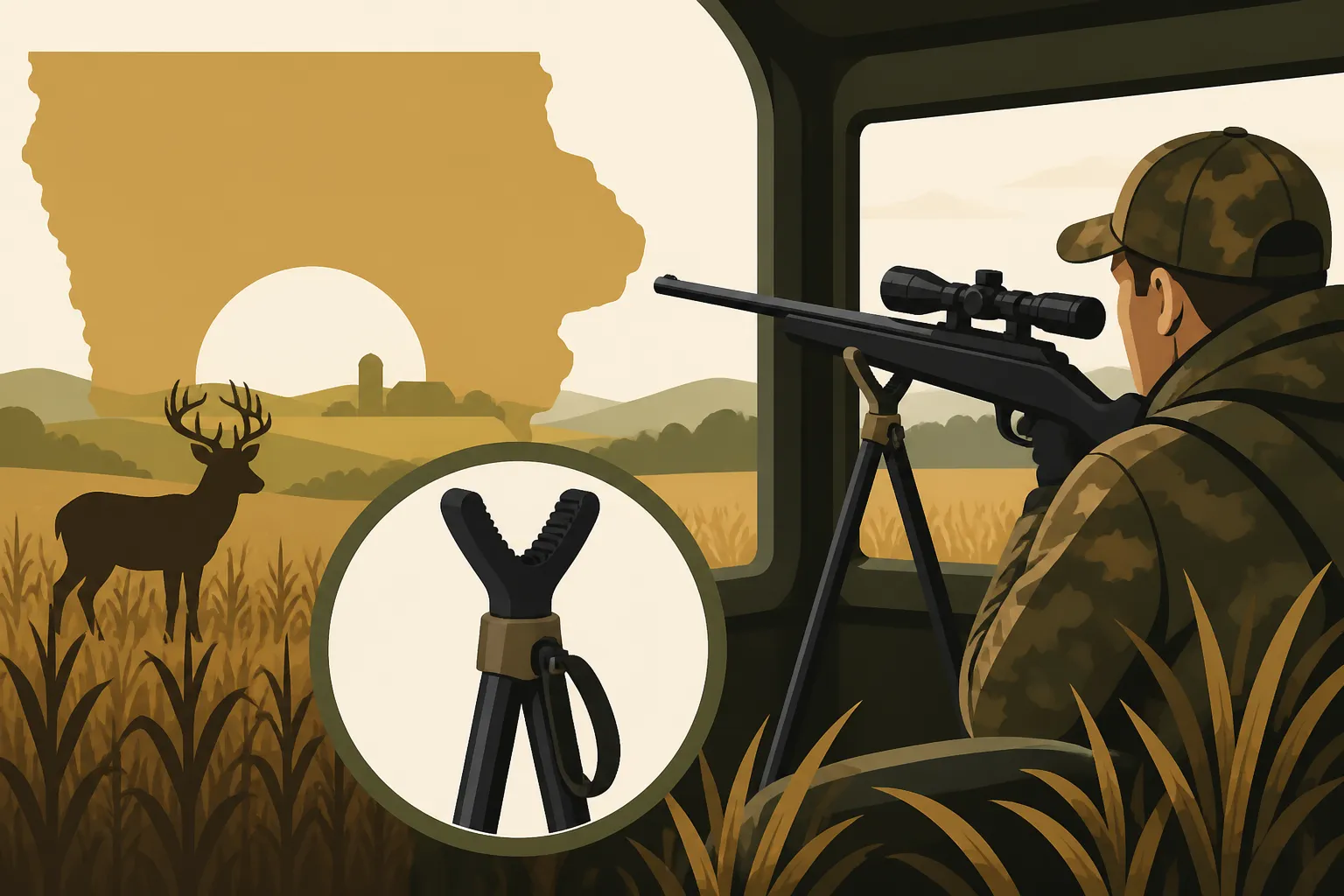
Adjustability is paramount for ground blinds. Look for sticks that offer a wide range of height adjustment, ideally with quick-release levers or twist locks that are easy to operate, even with cold, gloved hands. This versatility allows you to adapt to different window heights and terrain features. Some sticks come with interchangeable feet – rubber for hard surfaces, or spiked for better grip in soft ground – which can be a real benefit in varied Iowa conditions. Additionally, consider the type of rest at the top. A "V" shaped rest or a "U" shaped cradle provides excellent support for your firearm, and some even swivel, allowing for quick horizontal tracking of a moving deer.
Durability and Care Tips for Longevity
Iowa weather can be brutal, from freezing rain to muddy fields. Your shooting sticks need to be tough enough to handle it all. Look for materials that resist corrosion and mechanisms that are less prone to jamming with dirt or ice. Brands that are known for their outdoor gear durability, often reviewed on sites like GoHunt, are a good starting point. Check reviews for how well the locking mechanisms hold up over time and in harsh conditions.
To ensure your shooting sticks last, a little maintenance goes a long way. After each hunt, especially if they've been in mud or rain, wipe them down thoroughly. Extend and collapse all sections to ensure no grit or grime is interfering with the locking mechanisms. If they're particularly dirty, a quick rinse with water and a complete drying before storage can prevent rust or corrosion. Pay attention to the footings; replace worn rubber tips or ensure spikes are clean. Just like you'd meticulously care for your firearms or Keeping a Muzzleloader Dry in Rain, treating your shooting sticks with the same respect will ensure they're always ready when you are, providing that crucial stability for your next big Iowa whitetail.
Disclaimer
This article is for general informational purposes only and does not constitute professional advice. Laws, prices and regulations vary by location and change over time. Consult a qualified professional for guidance on your specific situation.