Using a Decoy on a Field Edge
Hunting Iowa's field edges can be incredibly frustrating. You spend hours tucked away, watching deer pour out into the crops or browse along the timber line, only for that mature buck you've been after to hang up 80 yards out, just outside of bow range or a comfortable shotgun shot. It's a tale as old as time, and it makes you want to pull your hair out! But what if you could entice that cautious buck a little closer? This guide is all about how to master the art of using a decoy on a field edge, a tactic that, when applied correctly, can be a game-changer for bringing those big Iowa whitetails right into your lap.
Why Decoys Work on Iowa Field Edges
Let's face it, deer are naturally wary creatures. They didn't get to be big, mature bucks by carelessly strolling into every open field. They've learned caution, especially when exposed along the edge of a crop field or a pasture. But whitetails are also driven by powerful instincts: breeding, dominance, and a healthy dose of curiosity. It's these very instincts that a well-placed decoy can tap into, turning a buck's caution into an opportunity for you.
The Psychology of a Whitetail Buck
To understand why a decoy works, you first have to get into the mind of a whitetail buck, particularly during the pre-rut and rut phases. Bucks are constantly on the move, scent-checking, rubbing, scraping, and most importantly, looking for does and potential rivals. When a buck sees another deer, it’s not just an object; it represents something. Is it a rival buck invading his territory? Is it a doe, possibly in estrus, that he needs to check out? The visual stimulus of a decoy can be an immediate trigger for these powerful instincts.
Think about it from a buck's perspective. He's cruising a timber edge, maybe following a scrape line or a doe trail, when suddenly, through the trees or just out on the field, he spots another deer. His internal alarm system immediately shifts from general caution to focused assessment. Is it a threat? Is it a chance to breed? This immediate shift in focus is precisely what we're trying to achieve. It takes his attention away from your stand location and directs it squarely at the decoy.
Furthermore, there's a "social proof" aspect at play. If a buck sees another deer (even a static decoy) standing relaxed in an area, especially one he might otherwise be wary of, it can slightly reduce his guard. It suggests that the immediate area is safe, at least from that deer's perspective. This is particularly useful if deer in your area have been pressured. A realistic, calm-looking decoy can sometimes convey a sense of normalcy, making a wary buck feel a bit more comfortable stepping out.
Overcoming a Buck's Hesitation
The classic field edge "hang-up" is the bane of many a hunter's existence. You've seen it a hundred times: a beautiful buck steps out of the timber, pauses at the edge, and just stands there, scent-checking the wind, surveying the field, and looking for danger. He's often just out of range, picking up every subtle sign of trouble before he commits. This is where a decoy truly shines, by interrupting that cautious pattern.
A decoy presents an immediate, tangible "problem" or "opportunity" that overrides the buck's usual routine. Instead of methodically scanning the entire field, his eyes and often his entire body language will orient towards the decoy. It gives him something specific to focus on, a point of interest that draws his attention away from your camouflaged form or your stand. This shift in focus is critical; it encourages him to cover those last 20-30 yards that separate him from your shooting lane.
However, success here hinges on realism. A cheap, shiny, poorly-designed decoy can do more harm than good, acting as a warning sign rather than an invitation. Iowa bucks are smart, and they've seen enough human activity to be skeptical. This means investing in a decoy with a matte finish that doesn't glare in the sun, realistic paint schemes, and perhaps even a subtle fur texture. Scent control is also paramount; you don't want your human odor on the decoy acting as an immediate red flag. Ensuring your decoy looks, smells, and is positioned as naturally as possible is crucial for overriding a buck's inherent hesitation. GoHunt offers some great advice on selecting realistic decoys and preparing them for the field, often sharing tips from seasoned hunters.
Choosing and Setting Up Your Decoy
The effectiveness of your decoy strategy largely depends on making the right choices for your specific hunting scenario. There's no one-size-fits-all answer; what works during the peak of the rut might be completely ignored in the early season. Understanding the nuances of buck versus doe decoys, and mastering their placement, will significantly increase your odds.
Buck, Doe, or Both? Selecting the Right Decoy
When it comes to selecting your decoy, consider the phase of the rut and the behavior you expect from the bucks in your area.
Buck Decoys: These are generally best reserved for the peak rut, particularly when bucks are actively seeking out does and are willing to fight for them. A buck decoy implies a challenge, a rival infringing on another buck's territory or trying to steal a doe. For maximum effect, consider the decoy's posture. A buck with its head down, quartering away, can signal a submissive posture, inviting a more dominant buck to come in and assert his authority. Conversely, a more aggressive, head-up posture can challenge an approaching buck, daring him to get closer. However, be aware that younger, less dominant bucks might be intimidated by a buck decoy and shy away. To dive deeper into these choices, check out our guide on Doe Decoys Versus Buck Decoys.
Doe Decoys: Often more versatile and effective for a longer portion of the season, a doe decoy represents opportunity for a buck. Bucks are constantly looking for does, and a visual cue of a potential mate can be incredibly powerful. A standing doe, appearing relaxed and feeding, can entice a cruising buck to investigate. During the peak of the rut, an estrus doe decoy, perhaps with a slightly raised tail, can be irresistible. This posture tells a buck, without a doubt, that she's receptive and ready to breed, pulling him in with undeniable allure. Doe decoys tend to attract bucks of all ages, as they represent a universal motivator.
Combo Setups: For an even more compelling visual, a combination of a buck and a doe decoy can be deadly. Picture a buck decoy facing a doe decoy, as if he's actively trailing or tending her. This scenario creates a powerful visual narrative: a buck has found a receptive doe, and any approaching buck might see this as a chance to cut in or challenge the "tending" buck. It mimics a real-life breeding scenario that can draw in dominant bucks like a magnet. Always remember to prioritize safety with multiple decoys, especially when hunting during gun seasons or in areas with other hunters. Ensure your blaze orange is highly visible when setting up and retrieving.
Strategic Placement and Wind Direction
Once you've chosen your decoy, its placement is absolutely critical. This isn't just about setting it where it can be seen; it's about setting it up to manipulate a buck's approach for the perfect shot opportunity.
The Golden Rule: Wind is King. You need to position your decoy so that any buck approaching it will naturally move past your stand, or at least in a way that allows you to take a broadside shot. Ideally, you want the buck to approach the decoy by circling downwind to scent-check it. This means placing your decoy downwind of your stand's position, allowing the buck to walk into your shooting lane before he gets directly downwind of you. This intricate dance with the wind is thoroughly explored in our guide on Decoy Placement and Wind Direction. For example, if your stand is set up for a prevailing west wind, place your decoy to the east or northeast of your stand, so a buck circling to get downwind of the decoy will come from the north or northwest, putting him in a prime position for a shot.
Consider the distance from your stand. You want the decoy close enough to draw attention, but not so close that an approaching buck looks past it and directly at you. A common and effective range is 20-30 yards from your stand. This draws the buck well within easy bow range and offers comfortable shotgun or straight-wall rifle shots, but still keeps his focus on the decoy itself. Too far, and he might hang up. Too close, and he might spot you before getting a shot off.
Lastly, think about visual prominence versus a natural look. The decoy needs to be seen from a distance, especially by cruising bucks. However, it shouldn't look out of place or "staked" in an unnatural way. Use natural cover to your advantage. A small brush pile, a clump of weeds, or a fallen log can help hide the decoy's base or stakes, making it appear as if it just stepped out of the timber or is naturally feeding in a particular spot. Pay attention to the sun's angle throughout your hunt to avoid any unnatural glare or shadows off the decoy's surface. Tools like GoHunt can be invaluable for e-scouting, allowing you to examine aerial imagery for natural pinch points, funnels, and potential stand sites along field edges where a decoy might be most effective. Understanding Standing Corn and Bean Field Deer Patterns can also help you identify prime ambush points.
For example, an inside corner of a picked bean field, especially one that funnels deer movement from a timber block into the open, is a prime location for a decoy. Bucks often follow these natural routes, and a decoy placed just inside that corner can pull them into an ethical shooting range. Learn more about these specific locations in our article on Hunting Inside Corners of Crop Fields.
| Decoy Type | Best Time to Use | Ideal Posture | Why it Works | Considerations |
|---|---|---|---|---|
| Dominant Buck | Peak Rut (early Nov) | Head up, broadside | Challenges rivals, territorial aggression | Can deter younger bucks; ensure realism |
| Submissive Buck | Pre-Rut, Rut | Head down, quartering away | Invites challenge from dominant bucks | Less aggressive visual, might not draw far |
| Standing Doe | Pre-Rut, Rut, Post-Rut | Natural, relaxed feeding | Attracts cruising bucks looking for mates | Less intimidating, broader appeal |
| Estrus Doe | Peak Rut | Tail slightly raised | Strongest visual for breeding intent | Best paired with estrus calls, very specific timing |
Calling and Scenario Planning
A decoy provides the visual, but calls provide the auditory confirmation that can seal the deal. Combining these two elements creates a powerful, irresistible scenario for an Iowa buck, turning a curious glance into a committed approach. But knowing when and how to call, and what to do when a buck commits, is key to success.
Integrating Calls with Your Decoy Setup
Decoys and calls are a dynamic duo, each enhancing the other's effectiveness. The visual of the decoy provides the context, while the call adds the urgent, lifelike auditory cue. This combination paints a complete picture that's hard for a buck to ignore.
Start with subtlety. If you spot a buck in the distance, especially one that seems to be cruising or lingering on the field edge, begin with soft grunts or doe bleats. These gentle calls can pique his interest without alarming him. The visual of the decoy then provides immediate confirmation of the sound, telling him exactly where that "other deer" is. If he responds with a turn of the head or changes his direction, you can then consider becoming slightly more aggressive. For a deeper dive into these techniques, particularly during the peak activity, consult our guide on Rattling and Grunting During the Iowa Rut.
When utilizing a buck decoy, especially during the peak rut, rattling can be an absolute game-changer. Imagine a buck spots your decoy, appearing to tend a doe or just standing provocatively. Then, the sounds of a full-blown sparring match erupt from the same area. This auditory and visual combination screams "fight!" or "breeding opportunity!" to a dominant buck. You're not just showing him a deer; you're creating a dramatic scene he feels compelled to investigate. Remember to rattle realistically, incorporating pauses and varying intensity to mimic a true buck fight. The goal is to draw his attention and commitment, letting the decoy finish the story. Our article on Grunt Calls That Work in the Pre-Rut provides more specific advice on call types.
For a doe decoy, particularly an estrus one, an estrus bleat is your most potent weapon. This call explicitly communicates to a buck that there's a receptive doe in the immediate vicinity. When paired with the visual of a doe decoy, it leaves little to the imagination. You can enhance this by adding soft, trailing grunts to simulate a buck actively pursuing or tending the estrus doe, making the scene even more believable and urgent for an approaching buck.
Don't forget the power of calling after the shot. It's a tactic many hunters overlook. If you've successfully taken down a buck with your decoy setup, and the area still feels active, don't be afraid to try some follow-up calls. During the rut, it's not uncommon for multiple bucks to be in the vicinity, and the sounds of a breeding or sparring scenario might draw in another curious buck. Just ensure your first deer is ethically dispatched and secure before you continue calling.
What to Do When a Buck Commits (or Doesn't)
The moment a buck finally commits to your decoy is exhilarating. His focus shifts almost entirely to the "intruder" or "potential mate," and this is your window of opportunity. Be ready.
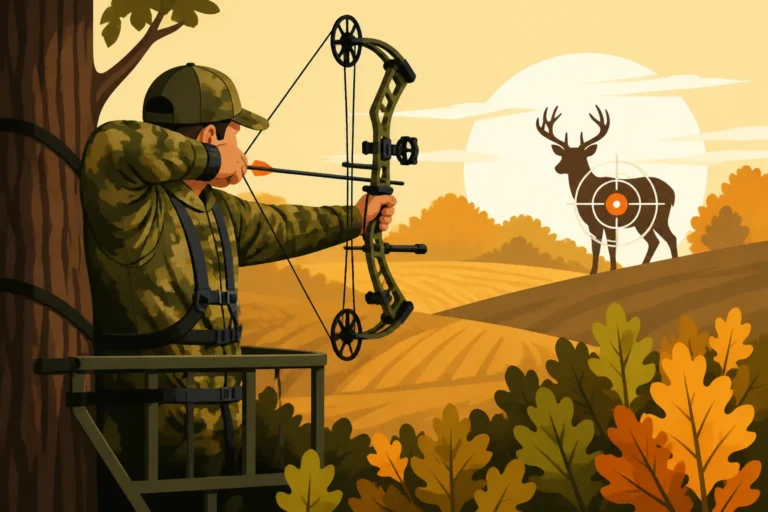
As a buck approaches, his attention will likely be fixated on the decoy. This means you have a precious few moments to make your move without being detected. Draw your bow or shoulder your firearm well before he enters your absolute maximum ethical shooting range. Wait for him to present a broadside or quartering-away shot. Often, as he closes the distance, his head will be down, nose to the ground, or obscured by the decoy itself, offering you a moment to move undetected. Slow, deliberate movements are paramount here; any sudden jerks will blow your cover. GoHunt's mapping features can help you visualize the most likely approach angles and plan your shot windows.
However, sometimes a buck will still hang up, even with a decoy. He might circle widely, or stop just out of range, trying to scent-check or evaluate the situation. Don't panic. A soft grunt or a subtle doe bleat can sometimes refocus his attention on the decoy and encourage him to close those last few yards. If he starts to circle directly downwind of you, be prepared. This is a crucial moment where his keen sense of smell will likely expose your position. If your setup allows, you might be able to subtly shift for a shot, but often, the best move is patience. Sometimes, you just have to let them walk and live to hunt another day rather than forcing a bad shot.
A vital consideration with decoys, especially during gun seasons, is safety. When you are moving in and out of your stand location, especially in low light, or in areas with other hunters, always wear plenty of blaze orange. Never stalk a decoy, and always approach it from the direction a hunter would be expected to come from, not from the direction a deer would approach. This is not only for your safety but for the safety of others. While the excitement of the hunt can be intense, common sense and safety must always come first.
After the hunt, take a moment to assess. Did the decoy work as intended? If not, why? Maybe it was placed too far, too close, or the wind shifted unexpectedly. Every sit is a learning experience. Use trail cameras, placed strategically, to monitor deer movement patterns before and during your hunt. This information, combined with knowing When the Iowa Rut Peaks, can help you fine-tune your decoy strategy for future success. Remember, Scouting Iowa Timber and River Bottoms and understanding localized deer patterns is key to finding those optimal field edges where a decoy will truly shine. For instance, knowing how deer use specific travel corridors to access picked fields is information you can get from thorough scouting, making your decoy placement even more lethal. You might even find it beneficial to use a decoy during the First Week of November Stand Choice, as this period often aligns with peak rut activity and aggressive buck behavior.
Disclaimer
Hunting is an inherently dangerous activity. Always prioritize safety, follow all local and state regulations, and obtain proper licenses and permits. The information provided in this guide is for informational purposes only and should not replace professional instruction or local wildlife agency guidelines. Hunt responsibly and ethically.