Iowa Wild Turkeys Across the State
Few things get an Iowa hunter's heart pounding like the throaty gobble of a wild turkey ringing through a crisp spring morning. Yet, for many years, the thought of pursuing these magnificent birds across the Hawkeye State was just a dream, a historical footnote from a bygone era. Iowa's wild turkey population faced a steep decline, but thanks to dedicated conservation efforts, these elusive birds have made a remarkable comeback, offering incredible hunting opportunities that deserve a deep dive. This guide will walk you through everything you need to know about Iowa's wild turkeys, from their history to habitats, biology, hunting strategies, and the vital role of conservation.
Iowa's Wild Turkey Comeback Story
It's hard to imagine, but there was a time when the resounding gobble of a wild turkey was nearly absent from Iowa's woodlands. Habitat destruction and unregulated hunting in the late 19th and early 20th centuries pushed these iconic birds to the brink, nearly extirpating them from the state. The idea of a vibrant Iowa turkey season seemed impossible, a sad testament to how quickly a species can disappear without proper management.
Historical Decline and Reintroduction Efforts
By the early 1900s, Iowa's once-thriving wild turkey populations had dwindled to almost nothing. The vast hardwood forests that turkeys called home were cleared for agriculture, fragmenting their habitat and leaving them vulnerable. It wasn't just Iowa; many states across the Midwest and East saw similar declines. This widespread loss ignited a conservation movement, recognizing the urgent need to restore native wildlife.
In Iowa, the first glimmer of hope for wild turkeys came in the 1960s with reintroduction programs. This wasn't a simple matter of releasing pen-raised birds; wildlife biologists learned quickly that wild-trapped turkeys were far more successful at establishing new populations. These initial efforts often involved trapping wild birds from states with healthy populations, like Missouri and Wisconsin, and carefully relocating them to suitable, reforested areas within Iowa. These early sites were strategically chosen, often in rugged, timbered river breaks or along extensive creek drainages in counties like Van Buren, Appanoose, and Allamakee, where pockets of decent habitat still existed. It was a slow, meticulous process, often requiring careful monitoring and multiple release sites to ensure genetic diversity and successful reproduction. Hunters and conservationists alike held their breath, hoping these efforts would take root.
Population Growth and Range Expansion
Against all odds, the reintroduction programs were a resounding success. The wild turkeys, specifically the Eastern subspecies, proved incredibly adaptable. With renewed habitat and protection, their numbers began to climb steadily through the 1970s and 80s. What started as small, localized populations soon began to expand their range, radiating out from the initial release sites. They found refuge and sustenance in the patchwork of timber, brush, and agricultural fields that now characterized much of Iowa's landscape.
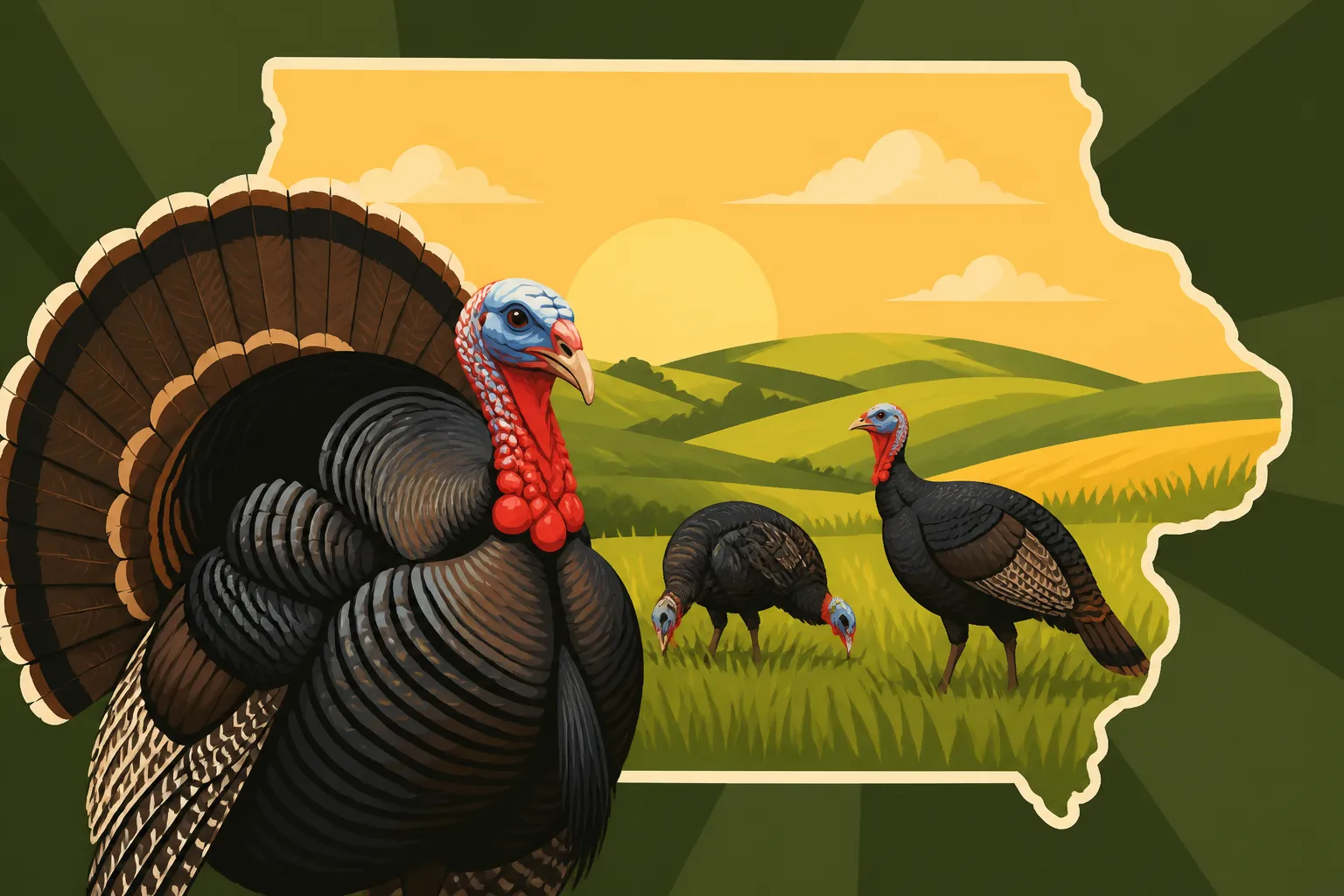
This expansion wasn't limited to the deep timber; turkeys surprised many by adapting to areas with smaller woodlots and creek bottoms, utilizing the vast corn and soybean fields for foraging during certain times of the year. Today, wild turkeys are found in all 99 Iowa counties, a testament to their resilience and the effectiveness of science-based wildlife management. While populations naturally fluctuate due to weather, habitat changes, and other factors, the overall trend has been one of robust health. This success story isn't just about turkeys; it's a powerful reminder of what dedicated conservation can achieve. The sight of a strutting gobbler in a picked cornfield or a hen leading a brood of poults through a timber edge is now a common, cherished experience for Iowans. For a deeper look into these trends, check out our piece on Iowa Turkey Population Trends.
Where Iowa Turkeys Roam: Habitat and Distribution
Understanding where turkeys prefer to live is absolutely crucial for any hunter hoping to intercept a gobbler or locate a fall flock. While Iowa's landscape is predominantly agricultural, there are specific areas and habitat types that consistently hold the highest densities of wild turkeys. They aren't just randomly distributed; they utilize the terrain and vegetation to their advantage, seeking cover, food, and safe roosting sites.
Timbered River Bottoms and Creek Drainages
If there's one habitat type that screams "turkey" in Iowa, it's the timbered river bottoms and the extensive networks of creek drainages. These areas provide everything a wild turkey needs to thrive: mature hardwoods for roosting, dense understory for nesting and brood-rearing, and a rich variety of food sources. Think about the major river systems like the Mississippi, Missouri, Des Moines, Skunk, Iowa, and Cedar Rivers, and their countless tributaries. These corridors are lifelines for wildlife.
The bluffs and hillsides bordering these river and creek systems are often heavily wooded with oak, hickory, maple, and walnut trees. Oaks and hickories are particularly vital, providing acorns and nuts that are a primary food source for turkeys, especially in the fall and winter. The steep, often inaccessible terrain within these drainages also offers crucial refuge from human disturbance. Turkeys will utilize these areas for escape cover, especially during high-pressure times. During the spring, gobblers often set up on ridges overlooking these bottoms, using their vantage point to project their calls and attract hens. The complex topography also creates natural travel corridors and pinch points that hunters can exploit. Access to some of these areas can be challenging, but it's often where you'll find less pressured birds. Learning to read an Iowa timber draw for deer sign can also apply to turkeys, as both species utilize similar travel corridors.
Agricultural Edges and Mixed Woodlands
While the big timbered bottoms are prime turkey country, Iowa's wild turkeys have also become incredibly adept at living in the matrix of agricultural fields and smaller, scattered woodlots. This adaptation is part of their success story across the state. They don't just exist on the fringes; they actively utilize these mixed habitats, often venturing into crop fields for foraging.
During the spring and summer, agricultural fields, particularly those with corn or soybeans, offer an abundance of insects, waste grain, and tender green vegetation. Hens will often lead their poults into these field edges to feed on insects, which are crucial for the rapid growth of young turkeys. The transition zones, where timber meets a picked cornfield or a hayfield, are high-activity areas. These edges provide quick access to cover if danger approaches, making them attractive to wary birds. Hunters often find success setting up on these field edges, using decoys to draw birds out of the timber. Even small, isolated patches of timber, cedar thickets, or overgrown fencerows can hold turkeys, especially if they are connected to a larger habitat block or water source. It's a misconception that turkeys only live in vast, uninterrupted forests. In Iowa, they've learned to thrive in a mosaic landscape, making careful scouting of these diverse areas essential. Many public land hunters find success by identifying these smaller, overlooked pockets of cover adjacent to private agricultural fields.
Understanding Iowa Turkey Behavior and Biology
To consistently find and hunt wild turkeys in Iowa, a deep understanding of their behavior and biology is paramount. These birds are creatures of habit, but they are also incredibly perceptive and can change their routines based on pressure, weather, and food availability. Learning their rhythm, from daily movements to seasonal patterns, is key to successful interactions.
Roosting, Feeding, and Breeding Habits
Wild turkeys follow a fairly predictable daily cycle, heavily influenced by light, food, and safety. Their day begins on the roost, typically in tall, mature trees, often near water or on prominent ridges. They fly down at first light, usually with a chorus of "tree yelps" and "gobbles" as they communicate their presence. Scouting for roosting sites the night before can be a game-changer for spring hunters. Knowing Roosting Iowa Turkeys the Night Before can significantly increase your odds.
Once on the ground, their primary focus shifts to feeding. Turkeys are omnivores, their diet varying seasonally. In spring and summer, they forage heavily on insects, grasses, seeds, and fruits. In fall and winter, acorns, waste grain from agricultural fields (especially corn and soybeans), and various nuts become critical. They'll scratch through leaf litter, peck at seeds, and sometimes even venture into open fields for insects. After a period of feeding, they'll often "loaf" in shaded areas or thick cover, dusting themselves in dirt baths to control parasites.
The spring breeding season is the most exciting time for turkey hunters. This is when gobblers are actively seeking hens, displaying their impressive fan and strutting to attract mates. Gobbling peaks during this period, with the birds vocalizing most intensely at fly-down and throughout the morning. Hens will begin to nest in April and May, often in dense cover, laying a clutch of around 10-12 eggs. During this time, gobblers might be "heenned up" with a group of receptive hens, making them challenging to call in. Understanding the nuances of Calling a Henned-Up Iowa Gobbler is crucial in these scenarios. Once hens begin incubating, gobblers become more solitary and responsive to calls.
Flock Dynamics and Seasonal Movements
Wild turkeys are highly social birds, living in distinct flocks that exhibit interesting dynamics throughout the year. During the late fall and winter, large, segregated flocks are common. You'll typically see distinct hen-and-poult flocks, bachelor groups of gobblers, and sometimes mixed-age groups. These larger congregations offer safety in numbers and are efficient for finding scarce food sources during colder months. They might travel considerable distances between roosting areas, feeding grounds, and protective cover, sometimes moving between large timber blocks and agricultural fields.
As winter gives way to spring, these large flocks begin to break up. The testosterone-driven gobblers start to separate and establish dominance hierarchies. Hens will also disperse as they become receptive to breeding, eventually seeking out nesting sites. This dispersal is what makes spring hunting possible, as individual gobblers become more callable as they search for mates. Once the hens are on their nests, gobblers will often roam more widely, continually searching for remaining receptive hens.
After the poults hatch, typically in late May or early June, the hens lead their broods to areas rich in insects and dense cover. Poult survival is critical for the overall health of the turkey population, and the first few weeks are especially vulnerable. As the poults grow, the hen-and-brood flocks will become more mobile, eventually rejoining other hen flocks in late summer or early fall. The cycle then begins anew, with gobblers forming bachelor groups and all birds gradually coalescing into larger winter flocks. Understanding these annual shifts is vital for successful scouting, whether you're planning a spring hunt or pursuing fall birds.
Factors Affecting Iowa Turkey Populations
Like any wildlife species, Iowa's wild turkey populations are subject to a variety of environmental and biological factors. While they've made an incredible comeback, their numbers are never static, fluctuating year to year based on a complex interplay of forces. Understanding these influences helps hunters and conservationists appreciate the challenges these birds face and the efforts needed to maintain healthy populations.
Weather Impacts on Poult Survival
Without a doubt, one of the most critical factors influencing turkey populations is spring and early summer weather, specifically its impact on poult survival. Young turkeys, or poults, are incredibly vulnerable during their first few weeks of life. They are small, cannot regulate their body temperature effectively, and are highly susceptible to exposure.
Extended periods of cold, wet weather immediately following hatch can be devastating. Poults can quickly succumb to hypothermia if they get chilled and can't dry out. Heavy, prolonged spring rains can also flood nests, reduce insect availability (a vital food source for growing poults), and make it harder for hens to keep their young warm and dry. Conversely, mild, dry springs typically lead to higher poult survival rates, which translates to a stronger cohort of young birds entering the fall and subsequent spring seasons. This is why wildlife biologists pay such close attention to annual poult survival data, as it's a strong indicator of the overall health and future trends of the turkey population. Knowing about Spring Rain and Poult Survival helps explain these fluctuations. A good resource like GoHunt can help track regional weather patterns, which, while not directly predictive of poult survival, can inform your understanding of local conditions.
Predation and Disease Considerations
Beyond weather, wild turkeys face constant threats from predation and, occasionally, disease. Predation is a natural part of any ecosystem, and turkeys have many predators throughout their life cycle. Nests are particularly vulnerable to raccoons, opossums, skunks, and snakes. Young poults can fall victim to raptors, coyotes, foxes, bobcats, and even domestic cats and dogs. Adult turkeys, while more formidable, are still prey for coyotes, bobcats, and great horned owls. While predation can reduce local numbers, healthy turkey populations are generally resilient enough to withstand typical predation levels. However, if habitat quality declines, making turkeys more exposed, or if predator populations surge, it can exacerbate the pressure on turkeys.
Disease can also play a role, though typically less dramatically than in deer populations. Blackhead disease (histomoniasis) can affect turkeys, often spread by internal parasites found in game birds like pheasants and quail. Lymphoproliferative disease (LPDV) is another concern, though its impact is still being studied. Avian influenza outbreaks, while primarily affecting waterfowl, can also sometimes impact other bird species. The Iowa Department of Natural Resources (DNR) monitors for signs of disease and encourages hunters to report any sick or unusual-looking birds. Maintaining robust, diverse turkey habitats and healthy ecosystems is the best defense against widespread disease impacts.
Hunting Iowa's Wild Turkeys: Seasons and Opportunities
The successful reintroduction of wild turkeys has opened up fantastic hunting opportunities across Iowa, drawing both resident and nonresident hunters eager to experience the thrill of calling in a gobbler. Iowa offers both spring and fall turkey seasons, each with its own unique challenges and rewards. Understanding the nuances of these seasons and how to access hunting grounds is vital for a successful hunt.
Spring vs. Fall Turkey Seasons
Iowa's spring turkey season is arguably the most popular, primarily focused on harvesting gobblers when they are most vocal and active during their breeding cycle. The season is split into multiple periods, often referred to as "seasons," typically running from early April through late May. This tiered system helps manage hunting pressure and spreads out hunters across the prime breeding period. Hunters can usually purchase one license for a specific season, with options for an additional license if quotas allow. The spring hunt is all about calling a receptive gobbler into range, often using a combination of yelps, clucks, and purrs to mimic a hen. It's an immersive experience, reliant on stealth, patience, and the ability to interpret turkey vocalizations and behavior. For a deep dive into specific strategies, check out Iowa Turkey Hunting Tactics for Spring Gobblers.
The fall turkey season, while less popular than spring, offers a different and often equally rewarding experience. Fall hunts typically run from October through early December. Unlike spring, hunters can harvest any turkey, including hens and young "jakes" or "jennys." The tactics shift from calling in lovesick gobblers to locating and breaking up fall flocks. The goal is often to scatter a flock and then call them back together using "assembly yelps" or "kee-keess" to imitate lost poults or a lone hen. This can be a highly effective strategy, especially with juvenile birds that are eager to rejoin their family groups. Fall turkey hunting can also be combined with deer hunting in some areas, offering a unique mixed-bag opportunity. Both seasons present distinct challenges, and many dedicated turkey hunters enjoy participating in both to experience the full spectrum of turkey hunting.
Public Land Access and Considerations
For many hunters, especially those without access to private land, Iowa's extensive network of public hunting areas provides invaluable opportunities. The Iowa Department of Natural Resources (DNR) manages numerous Wildlife Management Areas (WMAs), State Forests, and other public lands where turkey hunting is permitted. These areas are scattered across the state, with some of the largest timbered tracts, often holding higher turkey densities, found along the major river systems and in southern Iowa.
Utilizing the Iowa DNR Hunter Atlas is an essential tool for identifying these public parcels, understanding their boundaries, and checking for any specific regulations or walk-in access restrictions. GoHunt also provides excellent mapping resources that can help pinpoint these public access points and scout them virtually. Be aware that public lands can experience significant hunting pressure, especially during opening weekends. Therefore, employing tactics like Run-and-Gun Turkey Tactics on Iowa Public Land or being willing to walk further away from parking areas can increase your chances of finding unpressured birds.
When hunting public land, always be mindful of other users. Safety is paramount, and wearing blaze orange when moving through fields or less-dense cover, even during archery seasons, is a good practice, especially during shotgun seasons. Familiarize yourself with Iowa's rules on portable stands and blinds, and always practice ethical hunting by leaving no trace. Knowing the specific rules for Portable Stand Rules on Iowa Public Ground is important. For nonresidents, it's also crucial to understand the Iowa Nonresident Spring Turkey Licences process and application dates, as these tags can sometimes be limited or require an application period.
| Iowa Turkey Season Comparison | Spring Turkey Season | Fall Turkey Season |
|---|---|---|
| Primary Target | Gobblers (males) | Any turkey (male/female) |
| Season Dates | Early April – Late May (multiple periods) | October – Early December |
| Main Hunting Method | Calling in gobblers, mimicking hens | Breaking up flocks, calling back lost birds |
| Vocalizations | Gobbling, yelps, clucks, purrs | Assembly calls, kee-keess, clucks |
| Pressure | High, especially early in periods | Moderate to Low |
| Primary Challenge | Heenned-up gobblers, wary birds | Locating flocks, getting them to scatter |
| Best Weather | Clear, calm mornings for gobbling | Any weather, can be good in light rain |
| Licence Availability | Specific seasonal periods, can be limited for nonresidents | Generally more open, often available over the counter |
Essential Gear and Tactics for Iowa Turkey Hunters
Successfully hunting Iowa's wild turkeys requires more than just knowing where they live; it demands the right gear and a solid understanding of effective tactics. Whether you're a seasoned turkey hunter or new to the pursuit, having your equipment dialed in and a strategic approach is essential. Turkeys are notoriously wary birds, and every detail, from your camouflage to your calling, can make a difference.
Calling Strategies and Decoy Use
Calling is the heart and soul of spring turkey hunting, and mastering various vocalizations is a critical skill. The most common calls mimic a hen's presence, aiming to draw in a curious or lonely gobbler. The primary calls include:
- Yelps: The most fundamental call, mimicking a hen's desire to find a mate or other turkeys. Varying the pitch and cadence is important.
- Clucks: Short, sharp notes that indicate contentment or alertness. Used to get a gobbler's attention without being too aggressive.
- Purrs: Soft, reassuring sounds of contentment, often used to close the distance once a gobbler is in sight.
- Cuts: Aggressive, loud, fast clucks that mimic an excited hen. Can provoke a gobbler into responding.
- Fly-down cackles: Mimics a turkey flying down from the roost, often used at first light to announce your presence.
Mastering a variety of calls – box calls, slate calls, and diaphragm calls – allows for versatility. Each has its own distinct sound and utility. For instance, a box call can project loudly across open fields, while a diaphragm call allows for hands-free operation once a bird is close. Knowing when to use different calls, and more importantly, when not to call, comes with experience. Sometimes less is more, especially with pressured birds.
Decoys are another powerful tool in the turkey hunter's arsenal. They provide a visual focal point for incoming gobblers, drawing their attention away from your exact position. Popular decoy setups include:
- Single hen: A classic choice, often effective in drawing in a gobbler looking for a mate.
- Hen and jake/subordinate gobbler: This setup can trigger an aggressive response from dominant gobblers who see a younger male with a hen.
- Strutting gobbler: A highly aggressive setup, best used when you know there are dominant gobblers in the area. Be cautious with these on public land during gun seasons, as they can sometimes draw other hunters in too closely.
Placement is key. Decoys should be positioned to present a clear shot opportunity at the approaching gobbler, ideally 20-30 yards from your position. Consider wind direction, too, as turkeys often approach into the wind. For more specific advice, review Turkey Decoy Spreads That Work and Decoy Placement and Wind Direction.
Shotgun, Bow, and Blind Setups
The choice of weapon for turkey hunting largely depends on personal preference and the specific season. Most spring hunters opt for a shotgun, known for its effectiveness at close ranges.
Shotgun Setup:
- Gauge: 12-gauge is most common, but 20-gauge shotguns are also highly effective with modern loads.
- Choke: A tight "turkey choke" (extra full) is essential for a dense pattern.
- Ammunition: High-density, heavy-payload turkey loads (like tungsten-based shot) are standard, providing maximum pellet energy and tight patterns. Pattern your shotgun before the season to know its effective range and pattern density.
- Optics: Many hunters use red dot sights or low-magnification scopes for precise aim at the turkey's head and neck.
- Camouflage: Full head-to-toe camouflage is critical to break up your outline.
Bow Setup:
- Bow: Compound bows are most popular, but traditional bows are also used.
- Broadheads: Specific turkey broadheads, often designed for maximum shock and quick kills without deep penetration (like a Guillotine broadhead), or standard fixed/mechanical broadheads are used. Practice shooting at realistic turkey targets.
- Blinds: A pop-up ground blind is almost a necessity for bowhunting turkeys, allowing for movement and drawing the bow undetected. Blind Hunting for Turkeys With Kids is a great way to introduce youngsters to the sport. Brushing In a Ground Blind will help it blend in.
Ground Blind Strategy:
- Ground blinds are excellent for both shotgun and bow hunters, especially in open country or for those who need to minimize movement.
- Set up your blind well in advance if possible, allowing turkeys to get used to it.
- Choose a location with good visibility, shooting lanes, and a natural backdrop.
- Always ensure your blind is well brushed in and that you are silhouetted against dark cover, not against the open sky.
- Be mindful of Hunting From a Blind Without Movement, as turkeys have exceptional eyesight.
Regardless of your weapon, safety is paramount. Always be aware of your surroundings, clearly identify your target, and know your effective range. Public land hunting also necessitates understanding Public Land Turkey Safety protocols.
Conservation and Management of Iowa's Turkey Resource
The thriving wild turkey population in Iowa today isn't an accident; it's the direct result of decades of dedicated conservation and careful management. This ongoing effort ensures that future generations of Iowans can continue to experience the thrill of turkey hunting and enjoy the presence of these magnificent birds in the state's diverse landscapes.
DNR Monitoring and Hunter Contributions
The Iowa Department of Natural Resources (DNR) plays a pivotal role in managing the state's wild turkey resource. Their biologists and wildlife technicians continuously monitor turkey populations through various methods. One primary tool is the annual spring Gobbler Sightings Survey, where hunters and outdoor enthusiasts report the number of gobblers seen and heard, providing valuable data on gobbling activity and distribution. Additionally, the DNR conducts extensive brood surveys in the summer, gathering information on hen-to-poult ratios, which is crucial for assessing reproductive success and future population trends. These surveys, combined with harvest data collected from hunters, give the DNR a comprehensive picture of the turkey population's health.
Hunters are indispensable partners in this conservation equation. Through the purchase of hunting licenses and stamps, they directly contribute funds that support turkey management programs, habitat restoration, and research. This "user-pay, public-benefit" model, known as the American System of Wildlife Conservation, ensures that those who benefit from the resource also fund its perpetuation. Furthermore, hunters act as eyes and ears on the ground, often reporting unusual observations, potential poaching incidents, or signs of disease to the DNR. This active participation from the hunting community is crucial for responsive and effective wildlife management, safeguarding the future of Iowa's turkeys.
Habitat Improvement and Landowner Programs
While population monitoring is essential, the backbone of wild turkey conservation in Iowa lies in habitat improvement. Turkeys need quality habitat to thrive: mature timber for roosting, dense understory for nesting and brood-rearing, and diverse food sources throughout the year. The DNR actively works to restore and enhance these habitats on public lands, often through timber stand improvement projects, controlled burns to encourage new growth, and the planting of beneficial trees and shrubs.
Beyond public lands, private landowners are critical stewards of turkey habitat. Recognizing this, the DNR and other conservation organizations offer various programs to assist landowners in creating and enhancing wildlife habitat on their properties. Programs such as the Iowa Habitat and Access Program (IHAP) incentivize landowners to allow public hunting access while also improving habitat. Other initiatives focus on tree planting, establishing native grasses, and creating food plots that benefit turkeys and other wildlife. Landowners interested in supporting turkey populations can work with their local DNR wildlife biologist or private land specialist to develop habitat management plans tailored to their property. These partnerships between state agencies, conservation groups, and private citizens are fundamental to the continued success of Iowa's wild turkey populations, ensuring that the gobble continues to echo across the state's diverse landscapes for generations to come.
Disclaimer
The information provided in this guide is for general informational purposes only and is not intended as legal advice. Hunting regulations and seasons in Iowa are subject to change. Always consult the official Iowa Department of Natural Resources (DNR) regulations and guidelines before planning any hunting activity. It is the responsibility of each individual hunter to know and comply with all applicable state and federal laws.