Bobcat Range Across Iowa
There's a quiet excitement that buzzes among Iowa hunters and outdoors enthusiasts whenever the topic of bobcats comes up. For many years, these elusive felines were little more than a whisper, a rare sighting, or a forgotten piece of Iowa's natural history. But things have changed, and if you’ve been wondering about their presence or where they might be roaming, you're not alone. This guide will walk you through the remarkable comeback of bobcats in our state, reveal where they currently thrive, and discuss their expanding range across Iowa’s diverse landscapes.
The Resurgence of Bobcats in Iowa
It wasn't that long ago that the idea of regularly seeing a bobcat in Iowa seemed like a pipe dream. These beautiful, secretive creatures were once common, truly part of the wild fabric of our state. But as Iowa's landscape shifted dramatically with agricultural expansion and unchecked hunting and trapping pressure, their numbers plummeted. For decades, they were virtually gone from large parts of the state, considered an endangered species, a ghost of the past. It's a testament to both nature's resilience and dedicated conservation efforts that we now see them making such a strong comeback.
Historical Presence and Decline
Back in the pioneer days, bobcats were just another predator in the Iowa ecosystem, adept at hunting in the timbered river bottoms and the scattered brush country. Their short, bobbed tails and tufted ears were a familiar sight to early settlers, albeit a fleeting one. However, as human populations grew and agricultural practices intensified, much of their critical habitat, particularly dense timber and brushy tracts, was cleared. Simultaneously, there were few regulations on hunting and trapping furbearers, leading to significant pressure on bobcat populations. By the mid-20th century, their numbers had dwindled to critical lows, and they were essentially extirpated from much of the state, especially the more heavily farmed northern and central regions. It was a bleak time for Iowa's wild cats, and many believed they might never truly recover a foothold here.
The disappearance of bobcats was part of a larger trend affecting many native predators. With fewer places to hide and a lack of protective measures, they simply couldn't compete with the rapid pace of human development. It highlighted the fragile balance of our ecosystems and how quickly a species can decline when their habitat is fragmented and they face relentless pressure. For generations, an Iowa hunter might go their entire life without ever catching a glimpse of this magnificent animal, let alone knowing where to consistently look for one.
Conservation Efforts and Population Growth
Thankfully, the tide began to turn. Increased awareness of wildlife conservation, coupled with the implementation of trapping and hunting regulations, provided the much-needed reprieve for bobcats. In 1977, the Iowa Department of Natural Resources (DNR) gave the bobcat full protected status, making it illegal to hunt or trap them. This protection was crucial, allowing their small, struggling populations to begin rebuilding in the more remote, timbered areas of the state where they still clung on.
Over the next few decades, the populations slowly, steadily grew. As their numbers increased, so did the sightings, especially on trail cameras set for deer. This natural expansion, combined with studies and surveys conducted by the DNR, confirmed that bobcats were indeed making a remarkable comeback. By the early 2000s, their population had rebounded enough that the DNR cautiously reopened a limited trapping season in specific southern counties, a clear indicator of their recovery. Today, they are managed as a furbearer, with specific seasons and quotas, which is a far cry from their near-extinction status. Their current management shows a careful balance between allowing sustainable harvest and ensuring the population continues to thrive, reflecting a commitment to keeping these important predators on the landscape.
Current Bobcat Distribution Across Iowa
When you look at a map of Iowa, you might initially think it's all endless corn and bean fields. And while row crops certainly dominate, pockets of prime bobcat habitat are scattered across the state, and these cunning predators are masters at using them. Their distribution isn't uniform; instead, it tends to be concentrated in certain areas that offer the perfect blend of cover, food, and remoteness. Understanding this distribution is key to knowing where you might encounter one, whether you're hunting deer or simply out enjoying nature.
Southern and Western Iowa Strongholds
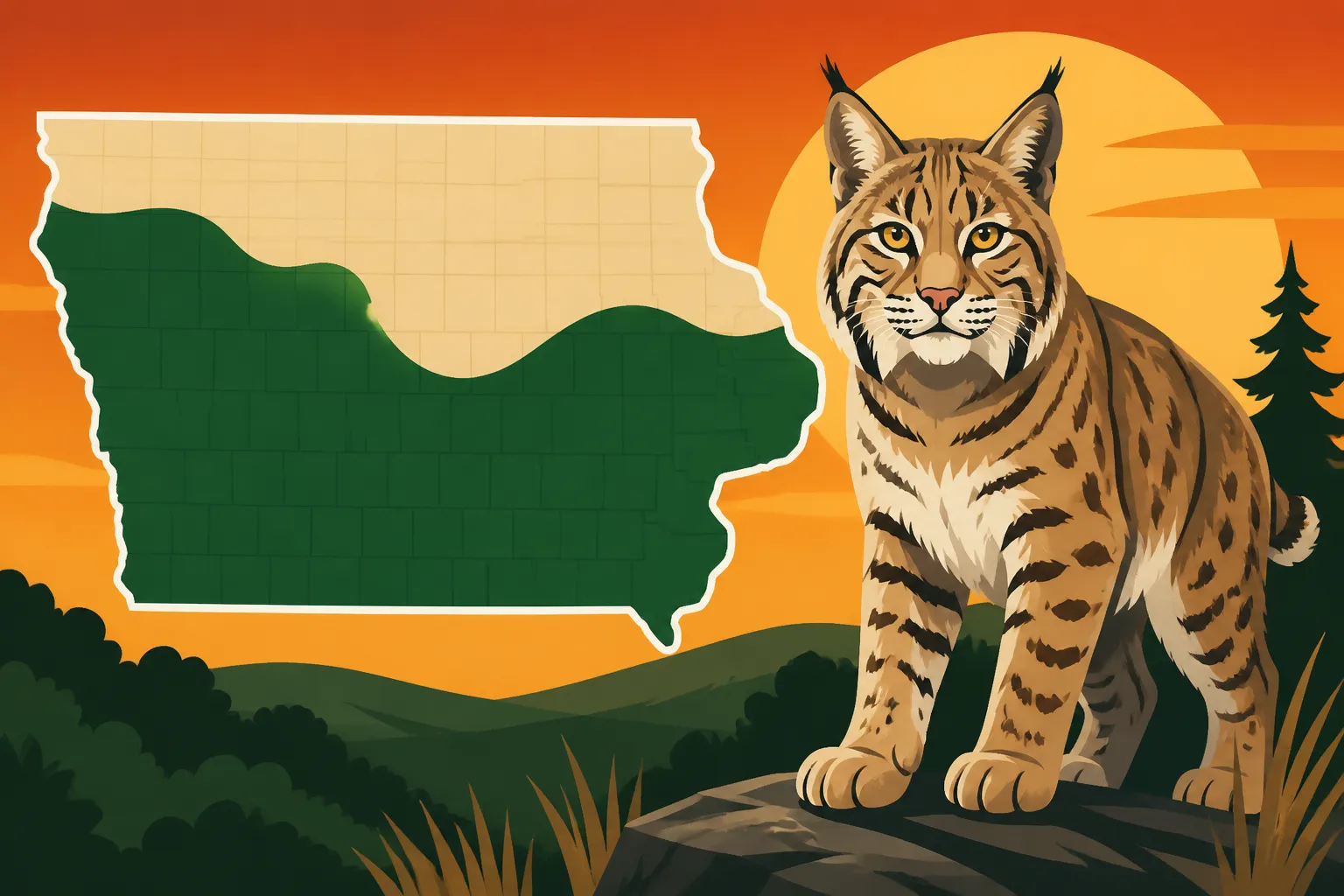
Without a doubt, the strongest bobcat populations in Iowa are found in the southern and western portions of the state. These regions offer a unique combination of factors that make them ideal for bobcats. Southern Iowa, with its extensive timber tracts, broken terrain, deep ravines, and less intensive agricultural practices compared to the north, provides ample cover and a rich prey base. Counties in the southern tier, especially those along river systems like the Des Moines River, often report the highest densities of bobcats. Areas like Stephens State Forest or Shimek State Forest are classic examples of the kind of sprawling, rugged timber that these cats absolutely love. This kind of landscape gives them the dense cover they need for denning, raising young, and ambushing prey.
Similarly, western Iowa, particularly the unique Loess Hills region, is another significant stronghold. The dramatic topography of the Loess Hills features steep, timbered ridges and deep, winding ravines that offer incredible cover and a natural labyrinth for bobcats to navigate. The less disturbed nature of these hills, combined with good populations of rabbits, squirrels, and small rodents, creates a perfect environment. This broken, diverse terrain acts as a natural refuge, allowing bobcat populations to flourish away from constant human disturbance. Hunters focused on deer in these areas should always keep an eye out for bobcat tracks or even a fleeting glimpse of a cat slipping through the underbrush. If you're using a mapping app like GoHunt, pay close attention to the public lands and IHAP tracts in these regions; they often hold significant bobcat activity.
Expanding Range into Central and Eastern Iowa
While southern and western Iowa are their traditional strongholds, bobcats are certainly not staying put. Over the last decade or two, there has been a noticeable expansion of their range into central and even parts of eastern Iowa. This doesn't mean you'll find them on every farm, but sightings and trail camera captures are becoming increasingly common in areas where they were historically absent or extremely rare. This expansion is a testament to the health and adaptability of Iowa's bobcat population. They are using timbered creek corridors, brushy drainages, and even smaller isolated woodlots to navigate across more open agricultural landscapes.
For instance, a hunter pursuing Hunting a Narrow Creek Corridor for deer might suddenly spot a bobcat traversing the same path, or a trail camera set up along a timber edge for Hunting Inside Corners of Crop Fields might capture one cruising through the corn stubble. These linear features provide essential travel routes and hunting grounds in areas that might otherwise seem inhospitable. As the bobcat population grows, younger cats are forced to disperse further from their birth territories, pushing the boundaries of their traditional range. This means that hunters in counties once considered "bobcat-free" might now have a real chance of encountering one. This gradual expansion shows how well they adapt to finding suitable habitat, even if it's in smaller, more fragmented pieces, as long as there's enough food and cover to sustain them.
Understanding Bobcat Habitat and Behavior
To truly appreciate the bobcat's return to Iowa and understand their current distribution, it helps to delve into their preferred habitats and typical behaviors. These aren't creatures of wide-open spaces; they are masters of stealth and cover, blending seamlessly into the dense undergrowth and shadows of our timbered landscapes. Their lifestyle dictates where they can survive and thrive, and Iowa provides just enough of these critical elements to support a growing population.
Ideal Habitat Characteristics
Bobcats are champions of dense cover. They absolutely thrive in rugged, timbered areas with thick underbrush, rocky outcrops, and particularly along timbered stream bottoms and river breaks. Imagine those tangled thickets of cedar and multiflora rose, the kind of places you'd never want to walk through – that's prime bobcat country. These areas provide the perfect blend of concealment for ambushing prey, safety from larger predators, and secluded denning sites. The rougher the terrain, the better, as it limits human disturbance and offers a complex landscape for hunting. Areas with Cedar and Locust Thickets as Bedding Cover for deer often double as excellent bobcat habitat.
In Iowa, this often translates to the deep timber pockets of our state forests, the steep bluffs of the Loess Hills, and the extensive river corridors that snake across the state. These river systems, with their associated timber, brush, and varying topography, act as natural highways for bobcats, allowing them to travel and hunt without venturing too far into open, exposed areas. Even relatively small, unpressured timber blocks surrounded by agriculture can hold a resident bobcat or two, especially if they connect to larger travel corridors. They are opportunistic and adaptive, but the core requirement remains consistent: thick, secure cover where they can disappear.
Prey and Predation
As opportunistic carnivores, bobcats have a varied diet, which is another reason for their success in diverse Iowa landscapes. Their primary food sources are small to medium-sized mammals, with cottontail rabbits and various squirrel species often topping the menu. These abundant prey items are found throughout Iowa's timbered and brushy habitats, providing a consistent food supply. They'll also readily hunt mice, voles, and other rodents, making them a valuable part of the ecosystem in controlling pest populations. Hunters know well that if you have healthy populations of Rabbit Hunting Brush Piles and Squirrel Hunting Iowa Oak Timber, you likely have a robust food chain that could support a bobcat.
Beyond small mammals, bobcats are known to prey on ground-nesting birds, including wild turkeys and pheasants, especially young poults. They are incredibly efficient hunters, using their keen senses and stealth to stalk and ambush. While they might occasionally take a fawn or a sick/injured adult deer, they are generally not considered a major predator of healthy adult whitetails. Their predation on various species means that a strong bobcat population signifies a healthy, balanced ecosystem with a good variety of prey animals, which is something every hunter should appreciate. You might not see them often, but their presence is a good indicator of overall wildlife health in an area.
Spotting and Coexisting with Bobcats
So, how do you actually spot one of these secretive animals, or at least confirm their presence in your hunting area? It takes patience, a bit of luck, and knowing what to look for. While a direct sighting can be exhilarating, more often than not, you'll be looking for signs that they're around. Understanding their behavior and utilizing modern scouting tools can significantly increase your chances of detecting a bobcat, or at least appreciating that they're sharing the landscape with you.
Signs of Bobcat Presence
The most common way hunters confirm bobcat presence is through indirect signs. Tracks are a dead giveaway, though often confused with domestic cat or small dog tracks. Bobcat tracks typically lack claw marks (their claws are retractable), are more rounded, and show four distinct toe pads with a prominent heel pad. You might find them along muddy creek banks, dusty trails, or snow-covered paths, especially near dense cover. Scat, while less distinct, can also be found, often containing hair and bone fragments of their prey.
Of course, the thrill of an actual sighting, even a quick glimpse, is unforgettable. I've had a few experiences where I've seen a bobcat silently slipping through a timber draw while Reading an Iowa Timber Draw for Deer Sign. They move with an incredible grace and stealth, often appearing and disappearing as if by magic. If you spend enough time scouting and hunting in prime bobcat habitat, particularly in those rugged southern and western Iowa areas, your chances increase. They are most active at dawn and dusk, much like deer, so those prime hunting hours are when you're most likely to catch them moving.
The Role of Trail Cameras
Trail cameras have been an absolute game-changer in understanding and monitoring bobcat populations in Iowa. Before their widespread use, much of what we knew came from incidental sightings or tracks. Now, cameras provide undeniable proof of their presence, allowing wildlife biologists to track their expansion and population densities, and giving hunters incredible insights into the wildlife inhabiting their properties. A trail camera set near a well-used game trail, a brushy bottleneck, or a spring-fed creek crossing is far more likely to capture a bobcat than a hunter sitting silently.
If you're specifically hoping to capture a bobcat on camera, consider placing your camera in areas with very thick cover, especially along the edges of dense timber, near rock piles, or in brushy ravines. Think about natural funnels or pinch points that any predator would use to travel. While they're not easily "baited" like coyotes, cameras positioned in areas with high rabbit or squirrel activity might increase your odds. Regularly checking your cameras, even during the off-season, can reveal patterns of bobcat movement that you'd never otherwise observe. It’s fascinating to see how often these animals pass through areas we frequent, completely unnoticed by us.
Coexisting with these Elusive Felines
The presence of bobcats is a positive indicator for Iowa's wild places. They are a vital part of the food web, helping to keep prey populations healthy and in balance. For hunters and landowners, coexisting with bobcats is generally quite easy due to their naturally shy and reclusive nature. They actively avoid human contact, making conflicts extremely rare. Most people consider it an honor to even know a bobcat is living on or near their property.
While you might see one cross a road or on a game camera, direct encounters are uncommon. It's a privilege to share the landscape with such a magnificent native predator. Supporting efforts to maintain and restore diverse habitats, especially those dense timber and brushy areas that bobcats call home, benefits not only these fascinating felines but also a wide array of other wildlife, from turkeys to whitetail deer. Utilizing mapping tools like those offered by GoHunt, or simply taking the time to Scouting Iowa Timber and River Bottoms on foot, allows you to identify and appreciate these crucial areas where bobcats and other wildlife can thrive. Their continued presence is a wild success story for Iowa.
| Iowa Region | Bobcat Presence Likelihood | Key Habitat Features |
|---|---|---|
| Southern Iowa | High | Extensive timber, rugged terrain, creek bottoms, state forests |
| Western Iowa | High | Loess Hills bluffs, dense timber, deep ravines, less agriculture |
| East-Central Iowa | Moderate (Expanding) | Timbered river corridors, isolated woodlots, brushy drainages, fragmented cover |
| North-Central Iowa | Low (Occasional Sightings) | Limited dense cover, larger agricultural fields, fragmented habitat |
| Northeast Iowa | Moderate | Driftless Area bluffs, timbered coulees, rocky terrain, scattered state forests |
Disclaimer
This article is for general informational purposes only and does not constitute professional advice. Laws, prices and regulations vary by location and change over time. Consult a qualified professional for guidance on your specific situation.