Northeast Iowa Driftless Hunting
Finding consistent, quality hunting ground in Iowa can often feel like an uphill battle, especially when you're constantly competing with others for prime spots or navigating the challenges of private land access. But for those willing to venture a bit off the beaten path, or perhaps more accurately, into the pathless bluffs and valleys, Northeast Iowa's Driftless Region offers a truly unique and often overlooked hunting experience. This isn't your typical flat, checkerboard farm country; this is a rugged, timbered landscape that demands different tactics and rewards perseverance with some incredible opportunities, from trophy whitetails to booming spring gobblers. This guide is going to take a deep dive into what makes the Driftless so special for hunters and how you can unlock its potential.
Understanding the Driftless Region's Unique Terrain
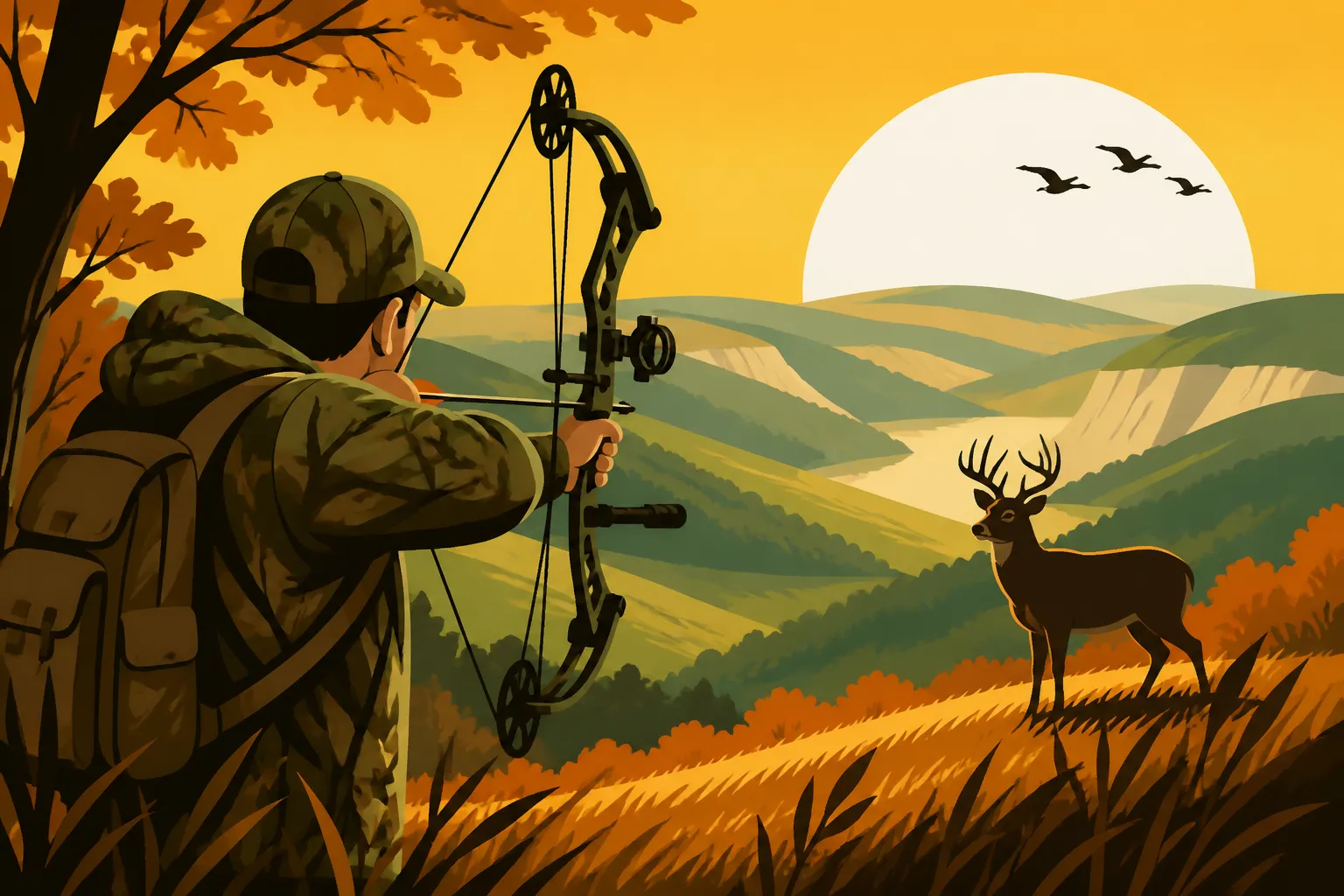
The term "Driftless Area" might sound a bit vague, but it refers to a distinct geological region that was completely untouched by the last glacial advance, unlike much of the surrounding Midwest. While glaciers scraped and leveled vast portions of Iowa, depositing "drift" (glacial sediment), this particular pocket remained "drift-less." The result is a landscape utterly different from the rest of the state, with towering limestone bluffs, deep, winding valleys (often called coulees or hollows), spring-fed creeks, and extensive, mature timber.
Geological History and Landscape Features
Imagine a crumpled blanket, rather than a neatly spread one. That's the Driftless. The glaciers, roughly 10,000 to 2.5 million years ago, flowed around this region, leaving behind a heavily dissected plateau. Over millennia, water carved deep river valleys, exposing ancient rock layers and creating dramatic elevation changes. You'll find sharp ridges, steep slopes, and narrow valley floors. This dramatic topography means there's less contiguous agricultural land, and more unbroken blocks of forest. It’s a stark contrast to the gently rolling hills and vast crop fields you see in much of central and western Iowa.
This geology is what shapes everything about hunting here. The steep hillsides are often covered in hardwoods like oak, maple, and hickory, providing excellent food sources and bedding cover. Deep ravines hold moisture and dense undergrowth, creating natural sanctuaries for deer. Spring-fed streams, flowing year-round, ensure constant water sources, even during dry spells. These features funnel game movement, create unique thermal patterns, and offer a completely different set of challenges and opportunities for the savvy hunter.
How Topography Impacts Deer and Turkey Movement
The unique topography of the Driftless directly dictates how deer and turkeys move through the landscape. Unlike flat farm country where deer might cross open fields or follow ditch lines, here they stick to the contours of the land. They use the deep coulees for travel and bedding, often moving up and down the steep slopes, sometimes pausing on benches or saddles to survey the area. These saddles and benches become crucial ambush points, acting as natural highway interchanges where deer transition between bedding and feeding areas. Saddles and Benches Deer Cross Daily is a great resource for understanding these key terrain features.
Turkeys, too, thrive in this environment. They often roost in the towering trees along the bluff lines, using the elevation to their advantage. In the mornings, they'll pitch down into the valleys to feed in timbered flats or along creek bottoms, slowly working their way back up the slopes as the day progresses. The steep terrain also means thermals play a massive role, especially in the mornings and evenings, influencing how scent travels and where you should position yourself. Understanding these movements is paramount; simply walking through the woods without a topographical map and a keen eye for terrain features will leave you scratching your head.
Key Game Species in the Driftless
While Iowa is renowned for its whitetails statewide, the Driftless offers a distinct experience for pursuing them, along with robust populations of wild turkeys and opportunities for other game. The rugged habitat creates resilient, often larger-bodied animals that are well-adapted to the challenges of the terrain.
Whitetail Deer: Adapting to the Bluffs
The whitetail deer in the Driftless are a breed apart. They're built for climbing and navigating steep, broken country. Bucks here can grow impressive antlers, thanks to excellent nutrition from diverse timber species (acorns are a prime example) and the escape cover offered by the rugged landscape, which can sometimes make them harder to pursue and therefore allow them to reach older age classes. Hunting them often means long drags out of deep valleys, but the reward of a mature Driftless buck is something special.
Their patterns are heavily influenced by the bluffs and coulees. During the rut, bucks will cruise along benches and ridge lines, scent-checking the valleys below, and dropping into them to chase does. Knowing how to read these terrain features, from subtle deer trails etched into steep hillsides to rubs and scrapes along benches, is critical. You might not find as many deer concentrated in single food plots as you would in other parts of Iowa, but the deer you do encounter are often mature and well-exercised. For a broader look at deer in Iowa, check out Iowa Whitetail Deer and Why They Score So High.
Wild Turkeys: Roosting in the River Breaks
Northeast Iowa is a turkey hunter's paradise, and the Driftless is arguably the crown jewel. The abundance of mature timber for roosting, combined with varied understory and open areas along creek bottoms and smaller fields, provides ideal habitat. You'll often find birds roosting high on the bluffs overlooking a river or a deep valley, their morning gobbling echoing for miles.
Hunting these birds requires both patience and a willingness to hike. You might be calling to a gobbler on an adjacent ridge, or trying to intercept one as it pitches down from its roost. The steep terrain can make getting in front of a bird a real workout, but the sheer beauty of the landscape and the thrill of a gobbler hammering back from across a coulee is an unforgettable experience. Successful strategies often involve getting above the birds or intercepting them in pinch points as they move between roosting and feeding areas. For more tactics, consider reading Iowa Turkey Hunting Tactics for Spring Gobblers.
Other Game Opportunities
While deer and turkeys dominate the scene, the Driftless also offers chances for other species. Squirrels and rabbits are plentiful in the timbered areas and brushy creek bottoms, providing excellent small game hunting. Waterfowl can be found along the larger rivers like the Mississippi and its tributaries, especially during migration, often in backwaters and sloughs nestled between the bluffs. Even coyotes are abundant, drawn to the ample cover and prey. The diverse ecosystem supports a wide array of wildlife, making it a truly rich hunting environment beyond just the big game species.
Public Land Opportunities in Northeast Iowa
One of the greatest appeals of the Driftless Region is the relatively ample public land access compared to other parts of Iowa. While Iowa is known for being a predominantly private land state, the rugged terrain in the northeast made large-scale agriculture less feasible, leading to more land being preserved as state forests, wildlife management areas, and county parks.
Iowa State Forests and Wildlife Management Areas
The crown jewels of public hunting in the Driftless are the large state forests, such as Yellow River State Forest, and numerous Wildlife Management Areas (WMAs). These areas encompass thousands of acres of contiguous timber, offering vast spaces to roam and get away from pressure.
Yellow River State Forest
Yellow River State Forest, located in Allamakee County, is a prime example. It boasts over 8,500 acres of rugged, timbered hills and valleys. This is true backcountry hunting for Iowa, with designated equestrian trails, hiking trails, and minimal roads. You can literally walk for miles through unbroken timber. Yellow River State Forest Hunting covers more specifics. These large tracts allow deer to mature and establish complex patterns, and offer excellent opportunities for spring turkeys. Hunters often have to earn their deer here, navigating steep climbs and long drags, but the reward is a truly wild hunting experience. Other WMAs scattered throughout the region, while perhaps smaller, often offer similar terrain and diverse hunting opportunities, from timber to wetland habitats.
County Conservation Board Areas and Smaller Tracts
Beyond the major state forests, many county conservation boards in Northeast Iowa manage smaller, but equally valuable, parcels of public land. These can range from a few dozen acres to several hundred, often encompassing timbered creek bottoms, steep bluffs, or former pastureland now regenerating into prime habitat. While they might not offer the same vastness as a state forest, they can be fantastic for day hunts, especially for scouting new ground or when you're short on time.
It's crucial to consult county-specific maps or use mapping tools like onX Hunt to identify these smaller parcels. They often receive less pressure than larger state areas simply because they're less known or harder to find. However, always double-check local regulations; some county parks might have restrictions on hunting hours, weapons, or specific areas, so being informed is key. These smaller spots can be absolute gems for catching a cruising buck during the rut or calling in a sneaky gobbler.
| Public Land Type | Typical Size | Key Features | Primary Game | Access & Regulations |
|---|---|---|---|---|
| State Forests | 1,000s to 10,000+ acres | Extensive contiguous timber, steep bluffs, deep valleys, minimal roads | Deer, Turkey, Small Game | Generally open hunting, designated trails, potential camping. Check specific forest rules. |
| Wildlife Management Areas | 100s to 1,000s of acres | Varied habitat (timber, wetlands, grasslands), often managed for specific species | Deer, Turkey, Waterfowl, Upland | DNR managed, generally open hunting, may have specific habitat or season restrictions. |
| County Conservation Areas | 10s to 100s of acres | Smaller timber blocks, creek bottoms, regenerated fields, often near towns | Deer, Turkey, Small Game | Varies by county. Some limited access, specific weapon rules, or restricted hours. Check county maps. |
| IHAP Lands | Variable (private land) | Clearly marked private land opened for public walk-in access | Deer, Turkey, Pheasant | Specific walk-in dates, foot traffic only. Check signs and online map. |
Hunting Strategies for Driftless Terrain
Hunting the Driftless demands a different approach than hunting flatter, agricultural landscapes. Your ability to adapt to the terrain, understand wind and thermals, and often go mobile will be your greatest assets.
Mobile Hunting and Treestand Placement
Given the rugged and often unpredictable nature of deer movement in the Driftless, mobile hunting tactics shine. Hauling in a ladder stand or heavy hang-on stand can be an exhausting endeavor, and often, by the time you've invested that much effort, the deer pattern has shifted. This is where lightweight hang-on stands, climbing sticks, and especially saddle hunting come into their own. Mobile Saddle Hunting in Iowa goes into great detail on this.
Being able to quickly set up and tear down your stand allows you to adapt to new sign, changing wind conditions, or a sudden shift in deer activity. When you find a hot sign (fresh scrapes, rubs, or heavy trails), you can get a stand in place that day, or at least be ready for the next morning or evening hunt. Look for the "superhighways" – the subtle benches and saddles that connect feeding and bedding areas on steep slopes, or the pinch points where a narrow strip of timber runs between two fields. These are often transient, so flexibility is key.
Using Wind and Thermals to Your Advantage
In the Driftless, wind is rarely a simple, consistent direction. The deep valleys and high bluffs create complex air currents, making it challenging to keep your scent out of a deer's nose. This is where understanding thermals becomes critical. Thermals are air currents driven by temperature changes. In the mornings, as the sun warms the valley floors, warm air rises, carrying your scent upwards. In the evenings, as the sun sets and the air in the valleys cools, heavy cold air sinks, carrying your scent downwards.
Therefore, when hunting in the morning, you might want to position yourself slightly below a ridge or along a sidehill, letting your scent rise above the deer's likely travel path. In the evening, sitting higher up, perhaps on a bench or just below a bluff line, can allow your scent to sink into the valley below where deer might not yet be present. Always have a wind checker handy, like a small bottle of powder or milkweed seeds, and observe how the air is moving at your specific location, not just what a weather app says for the broader area. Understanding Wind and Thermals in River Breaks can significantly improve your success.
Scouting Techniques Specific to Driftless Areas
Scouting in the Driftless is a year-round commitment. E-scouting with tools like onX Hunt or GoHunt is your first line of defense. Use the topographical layers to identify potential pinch points, saddles, benches, and south-facing slopes that might hold early-season greens or act as warm bedding areas in late season. Look for draws that lead up to agricultural fields or oak ridges. These mapping apps are indispensable for visualizing the terrain before you ever set foot on it.
Once you hit the ground, focus on finding the most efficient travel routes deer use up and down the steep terrain. Look for well-worn trails, old logging roads, or even faint deer paths etched into the hillsides. These often connect bedding areas in dense cover to feeding areas on the ridge tops or in the valleys. Pay attention to water sources—the numerous springs and creeks can concentrate deer movement. Don't be afraid to put on miles; the further you get from easy access points, the better your chances of finding undisturbed game. Always keep an eye out for fresh rubs and scrapes, especially on benches and points, as these indicate recent buck activity. For a thorough approach to scouting, read Scouting Iowa Public Land Before the Opener.
Navigating Access and Regulations in the Driftless
Hunting in the Driftless, particularly on public land, comes with its own set of rules and challenges regarding access and compliance. It’s not just about finding the deer; it’s about knowing where you can legally pursue them and how to be a respectful user of shared resources.
Identifying Public vs. Private Boundaries
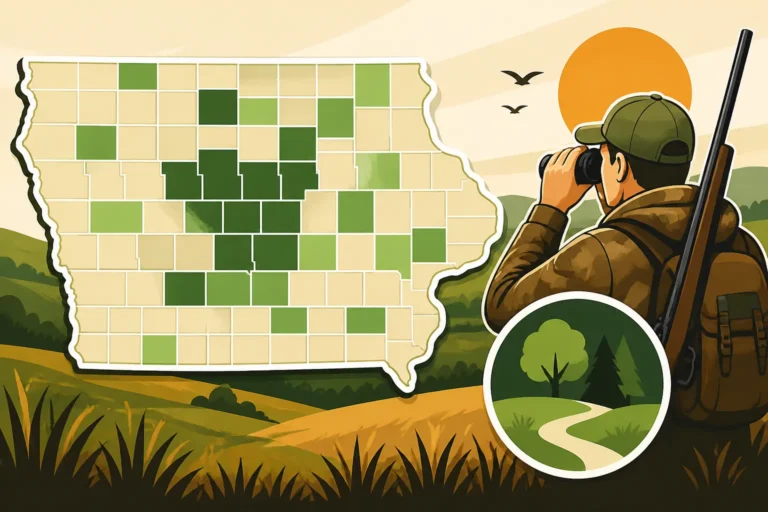
This is where digital mapping tools become absolutely essential. The mosaic of public and private land in the Driftless can be complex, with smaller private parcels sometimes intermingled with larger public tracts. An app like onX Hunt provides detailed property lines, landowner names, and distinguishes between different types of public land (State Forest, WMA, County Park). It's an absolute game-changer for avoiding accidental trespassing, which can swiftly ruin a hunt and damage landowner relations.
Before you even leave your driveway, pull up the area you plan to hunt on your mapping app. Identify access points, parking areas, and visualize potential routes that keep you on public ground. Remember, just because land isn't posted doesn't mean it's public. Always confirm the ownership. Finding Property Lines in Iowa offers a more general guide, but in the Driftless, with its less obvious boundaries, it's doubly important.
Iowa's Habitat and Access Program (IHAP) Lands
Beyond the state forests and WMAs, Northeast Iowa also benefits from Iowa's Habitat and Access Program (IHAP). These are private lands that landowners voluntarily enroll in a program to open them up for public walk-in hunting access. These tracts are marked with distinctive yellow signs and are often invaluable, providing additional hunting opportunities in areas that might otherwise be inaccessible.
IHAP lands are strictly walk-in only, meaning no vehicles, ATVs, or even bicycles beyond designated parking areas. They often have specific start and end dates for access, so always check the current year's regulations or the Iowa DNR's hunting atlas. While these can be fantastic for pheasants and small game, many also offer excellent deer and turkey hunting, particularly those with timbered draws and brushy creek bottoms. These areas can sometimes offer less pressure than the larger, more well-known public tracts, especially if you're willing to walk a bit further in.
Specific Regulations and Considerations
Beyond general Iowa hunting regulations, there are sometimes specific rules that apply to certain public areas in the Driftless. For example, some county parks might prohibit certain weapon types during specific seasons or have earlier closing times than state-managed lands. Always check the Iowa hunting regulations booklet and any posted signs at the specific property you plan to hunt.
Carcass transport rules, especially related to Chronic Wasting Disease (CWD), are another key consideration. While CWD is a concern statewide, certain counties might have specific requirements for mandatory testing or restrictions on bringing certain parts of a harvested deer out of that county. Staying informed about these regulations is crucial for ethical and legal hunting. Finally, be mindful of other users – hikers, birdwatchers, and other hunters – especially on multi-use public lands. Leave no trace, pack out all your garbage, and be courteous.
Scouting the Driftless: Tools and Techniques
Effective scouting is the backbone of successful hunting, and in the rugged Driftless, it takes on even greater importance. The terrain can hide secrets, but with the right tools and a systematic approach, you can unlock its potential.
Leveraging Mapping Software: onX Hunt and GoHunt
Gone are the days of relying solely on paper maps, though a good topo map never hurts as a backup. Modern mapping apps like onX Hunt and GoHunt are indispensable for hunting the Driftless. They provide satellite imagery, topographical lines, and property boundaries right on your phone or tablet. This allows you to "e-scout" from home, identifying potential hotspots before you ever burn gas.
Use the topographical layers to find elevation changes, saddles, and creek drainages. Switch to satellite view to locate thick cover, oak stands, and potential food sources. Mark potential stand locations, bedding areas, and travel corridors. Many of these apps also offer features like public land layers, showing you exactly where you can legally hunt, which is critical in this mixed landscape. Before you head out, download offline maps, as cell service can be spotty in the deep valleys of the Driftless. Having your plan laid out on a digital map saves countless hours and helps you make the most of your time in the woods.
Reading Aerial Imagery for Terrain Features
Aerial imagery is your best friend when trying to decipher the complex terrain of the Driftless. Look for distinct patterns in the tree canopy that indicate different timber types. Darker, denser green areas might be pines or cedars, offering thick thermal cover. Lighter green, more open areas with large individual crowns could be mature oak or hickory stands, prime feeding areas for deer and turkeys.
Pay close attention to how elevation changes. The lines on a topographical map might be abstract, but coupling them with aerial photos brings them to life. Identify finger ridges extending into valleys, deep draws, and areas where cover transitions. Look for subtle changes in vegetation that might indicate a bench or a hidden spring. Snow cover during the winter can reveal hidden deer trails and concentrated bedding areas that are otherwise invisible in green foliage. By cross-referencing these visual cues with topo lines, you can develop a clear understanding of how game might move through a particular piece of ground. For deeper insights, explore Reading Aerial Imagery for Bedding Cover.
Boots-on-the-Ground Scouting in Off-Season
While e-scouting provides a fantastic starting point, there's no substitute for putting boots on the ground, especially during the off-season. Winter and early spring, before leaf-out, are ideal times. With less foliage, you can see further into the timber, identify old rubs and scrapes from the previous season, and find well-worn trails more easily. The lack of insects and cooler temperatures also make for a more pleasant hiking experience.
Focus your efforts on confirming what you saw on your maps. Are those saddles as pronounced as they looked? Is that thicket as dense for bedding as you hoped? Walk the ridge lines, explore the coulees, and identify actual water sources. Look for shed antlers – they’re not just trophies; they tell you where deer were spending time during the late season. Take notes, mark waypoints on your GPS, and take pictures. The more time you spend understanding a piece of ground, the more confident you'll be when hunting season arrives. And remember, the less pressure you put on the area during the season, the better. Consider visiting Scouting Iowa Public Land Before the Opener for more tips.
Challenges and Rewards of Hunting the Driftless
Hunting the Driftless Region is certainly not for the faint of heart. It presents unique challenges that can test a hunter's endurance and resolve, but the rewards are often incredibly gratifying, offering an experience unlike anywhere else in Iowa.
The Physical Demands of Rugged Terrain
Let's be real: hunting the Driftless is a workout. Those picturesque bluffs and deep valleys translate into some serious elevation gain and loss. You'll be climbing steep hills, navigating uneven terrain, and often packing gear in and out over long distances. Getting a harvested deer out of a deep coulee can be an epic undertaking, sometimes requiring multiple trips or specialized gear like deer carts or game sleds (though some areas might not allow wheels, so check).
If you're accustomed to flatland hunting, the physical demands of the Driftless will be a rude awakening. It's wise to get in shape before your hunt, focusing on cardio and leg strength. But for those who embrace the challenge, it adds an extra layer of satisfaction to the hunt. The feeling of earning your game through sheer effort in such a beautiful, wild landscape is incomparable. Getting a deer out of tough terrain, for instance, can often be a logistical nightmare, and you might find useful tips in Getting a Deer Out of an Iowa Creek Bottom.
Hunting Pressure and Finding Seclusion
While the Driftless offers more public land, it's not entirely devoid of hunting pressure, especially on easily accessible tracts or during peak season dates like the shotgun opener. Many hunters are discovering the magic of the Driftless, and with that comes more competition. However, the sheer ruggedness of the terrain often acts as a natural filter. Most hunters won't venture far from easy access points or well-maintained trails.
This means that if you're willing to put in the miles and brave the steep climbs, you can often find surprising pockets of seclusion and undisturbed game. The deeper you go, the less pressure you're likely to encounter. This is where your detailed scouting and mobile hunting strategies pay off – getting into those hard-to-reach spots where other hunters aren't willing to go can lead to incredible encounters with mature animals. Understanding Hunting Pressure Patterns on Iowa Public Land can help you strategize to find those less-pressured areas.
The Unique Beauty and Rewarding Experience
Despite the challenges, hunting the Driftless is an incredibly rewarding experience. The scenic beauty is simply breathtaking, with panoramic views from bluff tops, winding spring-fed creeks, and dense, ancient forests. It feels wilder, more remote, and offers a true sense of adventure. It's a place where you can truly immerse yourself in nature, honing your skills in a demanding environment.
The deer and turkeys you pursue here are often more challenging to hunt, making a successful harvest all the more meaningful. There’s a profound satisfaction that comes from outsmarting an animal in its own rugged backyard. Whether you're chasing a wary old gobbler across multiple ridges or tracking a monster whitetail through a snow-covered coulee, the memories made in the Driftless will last a lifetime. It’s an opportunity to truly connect with the land and experience Iowa hunting in a uniquely wild way.
Disclaimer
This article is for general informational purposes only and does not constitute professional advice. Laws, prices and regulations vary by location and change over time. Consult a qualified professional for guidance on your specific situation.