Missouri River Bottom Hunting in Iowa
There's nothing quite like the allure of hunting the Missouri River bottoms in Iowa. It's a vast, wild, and sometimes unforgiving landscape that promises huge rewards for those willing to put in the effort, but it also presents a unique set of frustrations, from ever-changing river currents to confusing property lines and unpredictable game movement. This guide is here to walk you through the ins and outs of tackling these unique challenges, helping you understand the terrain, find the right access, and develop effective strategies for a successful hunt along Iowa's western frontier.
Understanding the Unique Challenges and Rewards of Missouri River Bottom Hunting
Hunting the Missouri River bottom is an experience unlike any other in Iowa. It's not your typical crop field edge or timber draw hunt. This is a dynamic, often wild frontier where the river dictates much of what you'll find, from the lay of the land to the movement of game. Many hunters, especially those accustomed to predictable patterns elsewhere, find themselves utterly perplexed by the constant flux and hidden gems of the Big Muddy's flood plain. The sheer scale can be daunting, but with understanding, it transforms into an incredible advantage.
The Dynamic Landscape of the Missouri River Bottoms
The Missouri River isn't static; it's a living, breathing entity that constantly redefines its banks, carves out new channels, and deposits fresh sandbars. This means the terrain you scout in July might look drastically different by October, especially after a significant rainfall event upstream. You'll find a mix of mature timber, often cottonwoods and willows that thrive in moist conditions, alongside dense tangles of brush, oxbow lakes, sloughs, and expansive sand or gravel bars. These features are critical in shaping deer bedding areas, funneling waterfowl, and providing cover for upland birds. The constant erosion and deposition create a mosaic of habitats, some temporary, some more established, which game animals adapt to remarkably quickly. Understanding this ebb and flow is the first step to unlocking its secrets.
One major frustration for many hunters is finding that their carefully scouted spots have been altered by a flood or erosion. What was a perfect deer crossing last year might now be too deep or have washed away entirely. This necessitates a flexible and adaptive approach to scouting and hunting. You can't just rely on historical knowledge; you need to be observant of current conditions. The water levels often fluctuate, exposing new travel corridors or cutting off old ones, which directly impacts where deer will move or where ducks will feed. River Oxbows and Deer Movement can provide more insight into how deer use these specific features.
Species and Seasons You'll Encounter
The Missouri River bottom is a biodiversity hotspot in Iowa, offering opportunities for a wide array of game species across various seasons. Whitetail deer are, of course, a major draw. The rich alluvial soils and ample cover provide everything a trophy buck needs to grow large, both in body and antler size. You'll find them using the thick timber as bedding cover during the day and slipping out into adjacent agricultural fields or smaller clearings at dusk and dawn. The maze of sloughs and timber also makes for excellent concealment.
Beyond deer, the Missouri River is a crucial part of the Mississippi Flyway, making it a prime location for waterfowl hunting. Ducks and geese use the main channel, backwaters, and oxbows for resting and feeding, especially during the peak migration periods. Jump shooting sloughs, setting up decoys on sandbars, or blind hunting along the edges of larger bodies of water can be incredibly productive. Upland birds, particularly pheasants and quail, can also be found in the dense grass and brushy edges along the river, especially where there are pockets of undisturbed cover mixed with food sources. The varied habitat also supports a healthy population of predators and furbearers, offering additional hunting and trapping opportunities. You might be surprised to find opportunities for Waterfowl Hunting Iowa River Backwaters right alongside your deer hunt.
Navigating Access and Boundaries Along the River
Access is often the biggest hurdle for hunters looking to explore the Missouri River bottoms. While there are significant tracts of public land, much of the riverfront is privately owned, and boundaries can be notoriously difficult to discern, especially in areas where the river has changed course. The term "river bottom" often conjures images of endless public wilderness, but in reality, it's a patchwork. Understanding riparian rights, which dictate access to water and land bordering it, is crucial. Just because you can access the river by boat doesn't automatically mean you can step onto any adjacent land.
This is where detailed mapping tools become invaluable. Relying on outdated paper maps or general knowledge can quickly lead to trespassing fines or, at the very least, an uncomfortable confrontation with a landowner. Many of the most productive areas require boat access, adding another layer of complexity to your hunt planning. Finding suitable launch points, understanding river currents, and securing your vessel are all part of the equation. Always be diligent about knowing exactly where you are and whose land you are on. It's not always as simple as a fence line when you're dealing with a dynamic river system.
Key Public Hunting Areas Along the Missouri River
While the Missouri River bottom can seem like an impenetrable fortress of private land, there are indeed significant and valuable public hunting opportunities if you know where to look and how to access them. These areas are often managed by federal or state agencies, each with its own specific rules and regulations. Knowing these distinctions can save you a lot of headache and potentially unlock some incredible hunting grounds.
Federal Lands: Corps of Engineers and USFWS Tracts
Along the Missouri River, much of the public access comes from lands managed by federal agencies. The U.S. Army Corps of Engineers (USACE) manages numerous tracts of land, primarily for flood control, navigation, and recreation. These lands often follow the river's edge, sometimes extending quite a bit inland, and frequently have specific regulations that differ from state-managed areas. You'll find a mix of timber, sandbars, and occasionally open fields on these properties. They can be fantastic for deer, turkey, and small game, and often offer good waterfowl opportunities where sloughs and backwaters exist. Parking areas are sometimes limited, and internal travel might require significant walking or boating.
Additionally, the U.S. Fish and Wildlife Service (USFWS) manages national wildlife refuges, such as the DeSoto Bend National Wildlife Refuge, which straddles the Iowa-Nebraska border near Council Bluffs. While parts of refuges are often closed to hunting to provide sanctuary for wildlife, other designated areas are open, usually with very specific regulations regarding species, seasons, and access methods. These refuges are absolute magnets for migratory waterfowl, and the deer hunting in adjacent open areas can be phenomenal due to the sanctuary provided. Always check the specific refuge's current rules and maps before planning a hunt, as they can be quite detailed and change seasonally. DeSoto Bend Refuge Hunting Rules would be a good starting point for learning more about this area.
State Wildlife Areas and Conservation Lands
Iowa's Department of Natural Resources (DNR) also manages various wildlife areas along the Missouri River, often working in conjunction with federal agencies or county conservation boards. These state-managed lands are typically larger tracts of timber, wetlands, and grasslands acquired specifically for wildlife habitat and public recreation. While perhaps less expansive than some federal holdings, they are often strategically located to maximize wildlife use and can be incredibly productive. These areas are usually well-marked with public land signs, making boundary identification a bit easier.
County Conservation Boards (CCBs) also play a vital role, managing smaller, often dispersed tracts of land along tributaries or directly on the river. These areas, while sometimes smaller in scale, can offer excellent hunting opportunities, particularly for deer and small game, and can be less pressured than larger state or federal areas. Each CCB has its own specific regulations, which you'll need to research for the particular county you plan to hunt in. The key with all these public lands is diligent research; never assume that all public land operates under the same rules.
Considerations for Walk-In Access and River Navigation
Deciding how you'll access your hunting spot is paramount on the Missouri River. Many areas, particularly those in federal or state ownership, are designated as "walk-in" only, meaning no motorized vehicles are allowed beyond designated parking areas. This requires a strong back, a good pack, and a willingness to hike, sometimes for miles, to get away from the road noise and other hunters. For these situations, a reliable deer cart or drag system is a game-changer when it comes time to haul out your harvest. Deer Carts on Iowa Walk-In Ground could be a lifesaver.
| Access Method | Advantages | Disadvantages | Best For |
|---|---|---|---|
| Walk-In | Stealthy, allows access to deeper areas, less competition | Physically demanding, limited gear, long recovery | Deer, small game, less pressured spots |
| Boat Access | Covers vast distances, access to islands/cut-offs, carry more gear | Requires boat/motor, river navigation skills, water safety concerns | Waterfowl, scouting, deep timber deer, large hauls |
| Kayak/Canoe | Quiet, versatile for shallow water, good exercise | Limited gear capacity, slower, requires paddling strength | Scouting, jump shooting, stealthy timber access |
| ATV/UTV (where allowed) | Quick access, haul heavy loads | Limited to designated trails, noisy, may spook game | Recovering game, transporting blinds, restricted areas |
For much of the Missouri River bottom, boat access opens up a world of possibilities. It allows you to reach remote islands, navigate sloughs, and bypass private land to access public tracts that are otherwise landlocked. However, the Missouri River is a powerful, often dangerous body of water. Strong currents, submerged hazards, commercial barge traffic, and rapidly changing weather conditions demand a high level of boating experience and caution. Always wear your life jacket, know the river conditions, and tell someone your float plan.
Scouting and Strategy for River Bottom Success
Hunting the Missouri River bottoms requires a unique blend of traditional woodsman skills and modern technology. The terrain is constantly changing, and game animals are masters at using the dynamic environment to their advantage. A successful hunt here isn't just about showing up; it's about understanding the nuances of the river itself and how it influences everything from bedding to feeding.
Reading the Terrain: Current, Cover, and Food
When you're scouting the Missouri River bottom, you're not just looking for deer sign; you're deciphering the river's story. Pay close attention to current strength and direction, especially where it meets sandbars or timber points. These areas often create natural funnels for deer as they seek easier crossings or avoid deep, fast-moving water. Look for "washouts" or areas where the river has recently eroded the bank, exposing fresh soil and often creating new travel corridors or cutting off old ones. This is particularly important when considering Access Routes That Do Not Bump Deer.
Thick cover is king in the river bottom. Cottonwood and willow thickets, tangled multiflora rose, and dense patches of dogwood provide excellent bedding cover, especially near agricultural fields where deer will feed. During the rut, these thickets become prime areas for bucks cruising for does. Food sources can be varied, from acorns in more mature oak stands (if present, as oaks are less common right in the bottomland) to browsed saplings, and most notably, adjacent crop fields. Identifying pinch points where the river pushes deer into narrow strips of cover, or where sloughs concentrate movement, is a critical scouting skill. Look for heavy trails leading to and from these areas.
Understanding Waterfowl and Deer Movement
Deer movement in the river bottom is heavily influenced by cover, food, and water. During daylight hours, especially during hunting season, deer will often bed deep in the thickest cover along the river, only venturing out at dusk. However, the river itself can be a major travel corridor. Bucks will cruise parallel to the main channel, using islands or slough edges as security cover while they search for does. Wind direction is incredibly important here, as scent can travel far and wide across open water or through sparse timber. A buck might use a specific sandbar crossing only when the wind is just right.
For waterfowl, understanding migration timing and their daily routines is key. Ducks and geese will often feed in nearby crop fields or shallow backwaters in the early morning and late evening, resting on larger bodies of water or sandbars during midday. Iowa Duck Migration Timing is crucial intel. Pay attention to flight paths and observe where birds are coming from and going to. The Missouri River bottom offers a unique challenge in that waterfowl can be anywhere, from the smallest isolated pothole to the vastness of the main channel. Being mobile and adaptable with your setup, whether it's setting up a quick spread of decoys on a newly formed sandbar or jump shooting a secluded slough, can make all the difference.
Utilizing Mapping Tools for Effective Scouting
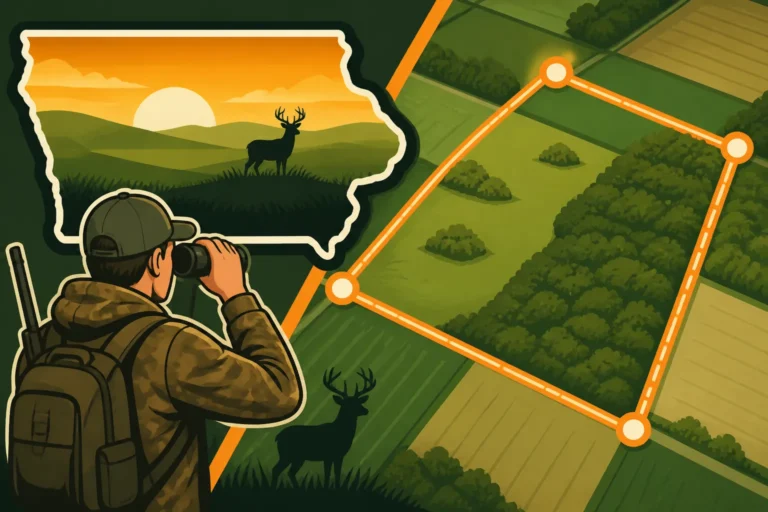
In a constantly changing environment like the Missouri River bottom, digital mapping tools are an absolute necessity, not a luxury. Services like onX Hunt and GoHunt provide invaluable layers that can display property boundaries, public land ownership, topography, and aerial imagery, which are all critical for navigating this complex terrain. Before you even set foot on the ground, you can use these apps to identify potential access points, locate public land boundaries, and pinpoint areas of dense cover or water bodies.
With onX Hunt, for example, you can toggle between satellite imagery and topographical maps, allowing you to visualize elevation changes, locate hidden sloughs, and identify likely travel corridors. The property boundary overlay is especially critical here to prevent accidental trespassing in areas where private and public lands intermingle or where river changes have obscured old markers. GoHunt offers similar robust mapping features that help you break down large areas into manageable scouting units. These tools allow you to drop waypoints for potential stand locations, bedding areas, or even boat launch points, making your physical scouting far more efficient. You can even use them to evaluate potential Saddles and Benches Deer Cross Daily or Hunting Inside Corners of Crop Fields which might be adjacent to river bottom cover. The ability to download offline maps means you're never without crucial information, even when cell service is spotty along the river.
Gear and Logistics for a Missouri River Hunt
Hunting the Missouri River bottom demands a specific set of gear and a well-thought-out logistical plan. The environment can be harsh, access can be challenging, and game recovery can be difficult. Being prepared for anything will not only increase your success but also ensure your safety and comfort.
Essential Equipment for River Bottom Conditions
First and foremost, waterproof gear is non-negotiable. Rubber boots, or hip waders if you anticipate crossing shallow sloughs or navigating muddy banks, are essential. Your outerwear should also be highly water-resistant or waterproof, as morning dew, fog, or unexpected rain showers are common, and getting soaked can quickly end a hunt, especially in colder weather. Quiet fabrics are always a plus for deer hunting. Cold Weather Stand Clothing is especially important if you're hitting the late season.
Beyond clothing, a sturdy backpack capable of carrying extra layers, food, water, and emergency supplies is vital. If you plan on covering a lot of ground, especially for walk-in access, consider a lightweight but durable treestand or a mobile saddle hunting setup. These allow you to adapt to new deer patterns as you discover them. For waterfowl, a reliable set of decoys, a sturdy blind (or materials to build a natural blind), and a good call are crucial. Don't forget high-quality optics – binoculars and a rangefinder are indispensable for spotting game in dense cover or judging distances across open water.
Water Safety and River Crossing Considerations
If your hunt involves any kind of water travel, safety must be your absolute top priority. This means wearing a properly fitted life jacket at all times while on the water, even if you're a strong swimmer. The Missouri River is powerful, and conditions can change rapidly. Always have a fully charged phone in a waterproof case, along with a whistle or other signaling device. A spare paddle or a small emergency motor can be a lifesaver if your primary engine fails.
When planning river crossings, whether by boat or by wading, always assess the current, depth, and potential hazards like submerged logs or shifting sandbars. Never cross alone if possible, and always let someone know your float plan, including your intended route and expected return time. If you're using a boat for access to islands or remote stretches, ensure it's properly anchored or secured when you're on shore, as rising water or currents can easily sweep an unmoored vessel away. This environment demands respect for its power.
Planning Your Hunt: From Transportation to Recovery
Logistics start with transportation. How will you get to your hunting area? Will you drive right up to a public land parking lot, or will you need to launch a boat upstream and float down? If you're floating, consider a shuttle plan with a second vehicle. Parking can be limited on some public tracts, especially during peak seasons, so arrive early. Once you've harvested an animal, particularly a deer, the challenge of recovery begins. Getting a Deer Out of an Iowa Creek Bottom or any similar riverine terrain can be incredibly difficult.
A deer cart or a robust sled is invaluable for moving a deer through mud, thick brush, or across sandbars. If you're hunting solo and far from your vehicle, consider learning the gutless method for field dressing to lighten the load for quartering out your animal. Game bags are essential for keeping meat clean and protected, especially if you have a long haul back to your vehicle. Always have a plan for cooling the meat quickly, particularly during warmer early season hunts. This might involve bringing a large cooler with ice to the field or having a clear path to a locker plant.
Dealing with the Unique Pressures and Opportunities
The Missouri River bottoms, despite their wild character, are not immune to hunting pressure. However, the unique features of this landscape also create opportunities for savvy hunters to find unpressured game. It's a constant balancing act between knowing where the crowds will be and understanding how to get away from them.
Managing Hunter Density and Competition
On opening weekends of major seasons, especially archery and shotgun deer seasons, popular public access points along the Missouri River can see significant hunter density. This can be frustrating, as it often means deer are on high alert or have been pushed into the thickest, most inaccessible cover. Understanding Hunting Pressure Patterns on Iowa Public Land is key here. One effective strategy is to hunt during weekdays when pressure typically drops off. Another is to simply walk further, boat further, or use more challenging access points that deter most other hunters. The deeper you go, the less competition you'll generally find.
Waterfowl hunting can also see high competition, particularly on popular sloughs or backwaters. Scouting during the week and identifying less-used areas can give you an edge. Sometimes, setting up just off the main group of hunters, but along a common flight path, can yield surprising results. The sheer size and complexity of the Missouri River bottom means that even when there are other hunters, there's usually room to spread out if you're willing to work for it.
Respecting Private Land and Riparian Rights
As mentioned earlier, the mosaic of public and private land along the Missouri River is perhaps its most significant challenge. Respecting private property boundaries is not just about ethics; it's the law. Always assume land is private unless clearly marked as public. Use your mapping apps religiously, like onX Hunt, and update them regularly. If in doubt, stay out. Finding Property Lines in Iowa is a skill you'll absolutely need here.
Riparian rights can be confusing. Generally, while you may be able to float a navigable river or slough, that doesn't grant you permission to exit your boat and hunt on adjacent private land without explicit permission. Even if a sandbar appears to be "newly formed" by the river, its ownership might still be tied to the adjacent private landowner. If you find game on private land, you cannot pursue it without permission. Always seek written permission if you intend to hunt private land, and carry it with you. Good relationships with landowners are invaluable in this region.
The Reward of Untouched River Bottom Wilderness
Despite the challenges and pressures, the Missouri River bottom offers something increasingly rare in Iowa: a true sense of wildness and the opportunity to hunt untouched ground. The dynamic nature of the river means there are always new areas being created or revealed, offering a chance to be the first hunter to explore them. The feeling of navigating a secluded slough by kayak, slipping into a stand in a remote timber block, or watching a flock of mallards drop into a hidden pothole is incredibly rewarding.
These areas, often overlooked due to difficult access or perceived lack of game, can hold some of the biggest deer and offer incredible waterfowl hunting. The willingness to embrace the adventure, overcome the logistical hurdles, and adapt to the environment is what sets a successful river bottom hunter apart. You're not just hunting; you're exploring a piece of Iowa's wild heart.
Conservation and Ethical Considerations
Hunting the Missouri River bottom is not just about the harvest; it's about being a steward of this unique and vital ecosystem. Given the dynamic nature of the environment and the mix of public and private lands, responsible and ethical behavior is paramount.
Leaving No Trace and River Stewardship
When hunting along the Missouri River, the principle of "leave no trace" takes on even greater importance. The river itself is a powerful force that can carry trash and debris far downstream, impacting wildlife and other recreational users. Pack out everything you pack in, and if you encounter litter left by others, consider packing that out too. Avoid disturbing natural habitats unnecessarily; stick to established trails or travel corridors where possible.
If you're using a boat, be mindful of your wake and avoid damaging fragile sandbars or eroding banks. Practice ethical boating by cleaning your boat and trailer to prevent the spread of invasive species. For hunters using portable stands, remember Leaving No Trace on Iowa Walk-In Ground and ensure you remove all stands, ropes, and markers at the end of the season, or according to specific public land regulations. We are guests in these wild spaces, and our actions directly reflect on the hunting community as a whole.
Understanding Local Regulations and Reporting
The regulations for hunting the Missouri River bottom can be complex due to the varying jurisdictions of federal, state, and county agencies. Always consult the current Iowa hunting regulations booklet, but also be sure to check specific rules for any federal (USACE, USFWS) or county conservation areas you plan to hunt. These additional rules often cover things like weapon restrictions, specific season dates, off-limit areas, and even rules about stand placement or overnight camping.
Furthermore, ethical hunting includes understanding your role in wildlife management. This means accurately reporting your harvest as required by the Iowa DNR. Accurate harvest data helps biologists manage deer and other game populations effectively, ensuring healthy herds for future generations. If you observe any illegal activity, such as poaching or littering, report it to the appropriate authorities. Being an ethical hunter means being an active participant in conservation and responsible management.
Disclaimer
This article is for general informational purposes only and does not constitute professional advice. Laws, prices and regulations vary by location and change over time. Consult a qualified professional for guidance on your specific situation.