Northeast Iowa Bluff Country Access
For many hunters, the image of Iowa deer hunting conjures up vast, flat corn and soybean fields, but for those in the know, the rugged, timbered bluffs of Northeast Iowa offer an entirely different, intensely rewarding experience. This unique landscape, often overlooked by those fixated on open-country hunting, presents its own set of challenges and incredible opportunities. Navigating the steep inclines and deep valleys, figuring out deer movement in this fractured terrain, and simply finding viable public access can feel overwhelming. This guide will help you decode the secrets of hunting in Northeast Iowa's bluff country, making your next hunt more successful and less frustrating.
The Unique Appeal of Northeast Iowa's Bluff Country
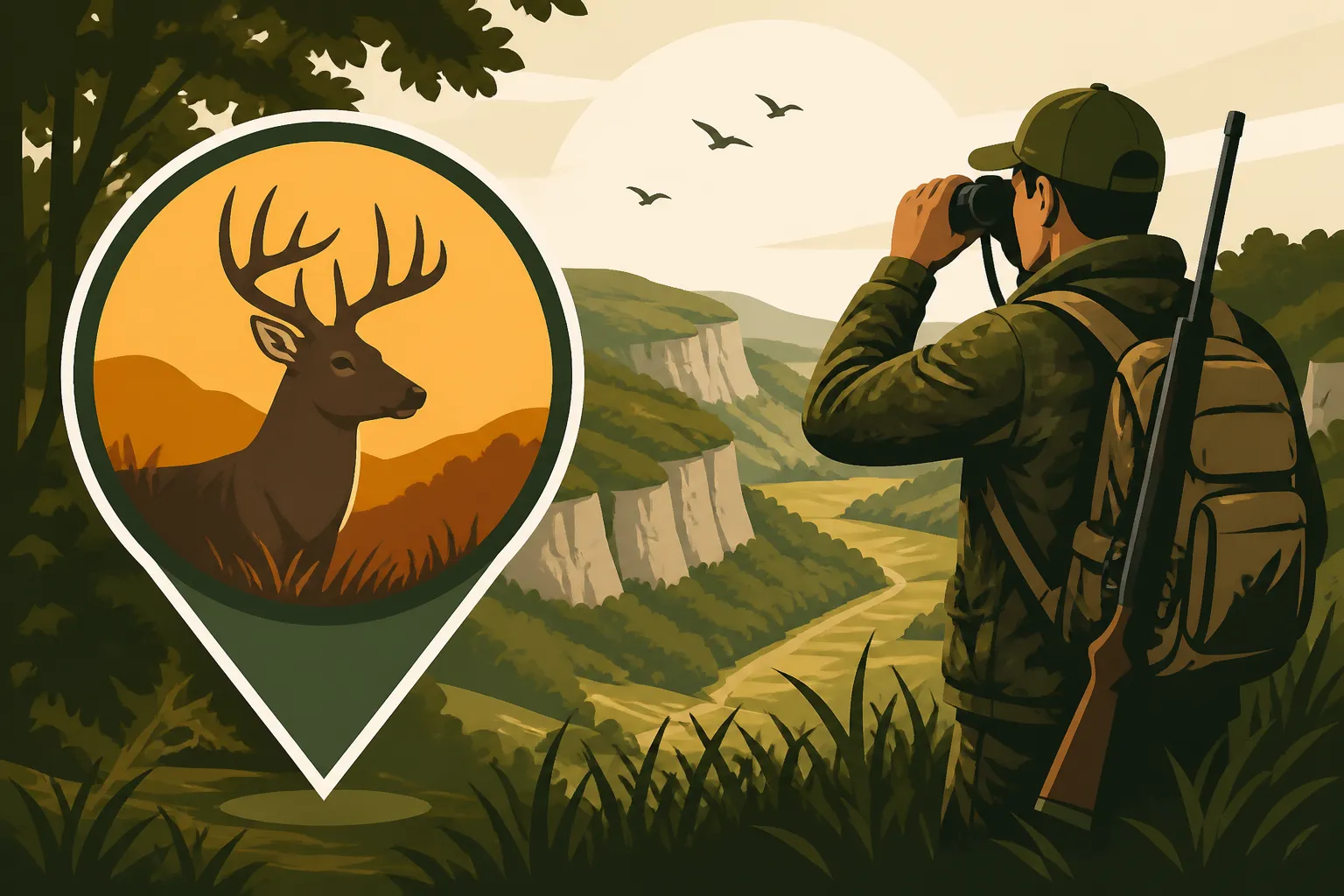
Northeast Iowa is often referred to as part of the "Driftless Area," a region that escaped glaciation during the last ice age, leaving behind a landscape unlike the rest of the state. Instead of rolling plains, you find deeply incised river valleys, steep hillsides, and expansive mature hardwood forests. This geological anomaly creates a fantastic environment for wildlife, particularly whitetail deer and wild turkeys, offering both dense cover and diverse food sources.
Rugged Topography and Diverse Habitat
The terrain here is truly different. You're looking at steep, wooded slopes that drop into narrow creek bottoms, often with sheer rock faces and deep ravines. Ridge tops might be narrow and winding, sometimes opening into small, secluded fields or food plots managed by local landowners, or even pockets of dense cedar and multiflora rose offering incredible bedding cover. This broken topography forces deer into predictable travel corridors, especially when you understand how they utilize different elevations for bedding, feeding, and escaping pressure. The mixed hardwood timber—oaks, maples, walnuts—provides abundant mast crops in the fall, which is a significant draw for deer and turkeys alike. These areas also hold pockets of thick underbrush, creating sanctuaries that can be tough to penetrate but often hold mature animals.
Prime Species and Trophy Potential
While the entire state of Iowa is renowned for its whitetail deer, the Northeast bluffs offer a particular kind of trophy potential. The sheer ruggedness of the landscape, coupled with the dense cover, often allows bucks to reach older age classes, leading to impressive antler growth. These deer are savvy, accustomed to navigating steep terrain, and masters of using the topography to their advantage, making them a formidable challenge. Beyond deer, the bluff country is a phenomenal area for wild turkeys. The mix of mature timber for roosting, open fields for strutting, and dense undergrowth for nesting creates ideal conditions for robust turkey populations. Spring turkey hunting here, listening to gobblers echo across the valleys, is an experience every hunter should have. Iowa Wild Turkeys Across the State
Less Pressure, More Challenge
One of the often-unspoken benefits of hunting the bluff country is that the challenging terrain naturally deters some hunters. While you'll still encounter pressure, especially on easily accessible public parcels, the steep climbs and difficult retrieves mean that many hunters stick to more forgiving ground. This leaves deeper, harder-to-reach pockets of public land relatively undisturbed, offering opportunities for hunters willing to put in the physical effort. It's a trade-off: you work harder, but you might just find that untouched sanctuary holding the buck you've been dreaming of. The sheer scale of some of these timbered areas also helps to diffuse pressure, as deer have vast expanses to roam and hide.
Unlocking Public Access in the Driftless Region
Finding huntable ground in Northeast Iowa's bluff country requires a bit more effort than simply looking for a "Wildlife Management Area" sign. The public land here is often a patchwork of different classifications, each with its own nuances, and some areas are more expansive and rugged than others.
State Forests and Wildlife Management Areas
The crown jewel of public access in Northeast Iowa is undoubtedly the Yellow River State Forest. This massive tract of timber in Allamakee County epitomizes the bluff country experience, offering thousands of acres of steep, unbroken hardwoods. It's a place where you can truly get lost, in the best possible way, and find solitude if you're willing to hike deep. Beyond Yellow River, numerous smaller Wildlife Management Areas (WMAs) are managed by the Iowa DNR. These can range from large timber blocks to wetlands and scattered agricultural fields, often situated along river corridors or within drainage systems that feed into the larger bluffs. Each WMA will have its own specific management objectives, so it's always wise to check individual area rules for things like vehicle access or allowed activities. You'll find deer, turkey, and often good small game hunting in these areas. Iowa Wildlife Management Areas
County Conservation Areas and Smaller Tracts
Don't overlook the smaller, often fragmented pieces of public land managed by individual county conservation boards. These parcels might be less famous than the state forests, but they can be goldmines for local hunters or those willing to do some extra research. Often, these areas are preserved timber tracts, river access points, or old farmsteads that have been converted to wildlife habitat. While they might not offer the same vastness, they can act as crucial travel corridors or bedding areas, especially if they border private land with good food sources. The rules for these county areas can vary significantly from one board to the next, so always double-check. Some might allow bow hunting but restrict firearms, or have specific parking regulations. Iowa County Conservation Board Hunting Rules
Corps of Engineers and River Bottom Access
The mighty Mississippi River defines the eastern edge of Iowa's bluff country, and with it comes a unique set of public hunting opportunities managed by the Army Corps of Engineers and the Upper Mississippi River National Wildlife and Fish Refuge. These areas often consist of river bottomlands, islands, and backwater sloughs, which, while not strictly "bluff country" in the topographical sense, are intrinsically linked to the larger ecosystem. Deer frequently travel between the bluffs and the river bottoms, especially during certain times of the year, making these areas productive for hunters willing to access them, often by boat. Waterfowl hunting is also a major draw in these riverine environments. Be prepared for potentially wet conditions and access challenges. Understanding river stages and navigating by water is often key here. Upper Mississippi Refuge Hunting
Mastering Navigation and Scouting in Steep Terrain
The rolling hills and deep valleys of Northeast Iowa require a different approach to scouting and navigation than flatter agricultural lands. Relying solely on your memory or a paper map can quickly get you turned around, especially when you're deep in timber with no discernible landmarks.
Topographical Map Reading Essentials
When you're hunting in the bluffs, understanding contour lines on a topographical map is paramount. These lines are your key to unlocking deer movement. Look for saddles—dips in a ridge line that deer will almost invariably use to cross from one side to another. Identify benches, which are flat spots on a steep hillside where deer often stop to feed or bed, offering a commanding view. Drainages and creek bottoms serve as natural funnels, especially when bordered by thick cover. Ridge tops often have well-worn trails, particularly for cruising bucks during the rut. Being able to visualize the three-dimensional landscape from a two-dimensional map is a skill that takes practice but is invaluable here. Reading an Iowa Timber Draw for Deer Sign
E-Scouting Before You Go
Before you even step foot in the timber, your best friend will be a robust mapping application like onX Hunt or GoHunt. These platforms allow you to pour over satellite imagery and topo maps from the comfort of your home, identifying potential access points, property lines, and terrain features that scream "deer." Look for transitions: where mature timber meets younger growth, where a steep slope levels out into a bench, or where a narrow finger ridge extends into a wider bottom. Mark potential bedding areas, likely travel corridors, and even places where you suspect you might find a scrape or rub line. The ability to toggle between aerial views and topographic overlays can help you identify subtle terrain features that might be missed on a basic map. This virtual scouting session allows you to create a solid game plan and pinpoint areas for physical reconnaissance. E-Scouting Iowa Farm Country From Home
Boots-on-the-Ground Verification
As helpful as e-scouting is, there's absolutely no substitute for getting your boots dirty. The satellite images and topo lines can only tell you so much. You need to walk the ground to confirm what you've seen digitally. Is that "bench" actually a small, brushy flat, or is it just a slight break in a continuous slope? Is that thick bedding cover truly impenetrable, or can deer easily slip through it? Look for actual deer sign: rubs, scrapes, droppings, and well-worn trails. Pay attention to pinch points created by terrain or vegetation. Check for water sources, especially during dry periods. This physical scouting helps you confirm your e-scouting hypotheses, refine your stand locations, and gain a real understanding of how deer use that specific piece of terrain. It also gives you a feel for prevailing winds and thermal currents, which behave uniquely in hilly country. Scouting Iowa Public Land Before the Opener
Tailoring Your Hunting Tactics for the Bluffs
Hunting the bluff country isn't like hunting a flat woodlot. The elevation changes, dense cover, and often complex wind patterns demand a more dynamic and adaptive approach to your tactics. What works in one valley might fail spectacularly in the next.
Understanding Wind and Thermals
This is arguably the most critical factor in bluff country hunting. Wind doesn't simply blow in one direction; it swirls, eddies, and is heavily influenced by topography. In the mornings, as the sun heats the ground, thermals will typically rise, carrying your scent uphill. In the evenings, as the air cools, thermals fall, pulling your scent downhill into the valleys. However, this is a generalization, and local anomalies are common. You'll often find micro-currents that make scent control even more challenging. Being aware of these forces is paramount for stand placement. A good strategy might involve setting up on a ridge line or bench during midday when thermals are less pronounced, or planning your entry and exit routes to avoid blowing your scent directly into bedding areas. Always carry a puff bottle to monitor even the slightest air movement. Wind and Thermals in River Breaks
Stand Placement in Challenging Environments
Forget your typical field-edge setups; in bluff country, you're looking for subtle advantages in a complex landscape. Saddles are classic ambush points, especially during the rut when bucks are cruising between drainages. Benches on steep hillsides, particularly those with good cover, can be excellent bedding areas or staging points before deer move to feed. Ridge points that funnel deer around them are also prime locations. Look for areas where two or three draws converge, creating a natural crossroads for deer movement. When hanging a stand, consider your entry and exit routes carefully, ensuring you can get in and out without disturbing deer, and that your scent cone isn't blowing into where you expect deer to be. Sometimes, a lower stand on a steep slope can be more effective than a high one, as it places you closer to the deer's eye level as they move uphill. Best Stand Locations in Rolling Timber
Mobile Hunting Advantages
Given the ruggedness and the need to adapt to changing conditions or deer movement, mobile hunting setups truly shine in Northeast Iowa's bluff country. Rather than committing to a fixed stand location for an entire season, a lightweight hang-on stand with climbing sticks or a saddle hunting setup allows you to quickly adjust. If you scout a new hot sign area, or if the wind shifts unexpectedly, you can move your setup to capitalize on the new information. This agility is especially valuable during the rut, when bucks are constantly on the move, and their patterns can change daily. Carrying minimal gear, being able to set up quietly and efficiently, and having the flexibility to hunt different terrain features—from steep ridges to dense thickets—is a huge asset. Mobile Saddle Hunting in Iowa This method allows you to be nimble and pursue deer wherever they are, rather than waiting for them to come to you at a predetermined spot.
| Public Land Type | Typical Terrain | Primary Game Species | Common Access Challenges | Key Considerations |
|---|---|---|---|---|
| State Forests | Expansive, steep, timbered bluffs | Whitetail Deer, Turkey, Small Game | Long hikes, rugged terrain, limited vehicle access | Requires physical fitness, good navigation skills. |
| Wildlife Mgmt Areas | Varied: Timber, wetland, some ag | Deer, Turkey, Waterfowl, Upland | May have more pressure, specific area rules | Check individual WMA regulations, diverse opportunities. |
| County Conservation | Smaller, fragmented timber/habitat | Deer, Turkey, Small Game | Local rules vary, can be hard to find | Research county websites, often good local spots. |
| Corps of Engineers/Refuge | River bottoms, islands, backwaters | Waterfowl, Deer, Turkey (riverine) | Boat access often required, flooding risk | Understand river levels, federal regulations apply. |
Common Challenges and Smart Solutions
Hunting the bluffs is undeniably demanding, both physically and mentally. Being prepared for the unique hurdles this environment presents can make the difference between a memorable hunt and a frustrating one.
Physical Demands and Gear Choices
Let's be real: hunting the bluffs is a workout. You'll be climbing steep hillsides, navigating uneven terrain, and potentially dragging a deer out of a deep ravine. Physical fitness is a major asset here. Beyond personal conditioning, your gear choices become even more critical. Invest in high-quality, comfortable, and supportive hunting boots with excellent ankle support and grip. Layered clothing is essential, as you'll sweat on the climbs and then cool down quickly on stand. A sturdy pack capable of comfortably carrying your gear in and, hopefully, meat out, is a must. If you're fortunate enough to harvest a deer deep in the timber, getting it out can be a monumental task. Consider quartering your deer in the field using the gutless method and using game bags to pack it out in stages. A deer cart, while invaluable in flatter country, might be less useful in extreme bluffs, so know your limitations and have a plan. Getting a Deer Out of an Iowa Creek Bottom
Managing Hunting Pressure
Even in the rugged bluffs, public land can experience significant hunting pressure, especially on opening weekends or during peak rut. The key to success often lies in finding those overlooked pockets. This means being willing to hike further and deeper than most. While everyone might hit the first ridge, a true trophy hunter will be pushing for the second or third, or even dropping into the deepest, thickest valleys that seem impassable. Pay attention to typical access points—parking lots, obvious trails. Deer quickly learn to avoid these areas and will gravitate towards quieter sanctuaries. Hunting on weekdays, if possible, can also significantly reduce the number of encounters with other hunters. Utilizing a mapping tool like GoHunt can help you identify areas with less obvious access, often leading to less pressured animals. Remember, deer are incredibly sensitive to pressure, and finding that quiet spot is often more important than finding a "hot" one. Hunting Pressure Patterns on Iowa Public Land
Respecting Boundaries and Landowner Relations
Iowa has a significant amount of private land, and even when you're hunting public areas in the bluffs, you're often bordering private property. Knowing precisely where those lines are is non-negotiable. Mapping apps like onX Hunt are invaluable for this, showing property boundaries and landowner names, helping you avoid accidental trespass. Respecting private land isn't just about legality; it's about being a good ambassador for hunting. If your game crosses onto private land, you cannot retrieve it without explicit permission from the landowner, and it's best to establish that relationship before you ever step foot in the woods. While the focus of this article is on public access, understanding how to respectfully Finding Private Land Access in Iowa on adjacent properties can unlock even more opportunities or simply provide peace of mind if a wounded animal goes onto private ground. Always double-check regulations regarding retrieving game across property lines, as they can be specific.
Disclaimer
This article is for general informational purposes only and does not constitute professional advice. Laws, prices and regulations vary by location and change over time. Consult a qualified professional for guidance on your specific situation.