Boat Access to Iowa River Islands
For many Iowa hunters, the idea of finding truly untouched hunting ground feels like a distant dream, especially when public land access can often mean contending with crowds. But tucked away within our state's winding river systems are countless islands, often overlooked and under-pressured, that can hold some incredible opportunities. This guide will walk you through everything you need to know about accessing these hidden gems by boat, turning what seems like an impossible venture into a viable and rewarding hunting strategy.
The Allure and Challenges of River Island Hunting in Iowa
River islands in Iowa present a unique set of circumstances for the hunter, offering both significant advantages and specific hurdles that need careful consideration. They can be some of the most frustratingly alluring pieces of ground out there.
Why River Islands are Hidden Gems
Imagine stepping onto a piece of public land where the deer rarely see human pressure. That's often the reality of river islands. Most hunters simply aren't willing or equipped to reach them, creating natural sanctuaries where whitetails can grow old and undisturbed. These islands often become natural travel corridors and bedding areas, especially during the rut when bucks are cruising for does, or in the late season when they're seeking refuge from relentless pressure on mainland properties.
The habitat on these islands can also be quite distinct. You'll find a mix of mature timber, thick undergrowth, and sometimes even small pockets of wetland vegetation, providing everything a deer needs in a compact, isolated environment. It’s not uncommon to jump deer right after landing, proving just how secluded these spots can be. For those willing to put in the extra effort, the reward isn't just a successful hunt, but the profound satisfaction of truly getting away from it all and experiencing a wilder side of Iowa hunting. It's a feeling of discovery, knowing you've found a spot most others just float by.
Navigating Legalities and Land Ownership
One of the biggest headaches when considering river island hunting is figuring out who actually owns the land. Iowa’s river systems are dynamic; erosion and accretion mean that island boundaries can shift over time, and what was once publicly owned might now be private, and vice-versa. It's not as simple as looking at an old plat map. The general rule of thumb in Iowa is that the public owns the bed of navigable rivers up to the ordinary high-water mark, but many islands can be privately deeded.
This is where detailed mapping tools become your best friend. Services like onX Hunt are invaluable, allowing you to overlay public and private land boundaries directly onto satellite imagery. You can identify an island from your couch, zoom in, and instantly see its ownership status. However, always remember that these tools are guides, not gospel. River changes can occur more rapidly than map updates. The last thing you want is to spend hours getting to a prime spot only to find out you're trespassing. Always double-check and if there's any doubt, err on the side of caution or seek clarification from local DNR offices or county recorders. It's a common frustration for hunters to think they’ve found a prime, remote public island only to discover a landowner’s boundary slices right through it, or worse, completely encompasses it.
Understanding the Iowa River Environment
Iowa's rivers, whether it's the mighty Mississippi, the sprawling Missouri, or the more intimate Des Moines and Cedar, are living, breathing entities. Their personalities change with the seasons and the weather. Water levels fluctuate dramatically, especially in spring and after heavy rains, transforming shallow sandbars into submerged hazards or vice-versa. Currents can be deceptively strong, even in what appears to be calm water, capable of pulling a small boat downstream or sweeping you into a log jam.
Snags, submerged trees, and shifting sandbars are constant threats to boaters. You might have a clear run in the morning, only for a subtle shift in wind or water level to expose a new obstacle on your return trip. Cold weather, particularly during the late deer seasons, adds another layer of danger. A capsized boat in November or December isn't just inconvenient; it's a life-threatening situation. Always assume the river is colder and stronger than it looks. This respect for the river is paramount, and understanding its ever-changing nature is key to both safe access and a successful hunt.
Essential Gear and Boat Selection for Island Access
Getting to and from these river islands safely and efficiently requires the right equipment. This isn't your typical walk-in hunt, and your gear choices will reflect that.
Choosing the Right Watercraft
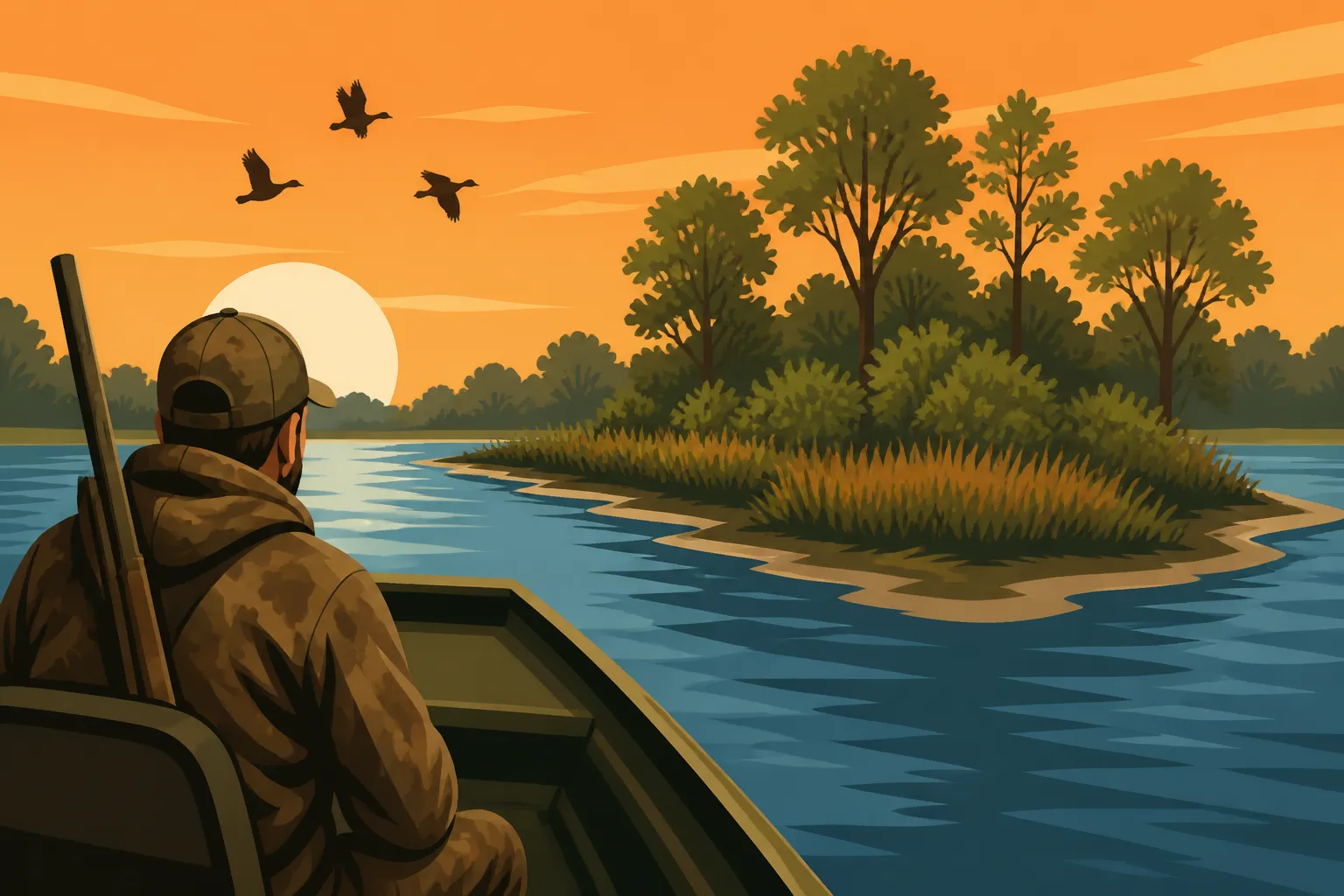
The type of boat you choose will largely depend on the specific river and conditions you plan to navigate. For the vast, often shallow backwaters of the Mississippi or the unpredictable sandbars of the Missouri, a flat-bottom jon boat is often the workhorse. They are stable, can carry a good load of gear and a deer, and their shallow draft allows you to skim over spots that would stop a V-hull in its tracks. You'll want a reliable outboard motor, and for truly skinny water, a jet-drive motor can be a game-changer, allowing you to run over incredibly shallow flats without fear of damaging a prop.
For smaller rivers or those with fewer obstacles, canoes or kayaks can be viable, especially if you're a minimalist bowhunter or just want to scout. They offer stealth and portability, perfect for sneaking into tight spots. However, their capacity for gear and game is limited, and stability can be an issue in strong currents or when loaded down. A duck boat or a small utility boat with a slightly V-shaped bow can handle a bit more chop on larger rivers but still needs to be relatively shallow-drafting. Consider durability too; you'll likely be bumping into logs and dragging over sandbars, so a robust aluminum hull is often preferred over fiberglass. Regardless of your choice, ensure it's equipped with all necessary safety gear: Coast Guard approved personal flotation devices (PFDs) for everyone on board, a strong anchor with plenty of rope, paddles, bailing device, and a well-stocked emergency kit.
Mapping and Navigation Tools
In a dynamic river environment, where features can literally disappear or reappear overnight, accurate mapping and navigation are non-negotiable. Forget trying to rely solely on visual landmarks; they might change or be obscured by fog or darkness. A dedicated GPS unit or, more commonly these days, a robust smartphone app like onX Hunt is crucial. The beauty of onX Hunt is its detailed satellite imagery combined with public and private land layers. This allows you to identify specific islands, scout potential landing spots, and, most importantly, confirm land ownership. You can also mark your access routes, stand locations, and potential hazards, ensuring you can navigate safely even in low light.
Beyond land ownership, understanding the river itself is key. For larger rivers like the Mississippi, there might be available river charts that detail channels, depths, and navigation markers. These can be combined with your GPS for comprehensive awareness. Even with all the tech, it’s easy to get disoriented, especially on a heavily timbered island where every tree looks the same. Having a clear, marked route in and out, and being able to drop pins for important features, can save you a lot of headache and keep you safe. E-Scouting Iowa Farm Country From Home is a great precursor to this kind of detailed planning.
Packing for the Island Hunt
Your packing list for an island hunt needs to account for both the journey and the hunt itself. Waterproof bags are an absolute must. Dry bags will protect your spare clothing, electronics, and food from splashes, rain, or an unexpected dunking. Always pack extra layers of clothing, especially if hunting in colder weather. The temperature difference between a calm river and a breezy island can be significant, and getting wet in cold conditions is dangerous.
Communication devices are vital. A fully charged cell phone (in a waterproof case) is standard, but consider a satellite messenger device if you're venturing into areas with spotty cell service. This allows you to send emergency messages even without a signal. For game retrieval, plan ahead. If you're successful, you'll need to get that deer back to your boat. This might mean field dressing the animal on the island to reduce weight, or even Quartering a Deer in the Field to make it more manageable for transport. A sharp, sturdy knife, game bags, and perhaps a small game cart that can be broken down for boat transport, are all excellent considerations. Don't forget basic safety gear for the hunt itself: a first-aid kit, fire starter, headlamp with extra batteries, and a rope. You never want to be caught unprepared on an isolated island, especially as dusk settles.
Strategies for Safe and Successful Island Hunting
Beyond the gear, there's a whole strategic approach to making your river island hunt a success. It’s about planning, execution, and respect for both the game and the environment.
Pre-Scouting and Planning Your Approach
The groundwork for a successful island hunt often begins long before you even launch your boat. Start with extensive e-scouting from home using tools like onX Hunt or Google Earth. Look for islands that offer a good mix of cover, proximity to mainland food sources, and minimal human disturbance. Identify potential landing spots that are relatively safe from strong currents and aren't too steep or muddy. Look for natural funnels, pinch points, and bedding areas on the island itself. Scouting Iowa Timber and River Bottoms provides foundational knowledge applicable to these island environments.
Once you have a few target islands in mind, a physical scouting trip by boat (during the off-season or outside of hunting hours) is highly recommended. This allows you to check water depths, assess currents firsthand, and identify any hidden hazards that might not show up on a map. You can also evaluate potential access points on the mainland and scout parking options that won't give away your plans or make for an unnecessarily long trek to the boat launch. Crucially, always develop an emergency plan: know your route, tell someone where you're going and when you expect to return, and have a backup plan for unexpected changes in weather or river conditions. Leaving a Trip Plan for a Public Hunt is essential when venturing into remote spots.
Navigating the River and Landing on the Island
When it's time to actually make the journey, safety on the water is paramount. Read the river. Pay attention to currents, especially around bends or where tributaries enter. Look for tell-tale signs of submerged objects like ripples or eddies. If you’re using an outboard motor, understand your boat’s draft and be prepared to lift your motor or even pole through extremely shallow sections. Jet drives excel here, but even they have limits.
Choosing your landing zone on the island is critical. Look for areas with a gentle slope that aren't too muddy or covered in quicksand-like silt. Avoid steep, undercut banks that could collapse. Once you've landed, secure your boat thoroughly. An anchor (or two, fore and aft, if the current is strong) and tying off to a sturdy tree on the island will prevent your boat from drifting away while you're hunting. Remember how river levels can change; a high-and-dry boat in the morning could be floating away by afternoon if the water rises, or stranded if it drops. Factor in the wind too, as it can push your boat against obstacles.
Hunting Tactics Specific to Islands
Once you're on the island, treat it as its own unique ecosystem. Deer behavior might differ from mainland deer simply because they're so isolated. They might be less wary of human scent if the island sees little pressure. Look for concentrated deer sign—rub lines, scrapes, and heavy trails—that indicate primary travel routes. These islands often act as funnels, especially if they are long and narrow, forcing deer movement into predictable patterns.
Pay close attention to Wind and Thermals in River Breaks. The water can affect how scent travels, creating unique thermal patterns that rise and fall with the sun. Early morning thermals might pull your scent towards the water, while evening thermals could pull it towards the center of the island. Being mindful of these shifts is crucial for success. Consider both bowhunting and gun hunting; islands can offer excellent close-quarters opportunities for archery, but also more open shooting lanes for slug guns or straight-wall cartridges during the gun seasons. Don't overlook the potential for small game either; many islands are also home to healthy populations of squirrels and rabbits, providing additional hunting opportunities. Squirrel Hunting Iowa Oak Timber can be a fun bonus for the island hunter.
River Regulations and Conservation Ethics
Hunting on Iowa's river islands requires not only an understanding of hunting regulations but also specific knowledge of water-related laws and a strong commitment to conservation.
Iowa's Navigable Waters and Public Access
In Iowa, the public generally has the right to use navigable waters for recreation, which includes boating and fishing. However, the exact boundaries between public water and private land can be tricky, especially regarding islands. As mentioned earlier, while the riverbed itself up to the ordinary high-water mark is often public, specific islands may have private ownership. Always confirm the ownership of the island you intend to hunt. Even on public islands, there can be specific rules regarding temporary shelters, permanent stands, or ground blinds. It's crucial to know portable stand rules on Iowa public ground and to be aware if Are Screw-In Steps Legal in Iowa? on these particular public lands. Some islands may be part of larger wildlife management areas (WMAs) with specific rules for that unit. It's always best to check with the Iowa DNR for the most up-to-date and specific regulations pertaining to your chosen hunting area. The general rule for Public Hunting Land in Iowa applies, but the river environment adds layers of complexity.
Leaving No Trace and Ethical Conduct
When you venture into these wilder parts of Iowa, the principle of "leave no trace" becomes even more important. These isolated ecosystems are often more fragile and less accustomed to human impact. This means packing out everything you pack in – and then some. Spent shell casings, food wrappers, plastic bottles, even field dressing remnants should be removed from the island. Minimize your disturbance to vegetation and soil. Avoid creating new trails if established ones exist, and be mindful of sensitive areas like eroding banks.
Respect for other river users is also paramount. You might encounter anglers, paddlers, or other recreational boaters. Maintain a safe distance, be courteous, and understand that everyone is out there to enjoy the natural resources. Ethical conduct extends to how you pursue game; ensure clean shots, diligent tracking, and proper game recovery. Leaving a wounded animal on an island can be particularly frustrating and difficult, so make every shot count. By upholding these ethics, we ensure these unique hunting opportunities remain available for generations to come. This is fundamentally about Leaving No Trace on Iowa Walk-In Ground.
Understanding Environmental Factors
Hunting on river islands means you are truly at the mercy of the elements. Environmental factors like flooding, rapidly changing water levels, and severe weather can quickly turn a pleasant hunting trip into a dangerous situation. Always check detailed weather forecasts specifically for river conditions before heading out, and be prepared to cut your hunt short if conditions deteriorate. Heavy rains upstream can cause significant rises in water levels downstream, potentially stranding you or making your return trip hazardous.
Being aware of the long-term health of these island ecosystems is also part of being a responsible hunter. Understand that your presence can have an impact, even a small one. Consider how human activity might affect nesting birds, sensitive plant species, or aquatic life around the island. By being informed and practicing thoughtful conservation, we can help protect these invaluable hunting grounds and ensure they continue to provide exceptional outdoor experiences.
Here's a quick comparison of popular boat types for river island access:
| Boat Type | Pros | Cons | Ideal Use Case |
|---|---|---|---|
| Flat-Bottom Jon Boat | Stable, high carrying capacity, shallow draft, durable. | Slower, can be noisy, not ideal for rough, open water. | Large rivers (Mississippi, Missouri), heavy gear/game. |
| Canoe/Kayak | Quiet, portable, excellent for stealth access. | Limited capacity, less stable, susceptible to wind/current. | Smaller rivers/creeks, lightweight gear, scouting, bowhunting. |
| Small Utility Boat (V-Bow) | Handles light chop better than jon boat, decent capacity. | Deeper draft than jon boat, potentially less stable than V-hull. | Mid-sized rivers, mixed conditions, moderate gear/game. |
| Duck Boat | Designed for shallow water, often camouflaged. | Can be expensive, specialized, may have limited space. | Waterfowl hunting, but effective for deer access in wetlands. |
Disclaimer
This article is for general informational purposes only and does not constitute professional advice. Laws, prices and regulations vary by location and change over time. Consult a qualified professional for guidance on your specific situation.