Iowa’s Straight-Wall Cartridge Rules
The world of Iowa deer hunting can feel like it's constantly shifting, especially when it comes to the legal firearms we can use. For years, shotgun slugs were the undisputed king, and if you grew up here, that's just how it was. Then came the introduction of straight-wall cartridge rifles, and suddenly, many hunters were scratching their heads, wondering what was allowed, what wasn't, and if their favorite rifle could finally join them in the stand. This guide is here to untangle the confusion surrounding Iowa's straight-wall cartridge rules, helping you understand the regulations and confidently choose your next deer rifle.
Understanding Iowa's Shift to Straight-Wall Cartridges
The change to allow straight-wall cartridge rifles in Iowa was a big deal, a real game-changer for many hunters. For decades, the options for firearm deer hunting were essentially limited to shotguns, muzzleloaders, and handguns. This worked, of course, but it certainly had its limitations, especially for those who preferred the accuracy and feel of a rifle. The push for straight-wall cartridges wasn't just about giving hunters more choices; it was about modernizing regulations while still addressing safety concerns in a state with a lot of open farm fields and residential areas.
Why the Rules Changed: A Nod to Hunter Choice
Let's be honest, hunting regulations can sometimes feel a bit arbitrary or stuck in the past. Iowa's long-standing restrictions on bottlenecked rifle cartridges for deer hunting stemmed from concerns about projectile range in our relatively flat, populated landscape. The idea was that a typical high-powered rifle round could travel much further than a shotgun slug, potentially posing a safety risk. However, as ammunition technology advanced, straight-wall cartridges emerged as a viable middle ground. These rounds offer improved accuracy and range over shotgun slugs, often with less felt recoil, but their ballistic properties generally mean the projectile sheds energy and drops faster than a bottlenecked rifle round, making them safer for our Iowa environment. The Iowa Department of Natural Resources (DNR) recognized this balance, leading to the regulatory change that many hunters had been advocating for years. It was a thoughtful move to enhance the hunting experience while maintaining public safety.
For many hunters, the switch represented a long-awaited opportunity. If you've ever felt limited by the effective range of your slug gun, or perhaps struggled with its substantial recoil, the idea of a more precise, comfortable rifle was incredibly appealing. It opened up new possibilities for stand placement and gave hunters more confidence in making ethical shots at extended ranges, without compromising the safety of others.
What Exactly Qualifies as a Straight-Wall Cartridge?
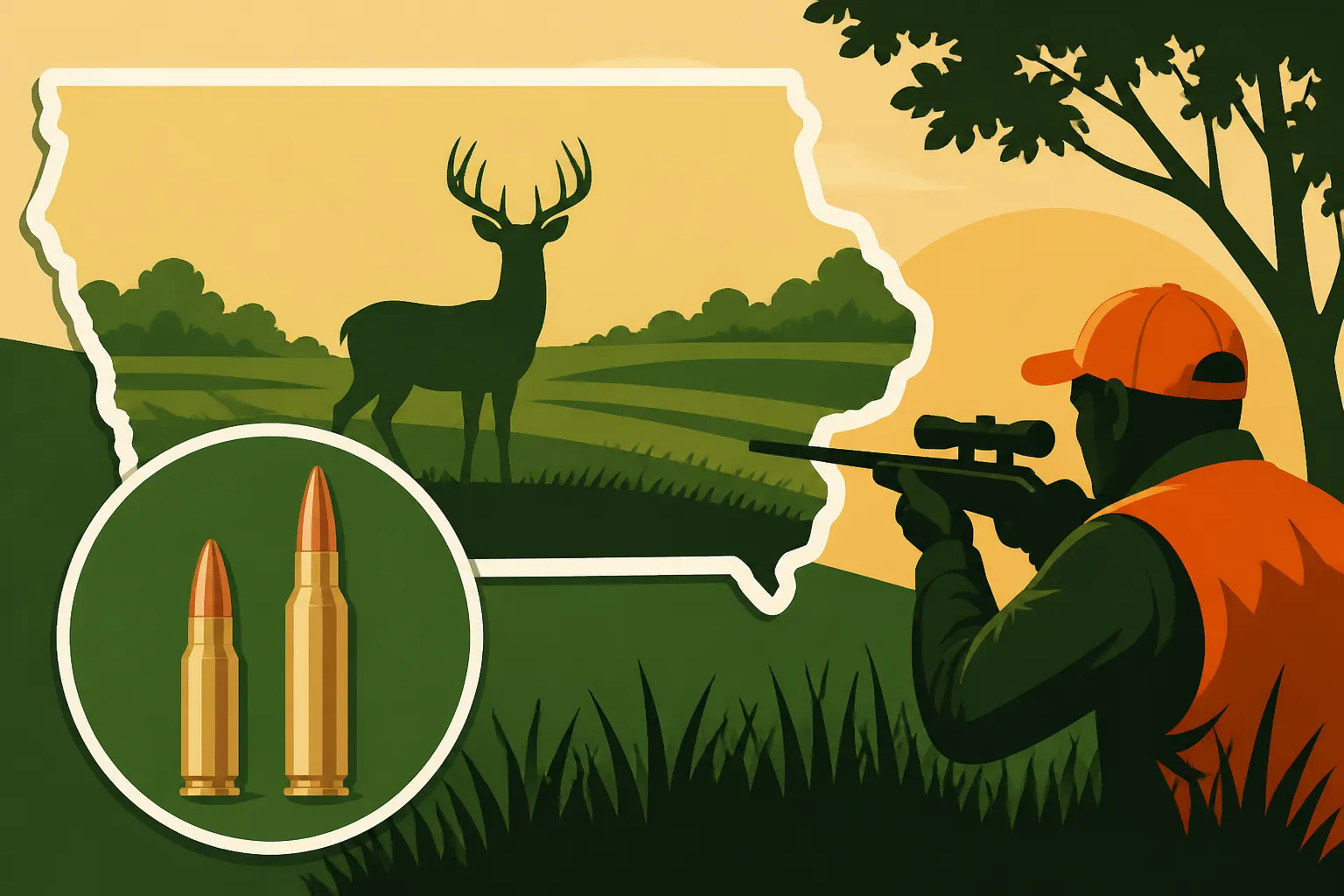
The term "straight-wall cartridge" itself can be a bit of a mouthful, and for those not steeped in firearms terminology, it might sound a little confusing. Simply put, a straight-wall cartridge is one where the sides of the cartridge case are parallel, or nearly parallel, from the base up to the mouth where the bullet is seated. Unlike bottlenecked cartridges, which taper down sharply to hold a smaller-diameter bullet, straight-wall cases maintain a consistent diameter for most of their length. Think of a soda can versus a wine bottle; the soda can is straight-walled. This design influences how the bullet travels and sheds energy, making it a suitable choice for areas where projectile over-travel is a concern.
When the regulations first rolled out, there was a learning curve for everyone, including firearm dealers and hunters. It wasn't just about the name; specific measurements for bullet diameter and case length were established to clearly define what was acceptable. This ensured that only cartridges fitting the desired ballistic profile would be used, upholding the safety intent behind the rule change. Understanding these core characteristics is the first step to knowing if your firearm, or one you're considering, is legal for deer season here in Iowa.
The Initial Confusion and How We Got Here
The introduction of straight-wall cartridge rules certainly wasn't without its growing pains. When new regulations come into play, especially ones that involve technical specifications for firearms, there's always a period of adjustment and, let's be honest, a fair amount of head-scratching. Many hunters weren't familiar with the term "straight-wall" or the specific calibers that would fall under the new rules. Questions abounded: Is my old .30-30 considered straight-wall? (No, that's bottlenecked.) What about a .44 Magnum rifle? (Yes, that fits!) Suddenly, everyone was consulting online forums, gun shop owners, and the official Iowa DNR regulations booklet trying to figure it all out.
Part of the confusion also stemmed from the sheer variety of straight-wall cartridges available on the market, some of which are very popular in other states but might not meet Iowa's specific criteria. It wasn't just about the case design, but also the bullet diameter minimums and maximums, and the case length restrictions. This meant that hunters couldn't just assume any straight-wall cartridge was legal; they had to verify it against the specific numbers published by the DNR. Thankfully, over time, a few popular cartridges quickly rose to prominence as clear winners for Iowa hunting, and the information became much clearer, making it easier for folks to make informed decisions for Iowa's Legal Deer Hunting Equipment by Season.
Key Regulations: Diameter, Length, and Energy
To truly understand Iowa's straight-wall cartridge rules, you need to dive into the nitty-gritty details, because the devil, as they say, is in the specifics. The Iowa DNR didn't just wave a magic wand and declare all straight-walls legal; they established clear parameters to ensure these cartridges fit within the safety and ethical hunting framework of the state. These parameters revolve around the bullet's diameter, the cartridge's case length, and a minimum muzzle energy requirement.
Bullet Diameter Limits: The 'Goldilocks' Zone
Iowa's regulations are quite precise when it comes to bullet diameter, establishing a "Goldilocks" zone – not too small, not too large, but just right for deer hunting in our state. Specifically, the rules state that the projectile must have a diameter of at least .357 inches and not exceed .500 inches. This range ensures that hunters are using a bullet substantial enough to deliver an ethical harvest on a whitetail deer, while simultaneously excluding larger calibers that might have excessive energy or recoil for the average hunter, or those that might not fit the straight-wall ballistic profile effectively.
This specification is crucial. For instance, cartridges like the .357 Magnum, .44 Magnum, .45 Colt, and .45-70 Government easily fall within this range. However, it specifically excludes popular big-bore handgun cartridges that might technically be straight-walled but exceed the .500-inch maximum, or smaller pistol calibers that don't meet the .357-inch minimum. Hunters often find themselves debating these precise measurements, so it’s always wise to check the exact caliber specifications for any round you're considering to ensure it complies with Iowa's Iowa Straight-Wall Bullet Diameter Minimum and Iowa Straight-Wall Bullet Diameter Maximum rules.
Case Length: Keeping It Straight
Beyond bullet diameter, the actual case length of the cartridge also plays a vital role in Iowa's straight-wall rules. The regulations specify a minimum case length of 1.285 inches and a maximum of 1.800 inches. This particular constraint is less about the bullet's flight path and more about distinguishing between traditional handgun cartridges, which tend to have shorter cases, and rifle-oriented straight-wall cartridges that offer greater performance. The intent here is to encourage the use of cartridges designed for rifles, which generally provide better accuracy and ballistics for deer hunting than, say, a short-barreled revolver cartridge might.
This case length requirement, combined with the diameter rules, helps to define the class of firearms the DNR intends for deer hunting. It ensures that hunters aren't just taking any pistol cartridge and sticking it into a rifle, but rather are utilizing cartridges designed with deer hunting in mind. For anyone looking to buy new ammunition or even a new firearm, comparing these case length figures is just as important as checking the bullet diameter. It adds another layer of specificity that ensures the spirit of the law, focused on safe and ethical hunting, is upheld.
Muzzle Energy Minimums: Ensuring Ethical Kills
Finally, and perhaps most critically for ethical hunting, Iowa's straight-wall cartridge rules include a minimum muzzle energy requirement. This ensures that the cartridge you're using has enough power to humanely harvest a deer. The regulations state that the cartridge must produce at least 500 foot-pounds of muzzle energy. For those not familiar with ballistic terminology, muzzle energy is a measure of the kinetic energy of the bullet as it leaves the barrel, directly relating to its knockdown power and ability to penetrate and incapacitate game.
This 500 foot-pound threshold is a standard measure for ethical deer hunting across many jurisdictions. It means that while a cartridge might meet the diameter and case length requirements, it also needs to pack enough punch to be truly effective. Most commercially available straight-wall rifle cartridges that meet the other criteria will easily surpass this energy minimum, but it’s still a good practice to check the ballistic data for your chosen ammunition, especially if you're experimenting with different loads or bullet weights. Using a reliable resource like GoHunt's cartridge guides or manufacturer websites can help you verify these numbers. This focus on energy underscores Iowa's commitment to responsible hunting, ensuring that every hunter has the tools to make a clean, humane kill when applying Shot Placement on a Whitetail at Twenty Yards or further.
Popular Straight-Wall Cartridges for Iowa Deer
With the rules established, a few straight-wall cartridges have really risen to the top as favorites among Iowa deer hunters. These options provide an excellent balance of compliance with regulations, effective hunting performance, and general availability. While there are many straight-wall options out there, these three tend to dominate the conversations around the campfire and in local gun shops.
The .450 Bushmaster: A Modern Favorite
If you've been around Iowa deer camps since the straight-wall rules came into effect, you've undoubtedly heard talk of the .450 Bushmaster. This cartridge has rapidly become one of the most popular choices, and for good reason. It hits hard, delivering significant energy at typical deer hunting ranges, making it an excellent choice for a quick, ethical harvest. Many hunters appreciate its flat trajectory out to 150-200 yards, which is often more than enough for the dense timber and field edges we hunt here. The rifles chambered in .450 Bushmaster are often built on AR-style platforms, offering familiar ergonomics and customization options, though bolt-action versions are also readily available.
The .450 Bushmaster excels in situations where you might encounter a deer at varying distances, from a close-quarters shot in a cedar thicket to a longer reach across a picked bean field. Its powerful punch means it’s very forgiving on shot placement, as long as you hit the vitals, ensuring a fast recovery. While the recoil can be stout, many modern rifle designs do a great job of mitigating it, making it manageable for most shooters. It's a powerhouse that's really found its stride in the Iowa hunting scene.
The .350 Legend: Lightweight and Low Recoil
For hunters seeking a lighter, lower-recoil option without sacrificing effectiveness, the .350 Legend has become a true contender. This cartridge was specifically designed to be compliant with straight-wall hunting regulations in states like Iowa, and it offers several advantages. Its lighter bullet and more moderate powder charge result in significantly less recoil than the .450 Bushmaster, making it a fantastic choice for younger hunters, those sensitive to recoil, or anyone who simply prefers a more comfortable shooting experience. Despite its mild manners, the .350 Legend is a highly capable deer cartridge, delivering ample energy for clean kills out to similar ranges as other straight-walls.
The rifles chambered in .350 Legend are often very lightweight and handy, perfect for long walks into public land or navigating thick brush. Its trajectory is also quite flat, making it easy to shoot accurately. Ammunition for the .350 Legend is widely available, which is always a plus, especially when considering Ammunition Availability for Straight-Wall Rifles. This cartridge proves that you don't need excessive power to be effective; intelligent design and good shot placement are what truly count. It's a great option for hunters who want a modern, efficient, and comfortable hunting rifle.
The .45-70 Government: A Classic with a New Lease on Life
While the .450 Bushmaster and .350 Legend are newer kids on the block, the venerable .45-70 Government has seen a resurgence in popularity thanks to straight-wall rules. This cartridge is a true classic, dating back to the late 1800s, and its effectiveness on large game has never been questioned. Typically found in lever-action rifles, the .45-70 offers a nostalgic appeal alongside serious stopping power. Modern loadings for the .45-70 are incredibly potent, easily exceeding Iowa's muzzle energy requirements and delivering a crushing blow to deer.
For hunters who appreciate tradition, the smooth action of a lever gun, and a cartridge with a storied history, the .45-70 is an excellent choice. It’s certainly not a low-recoil option, but its performance is undeniable. While its rainbow-like trajectory at longer ranges requires a bit more practice and understanding of bullet drop compared to some flatter-shooting modern rounds, within typical Iowa hunting distances, it's more than capable. It's fantastic to see such a classic round find new life and purpose in contemporary deer hunting.
Other Viable Options: Exploring the Cartridge Landscape
While the big three often dominate discussions, it's worth remembering that the straight-wall cartridge landscape is broader than just these popular choices. Other cartridges, such as the .44 Magnum, .357 Magnum, and even the .444 Marlin, are perfectly legal and effective for deer hunting in Iowa, provided they meet all the specific diameter, length, and energy requirements. Many hunters already own lever-action rifles or single-shot firearms chambered in these rounds, making them an immediate, compliant option.
For instance, the .44 Magnum, whether in a rifle or a handgun, is a potent deer cartridge within its effective range, offering moderate recoil in a rifle platform. The .357 Magnum, while at the lower end of the power spectrum for deer, can be perfectly effective with proper bullet selection and shot placement, especially for youth or recoil-sensitive hunters. The key is to thoroughly research any cartridge you're considering, consult the Iowa DNR regulations directly, and match the cartridge to your hunting style and the distances you expect to shoot. Don't be afraid to explore beyond the most common choices, but always prioritize safety and ethical harvesting capabilities.
Here’s a quick overview of some popular straight-wall cartridges:
| Cartridge | Bullet Diameter Range (inches) | Case Length Range (inches) | Muzzle Energy (ft-lbs) | Common Rifle Types | Pros | Cons |
|---|---|---|---|---|---|---|
| .450 Bushmaster | .451-.452 | 1.700 | 2000+ | AR-15, Bolt | Powerful, flat trajectory, effective | Heavier recoil, can be expensive |
| .350 Legend | .357 | 1.710 | 1700+ | AR-15, Bolt | Low recoil, lightweight, accurate, affordable | Less kinetic energy than .450 Bushmaster |
| .45-70 Government | .458 | 2.105 | 2000-3000+ | Lever-action, Single | Historic, very powerful, versatile | Significant recoil, arcing trajectory |
| .44 Magnum | .429 | 1.285 | 1000+ | Lever-action, Bolt | Moderate recoil, widely available | Shorter effective range |
| .357 Magnum | .357 | 1.290 | 500-700+ | Lever-action, Bolt | Very low recoil, good for beginners/youth | Limited range, requires precise shots |
Note: Muzzle energy can vary greatly based on specific bullet weight, powder charge, and barrel length. Always check manufacturer specifications.
Comparing Straight-Wall Rifles to Traditional Iowa Deer Weapons
For a long time, the only options for Iowa firearm deer hunters were shotguns, muzzleloaders, and handguns. The introduction of straight-wall cartridge rifles certainly shook things up, offering a new alternative with distinct advantages and disadvantages when compared to these traditional choices. Understanding these differences can help you decide which weapon best suits your hunting style and the specific conditions you face in the field.
Straight-Wall Rifles Versus Shotgun Slugs
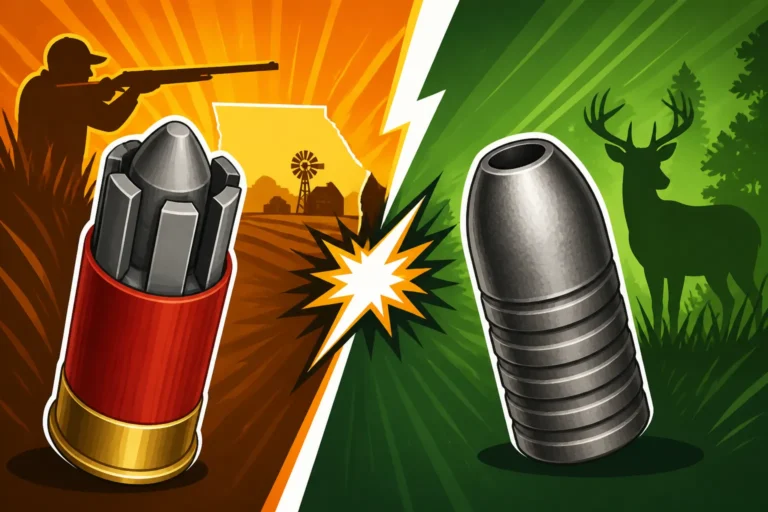
The most direct comparison for straight-wall rifles is with the venerable shotgun slug. For generations, the 12-gauge or 20-gauge slug gun was the go-to for Iowa deer. They're powerful, reliable, and get the job done at closer ranges. However, they do have their limitations. One of the biggest differences you'll notice with a straight-wall rifle is accuracy and effective range. While modern slug guns with rifled barrels and sabot slugs can be surprisingly accurate, consistently hitting vitals beyond 100-125 yards can be a challenge for many hunters. The trajectory of a slug drops significantly past that, requiring precise range estimation and holdover.
Straight-wall rifles, by contrast, generally offer a flatter trajectory and significantly better accuracy, often extending ethical range out to 150-200 yards, or even a bit further for experienced shooters with practice. This added range and precision can be a huge advantage when hunting larger fields or along long timber edges. Recoil is another major factor; a 12-gauge slug can deliver a substantial kick, which can be off-putting for some shooters and lead to flinching. Many straight-wall cartridges, especially the .350 Legend, offer much milder recoil, making for a more comfortable shooting experience and easier follow-up shots if needed. For those wanting to upgrade their accuracy, it's worth considering zeroing your new straight-wall rifle compared to Zeroing a Slug Gun at Fifty Yards.
Muzzleloaders: A Different Ballgame Entirely
Muzzleloaders hold a special place in the hearts of many Iowa hunters, offering an extended season and a unique, traditional hunting experience. However, they operate on a completely different principle than modern straight-wall cartridge rifles, and the comparison is less about competition and more about understanding distinct hunting opportunities. Muzzleloaders require more careful preparation, loading a single shot, often with loose powder and a projectile down the barrel. This process is slower and typically limits hunters to one shot at a deer.
Accuracy with modern inline muzzleloaders can be excellent, rivaling some centerfire rifles, but the practical effective range is often similar to or slightly less than straight-wall rifles, depending on the load and projectile. Where muzzleloaders truly shine is in their dedicated season, allowing hunters into the woods before or after the main gun seasons, which can be an incredible advantage for patterning deer. Straight-wall rifles, on the other hand, offer the convenience of quick reloading, multiple shots, and less fuss with cleaning and powder charges in the field. They are two distinct tools, each with its own advantages, and many Iowa hunters choose to utilize both, depending on the season and their hunting strategy. Consider exploring Muzzleloaders for Iowa's Two Seasons for a deeper dive into that hunting style.
Archery and Crossbows: The Silent Hunters
Comparing straight-wall rifles to archery equipment (compound bows, recurve bows, and crossbows) is like comparing apples and oranges, as they represent fundamentally different hunting philosophies and skill sets. Archery hunting is an intimate experience, demanding stealth, close-range proficiency, and an incredible understanding of deer behavior. The effective range for most bowhunters is typically within 20-40 yards, though modern equipment and extensive practice can push that slightly further. The challenge and satisfaction of drawing a bow on a whitetail within spitting distance is unparalleled for many.
Straight-wall rifles, while offering increased range and firepower, don't replace the unique appeal of archery. They are tools designed for efficiency at moderate distances. Archery seasons in Iowa also run for a much longer period than firearm seasons, offering extensive opportunities for patient hunters. Many hunters participate in both, using archery gear during the early season and then transitioning to a straight-wall rifle or shotgun during the later firearm seasons. Each method requires different skills, patience levels, and strategic approaches, whether you're hunting from a treestand, a ground blind, or still-hunting through thick cover. Bowhunting Iowa Deer From October to January offers a great look into the challenges and rewards of archery hunting here.
Practical Considerations for Hunting with Straight-Wall Cartridges
Adopting a straight-wall cartridge rifle for your Iowa deer hunt isn't just about understanding the regulations; it's also about practical considerations that will affect your experience in the field. From ammunition availability to shot placement, thinking through these details beforehand can make all the difference for a successful and enjoyable hunt.
Ammunition Availability and Cost Considerations
When straight-wall cartridges first became legal, finding certain types of ammunition could sometimes be a bit of a treasure hunt. However, as their popularity has soared in Iowa and other straight-wall-friendly states, availability has dramatically improved. Major ammunition manufacturers now consistently produce popular cartridges like the .450 Bushmaster and .350 Legend, ensuring shelves are stocked at local retailers and online. Even so, it's always a good idea to stock up well before deer season begins, especially if you have a preferred brand or bullet weight, as supplies can sometimes thin out during peak hunting times.
Cost is another factor. While straight-wall rifle ammunition is generally more expensive than common shotgun slugs, the prices have become more competitive over time. The increased accuracy and range often justify the expense for many hunters who prioritize ethical, clean kills. It’s also important to factor in the cost of practice ammunition; you'll want to spend plenty of time at the range to become proficient with your new rifle. Resources like GoHunt can often help you compare prices and availability across different vendors, ensuring you get the best value for your hunting budget.
Recoil Management and Shooting Comfort
Recoil is a big consideration for any firearm, and straight-wall rifles are no exception. While generally less punishing than a 12-gauge slug gun, some straight-wall cartridges, like the .450 Bushmaster and .45-70 Government, still pack a healthy punch. The .350 Legend, on the other hand, is known for its mild recoil, making it an excellent choice for hunters who are recoil-sensitive or for introducing new hunters to the sport. Managing recoil isn't just about comfort; it's also about accuracy. Excessive flinching due to heavy recoil can lead to poor shot placement, even with a highly accurate rifle.
If you're considering a straight-wall rifle with stout recoil, look for models that incorporate recoil-reducing features, such as good recoil pads, muzzle brakes, or heavier rifle platforms. Practicing with proper shooting technique – firmly shouldering the rifle, maintaining a good cheek weld, and breathing control – can also significantly help. The goal is to be comfortable and confident with your rifle, so that when that moment of truth arrives in the deer woods, you can focus entirely on making an ethical shot.
Sighting In and Effective Range Considerations
Accuracy is one of the primary reasons hunters gravitate towards straight-wall rifles. But that accuracy is only as good as your sighting-in process. Before you head to the field, you absolutely must spend time at the range, sighting in your rifle. Most straight-wall cartridges are capable of holding a tight group out to 150-200 yards, which means you'll want to zero your rifle appropriately for the distances you expect to shoot. For many Iowa hunters, a 100-yard zero is a good starting point, allowing for minimal holdover or holdunder out to typical hunting ranges.
Understanding the ballistic capabilities of your chosen cartridge and bullet combination is paramount. Different bullet weights and designs will have varying trajectories. Use a ballistic calculator or consult your ammunition manufacturer's data to understand your bullet's drop at various ranges. Practice shooting from different positions you might encounter in the field – from a bench rest, but also from a kneeling position, or simulating a shot from your treestand or Ground Blinds in Iowa Farm Country. Knowing your rifle's capabilities and, more importantly, your capabilities with that rifle, is fundamental to ethical hunting and ensures you stay within your Straight-Wall Rifle Range for Deer.
Hunting Scenarios: Timber, Fields, and Drives
Straight-wall rifles truly shine in the diverse hunting environments Iowa offers. In open farm country, where shots across picked corn or bean fields might stretch beyond typical slug gun range, the increased accuracy and flatter trajectory of a straight-wall can be a significant advantage. You can confidently take a shot at a buck cruising a distant timber edge or working an inside corner of a crop field.
In denser timber, where shots are often much closer, the stopping power of cartridges like the .450 Bushmaster is undeniable, making quick work of a whitetail in thick brush. For party hunting and organized deer drives, the rapid follow-up shot capability of a magazine-fed straight-wall rifle can also be beneficial, allowing you to quickly re-engage if multiple deer are pushed past. However, always remember that safety is paramount during drives; know your shooting lanes, be aware of your hunting partners, and confirm your target and what lies beyond it. When considering Shotgun Season Drives in Small Timber, the same safety rules apply, regardless of your chosen firearm. Straight-wall rifles are versatile tools that adapt well to almost any Iowa deer hunting scenario.
Navigating the Iowa DNR Regulations
Even with a good understanding of straight-wall cartridges, staying informed about the official regulations is critical for every hunter. Rules can change, and interpretations can vary. Relying on outdated information or hearsay can lead to an unfortunate situation in the field, so it’s always best to go directly to the source.
Where to Find the Most Current Information
The absolute best place to find the most current and accurate information regarding Iowa's straight-wall cartridge rules, and all other hunting regulations, is the official Iowa Department of Natural Resources (DNR) website. They publish an annual hunting and trapping regulations booklet that outlines everything you need to know, from season dates to weapon restrictions. This booklet is available online as a downloadable PDF and often in print at license vendors across the state. They also have specific pages dedicated to firearm regulations, which are regularly updated.
Beyond the official DNR website, there are other reputable sources. Many experienced Iowa outfitters and hunting organizations stay on top of the rules and can offer practical advice. Online mapping platforms like GoHunt, which often integrate DNR boundaries and regulations, can also be useful tools for visual learners. However, always cross-reference any information you find with the official DNR publication. Don't risk your hunt or a potential fine by relying solely on forum discussions or word-of-mouth. Keeping up to date with Iowa Deer Season Dates by Weapon and other specifics is part of being a responsible hunter.
The Importance of Double-Checking Before Your Hunt
It might sound obvious, but taking a few moments to double-check the regulations before each hunting season is incredibly important. Wildlife laws, while often stable, can sometimes be adjusted from year to year. A small change in bullet diameter limits, case length, or muzzle energy requirements could render a previously legal firearm or ammunition choice illegal. This is especially true for non-resident hunters who might be familiar with their home state's rules, which often differ significantly from Iowa's.
Imagine showing up for opening day, excited to use your new straight-wall rifle, only to discover a small detail in the regulations means it's not actually compliant. That's a frustrating, and avoidable, scenario. Print out the relevant sections of the regulations, highlight the key numbers, and even carry a copy with you in the field. This due diligence ensures that you're hunting legally and ethically, allowing you to focus on the thrill of the chase rather than worrying about compliance. Safe and responsible hunting starts with being fully informed.
Disclaimer
This article is for general informational purposes only and does not constitute professional advice. Laws, prices and regulations vary by location and change over time. Consult a qualified professional for guidance on your specific situation.