Saddle Gear for Mobile Iowa Hunting
If you've ever hauled a heavy hang-on stand and multiple sticks deep into an Iowa timber block, only to realize the wind shifted, or the deer sign you scouted just isn't there, you know the frustration. That feeling of being tethered to a fixed stand location, knowing the deer are moving just out of range, can be crushing. This guide is all about breaking free from those limitations, diving deep into the world of saddle hunting gear, and showing you how a mobile setup can unlock new opportunities for chasing Iowa whitetails.
The Freedom and Flexibility of Mobile Saddle Hunting
For many Iowa hunters, the idea of a fixed treestand has been the norm for decades. You scout a spot, hang a stand, and hope the deer cooperate. But as deer patterns shift with crop rotations, hunting pressure, and ever-changing weather, being truly mobile becomes a huge advantage. Saddle hunting isn't just a trend; it's a strategic shift that offers unparalleled flexibility, especially when you're working public land or trying to stay one step ahead of pressured Iowa bucks.
Why Saddle Hunting Excels in Iowa's Diverse Terrain
Iowa might be known for its vast agricultural fields, but beneath that rich soil lies a network of timbered river bottoms, intricate creek drainages, and rolling hills that offer fantastic, yet challenging, deer habitat. Traditional stands can be cumbersome to move through these areas, often requiring extensive preseason work that can put unnecessary pressure on deer. A saddle setup allows you to slip in quietly, adapt to fresh sign, and reposition with minimal disturbance, turning those hard-to-reach pockets into viable hunting spots.
Imagine picking apart a deep river bottom, moving from one timber point to another as you locate fresh rubs or scrapes. With a saddle, you're not committed to a single tree. If that perfect tree you picked last week suddenly has the wrong wind or lacks current sign, you simply move to the next. This adaptability is critical for success on pressured public ground where deer quickly learn to avoid predictable hunter locations. It allows you to respond to real-time information, whether that's a new scrape line or a subtle shift in food source preference, giving you an edge over less flexible hunters. Mobile Saddle Hunting in Iowa goes into even more detail on the tactical advantages this approach offers.
Overcoming the Hurdles of Traditional Stand Hunting
Let's be honest, those heavy hang-on stands, especially when coupled with multiple climbing sticks, are a workout just to get to the tree. Once you're there, the process of hanging them can be noisy, time-consuming, and frankly, dangerous if not done with extreme caution. For the hunter who wants to run and gun, or who needs to get into a spot quickly and quietly before sunrise, these traditional methods can be a significant barrier. The bulk and weight alone can deter someone from trying a new location on a whim.
Saddle hunting, by its very nature, is designed to be lightweight and efficient. While there's a learning curve, once you master the system, you'll find yourself able to carry all your essential gear in a compact pack, moving through thick cover with far less effort. This means you can access those remote corners of a WMA that other hunters avoid, or quickly set up on a newly discovered hot sign without breaking a sweat or alarming every deer in the county. It's about minimizing your footprint and maximizing your ability to react to what the deer are doing right now.
Essential Saddle System Components
A complete saddle hunting system is more than just a saddle; it's a carefully chosen collection of gear designed to work together for safety, comfort, and efficiency. Each component plays a vital role in ensuring a stable and secure platform for your elevated hunt. Getting to know each piece and understanding its function is the first step toward building a reliable mobile setup.
The Saddle Itself: Comfort and Safety
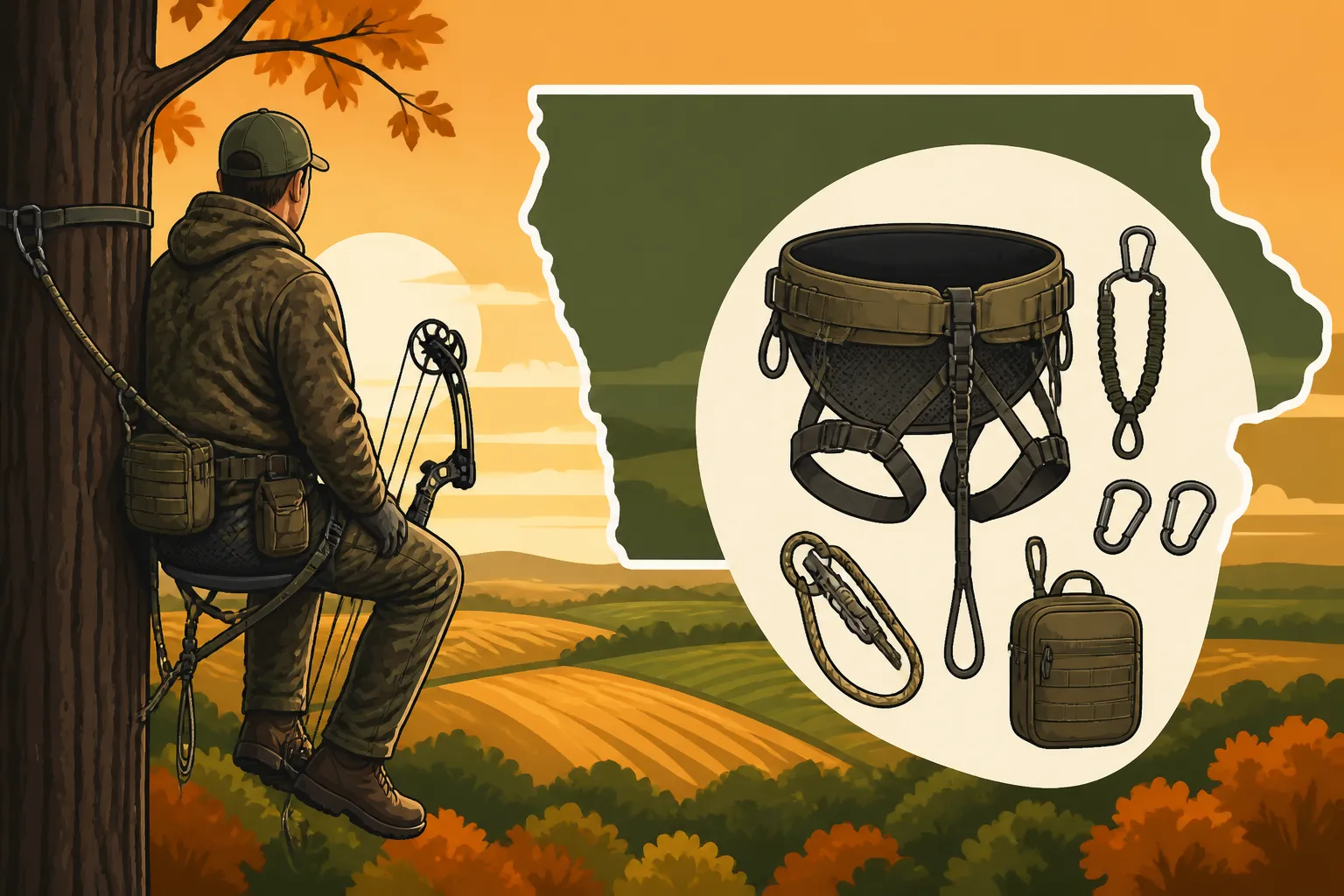
At the heart of any saddle hunting setup is, of course, the saddle. This is essentially a specialized harness that you wear, designed to suspend you comfortably against a tree. Unlike a traditional treestand that you sit on, a saddle allows you to lean into it, rotating around the tree to shoot in any direction. When you're spending hours up a tree, comfort is paramount, and modern saddles are engineered with padded leg straps, a supportive waist belt, and adjustable bridge loops to distribute weight evenly.
Safety is non-negotiable, and every saddle is designed with robust stitching and high-strength webbing to support your weight securely. The bridge, which connects the saddle to your tree strap, is a critical component, and many saddles offer adjustable bridges or multiple attachment points to customize your comfort and lean angle. Some popular models feature extra molle webbing or loops for attaching accessories directly to the saddle, keeping critical items like your rangefinder or grunt tube within easy reach. Learning how to properly don and adjust your saddle, both on the ground and once you've reached hunting height, is crucial for both safety and prolonged comfort during your hunt.
The Lineman's Belt and Tree Tether: Your Lifelines
These two pieces of rope, often made from high-strength static line, are your connection to the tree and your primary safety devices. The lineman's belt is used during the ascent and descent. It wraps around the tree and clips into two loops on the front of your saddle, allowing you to have both hands free to attach climbing sticks or other ascent aids while remaining securely connected to the tree. This is an absolute game-changer for safety, eliminating the dangerous practice of climbing with one hand while trying to set a stick with the other.
Once you reach your desired hunting height, the lineman's belt comes off, and the tree tether goes on. The tree tether is a single piece of rope with a Prusik knot (or similar adjustable knot) that wraps around the tree above you and clips into your saddle's bridge. This tether is what you lean into while hunting, allowing you to swing around the tree to get a shot. Just like the lineman's belt, the tree tether must be properly adjusted to give you the ideal lean angle and comfort. Always ensure both your lineman's belt and tree tether are free from fraying or damage before each use, as they are truly your lifelines while aloft.
Haul Line and Accessory Pouches: Organization in the Tree
While not technically part of the "suspension" system, a haul line and well-placed accessory pouches are absolutely critical for mobile saddle hunting. Your haul line is a thin but strong rope used to pull up your bow, backpack, and any other gear once you're safely established in the tree. It keeps your hands free during the climb and prevents accidental drops. A good haul line should be long enough to reach from the ground to your maximum hunting height, typically around 30 feet, and often includes a carabiner or hook on one end for easy attachment to your gear.
Accessory pouches or a well-designed backpack are essential for keeping your smaller items organized and accessible. When you're suspended in a saddle, pockets can become awkward to reach. Dedicated pouches that attach to your saddle or belt can hold things like your rangefinder, grunt tube, wind checker, or phone. Think about the items you need frequently and where they'll be most accessible without excess movement. Many mobile hunters also utilize a small "dump pouch" for spent broadheads or other trash to ensure they leave no trace on public land.
Climbing Methods for Saddle Hunting
Getting up the tree is half the battle in any elevated hunting scenario, and saddle hunting offers several efficient and quiet ways to get to your perch. The beauty of mobile climbing methods is their adaptability to different tree types and sizes, allowing you to pick the best tree for the situation rather than being limited by what a ladder stand can attach to. Each method has its pros and cons, and understanding them will help you choose what's best for your Iowa hunting style.
Climbing Sticks: The Workhorse of Mobile Ascent
Climbing sticks are arguably the most popular and versatile method for ascending a tree when saddle hunting. These are short, lightweight sections of metal (typically aluminum) that strap or cam buckle to the tree, providing sturdy steps. Hunters typically carry 3-5 sticks, stacking them in a compact bundle on their pack. The process involves attaching one stick, climbing it, attaching the next, and repeating until you reach your desired height. Many hunters use their lineman's belt during this process to maintain three points of contact and free up their hands.
The main advantages of climbing sticks are their stability, the ability to bypass lower limbs, and their relative ease of use once practiced. They work well on a wide variety of tree diameters and types found in Iowa's timber, from sturdy oaks and walnuts to straighter maples. Some popular brands offer modular designs, allowing you to customize the number of steps or even attach mini-platforms. Climbing Sticks and Platforms can offer further insights into optimizing this part of your setup. The key is to practice setting them up quietly and efficiently, especially in the dark, so you're not fumbling around at 5 AM on opening day.
Rope Access Methods: Advanced and Lightweight
For the truly minimalist or advanced mobile hunter, rope access methods like single-rope technique (SRT) or double-rope technique (DRT) offer incredibly lightweight and stealthy ways to get aloft. These methods involve using a series of specialized knots, ascenders, and descenders to climb a single rope that has been pre-set in the tree. While the initial learning curve is steeper and requires a significant commitment to practice and safety, the gear itself is often lighter and more compact than a full set of climbing sticks.
Rope access can be particularly effective for accessing tall, straight trees with minimal lower limbs, or for leaving a single rope in a tree for quick, repeated access (where legal and ethical, especially on private land). Imagine setting a rappel line for quickly descending after a long hunt, or using a throw bag to silently get your rope into a specific crotch high in the canopy. While not for every hunter, those who master rope methods appreciate the ultimate portability and the ability to reach heights that sticks might struggle with. The crucial element here is a deep understanding of knots, gear limits, and self-rescue techniques, making it more suited to experienced climbers.
Platforms and Aides: Adding Comfort and Stability
Once you've climbed the tree and attached your tree tether, having a small platform or steps can significantly enhance your comfort and stability while hunting from a saddle. A platform provides a solid surface for your feet, allowing you to relieve pressure on your legs and shift your weight more naturally. Many climbing stick systems offer a dedicated top stick that doubles as a mini-platform, or you can purchase standalone saddle platforms that attach securely to the tree.
These platforms often feature textured surfaces for grip and some even allow for minor leveling adjustments. For long sits, having a stable place to rest your feet is a game-changer, reducing fatigue and enabling you to stay on stand longer. Additionally, some hunters utilize strap-on steps or screw-in steps (where permitted, check local regulations like Are Screw-In Steps Legal in Iowa?) around the tree to provide additional foot placement options, allowing for even more shooting angles and better comfort during those all-day rut sits.
Accessories to Enhance Your Mobile Setup
While the core saddle system gets you safely into the tree, a range of accessories can significantly improve your experience, making you more efficient, comfortable, and ultimately, more successful. Think of these as the quality-of-life upgrades that transform a functional setup into a truly optimized hunting machine.
Optics and Rangefinders: Clear Vision and Precision
In Iowa's varied landscape, from thick timber draws to sprawling crop fields, having reliable optics is crucial. A good pair of binoculars, perhaps an 8×42 or 10×42, will help you pick apart distant cover, identify deer in low light, and confirm rack size before you even think about reaching for your bow. When you're in a saddle, every movement counts, so having your binoculars easily accessible, perhaps on a chest harness, means less fumbling and quieter operation. Binoculars for Iowa Timber Hunting emphasizes the importance of choosing the right magnification for your environment.
A quality rangefinder is an absolute must-have for bowhunting, especially from a saddle where your angles can change subtly as you rotate around the tree. Knowing the exact distance to your shooting lanes, rubs, scrapes, and potential deer travel routes is critical for making an ethical shot. Look for a rangefinder with angle compensation, which will give you a true horizontal distance when shooting from an elevated position. Keeping it clipped to your saddle or in an easily accessible pouch ensures you can range quickly and silently when a buck finally steps into view.
Backpacks and Gear Management: Keeping Everything Handy
A well-chosen backpack is more than just a carryall; it's an integral part of your mobile hunting strategy. It needs to comfortably carry your saddle, climbing sticks, extra layers, water, snacks, and any other essentials for a day in the field, all while remaining quiet and streamlined. Many saddle hunters opt for packs with external compression straps to secure climbing sticks or a platform, preventing them from shifting and making noise as you walk.
Inside, organization is key. Dedicated pockets for calls, wind-checking powder, a first-aid kit, and other small items keep everything within reach without requiring you to empty your entire pack. The goal is to be able to access what you need with minimal movement and noise. Consider a pack that allows for easy access while you're in the saddle, perhaps one that can hang from your tree tether or a small gear hook, turning it into a convenient mobile workstation. This attention to detail in gear management can truly make or break a long sit.
Safety and Comfort Enhancements: Staying Secure and Warm
Beyond the core safety components, several items can significantly increase your comfort and safety. A good headlamp with a red light option is invaluable for pre-dawn walks and post-dusk recovery efforts, allowing you to see without spooking deer. Ensure it has fresh batteries and consider carrying spares. For cold Iowa days, hand warmers and toe warmers can extend your sit time significantly, especially during the late season when temperatures plummet. Staying Warm on a December Sit offers more tips for braving the cold.
Perhaps less obvious but equally important is a small piece of foam or a seat pad. While a saddle is designed for comfort, having a little extra cushioning, especially if you anticipate long hours, can make a difference. Some hunters also carry a small, foldable saw or pruning shears to quietly clear any minor shooting lane obstructions once in the tree, though this should always be done with minimal movement and disturbance. Remember, the goal is to be effective without leaving a trace or alarming local wildlife.
| Gear Item | Primary Function | Key Benefit for Saddle Hunting |
|---|---|---|
| Saddle | Suspends hunter against the tree | Mobility, 360-degree shooting, lightweight |
| Lineman's Belt | Safety during ascent/descent | Hands-free climbing, secure while setting sticks |
| Tree Tether | Connects saddle to tree at hunting height | Secure suspension, allows rotation |
| Climbing Sticks | Tree ascent method | Versatile, stable, works on varied trees |
| Saddle Platform | Foot support while hunting | Enhances comfort, reduces fatigue |
| Haul Line | Lifts gear to hunting height | Maintains stealth, keeps hands free |
| Binoculars | Scouting, identifying deer | Crucial for spotting in varied Iowa terrain |
| Rangefinder | Precise distance measurement | Ethical shot placement from elevated positions |
| Hunting Backpack | Carries all gear, provides organization | Efficient transport, quiet access to essentials |
| Headlamp | Illumination in dark | Safe access/egress, minimal disturbance |
Strategic Considerations for Saddle Hunting in Iowa
Making the switch to saddle hunting isn't just about the gear; it's about adopting a new mindset for how you approach deer hunting. Iowa's unique blend of agriculture, timber, and diverse public land options presents specific challenges and opportunities that a mobile saddle setup is perfectly suited to address. Mastering these strategies will elevate your hunting success.
E-Scouting and On-the-Fly Adaptability
One of the biggest advantages of mobile saddle hunting in Iowa is the ability to adapt to changing conditions and new intel. This starts long before you ever step foot in the woods, with thorough e-scouting. Tools like GoHunt can be invaluable here, allowing you to pour over aerial maps, identify subtle terrain features like old fence lines, timber points, creek crossings, and potential bedding areas without putting boots on the ground. You can mark multiple potential trees and access routes for various wind directions, giving you a game plan before you even leave home. E-Scouting Iowa Farm Country From Home is a great resource for this.
Once you're actually in the field, the true power of adaptability comes into play. You might have planned to hunt one specific ridge, but after a quick scout, you find fresh rub lines or a cluster of feeding deer in an entirely different area. With a mobile saddle setup, pivoting to that new hot sign is not only feasible but encouraged. You're not tied to a single, pre-hung stand; instead, you can quickly move to a new location, set up quietly, and capitalize on real-time deer activity. This allows you to hunt where the deer are, not just where you hope they'll be.
Accessing Difficult Terrain and Pressured Areas
Iowa has some incredible hunting opportunities, but much of it, especially on public land, can be challenging to access. Think about those deep, brushy creek bottoms that wind through agricultural fields, or the steep, broken terrain of river breaks and the Loess Hills. These areas often hold mature bucks seeking refuge from hunting pressure, but getting a traditional stand into and out of them can be a monumental task. This is where the lightweight, compact nature of saddle gear truly shines.
With your saddle and climbing sticks condensed onto your back, you can navigate dense thickets, cross ditches, and climb steep banks with much greater ease and stealth. This ability to get off the beaten path and into those overlooked pockets can be the difference between seeing a few does and encountering that mature buck. Furthermore, on heavily hunted public lands, deer quickly learn to avoid easy access points and predictable stand locations. A saddle allows you to penetrate deeper and set up in spots that other hunters either can't or won't reach, reducing your encounter with other hunters and increasing your chances of finding undisturbed deer. Public Land Deer Hunting in Iowa underscores the need for such strategic access.
Quiet Entry and Exit: Minimizing Disturbance
In Iowa, where deer are often accustomed to human activity but quick to avoid direct pressure, quiet entry and exit routes are paramount. The clanking of aluminum ladder sections or the heavy thud of a hang-on stand being moved can send deer fleeing long before you ever get into position. Saddle hunting gear, being primarily fabric and rope with lighter metal components, is inherently quieter. With practice, you can get into a tree, set your sticks, and be ready to hunt with minimal noise.
Additionally, because you're not leaving a stand in the woods for extended periods, you're reducing your scent footprint and visual impact in your hunting area. After the hunt, your entire setup comes down with you, leaving no trace. This "leave no trace" philosophy is not only ethical but also helps keep your hunting spots from becoming predictable to deer and other hunters. It means your entry and exit are as low-impact as possible, reducing the chance of bumping deer on your way in or out, and preserving the quality of the hunting experience for future sits. Access Routes That Do Not Bump Deer is an excellent resource for planning these crucial movements.
Disclaimer
This article is for general informational purposes only and does not constitute professional advice. Laws, prices and regulations vary by location and change over time. Consult a qualified professional for guidance on your specific situation.