Deer Carts and Drag Systems
Few things can drain the joy out of a successful Iowa deer hunt faster than the thought of how you're going to get that magnificent animal out of the timber or across those endless CRP fields. We've all been there: staring at a downed buck, miles from the truck, with daylight fading and exhaustion setting in. This guide is here to explore the diverse world of deer carts and drag systems, helping you pick the right tools and strategies to turn that post-harvest dread into a manageable, even efficient, part of your hunting adventure.
The Agony of the Drag: Why You Need a Better System
Let's be honest, recovering a deer can be one of the most physically demanding parts of the hunt, especially here in Iowa. The thrill of the shot is quickly replaced by the daunting reality of moving hundreds of pounds of deer meat, bone, and hide through challenging terrain. Many hunters dread this part so much they start thinking about it before they even take the shot, sometimes influencing their stand placement or even their decision to shoot. It doesn't have to be that way.
The Brutal Reality of Iowa Terrain
Iowa might look flat on a map, but anyone who has spent time hunting our creek bottoms, river breaks, or even the subtle rolling hills of our timber knows better. You've got slick, muddy draws after a rain, thick multiflora rose patches that grab at everything, and crop stubble that can make dragging a deer feel like pulling a refrigerator over broken glass. Then there are the deep ravines and creek crossings that seem to appear out of nowhere, transforming a simple drag into an Olympic-level obstacle course. Trying to muscle a heavy deer through this kind of country, especially alone, is not just a chore; it's a recipe for injury and frustration. You'll find yourself questioning every life choice you've made up to that point.
And let's not forget those seemingly innocent picked corn or bean fields. They look easy enough, but try dragging a deer across a mile of frozen ruts or ankle-twisting cornstalks. Your shoulders burn, your back aches, and every few steps, a deer leg snags on something, forcing you to stop, readjust, and start all over again. This isn't just about convenience; it's about making sure you can safely and effectively retrieve your hard-earned harvest without completely ruining your body in the process. We hunt for the enjoyment and the sustenance, not to spend the next week laid up with a pulled muscle.
The Impact on Your Hunt and Your Body
Beyond the immediate physical strain, the thought of a difficult drag can subtly influence your hunting decisions, often for the worse. How many times have you passed on a deer that was a little too far back in the thick stuff, simply because you didn't want to deal with the extraction? Or perhaps you've taken a questionable shot just to bring the deer closer to an access point, a decision that can lead to a lost animal. This isn't good for ethical hunting, and it certainly isn't good for your mental state. Having a reliable recovery system frees you from these anxieties.
Furthermore, repeated strenuous drags, especially in awkward positions, can lead to chronic back pain, shoulder injuries, and overall exhaustion that makes you less effective for subsequent hunts. A deer cart or a well-designed drag system isn't just a piece of gear; it's an investment in your physical well-being and your long-term ability to keep enjoying the outdoors. It allows you to focus on the hunt itself, knowing that when success comes, you have a plan for Getting a Deer Out of an Iowa Creek Bottom or across that vast field.
Understanding Your Options: Deer Carts
Deer carts have revolutionized game recovery for many hunters. Instead of shouldering the full weight of a deer, you're distributing it over wheels, often making a job that might take two or three people manageable for one. They come in various configurations, each with its own strengths and weaknesses depending on the terrain and the size of your harvest.
Two-Wheeled Carts: Simplicity and Maneuverability
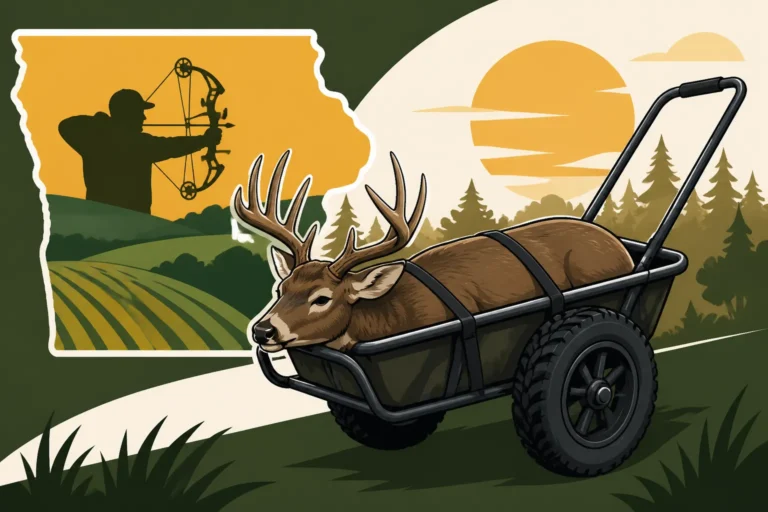
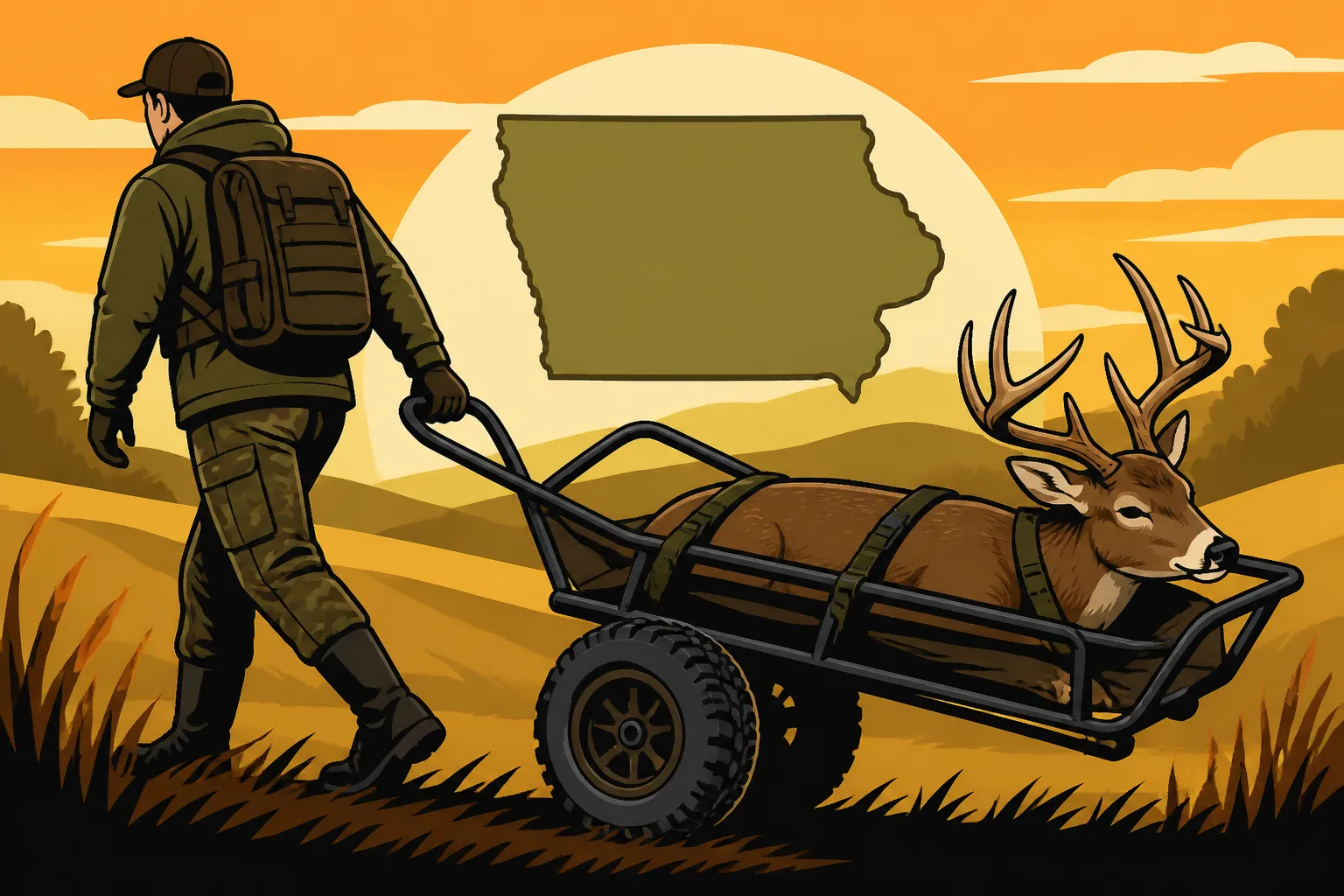
The classic two-wheeled deer cart is probably what most hunters picture when they think about mechanical game recovery. These carts typically feature a sturdy frame, a pair of large wheels, and some form of straps or netting to secure the animal. They are designed to carry the bulk of the deer's weight while you lift and pull on the handles, acting as a third pivot point. For many situations in Iowa, especially across relatively flat crop fields, maintained trails, or open timber with minimal undergrowth, these carts are fantastic. Their simple design makes them relatively lightweight and easy to maneuver.
However, two-wheeled carts do have their limitations. When you hit really uneven terrain, deep ruts, thick brush, or steep creek banks, they can become quite unwieldy. The narrow wheelbase means they can tip easily on side hills, and navigating tight turns in dense timber can be a wrestling match. You still bear a significant portion of the weight in balancing the load and pulling, so while far better than a drag, they still require considerable effort. For public lands where you might be Hunting Pressure Patterns on Iowa Public Land that force you deep into less accessible areas, you'll need to consider how well a two-wheeled cart handles true wilderness.
Single-Wheeled Carts: When Terrain Gets Nasty
Less common, but incredibly effective for specific conditions, are single-wheeled deer carts. Think of them as a heavy-duty wheelbarrow designed specifically for game. These carts typically have a single, large-diameter wheel in the center, and the deer is strapped on either side of this wheel, often lengthwise. The key advantage here is their ability to navigate extremely narrow paths, dense brush, and heavily treed areas where a two-wheeled cart would constantly snag. They are also excellent for traversing sidehills where a two-wheeled cart would be prone to tipping.
The trade-off with a single-wheeled cart is that you are responsible for balancing the load. This means more upper body and core strength is required to keep the cart upright, especially with a heavy deer. It can be a workout, but it’s a different kind of workout than dragging or wrestling a two-wheeled cart. For hunters venturing into rugged river bottoms or the dense cedar thickets we have in parts of Iowa, where the path is almost nonexistent, a single-wheeled cart can be a game-changer. They excel where you need to move through obstacles rather than over them.
Four-Wheeled Carts: Hauling Heavy Loads
At the other end of the spectrum, we have four-wheeled deer carts, often resembling small utility wagons or specialized game buggies. These are designed for maximum stability and weight distribution, making them ideal for truly heavy loads or when you have a long haul over relatively smooth or gently rolling terrain. Some even come with ATV hitches or can be pulled by small tractors, though most are hand-pulled. With four wheels, the cart carries almost all of the deer's weight, significantly reducing the strain on the hunter.
These carts shine on well-worn trails, old logging roads, or across open, relatively flat fields. However, their size and weight make them less suitable for dense timber or very rugged, brushy country. They can be cumbersome to turn in tight spots, and if you encounter deep mud or significant obstacles, their multiple wheels can actually get stuck more easily than a two-wheeled or single-wheeled option. For hunters who consistently take large deer and have good access routes, perhaps on private land or Hunting Iowa Walk-In Ground Without Burning It Out where paths are somewhat maintained, a four-wheeled cart can be an absolute godsend.
| Cart Type | Best For | Pros | Cons |
|---|---|---|---|
| Two-Wheeled | Open timber, trails, picked fields, mild terrain | Lightweight, good balance, fairly maneuverable, widely available | Can tip on sidehills, struggles in thick brush, requires some lifting |
| Single-Wheeled | Dense timber, narrow paths, steep sidehills | Excellent for tight spots, stable on inclines, good ground clearance | Requires more balancing effort, slower to load |
| Four-Wheeled | Long hauls, heavy deer, smooth trails, open fields | Maximum stability, minimal hunter effort, handles very heavy loads | Bulky, poor in dense brush, can get stuck in deep mud, less agile |
Understanding Your Options: Drag Systems
Sometimes, a full-blown deer cart just isn't practical. Maybe the terrain is too rugged, you're deep in a restricted area where wheeled vehicles aren't allowed, or you simply prefer a more minimalist approach. That's where drag systems come into play. These are simpler, often more compact tools designed to make the act of pulling a deer easier, even if you're still doing the lion's share of the work.
Simple Drag Ropes and Harnesses
The most basic drag system is, of course, a sturdy rope. But a plain rope can quickly dig into your hands, make it hard to get a good grip, and transmit every jolt directly to your shoulders. This is why many hunters upgrade to a specialized drag rope or harness. A good drag rope often features a comfortable, padded handle that distributes the pulling force across your hand, making it less painful and improving grip. Some even have a loop that allows you to put your arm through, engaging your core more effectively.
Even better are drag harnesses that you wear around your waist or shoulders. These systems attach to the deer and then to you, transferring the pulling power from your arms to your larger, stronger leg and back muscles. This is a game-changer for solo hunters or when you have a long way to go. Instead of straining your biceps and forearms, you can lean into the pull, using your body weight and leg drive. While still physically demanding, a good harness makes the effort far more efficient and reduces the risk of injury. It's a fundamental piece of gear that almost every Iowa deer hunter should have, especially if you anticipate hunting areas where mobility with a cart is limited, such as certain parts of Public Land Deer Hunting in Iowa.
Specialized Game Sleds and Tarps
When you need to protect the carcass from dirt and debris, or reduce friction over certain surfaces, a game sled or heavy-duty tarp is invaluable. A game sled is essentially a large, durable plastic tub or sheet with a low profile, designed to be pulled behind you. The deer is loaded onto the sled, keeping it clean and preventing its legs from snagging on undergrowth. Sleds are particularly effective over snow, ice, or relatively smooth ground like frozen stubble fields, where they glide with surprising ease. They can significantly reduce the effort required compared to dragging the bare hide.
Similarly, heavy-duty tarps (sometimes called game bags or drag tarps) serve a similar purpose. These are often made from rugged, puncture-resistant materials and can be wrapped around the deer, then cinched tight with straps or ropes, creating a smooth, contained package to drag. They protect the meat, keep burrs and dirt off, and reduce friction, especially over grassy or leafy terrain. While not as rigid as a sled, a good tarp is lightweight, foldable, and easy to pack, making it a great option for hunters who prioritize portability. When you're Field Dressing in Warm October Weather, keeping the meat clean and cool is paramount, and a tarp or sled can help achieve that by preventing direct contact with the ground.
Backpack Frame Systems for Quartered Meat
Sometimes, the terrain is just too rough, too steep, or too far for even the best cart or sled. Think of those deep, muddy creek bottoms or miles into a vast timber block. In these extreme situations, the most practical solution might be to quarter your deer in the field and pack it out. This involves skinning and butchering the animal where it lies, separating the meat into manageable sections (the four quarters, backstraps, tenderloins, neck meat, etc.), and then carrying these sections out in game bags on a sturdy backpack frame.
A dedicated external frame backpack or a heavy-duty pack frame is essential for this method. These frames are designed to carry heavy, awkward loads and distribute the weight efficiently across your hips and shoulders. It's not a quick process – Quartering a Deer in the Field takes time and skill – but it allows you to get every ounce of meat out, even from the most remote locations. Many hunters find this method less physically taxing than a long, strenuous drag of a whole deer, as you can take breaks, adjust the load, and simply walk more naturally. This is often the preferred method when hunting deep into public land where vehicular access is strictly prohibited, and you need to leave Leaving No Trace on Iowa Walk-In Ground.
Choosing the Right System for Your Iowa Hunt
Selecting the perfect deer recovery system isn't a one-size-fits-all decision. Iowa's diverse landscapes, from the rolling Loess Hills to the flat central plains, demand a thoughtful approach based on where and how you hunt. What works for a field-edge stand might be a nightmare deep in a river bottom.
Factors to Consider: Terrain, Distance, and Game Size
The first thing you need to honestly assess is the typical terrain you hunt. If you spend most of your time hunting picked crop fields or relatively open private timber with established trails, a two-wheeled deer cart is likely your best friend. It offers a great balance of maneuverability and load capacity without breaking the bank. However, if your honey holes are nestled deep in rugged creek bottoms, dense multiflora rose thickets, or steep, brushy ravines, a cart might spend more time on its side than upright. For these scenarios, a robust drag harness, a game sled, or even a backpack frame for quartering could be far more effective.
Distance is another huge factor. A 200-yard drag through easy terrain might be tolerable with just a rope, but that same distance over rough ground, or a mile over any ground, absolutely warrants a better system. The longer the distance, the more critical it becomes to minimize physical strain. For epic hauls, consider the efficiency of wheels or the segmented approach of quartering. Finally, the size of the game matters. A small doe might be manageable with a basic drag system, but a mature Iowa buck, especially one pushing 200-250 pounds dressed, becomes a monumental task without mechanical assistance. Plan for the biggest deer you realistically expect to harvest.
Public vs. Private Land Considerations
Your hunting grounds play a huge role in your gear choice. On private land, you might have the luxury of ATV access, allowing you to get a cart much closer to your downed animal. You might also have more flexibility to clear a path or use larger, less maneuverable carts. In these situations, a heavier-duty four-wheeled cart, or even a robust two-wheeled cart designed for larger loads, might be ideal. You're less concerned with packing gear in long distances.
Public land hunting, however, often presents different challenges. Many Iowa Wildlife Management Areas and Iowa's Habitat and Access Program Explained (IHAP) tracts have restrictions on motorized vehicles, forcing you to rely solely on human power. This means your recovery system needs to be either highly portable or incredibly efficient for manual use. A lightweight, packable drag harness, a compact game sled, or the ability to quarter and pack out meat becomes much more appealing. You need gear that can be carried in with you or retrieved quickly, without adding excessive bulk or weight to your primary hunting pack. Scouting your public land tracts using tools like GoHunt, which can help you identify access points and terrain features, can also inform your cart or drag system choice before you even step foot on the property.
Combining Carts and Drag Systems for Efficiency
Don't feel like you have to pick just one solution for every situation. Savvy Iowa hunters often combine different systems to maximize efficiency. For example, you might drag a deer out of a dense, swampy creek bottom using a heavy-duty drag harness to reach a more open trail. Once on the trail, you could then transfer the deer onto a two-wheeled cart for the longer haul back to the truck. This hybrid approach leverages the strengths of each system while mitigating their weaknesses.
Another excellent strategy involves using a game sled to get the deer through thick brush or over rough ground for a short distance, then loading it onto a cart once you hit a more manageable path. Or, if you know you're venturing deep into truly rugged country, you might carry a small, packable drag tarp or basic harness and have a cart stashed closer to your vehicle, ready for the easier part of the journey. Thinking ahead and having multiple options in your recovery arsenal means you're prepared for whatever Iowa's diverse terrain throws at you when success strikes.
Tips for Efficient Deer Recovery in Iowa
Having the right gear is only half the battle; knowing how to use it effectively and planning your recovery is just as crucial. A little foresight can save you a lot of sweat, time, and potentially, a lot of meat.
Preparation is Key: Scouting and Planning Your Exit
Just as you scout for deer sign and stand locations, you should also scout for exit routes. Before you even climb into your stand, take a mental note of the easiest path out of the area for a downed deer. Look for old logging roads, dried-up creek beds, or natural funnels that offer the least resistance. If you're using an app like GoHunt, you can mark potential recovery paths and access points on your digital maps, allowing you to visualize the best way to extract a deer. Knowing these routes beforehand helps you orient your shot, if possible, to put the deer closer to an easier exit.
Consider parking your vehicle in a spot that minimizes the drag distance or puts you on the "downhill" side of your hunting area. If you're hunting with a partner, discuss a recovery plan before the hunt. Who will grab the cart? Who will start the field dressing? A little pre-planning eliminates confusion and speeds up the entire process when adrenaline is high and daylight is precious. Remember, in colder weather, Staying Warm on a December Sit is important, but getting that deer cooled down quickly is paramount in warmer early-season hunts.
Field Dressing and Minimizing Weight
Unless you are absolutely certain of a very short, easy drag, always field dress your deer immediately. Removing the entrails significantly reduces the overall weight of the animal, often by 20-30%, making the drag or carting operation much less strenuous. Not only does it make the deer lighter, but it also allows the carcass to cool faster, which is critical for meat quality, especially during warmer early-season hunts in October.
If you're facing an exceptionally long or difficult haul and don't have a cart, consider the gutless method or full quartering in the field. This method involves skinning and deboning the animal where it falls, allowing you to pack out the meat in game bags without the added weight of bones and hide. While it requires more time and a good sharp knife, it's often the most practical solution for getting a deer out of truly remote or rugged Iowa terrain. Be sure to understand Iowa's Iowa Carcass Transport Restrictions if you plan to move quarters rather than a whole carcass, especially with CWD in some areas.
Working with a Partner (or More!)
While a good deer cart or drag system can make solo recovery possible, having a hunting partner or two makes the job exponentially easier. If you're on a Party Hunting Rules and Safe Drives operation, designate roles and responsibilities beforehand. One person can pull the front of the cart, another can push from the back, and a third can help clear obstacles. Even with just a drag harness, having a second person to grab a leg or tail for an extra pull can make a huge difference, especially when navigating tricky spots like ditches or steep banks.
Consider bringing extra heavy-duty gloves, a small shovel for clearing minor obstacles, and even a heavy-duty ratchet strap to secure the deer to a cart if you anticipate very rough terrain. Communication is key when working together, especially over uneven ground. "Lift!", "Push!", "Watch your step!" – clear commands help prevent injuries and keep the process moving smoothly. After all the effort put into scouting, hunting, and harvesting, ensuring a safe and efficient recovery is the final, respectful act of a successful hunt.
Disclaimer
This article is for general informational purposes only and does not constitute professional advice. Laws, prices and regulations vary by location and change over time. Consult a qualified professional for guidance on your specific situation.