Low Power Scopes for Timber Shots
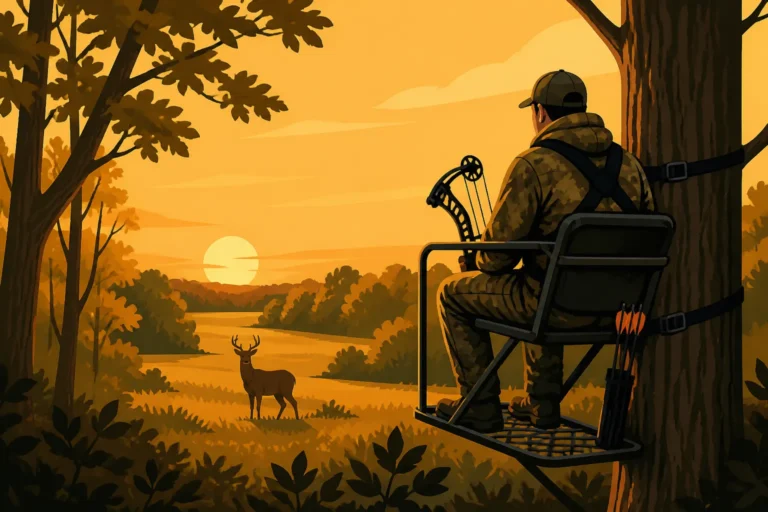
It's a familiar struggle for any Iowa deer hunter: you've finally slipped into that perfect timber stand, the crisp morning air hints at deer movement, and suddenly, a buck materializes out of the thick hardwoods. But he's close, maybe only 20 yards, and your high-magnification scope feels like looking through a straw. That's why understanding the advantages of low-power scopes for timber shots can dramatically improve your chances, turning those fleeting close encounters into successful harvests. This guide will walk you through why these optics are ideal for Iowa's dense cover and what to look for when choosing one.
The Unique Challenges of Iowa Timber Hunting
Hunting in Iowa's timber, whether it's the steep bluffs of the northeast, the river bottom thickets, or the scattered woodlots in farm country, presents a distinct set of challenges that can make traditional high-power optics a hindrance. Deer often appear like ghosts, slipping through cover quickly, and you need to acquire your target with speed and precision.
The Close-Range Reality
Unlike wide-open plains hunting where shots can stretch out to hundreds of yards, timber hunting often means your shot opportunities are measured in tens of yards, not hundreds. A mature whitetail buck might pop out from behind a stand of oaks at 35 yards, pause for a second, and then vanish into the next patch of dense multiflora rose. Your optic needs to be able to capture that fleeting moment without forcing you to fumble with magnification adjustments.
Imagine you're tucked into a stand overlooking a natural funnel in the timber, a spot where you know deer move between bedding and feeding areas. The trees are fairly dense, creating a tunnel effect. A buck steps out at 40 yards, quartering away slightly. If your scope is cranked up to 9x power, you might struggle to even find the deer in your field of view, let alone get a clear sight picture quickly enough. The target appears massive, but the immediate surroundings are blurred, disorienting you. This is where the lower magnification shines, giving you a wider, more forgiving view of the entire scene, allowing you to pick up the deer instantly. Best Stand Locations in Rolling Timber often lend themselves to these kinds of close-quarters engagements.
Low Light and Obstructions
Iowa timber, especially in the early morning or late evening, is often cloaked in deep shadows. The canopy, even after leaves have fallen, can block a significant amount of light, making target identification difficult. Add to this the maze of branches, saplings, and underbrush that naturally screens deer, and you're dealing with a demanding environment.
A scope designed for low light with a wide objective lens and good glass can certainly help, but high magnification can actually exacerbate low-light problems by constricting the exit pupil and making your image darker. Furthermore, looking through a high-power scope at a deer partially obscured by branches can create an effect where the branches seem to jump out, obscuring the deer even more. A lower magnification allows more light in relative to the magnification, often resulting in a brighter, clearer image. It also provides a better sense of depth and peripheral vision, helping you distinguish between deer and deceptive shadows or thick cover. When you're Reading an Iowa Timber Draw for Deer Sign, it's easy to see how quickly a deer can disappear into the shadows, making quick target acquisition vital.
The Need for Speed and Field of View
In those critical seconds when a deer appears and you need to make a shot, speed is paramount. Fumbling with a magnification ring or struggling to locate the deer in a narrow field of view can be the difference between a filled tag and an empty freezer.
A low-power scope, particularly one that starts at 1x or 2x, behaves almost like a red dot sight at its lowest setting, offering an incredibly wide field of view. This broad perspective makes it much easier to acquire a fast-moving target or to pick up a deer that suddenly appears in your periphery. When you're aiming for precise Shot Placement on a Whitetail at Twenty Yards, having a wide field of view helps you keep track of the deer's body language and movements, ensuring you pick the ethical shot window. It’s not just about seeing the deer, it’s about seeing the entire deer and its immediate environment clearly and quickly.
Essential Features of a Great Low-Power Timber Scope
When selecting a scope specifically for those tight, quick shots in Iowa's dense timber, you'll want to prioritize certain features that enhance speed, clarity, and durability. Forget the high-power long-range precision; we're talking about practical, fast hunting.
Magnification Range: The Sweet Spot
For timber hunting, a variable power scope with a low bottom end is key. Look for scopes that start at 1x, 1.5x, or 2x magnification. A 1-4x, 1-6x, or even a 2-7x power scope is often ideal. This allows you to crank it down to the lowest setting for brush-busting, close-range encounters where you need a wide field of view, and then bump it up just a touch (say, to 3x or 4x) for slightly longer shots or better target identification if the deer stops for a moment.
The ability to operate effectively at 1x or 2x is incredibly valuable. At 1x, your scope essentially functions like a red dot, allowing for "both eyes open" shooting, which is incredibly fast and natural. This broad, uncluttered view helps you track moving deer through tight spaces without feeling tunnel-visioned. As an experienced hunter, you know those big bucks in Timber and Creek Corridors as Deer Cover aren't going to stand still for long. When you need to quickly transition from observing to aiming, the low end of a variable power scope shines. Consider how easily you can scan for deer movement with binoculars, and then try to replicate that same ease of view through your scope.
Reticle Choice: Simple and Bold
In low light and thick cover, a complex, busy reticle can become a liability. You need something simple, bold, and easy to pick up quickly. Duplex reticles, or those with a heavy post, are excellent choices because they stand out against dark backgrounds and brush. Illuminated reticles are another fantastic feature, especially for those twilight hours. A subtle glow around the aiming point can make all the difference in clearly seeing your aiming point against a deer's dark hide or the shadows of the timber.
Avoid reticles with too many hash marks or ballistic drop compensation (BDC) dots if your primary use is short-range timber hunting. While BDC can be useful for longer shots, in timber, you're rarely shooting beyond 100 yards, and often much closer. A simple crosshair or a bold dot is generally all you need. Many modern scopes offer a simple dot within a circle, which provides both a fast acquisition point and a precise aiming dot. You can research different reticle options on resources like GoHunt to see what other hunters prefer for similar conditions.
Eye Relief and Exit Pupil: Forgiveness and Brightness
Generous eye relief is critical for quick target acquisition, especially if you're wearing glasses or need to mount the scope slightly further forward. This is the distance your eye can be from the ocular lens and still see a full, clear picture. More eye relief means more forgiveness in head position, which translates to faster mounting and aiming. Look for scopes with 3.5 to 4 inches of eye relief or more.
The exit pupil, which is the diameter of the light beam coming out of the scope to your eye, is also important. A larger exit pupil (calculated by dividing the objective lens diameter by the magnification) means a brighter image and a more forgiving sight picture, particularly in low light. At 1x or 2x, even a modest objective lens will provide a large exit pupil, making these scopes inherently good in dim conditions. This combination of good eye relief and a large exit pupil ensures that when that Iowa buck steps out, you're not struggling to find your sight picture or straining to see in the gloom. This becomes even more critical when you're making quick adjustments from an elevated position, as outlined in Shot Angles From an Elevated Stand.
| Feature | Ideal for Timber Shots | Less Ideal for Timber Shots (Typically) |
|---|---|---|
| Magnification | 1-4x, 1-6x, 2-7x (low bottom end for wide FOV) | 4-16x, 6-24x (high bottom end for narrow FOV) |
| Reticle | Simple Duplex, Heavy Post, Illuminated Dot/Circle, Bold Crosshair | Fine Mil-Dot, Complex BDC, Busy Christmas Tree Reticles |
| Eye Relief | 3.5 inches or more (forgiveness in head placement) | Less than 3 inches (requires precise head alignment) |
| Field of View | Wide (60+ feet at 100 yards at lowest power) | Narrow (30 feet or less at 100 yards at highest power) |
| Objective Lens | 24mm – 40mm (balances light gathering with compact size) | 50mm+ (can be bulky, sometimes unnecessary for close range) |
| Glass Quality | Good quality, multi-coated lenses (for brightness/clarity) | Basic glass, single-coated (dimmer, less contrast) |
Setting Up Your Low-Power Scope for Iowa Timber
Once you've chosen a low-power scope, proper setup and regular practice are crucial to maximizing its effectiveness in the field. A great scope poorly mounted or rarely practiced with is still a liability.
Mounting and Zeroing for Close Quarters
Mounting your scope correctly is the first step. Ensure proper eye relief and a consistent cheek weld. For timber hunting, consider using low or medium rings to keep the scope as close to the bore as possible, which helps with quick target acquisition and a natural shooting position. After mounting, the next critical step is zeroing. While many hunters zero for 100 or 200 yards, for a dedicated timber rifle, consider a zero that aligns with your most common shooting distances.
For a 1-4x or 2-7x scope, zeroing at 50 yards can be incredibly effective. With most popular deer cartridges, a 50-yard zero will keep you well within a deer's vital zone from point-blank range out to around 150-200 yards, depending on your cartridge and bullet. This "set it and forget it" approach for those closer shots means less guesswork in the moment of truth. You can always confirm your trajectory with a ballistic calculator, but for the practical reality of Iowa timber, a 50-yard zero often simplifies things greatly. For comparison, you can learn more about Zeroing a Slug Gun at Fifty Yards and apply similar principles to your rifle. Don't forget to practice Practicing Shots From a Treestand to simulate real-world conditions.
Practical Practice Scenarios
Range time with a low-power scope should focus on rapid target acquisition and smooth transitions. Don't just shoot off a bench. Set up targets at various close ranges (15, 25, 50, 75 yards) and practice shouldering your rifle quickly and engaging the target. Work on finding the target at 1x or 2x, then maybe briefly bumping up to 4x if time permits, but always prioritizing the shot.
Walk a course with your unloaded rifle, practicing shouldering and finding targets that simulate deer appearing suddenly in the woods. Pay attention to how quickly you can get a clear sight picture with both eyes open on the lowest magnification. If you have access to a safe shooting area in the woods (check local regulations!), even better. Practicing in varied terrain will give you a real feel for how your scope performs in different lighting conditions and through brush. It's about building muscle memory so that when a buck suddenly appears in that river bottom, your actions are fluid and instinctive. Many hunters use apps from services like GoHunt to scout public land before setting up practice scenarios.
Real-World Application in Iowa's Diverse Habitats
Iowa's hunting landscape is incredibly diverse, from vast row crop fields to sprawling timber blocks, and low-power scopes prove their worth across many of these scenarios. They offer adaptability that specialized long-range optics simply can't match when hunting dense cover.
Deep Timber and River Bottoms
When you’re deep in an old-growth timber block, or picking your way through a tangled river bottom, visibility is often severely limited. Trees are thick, undergrowth can be impenetrable, and deer are masters of using every bit of cover. In these environments, you're often looking at shot distances of 10 to 60 yards, maybe 80 yards on a good day.
A 1-4x or 1-6x scope, set to its lowest power, allows you to acquire targets almost instantly. The wide field of view is invaluable when a deer bursts out of a thicket. Instead of a narrow tunnel vision, you see the entire scene, making it easier to lead a moving deer or pick a clear lane through branches. Imagine a cold December morning, sitting in a stand in a creek bottom, hoping a buck is moving between bedding areas. Hunting a Narrow Creek Corridor means you’ll have fleeting shot opportunities, and a low-power scope gives you the edge by cutting down on acquisition time. It’s also crucial for identifying the deer accurately in thick cover, reducing the chance of misidentifying a doe as a buck, or vice versa.
Edge Hunting: Timber to Field Transitions
Many Iowa deer hunters spend considerable time hunting the edges where timber meets crop fields or CRP grass. Deer use these edges for travel, feeding, and staging before entering open areas. While shots here might occasionally stretch a bit further, the majority of action still happens within 100 yards, especially during the early morning and late evening.
When hunting a Timber Point Between Two Fields, a deer might pop out of the timber and quickly dart into a standing cornfield. A low-power scope allows you to keep both eyes open, watching the entire field edge, and then quickly bring the rifle up when a deer appears. The ability to switch from 1x for rapid close-range shots to 4x or 6x if the deer pauses 75 yards out in a picked bean field offers fantastic versatility. You aren’t forced to choose between a scope for deep timber or one for open fields; these scopes bridge that gap effectively. They are perfect for those transition zones where deer often hesitate, offering you a precious few seconds to make a precise shot.
Public Land and Mobile Hunting Scenarios
Hunting Iowa's public land often means dealing with varying terrain, thick cover, and the need to be mobile. Whether you’re saddle hunting a ridge line or setting up a ground blind along a dense fenceline, having a compact, versatile optic is a significant advantage. Saddle Hunting on Iowa Public Land demands light, efficient gear, and a bulky, high-magnification scope can be cumbersome.
Low-power scopes are typically lighter and more compact than their high-magnification counterparts, making them ideal for hunters who move frequently or pack into remote areas. They excel in situations where you might encounter a deer at 15 yards in dense cedar thicket or 80 yards across a small clearing. The wide field of view, especially at the lowest power, is particularly beneficial when trying to pick a shooting lane quickly from a portable stand or ground blind. When you're constantly adapting to new terrain and cover, a scope that offers speed and a broad perspective is a hunter's best friend. These optics simply make you more efficient and adaptable in dynamic hunting environments.
Disclaimer
This article is for general informational purposes only and does not constitute professional advice. Laws, prices and regulations vary by location and change over time. Consult a qualified professional for guidance on your specific situation.