Choosing a Scope for Slug Guns
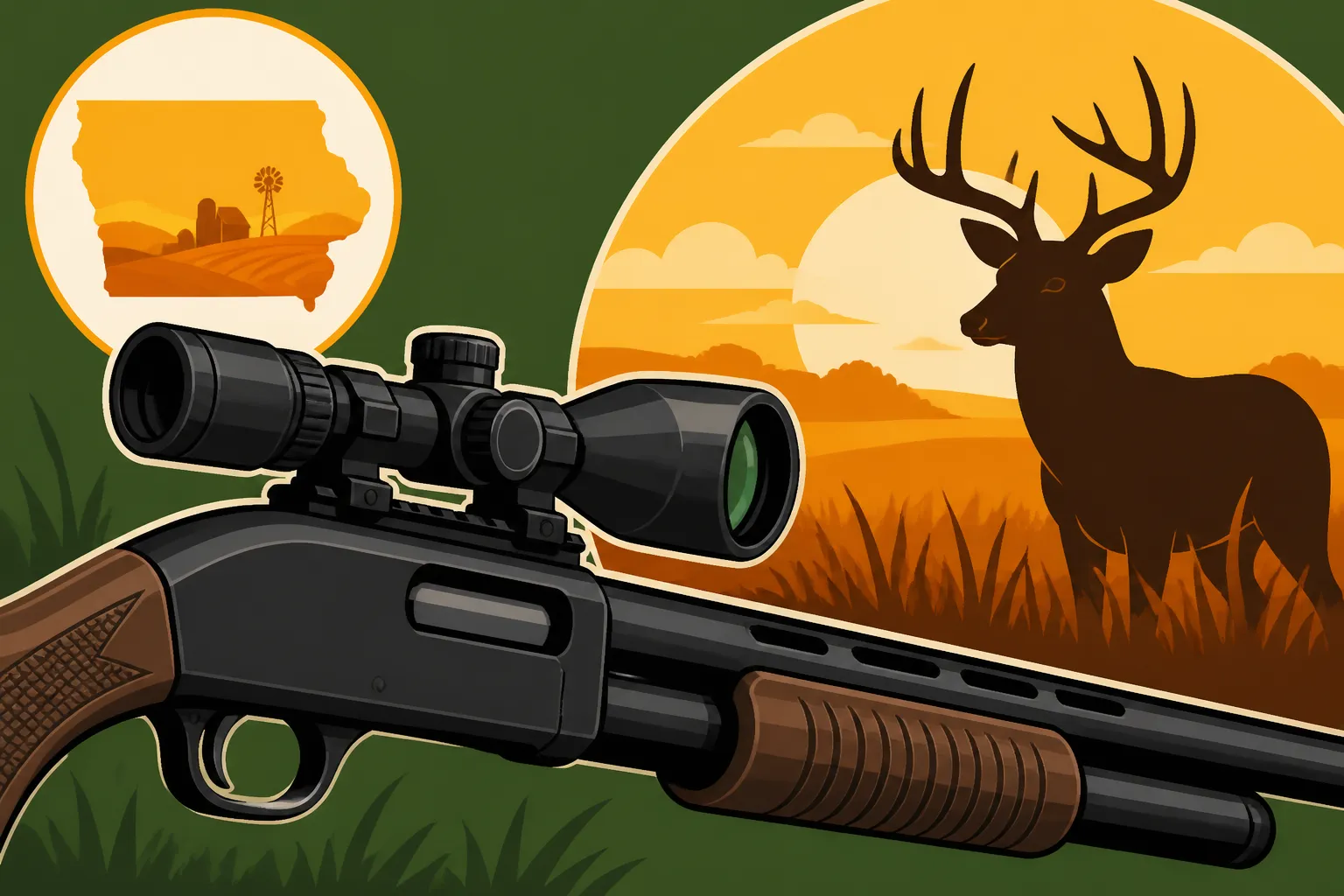
Many Iowa deer hunters face a real dilemma when it comes to equipping their slug guns. The unique characteristics of slug ammunition – heavy recoil and relatively short effective ranges – often make choosing the right scope feel like a confusing maze, leaving folks wondering if they’re getting the most out of their trusty shotgun. This guide is here to cut through the confusion and help you confidently select a scope that not only withstands the punishment but also helps you place that slug precisely where it needs to go, season after season, across the diverse Iowa landscape.
The Unique Challenge of Scoping a Slug Gun
Hunting deer with a slug gun in Iowa is a time-honored tradition, especially during the shotgun seasons when the timber is bare and the fields are cut. But anyone who's spent time behind a slug gun knows it's a different beast compared to a high-powered rifle. The ballistic characteristics and the sheer kick demand a very specific type of optic, and trying to make a general-purpose rifle scope work is often an exercise in frustration and wasted money.
Why Slug Guns Are Different
When we talk about slug guns, we're typically referring to shotguns, often 12 or 20 gauge, that are designed to shoot a single, heavy projectile – a slug – rather than a pattern of shot. Modern slug guns, especially those with rifled barrels, can be surprisingly accurate out to 100-150 yards, sometimes even a bit further with premium ammunition. However, this is still a far cry from the 300+ yard capabilities of many centerfire rifles. The trajectory of a slug is much more pronounced, dropping significantly faster over distance. This flatter arc means your aiming point shifts more dramatically as the range increases, making precise shot placement crucial, particularly when a big buck steps out at an unexpected distance.
The other major differentiator is recoil. A 12-gauge slug gun can produce a stout, jarring kick. This isn't just uncomfortable for the shooter; it's a brutal test for any optic mounted on the gun. A scope designed for a .223 Remington simply isn't built to absorb the repeated shock of a 12-gauge slug. The internal components can loosen, lenses can detach, and reticles can shift, leading to inconsistent accuracy and ultimately, missed opportunities in the field. This punishing recoil means we need scopes with robust construction and features specifically engineered to withstand such forces.
Common Frustrations with Slug Gun Optics
It’s easy to get frustrated when trying to choose a slug gun scope. Many hunters go into a sporting goods store, see a wall of scopes, and assume any of them will do. Then they get to the range, and after a few shots, their scope loses its zero, or the eye relief is so short they end up with "scope eye" – a nasty cut above the eyebrow from the scope hitting them during recoil. That's a quick way to sour anyone on their hunting setup.
Another common issue is over-magnification. People often think "more magnification is better," but for typical slug gun ranges, too much power can actually be detrimental. It narrows your field of view, making it harder to find and track a deer moving through thick timber or across a food plot, especially during those fast-paced Shotgun Season Drives in Small Timber. A high-power scope can also amplify any slight wobble in your hold, making shots feel less stable. Then there's the clarity, or lack thereof, when trying to peer into that dark creek bottom at dawn or dusk. If your scope isn't gathering enough light or has poor glass, those critical moments when a trophy buck steps out become blurry disappointments instead of clear shot opportunities. We've all been there, squinting through a cheap scope as the sun dips below the horizon, wishing we had invested in something better.
Essential Scope Features for Slug Gun Success
When you're out there in the crisp Iowa air, waiting for that big whitetail, the last thing you want is an optic that fails you. Focusing on specific features designed for slug guns will alleviate those common frustrations and build confidence in your setup. It's about getting a tool that stands up to the job and helps you make the shot count.
Eye Relief and Recoil Management
This is probably the most critical factor for slug gun scopes. As we touched on, slug guns kick hard. Adequate eye relief – the distance your eye can be from the ocular lens and still see a full, clear image – is absolutely essential to prevent injury. You want at least 3.5 to 4 inches of consistent eye relief, ideally a bit more if you can find it. Many general-purpose rifle scopes have shorter eye relief, which is fine for lighter recoiling cartridges, but it becomes a serious safety hazard with a 12-gauge.
Beyond the initial spec, look for scopes that offer consistent eye relief throughout the magnification range. Some cheaper scopes have eye relief that changes dramatically as you zoom in or out, forcing you to reposition your head, which is not ideal in a hunting situation. A good slug gun scope will maintain a generous and stable eye relief, allowing you to quickly shoulder the gun, acquire your target, and focus on the shot without worrying about getting smacked in the face. This consistent relief is a hallmark of quality construction, indicating robust internal mechanisms designed to handle the Recoil From a Twelve Gauge Slug.
Durability and Construction
A slug gun scope needs to be built like a tank. The internal components, the erector system, and the lenses themselves must be able to absorb heavy, repeated shock without shifting or breaking. This means looking for a one-piece main tube construction, which inherently offers greater strength and rigidity than scopes made from multiple pieces. High-grade aluminum alloys are common, but it's the thickness of the tube walls and the quality of the machining that really make a difference.
Furthermore, weatherproofing is non-negotiable for Iowa hunting. You'll encounter everything from pouring rain to freezing sleet and heavy snow during the seasons here. Your scope needs to be O-ring sealed and nitrogen or argon purged to prevent moisture from entering and fogging up the lenses internally. Even a tiny bit of moisture can ruin a hunt and potentially damage your optic. Look for scopes that explicitly state they are waterproof, fog-proof, and shock-proof. Companies like Leupold and Nikon have a long-standing reputation for building scopes that hold up to serious abuse, making them popular choices for hunters who demand reliability in harsh conditions. A durable scope means fewer trips to re-zero and more confidence when you’re out in the elements.
Reticle Choices for Close-Range Accuracy
For slug guns, simpler is often better when it comes to reticles. Since your effective range is generally shorter, you don't typically need complex ballistic drop compensator (BDC) reticles designed for long-range shooting, though some simpler holdover marks can be useful. A heavy duplex or a plain crosshair reticle is often ideal. The thicker posts of a heavy duplex draw your eye quickly to the center, which is a huge advantage when a deer suddenly appears in thick cover or during low-light conditions.
Some hunters also prefer illuminated reticles, especially for dawn and dusk hunting. A red dot or crosshair that glows can provide a much clearer aiming point against a dark background, making the difference between a clean shot and an educated guess. Just be sure the illumination is adjustable, so it doesn't wash out your vision in brighter conditions or become too dim when you really need it. Simplicity, visibility, and quick acquisition are the keywords here, ensuring you can make fast, accurate shots when time is of the essence, particularly at typical Slug Gun Range Limits in Iowa.
Magnification, Objective Lens, and Light Transmission
Beyond toughness and eye relief, how a scope helps you see your target is paramount. The right balance of magnification, a capable objective lens, and excellent light transmission can turn a fleeting glimpse of a deer into a confident shot, especially in those challenging low-light conditions often experienced in Iowa's timbered creek bottoms.
Finding the Right Magnification Power
For most Iowa slug gun hunting scenarios, less is often more when it comes to magnification. A fixed power scope around 2.5x to 4x, or a low-power variable like 1-4x, 2-7x, or 3-9x, is usually ideal. Why? Because slug guns excel in denser cover and at moderate ranges. A 1x or 2x setting gives you a very wide field of view, which is fantastic for quickly acquiring a deer that bolts out of a brushy draw or for tracking a moving target. It also makes it much easier to keep both eyes open, which improves situational awareness.
When you need a bit more precision for a shot across a cut bean field, you can dial up to 4x, 7x, or 9x. However, you'll rarely need anything higher than 9x for a slug gun, even at its maximum effective range. Going higher just exaggerates wobble, narrows your field of view too much, and often introduces more optical distortion without providing a tangible benefit for slug gun ballistics. Think about the types of shots you'll actually be taking – usually under 150 yards, often closer. A scope that allows you to see clearly at these distances without being cumbersome is the goal. Scope Magnification for Slug Guns is a topic worth diving into specifically as it directly impacts your success in varying terrain.
Objective Lens Size and Low Light Performance
The objective lens, the one farthest from your eye, plays a huge role in how much light the scope gathers. Generally, a larger objective lens can gather more light, which translates to a brighter image, especially at dawn and dusk when deer are most active. For slug guns, an objective lens in the 32mm to 44mm range is a great sweet spot. You don't necessarily need a massive 50mm or 56mm objective lens, which can make the scope bulky, heavier, and require higher rings, potentially altering your cheek weld and shooting comfort.
A moderately sized objective lens still provides excellent light-gathering capabilities without adding unnecessary bulk. Coupled with good glass and coatings, it will give you a bright, clear sight picture during legal shooting hours. Remember, it's not just the size of the objective lens; it's how efficiently the glass and coatings transmit the light. A high-quality 32mm scope can often outperform a low-quality 50mm scope in terms of image brightness and clarity because of superior engineering. When scouting for public land access or figuring out deer patterns, having a reliable tool like GoHunt can help you understand the landscape and predict where deer might be moving during those low-light periods, further highlighting the need for good optics.
Coatings and Clarity
This is where many budget scopes fall short. Lens coatings are microscopically thin layers applied to the glass surfaces to reduce glare, enhance light transmission, and improve image contrast. A scope with "fully multi-coated" lenses means all air-to-glass surfaces have multiple layers of anti-reflective coatings. This is what you want to look for. Single-coated or partially coated lenses simply won't perform as well in challenging light conditions.
Good coatings mean you get a crisp, bright, true-to-color image. This clarity helps you distinguish antler points in dense cover, evaluate a deer's body language, and precisely pick out your aiming point. Without quality coatings, images can appear dim, hazy, or have a bluish/yellowish tint, making target identification difficult and eye strain a real issue. When you're trying to Read an Iowa Timber Draw for Deer Sign or glassing a distant field edge, superior clarity can make all the difference in spotting that elusive buck before he spots you.
Zeroing and Ethical Range Considerations
Having a great scope means nothing if it’s not properly sighted in, and even a perfectly zeroed scope is useless if you don’t understand the ethical limitations of your firearm. For slug gun hunters in Iowa, understanding your true effective range and practicing regularly are paramount to ensuring clean, ethical harvests.
The Importance of a Solid Zero
Zeroing your slug gun scope is arguably the most critical step after mounting it. Given the significant drop of slug ammunition, having a precise zero at a known distance is non-negotiable. Most hunters opt to zero their slug guns at either 50 or 75 yards. At these distances, your point of impact will be fairly consistent. Beyond that, you'll need to know your specific slug's trajectory very well.
When you're at the range, don't just shoot once and call it good. Fire several three-shot groups from a stable rest. Observe the group size and make precise adjustments. Remember that even a slight change in ammunition type or brand can dramatically shift your point of impact with a slug gun, so once you find an accurate load, stick with it. Zeroing a Slug Gun at Fifty Yards is a common and effective practice. This regular practice not only ensures your equipment is performing optimally but also builds your confidence in the field. There's nothing worse than doubting your zero when a deer steps out.
Understanding Your Effective Range
Just because a slug can theoretically travel 200 yards doesn't mean you should be taking shots at that distance. Your ethical effective range is the maximum distance at which you can consistently place a slug into a target the size of a deer's vital zone (roughly an 8-inch circle) under field conditions. For most slug guns and hunters, this is often between 75 and 125 yards, sometimes up to 150 yards for highly proficient shooters with optimized setups.
Factors like recoil anticipation, wind, and the exact ballistics of your chosen slug load all play a role. Get to know your setup intimately at the range. Practice at 25, 50, 75, 100, and even 125 yards if your gun can handle it. Set up targets that simulate the size of a deer's vitals. This isn't about pushing limits; it's about knowing your personal capabilities and the limits of your equipment. It's far better to pass on a marginal shot than to make a poor hit. Using mapping tools, like those found on GoHunt, can help you accurately range potential shot opportunities in your hunting area, ensuring you stay within your ethical limits.
Practice Makes Perfect
This might sound like a broken record, but it's absolutely true for slug guns. Because of the heavy recoil, many hunters dread shooting their slug gun, leading to very little practice. However, consistent practice is the only way to become truly proficient. Consider using low-recoil practice slugs if available, or simply limit your practice sessions to fewer shots but more often. Focus on proper form, breathing control, and trigger squeeze.
Practicing from different shooting positions – standing, kneeling, and sitting – will also prepare you for real-world hunting scenarios. Not every shot will be from a perfectly stable bench rest. Practice shooting with your hunting clothing on, too, as it can affect your cheek weld and how the gun shoulders. Regular practice, especially before Sighting In Before Shotgun Season really begins, not only hones your skills but also reinforces your confidence in your slug gun and its newly acquired scope, making you a more effective and ethical hunter in the Iowa timber.
Top Considerations for Iowa Hunters
Iowa presents a unique tapestry of hunting environments, from dense timber to wide-open crop fields. Your slug gun scope needs to be versatile enough to handle these diverse conditions and the challenging weather Iowa is known for. Tailoring your choice to these specific regional factors will ensure you're ready for anything the season throws at you.
Matching Your Scope to Iowa's Terrain
Iowa’s hunting landscape is incredibly varied. In areas like southern Iowa, you might be hunting rolling timber and creek bottoms where shots are often 50 yards or less. Here, a low-magnification scope with a wide field of view and excellent low-light performance is king. Think 1-4x or 2-7x, which allows for quick target acquisition in tight quarters. You'll want to be able to pick up that deer quickly as it slips through the hardwoods or crosses a small opening.
Conversely, in central and northern Iowa, especially if you're hunting field edges or large block timber where deer might cross open spaces, you might encounter longer shots. While still within slug gun range, these could push out to 100-125 yards. For these scenarios, a 3-9x scope offers that bit of extra magnification to confidently place a shot across a field. The key is to realistically assess where you primarily hunt and choose a scope that complements that terrain. Remember, a common frustration is being over-scoped for timber hunting, making it hard to find a deer that's close and moving fast. A versatile optic that can go from 2.5x to 7x or 9x really shines in diverse Iowa cover. Hunting Inside Corners of Crop Fields or in dense Cedar and Locust Thickets as Bedding Cover will demand different visual capabilities from your optic.
Weatherproofing for Iowa Conditions
We all know Iowa weather can be wildly unpredictable. From frosty mornings to pouring rain, or even heavy snow during late season, your gear will be tested. This is why a truly weatherproof scope isn't just a nice-to-have; it's a necessity. We're talking about robust O-ring seals and nitrogen or argon purging to completely eliminate internal fogging caused by temperature changes and humidity. Imagine sitting in a stand on a chilly November morning, and as the sun comes up, your breath causes your scope to fog internally. That's a hunting disaster.
External lens coatings also play a role here. Many modern scopes feature hydrophobic (water-repelling) coatings that cause rain or snow to bead up and roll off, keeping your sight picture clear. This is invaluable when you're caught in a drizzle or trying to glass a field in the falling snow. Beyond fogging, extreme cold can also affect scope performance. Quality lubricants in the adjustment turrets ensure they still operate smoothly even when the mercury drops, which is vital for Late Muzzleloader Deer Hunting in Iowa. Don't skimp on weatherproofing; it's an investment in reliable performance when conditions are less than ideal.
Budgeting for Quality
It's tempting to try and save money on optics, but as the old adage goes, "buy once, cry once." While you don't need to mortgage your house for a slug gun scope, investing in a reputable brand known for durability and optical clarity will pay dividends in the long run. Cheap scopes often fail at the worst possible moment – when that buck of a lifetime steps out. They lose their zero, fog up, or simply don't provide a bright enough image.
There's a wide range of quality scopes available that won't break the bank. Look for brands that offer good warranties and have a reputation for standing behind their products. While specific prices change, you can typically find excellent slug gun specific scopes in a middle-tier price range that offer a great balance of features, durability, and optical performance. Compare different models, read reviews, and consider what features are truly essential for your hunting style. Sometimes, waiting an extra season to save up for a better scope is a smarter choice than buying a cheap one out of impatience. Remember, a reliable scope is a key component to a successful and ethical hunt.
Choosing Your Ideal Slug Gun Scope: A Summary
| Feature | Importance for Slug Guns | Key Considerations |
|---|---|---|
| Eye Relief | Critical | 3.5-4+ inches, consistent across magnification range to prevent "scope eye" from heavy recoil. |
| Durability | High | One-piece tube, high-grade aluminum, robust internal components. Must withstand heavy, repeated shock. |
| Weatherproofing | High | O-ring sealed, nitrogen/argon purged for fog-proof/waterproof performance in all Iowa weather. Hydrophobic coatings. |
| Magnification | Moderate | Low variable power (1-4x, 2-7x, 3-9x) ideal. Wide field of view at low power, enough zoom for moderate ranges. |
| Objective Lens | Moderate | 32mm-44mm provides good light gathering without excessive bulk. Quality of glass/coatings more important than sheer size. |
| Reticle | Moderate | Simple (heavy duplex, plain crosshair) for quick acquisition. Illuminated options for low light. Avoid overly complex BDC. |
| Light Transmission | High | Fully multi-coated lenses for maximum brightness, clarity, and contrast at dawn/dusk. |
Making an informed choice for your slug gun scope can dramatically improve your hunting experience and success rate here in Iowa. By prioritizing durability, generous eye relief, appropriate magnification, and excellent light transmission, you'll equip yourself with an optic that's truly up to the task. Don't let the unique challenges of slug gun ballistics deter you; with the right scope, your shotgun can be a powerful and precise tool for filling your freezer with venison. Remember to get out there and Check Your Zero Before Opening Day!
Disclaimer
This article is for general informational purposes only and does not constitute professional advice. Laws, prices and regulations vary by location and change over time. Consult a qualified professional for guidance on your specific situation.