Low Light Performance in December
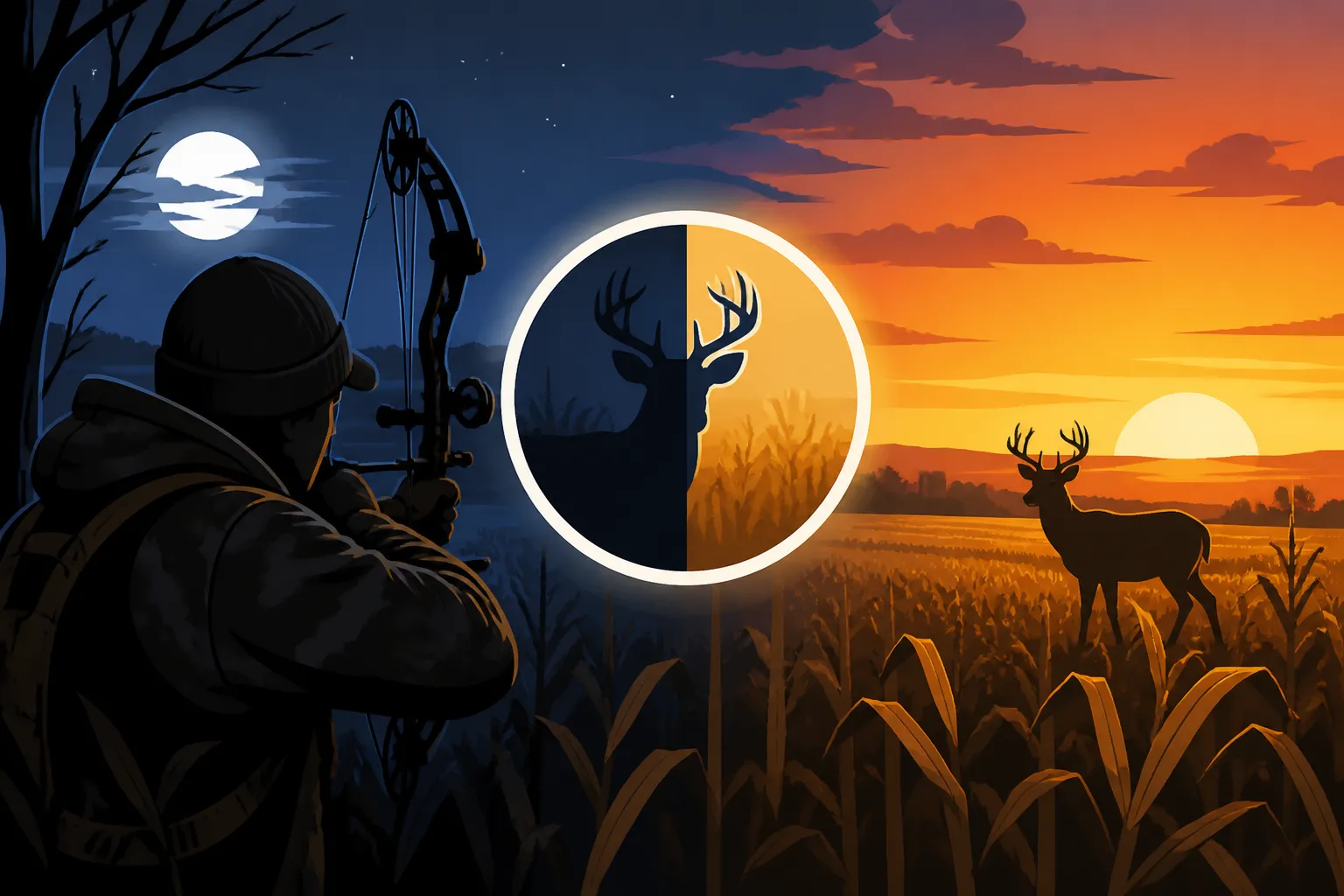
December deer hunting in Iowa brings with it a unique set of challenges, and one of the most frustrating for many hunters is the sheer difficulty of seeing clearly during those critical low-light periods. Whether it's the first grey hint of dawn or the last fading glow of dusk, distinguishing a deer from the shadows can feel like an impossible task, often leading to missed opportunities or, worse, an unsure shot. This guide is dedicated to helping you master these low-light conditions by optimizing your gear, understanding deer behavior, and adopting smart hunting strategies, ensuring you can identify your target with confidence and maximize your precious hunting time.
Understanding the Challenge of December Low Light in Iowa
The shortest days of the year, coupled with often overcast skies, mean that true, bright daylight is a luxury in December. For Iowa hunters, this means adapting to an environment where visibility can change by the minute, and the window for clear shots is narrow. It’s not just about the limited hours, but the quality of the light itself.
The Short Days and Long Shadows
As December rolls around, the sun hangs low in the sky, even at midday. This creates incredibly long shadows that stretch across fields and timber, obscuring details and making it difficult to discern shapes. What might be a clear shooting lane at noon could be a dark, indistinguishable tunnel at legal shooting light. Deer, being crepuscular creatures, are often most active during these very times when the light is at its poorest. They’ve adapted to use these low-light conditions to their advantage, moving more boldly and feeling safer when the human eye struggles to pick them out.
Imagine you're tucked into your treestand an hour before dawn, the air still and crisp. You know deer are likely moving from a distant bedding area to a Late-Season Food Source Hunting in Iowa you've scouted. You can hear twigs snapping, soft rustling, but visually, it's a battle against the gloom. A shadowy figure emerges from the timber line, and your heart races. Is it a big doe, or the buck you've been after all season? Without optimal optics, that critical identification can be guesswork, and in hunting, guesswork is a recipe for regret. The sun might peek over the horizon for only a short burst of clear light before dipping again, leaving you once more scanning through the murky shadows.
How Cold Affects Light and Visibility
December cold in Iowa isn't just uncomfortable; it can directly impact how we perceive light and how our optics perform. On a bright, clear, sub-freezing day, the air often seems incredibly crisp, almost amplifying distant sounds. However, while the air itself might be clear, the intensity of the light is still low, and deep shadows remain sharp and pronounced. Your eyes, accustomed to brighter conditions, might struggle to adjust to these stark contrasts.
Furthermore, the cold can present physical challenges to your gear. Condensation can be a real enemy. Walking from a warm vehicle or cabin into freezing air can cause your binocular or scope lenses to fog almost instantly. Even your own breath, exhaled in the frigid air, can create a momentary cloud over your lenses at the most inopportune time. Hunters often find themselves constantly wiping lenses, which not only makes noise but can also scratch delicate coatings over time. It's a frustrating dance between staying warm, staying quiet, and maintaining clear vision, especially when you're trying to spot a subtle twitch of an ear or a faint outline of an antler.
Essential Optics for December Low Light Hunting
Having the right glass in December isn't a luxury; it's a necessity. High-quality optics can genuinely extend your effective hunting time by allowing you to see deer earlier in the morning and later in the evening.
Binoculars: Your First Line of Defense
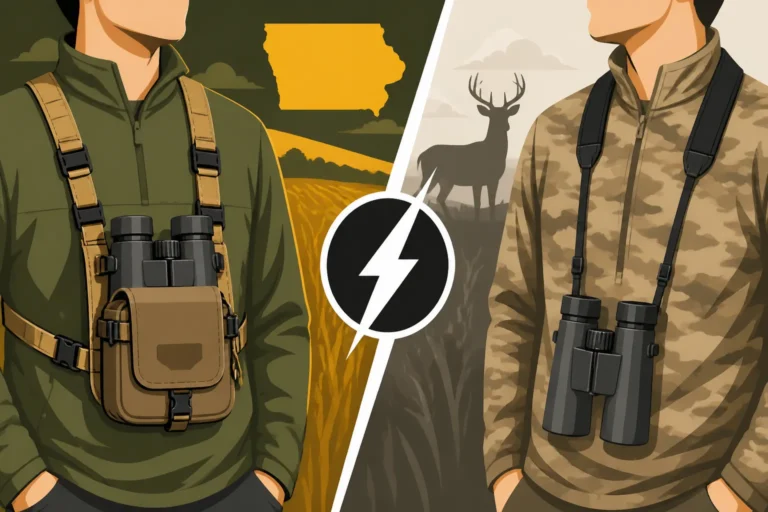
Your binoculars are perhaps your most crucial tool for low-light identification. They're what you'll use for prolonged scanning, picking apart distant cover, and confirming targets before you even think about raising your weapon. When choosing binoculars for December low light, there are a few key specifications to understand:
- Objective Lens Size: This is the second number in a binocular's rating (e.g., the '42' in 8×42 or 10×42). It refers to the diameter of the front lens in millimeters. A larger objective lens gathers more light. For low light, a 42mm or 50mm objective is generally preferred over a smaller 32mm.
- Magnification: This is the first number (the '8' in 8×42). While higher magnification might seem better, it often comes at the cost of brightness and field of view. An 8x magnification often provides a brighter image and a wider field of view, making it easier to spot movement in dim light, compared to a 10x binocular of similar quality. For Binocular Size for Timber Hunting, a wider field of view from an 8x is often very beneficial.
- Exit Pupil: This is a calculated value (objective lens diameter divided by magnification) that tells you how much light is delivered to your eye. In low light, your pupils dilate, typically to 5-7mm. An exit pupil of 5mm or higher ensures your eye is receiving ample light from the binocular. So, an 8×42 (42/8 = 5.25mm) is generally better in low light than a 10×42 (42/10 = 4.2mm), assuming similar glass quality.
- Glass Quality and Coatings: This is where price often dictates performance. Premium glass (like BaK-4 prisms) and multiple anti-reflective coatings on all air-to-glass surfaces (fully multi-coated) drastically improve light transmission, reduce glare, and enhance contrast. Cheap glass, even with a large objective, will appear dull and milky in low light.
Imagine you're glassing a distant CRP field where you suspect deer are bedding. With a good pair of 8x42s, those faint outlines in the tall grass at dawn start to resolve into distinct deer, their ears flicking, their bodies slowly becoming visible as the light slowly creeps in. With a lesser pair, that field might just remain a blur of shadows until well after legal shooting hours have passed.
Riflescopes: Maximizing the Legal Hours
Your riflescope is your final decision-making tool, and its low-light performance can make or break a shot during those critical twilight moments. You need a scope that gathers enough light to present a bright, clear image while also maintaining reticle visibility against a dark background.
- Objective Lens and Tube Diameter: Similar to binoculars, a larger objective lens (e.g., 40mm, 44mm, 50mm) will gather more light. However, don't just chase the biggest objective; quality matters more than size. A 30mm main tube diameter, while not directly increasing light gathering, generally allows for more internal adjustment and can be built with more robust components, which often correlates with higher optical quality. For Scope Magnification for Slug Guns, balancing magnification with light gathering is key. Too much magnification in low light will make the image dim.
- Glass Quality and Coatings: Again, this is paramount. High-end scopes utilize superior glass and coatings to maximize light transmission (often 90% or more). This means more light reaches your eye, resulting in a brighter, higher-contrast image.
- Reticle Design: In low light, a thin, delicate reticle can disappear against a dark timber background. Many scopes offer illuminated reticles, which can be a game-changer. A subtly illuminated dot or crosshair provides a clear aiming point without washing out the target. Some traditional reticles also feature thicker posts that draw the eye to the center. While Red Dot Sights on a Slug Gun are excellent for fast, close-range target acquisition, for longer shots in truly low light, a good riflescope with an illuminated reticle will generally offer superior precision and clarity.
Consider a scenario in the Iowa Late Muzzleloader Season Dates. You've identified a buck moving slowly along a timber edge during the last few minutes of legal light. Your scope, with its premium glass and illuminated reticle, allows you to clearly see the buck's vitals and place the crosshairs precisely. With a lesser scope, that buck might have remained an indistinguishable dark blob, leaving you with an ethical dilemma or a missed opportunity. This is where researching options, perhaps using resources like GoHunt to compare features, really pays off.
Rangefinders: Precision When It Matters Most
In low light, distances can be incredibly deceptive. What looks like 50 yards might actually be 70, or vice versa, especially when shadows play tricks on your depth perception. A reliable rangefinder with good low-light performance is crucial for making an ethical shot.
- Display Brightness and Clarity: Many budget rangefinders use black LCD displays that are nearly impossible to read in dim conditions. Look for models with bright, red OLED displays that are adjustable for brightness. These stand out clearly against a dark background.
- Scan Mode: A good scan mode allows you to continually range multiple objects as you pan across an area, helping you pick out a deer from surrounding brush. This is invaluable when a deer is moving slowly through patchy cover.
- Angle Compensation: If you're hunting from an elevated treestand in rolling terrain, angle compensation provides the "shoot-to" distance, which is often shorter than the line-of-sight distance. This prevents overshooting a deer below you. Rangefinders for Under Fifty Yards might seem less critical, but even at those close distances, angle and low light can throw you off.
Imagine you're perched on a ridge overlooking a timber draw. As the light fades, you see movement. A deer steps into a small opening. You quickly range it. The GoHunt tools you used for scouting indicated this area was prone to elevation changes. Your rangefinder, even in the gloom, gives you a clear, angle-compensated reading, confirming the distance and allowing you to make a confident decision about your shot.
Other Gear Considerations for Low Light
Optics are primary, but other pieces of gear also play a significant role in successful low-light hunting.
Headlamps and Safety Lights
While not directly for spotting deer, a good headlamp is indispensable for getting to and from your stand safely and efficiently during low-light hours. Headlamps for Walking Out After Dark is an absolute must, not just for you but for safely recovering a deer or finding a blood trail.
- Red Light Option: A headlamp with a red light setting is invaluable. Red light preserves your night vision far better than white light, which causes your pupils to contract. This means you can use your red light for navigation without temporarily blinding yourself to the natural low light around you, helping you maintain situational awareness.
- Brightness and Battery Life: Look for a lamp with adjustable brightness settings and good battery life, especially in cold weather. Carry spare batteries or a portable charger. You don't want your light failing when you're blood-trailing a deer in freezing temperatures.
- Backup Light: Always carry a small backup flashlight in your pack. Technology can fail, and being stuck in the middle of a big timber block in the dark with no light is a dangerous situation.
Clothing and Camouflage for Low Light
The right clothing does more than just keep you warm; it can also affect your visibility to deer and your safety to other hunters. Cold Weather Stand Clothing is vital in December, but think about its visual properties too.
- Camo Patterns: Some camouflage patterns are designed to break up your silhouette more effectively in deep shadows and low light. Look for patterns with large, contrasting elements rather than tiny, detailed ones, as small details often "muddy" together in poor light.
- Quiet Fabrics: In the stillness of dawn or dusk, every sound is amplified. Ensure your outer layers are made of quiet fabrics that won't rustle or swish as you move or raise your weapon.
- Blaze Orange Requirements: For gun seasons, Blaze Orange Rules During Iowa Gun Season are critical. While orange doesn't blend in, its highly visible spectrum ensures other hunters can see you, even in low light. For archery, while not always required, thoughtful placement of highly visible elements on your gear for walking in and out can be a lifesaver. Avoid shiny or reflective materials that can flash and alert deer or cause glare for you.
Low Light Hunting Strategies and Techniques
Having the right gear is only half the battle; knowing how to use it effectively in challenging conditions is the other.
Positioning for Optimal Light
Your stand placement can significantly impact your success in low-light conditions. Think strategically about how the sun will rise and set relative to your position and the deer's likely travel routes.
- East-West Edges: If possible, position yourself on the east side of a timber edge when hunting in the evening, allowing the setting sun to illuminate the edge of the field or timber where deer might emerge. Conversely, for a morning hunt, a west-side setup will catch the first rays of the rising sun on deer moving from a food source back to bedding.
- Elevated Positions: Treestands give you an advantage by allowing you to look down into shadows and over smaller obstructions that would block your view from the ground. This elevation can sometimes catch light that hasn't penetrated lower levels.
- Understanding Terrain: Use tools like GoHunt's satellite imagery and topographic maps to analyze terrain features. Look for subtle changes in elevation, creek bottoms, or benches that might catch or block light at different times of the day. A slight rise can be critical for getting those extra few minutes of usable light.
Remember, deer feel safer moving in the shadows. If you can set up where you have adequate light for a shot, but they are still somewhat obscured, you're playing to your advantage. This requires careful consideration of not just bedding and feeding, but also the sun's path and available light.
Managing Movement and Expectations
Low light demands heightened awareness and patience. It's easy to get antsy or make quick movements when you're struggling to see.
- Slow, Deliberate Scanning: Instead of quick glances, train yourself to slowly and methodically scan areas, pausing to let your eyes adjust and pick out anomalies. Use your binoculars to systematically pick apart every patch of cover. Many a hunter has missed a deer standing broadside just 60 yards away simply because it was static and well-camouflaged in the shadows.
- Patience and Restraint: This is perhaps the most important strategy. If you can't clearly identify the animal, its sex, and its vitals, do not take the shot. It's far better to let an animal walk than to make an unethical shot in poor light. Knowing when Iowa Legal Shooting Hours begin and end is not just a rule; it's a safety and ethical guideline. Pushing those limits often leads to poor decisions.
- Blood Trailing Preparedness: Even with the best shot, a deer might not drop in its tracks. In low light, a blood trail can be incredibly difficult to follow. Be prepared for a potentially long wait before taking up the trail, especially if you shot late in the evening. Mark the location of the shot and the deer's last known direction clearly. Having a high-quality headlamp with a red light option and even a backup for Walking In Before Legal Light or tracking purposes is crucial. Consider the impact of December Cold Front Deer Movement on blood trails, as very cold conditions can sometimes make trails more difficult to read if the blood quickly freezes and darkens.
| Optical Gear Type | Key Low-Light Features | Considerations for December Iowa |
|---|---|---|
| Binoculars | Large Objective Lens (42mm+), High Exit Pupil (5mm+), BaK-4 Prisms, Fully Multi-Coated Lenses | Essential for scanning timber edges and CRP at dawn/dusk. Prioritize 8x over 10x for brightness. |
| Riflescopes | Large Objective Lens (40mm+), High-Quality Glass, Illuminated Reticle, 30mm Tube Diameter | Critical for precise shot placement during legal shooting hours. Illuminated reticle is a game-changer. |
| Rangefinders | Red OLED Display, Angle Compensation, Scan Mode, Strong Beam in Reflective Conditions | Prevents distance misjudgment in deceptive low light; essential for ethical shots. |
| Headlamps | Red Light Option, High Lumen Output, Long Battery Life, Durability in Cold | Crucial for safe navigation and effective blood trailing without ruining night vision. |
December hunting in Iowa offers incredible opportunities, but success often hinges on how well you can see and adapt to the short, dim days. Investing in quality optics, understanding their capabilities, and employing smart strategies for low-light conditions will not only increase your chances of success but also ensure a more ethical and enjoyable hunt.
Disclaimer
This article is for general informational purposes only and does not constitute professional advice. Laws, prices and regulations vary by location and change over time. Consult a qualified professional for guidance on your specific situation.