Access Routes That Avoid Bedding Areas
We've all been there: the alarm clock blares, you slip out into the pre-dawn dark, heart pounding with anticipation, only to hear that sickening snort and crashing deer less than a hundred yards from your stand. You've just bumped every deer in the area, and your hunt is likely over before it even began. This guide is all about equipping you with the knowledge and tactics to consistently get to and from your stand without alerting a single deer, ensuring your hunts start right.
Understanding Iowa Deer Bedding Habits
Before you can effectively plan an access route, you've got to truly understand where Iowa deer, especially mature bucks, choose to bed down. It's not random; it's a calculated decision based on security, comfort, and survival. Deer are constantly assessing risk, and their bedding areas reflect that instinct to stay safe.
The Core Needs for a Quality Bedding Area
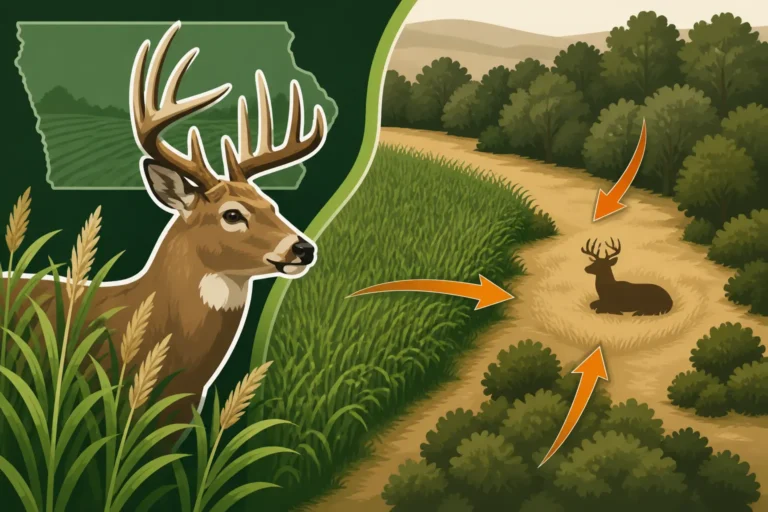
Deer aren't just looking for a soft spot to lie down; they're looking for a fortress. Their bedding choices are driven by a few critical factors that any savvy Iowa hunter needs to keep in mind. First and foremost is security. They need thick cover that conceals them from predators, both four-legged and two-legged. This means dense vegetation, often with a canopy overhead or a thick tangle of undergrowth that breaks up their outline. Think about how hard it is to spot a deer bedded in a cedar thicket or a deep ditch choked with multiflora rose – that's what they're after.
Secondly, thermal regulation plays a huge role. On a frigid December morning, a deer wants a spot out of the biting northwest wind, perhaps on a sunny south-facing slope that catches the first rays of sunlight. Conversely, in a warm October, they'll seek shade and air movement to stay cool. This might be under a dense pine canopy or deep in a cool, damp creek bottom. Iowa's weather swings wildly, so bedding adjusts accordingly. Lastly, deer are masters of using the wind to their advantage. They prefer bedding where they can smell danger approaching from downwind, while simultaneously having a visual advantage to spot anything coming from upwind or across the wind. This often means bedding on points, ridge lines, or on the downwind side of heavy cover, where they can watch their backtrail with their nose. Understanding this crucial aspect is key to designing entry and exit routes that don't give your position away.
Common Iowa Bedding Cover Types
Iowa offers a diverse landscape, and deer utilize every bit of it for bedding. You'll find deer bedding in a variety of cover types, each presenting its own challenges and opportunities for hunters. In the northern and central parts of the state, especially where agricultural fields dominate, you’ll often find deer bedding in dense pockets of CRP Grass and Where Bucks Bed. These native grass fields, sometimes mixed with switchgrass or other tall, sturdy vegetation, provide incredible concealment. A buck might bed right on the edge of a cornfield, using the standing crop for cover, or deep within a CRP field where he can disappear from view.
As you move into the timbered regions, particularly in southern Iowa or along river corridors, you'll encounter different preferences. Bucks often seek out dense Cedar and Locust Thickets as Bedding Cover on south-facing slopes, providing excellent thermal cover and visual obstruction. These thickets can be incredibly difficult to penetrate and are often where the biggest, oldest bucks feel most secure. River bottoms and creek drainages, especially those with dense brush and tangles of multiflora rose, also offer fantastic bedding cover, providing both security and access to water. In areas with rolling timber, you might find deer bedding on the lee side of ridges, using topographical features to block wind and offer a vantage point. Even small, overlooked patches of timber, overgrown fencerows, or brushy ditches can hold deer, especially if they offer peace and quiet away from human disturbance. The key is recognizing these features on a map and then confirming them on the ground.
Scouting for the Ultimate Stealth Access
Once you have a handle on where deer are likely bedding, the next challenge is figuring out how to get to your stand without them ever knowing you were there. This isn't just about walking quietly; it's about strategic planning, using both cutting-edge technology and good old-fashioned boots-on-the-ground scouting.
Leveraging E-Scouting and Mapping Tools
In today's hunting world, digital mapping tools are an absolute game-changer for planning access routes. Forget just staring at paper maps; services like GoHunt and onX Hunt allow you to dive deep into satellite imagery, topographical maps, and public/private land boundaries right from your couch. This is where you can truly excel at E-Scouting Iowa Farm Country From Home. Start by identifying potential bedding areas – those dark green blobs of timber, dense CRP fields, or river bends that just scream "deer bed." Once you've marked those, look for natural funnels, pinch points, or travel corridors that deer are likely using to move from bedding to feeding.
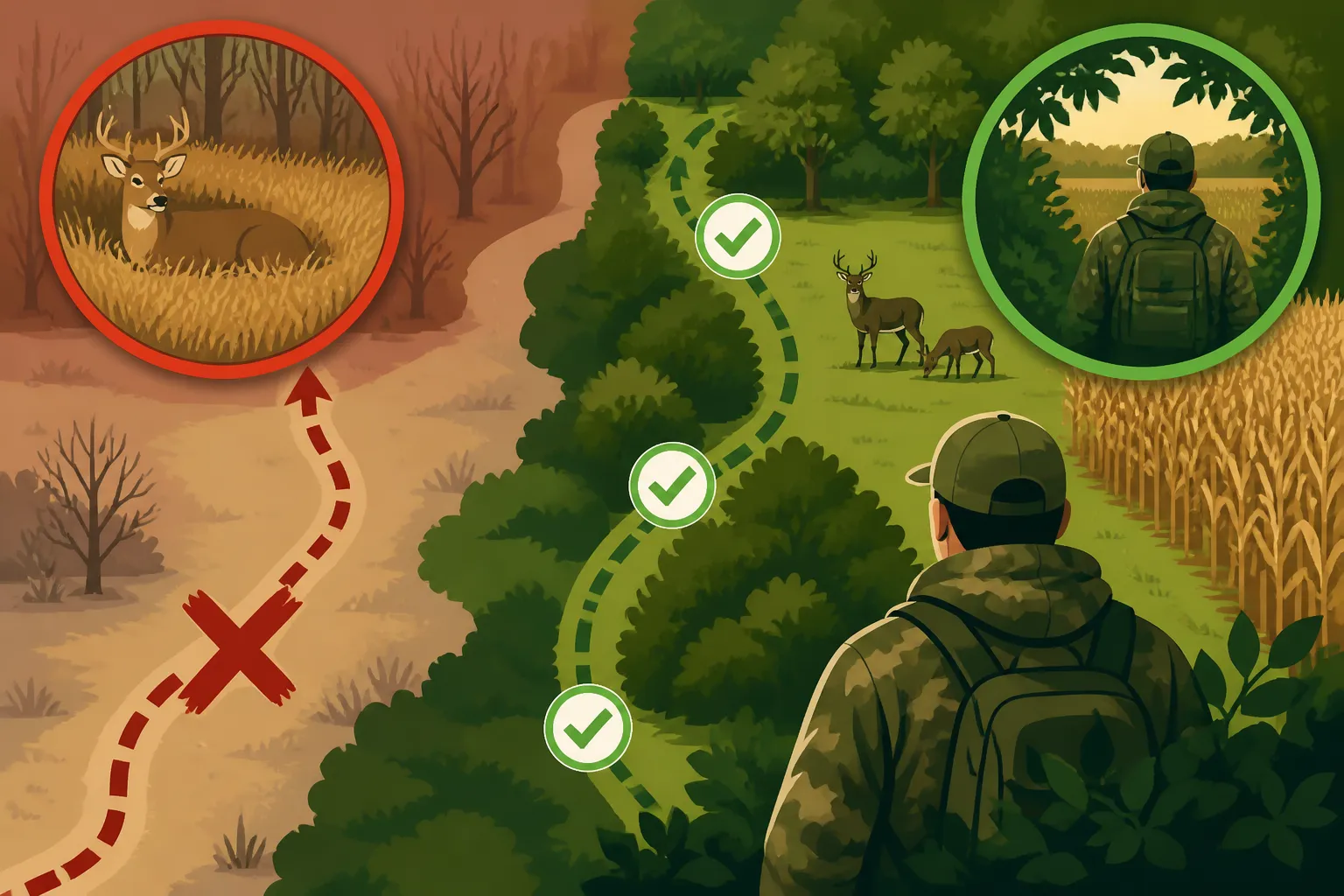
Now, here's the critical part: designing your access route. Your goal is to keep your approach parallel to or downwind of these bedding areas, never directly through them or upwind of them. Look for features like ditches, creek beds, fence lines (especially if they have brushy cover), or field edges with tall crops that can mask your movement and scent. Use the topo lines to find the lowest points of terrain or the back side of ridges that will naturally hide you from view. Pay close attention to Finding Property Lines in Iowa as well, ensuring your planned route doesn't inadvertently lead you onto private land without permission. Tools like GoHunt allow you to layer different maps, toggle between aerial views and topo, and even measure distances, helping you visualize your entire journey to the stand before you ever set foot in the woods. Take your time with this step; a well-planned e-scouting session can save you countless frustrating mornings in the field.
On-the-Ground Reconnaissance
E-scouting is powerful, but it's only half the battle. Nothing beats actually walking your proposed access routes during the off-season or a non-hunting day to confirm your findings. This boots-on-the-ground reconnaissance is crucial for fine-tuning your plan. What looks like a perfect ditch for cover on a satellite image might, in reality, be choked with thorny multiflora rose or be too noisy to navigate quietly. You need to identify potential "noise traps"—areas where dry leaves are particularly deep, where crunchy sticks litter the ground, or where thick briars force you into loud, awkward movements.
Walk the route exactly as you would on a hunt, noting every obstacle and potential noise source. Look for micro-terrain features that aren't obvious on a map, like small rises that offer a brief moment of cover, or subtle dips where you can drop out of sight. Pay attention to the prevailing wind and thermals, especially in complex terrain like river breaks or rolling timber, which can behave unpredictably. Practicing your walk in the dark with a headlamp can also be incredibly illuminating (pun intended!), revealing just how challenging some routes can be in low light conditions. This is also a good time to confirm your Access Routes That Do Not Bump Deer by ensuring they avoid known bedding areas and primary travel corridors. You might discover a better, quieter path just a few yards over from your initially planned route.
Executing Your Entry and Exit Strategy Flawlessly
Having a great plan on paper is one thing, but making it work when it counts is another. Flawless execution of your entry and exit routes means being mindful of every step, every breath, and every gust of wind. This is where the rubber meets the road, and small details make all the difference.
Mastering Wind and Thermals
There's an old saying in deer hunting: "Hunt the wind." And when it comes to access, it's not just about the stand location, it's about every single step you take to get there. Your scent is your biggest giveaway, and wind is the primary vehicle for that scent. Always, always approach your stand from a direction that puts the wind in your favor relative to known bedding areas and deer travel routes. This usually means keeping the wind in your face or quartering into it as you walk. Even on calm mornings, air currents can be tricky. You need to understand Wind and Thermals in River Breaks or hilly terrain, where air can sink into valleys at dawn (down-drafts) and rise as the sun heats the ground (up-drafts).
A simple wind checker is an absolute must-have. Puff it frequently as you walk to confirm wind direction, especially as you transition between different terrain features like open fields and dense timber. If the wind swirls or shifts unfavorably, be prepared to adjust your route or even abandon the hunt. It's better to live to hunt another day than to blow out a prime bedding area. Beyond wind, consider using Scent Control Products and What They Do to minimize your human odor, though remember they are an aid, not a guarantee. Proper layering of clothing and careful hygiene before heading out can also make a significant difference.
Walking Quietly and Deliberately
Once you've plotted your wind-advantageous route, the next challenge is to execute it silently. This means a slow, deliberate pace, especially in the dark. Instead of crashing through the woods, think of yourself as gliding. Lift your feet higher than usual to avoid shuffling leaves, and place each foot down slowly, testing the ground before committing your full weight. This might feel painstakingly slow, but it's far better than startling a deer fifty yards from your stand.
Your gear also plays a huge role. Ensure your backpack straps don't squeak, your zippers are quiet, and any loose items are secured to prevent jingling. Consider using Quiet Fabrics for Treestand Hunting for your outerwear, as noisy materials like stiff synthetics can amplify every brush against a branch. If you're using climbing sticks or a treestand, make sure they are rigged to be as silent as possible during transport. You might find that Parking Away From Your Stand by a greater distance, even if it means a longer walk, allows you to access from a less disturbed area, reducing the chances of bumping deer near your vehicle. In low light, a dim red-light setting on your headlamp can help you see just enough to place your feet, without flaring distant deer. Remember, the goal is to be a ghost in the woods.
The Importance of a Smart Exit Strategy
The hunt isn't over until you're back at your vehicle, and your exit strategy is just as important as your entry. Many hunters put all their focus on getting into the stand undetected, only to stomp out of the woods at last light, effectively educating every deer in the vicinity. This is particularly crucial if you plan on hunting the same stand multiple times. A noisy, careless exit can make deer avoid that area for days.
Ideally, your exit route should mirror your entry route, following the same principles of wind, cover, and quiet movement. However, sometimes after a successful hunt, or if deer activity was concentrated in a different area than expected, you might need to adjust. If you spot deer moving into a field near your stand, wait until they've moved off or it's completely dark before making your exit, even if it means sitting for an extra 30 minutes. If you've shot a deer, focus on a stealthy recovery, then plan your exit route for getting the animal out. For example, if you've been bowhunting in October and want to know How Harvest Timing Changes Deer Movement, a loud exit could impact future hunts. Always prioritize leaving the area undisturbed, setting yourself up for success on your next trip. This mindset ensures you're not just a hunter for today, but a hunter building for tomorrow.
| Access Route Element | Optimal Approach | Sub-Optimal Approach |
|---|---|---|
| Wind Direction | In your face, or quartering to your face | At your back, or swirling directly into bedding area |
| Terrain Features | Creek beds, ditches, backside of ridges, thick fencerows | Open fields, ridge tops, dense noisy brush |
| Cover | Standing crops, tall grass, dense timber, brush | Sparse trees, open woods, mowed fields |
| Noise Level | Slow, deliberate steps, minimal gear rattle | Rushing, scuffing leaves, noisy gear |
| Distance from Bedding | Maximize distance, avoid direct lines | Close proximity, direct line of sight/smell to bedding |
| Time of Day | Well before legal light (entry), well after dark (exit) | Close to legal light (entry), immediately after last light (exit) |
Walking In Before Legal Light
One of the most powerful tools in your arsenal for avoiding bedding areas is the cover of darkness. Most mature deer are not moving in the open during the darkest hours of the night. By getting into your stand well before legal light, you capitalize on this natural behavior and minimize your chances of being detected. However, this strategy requires careful planning and a deep understanding of your route.
The Advantages of Pre-Dawn Access
The simple truth is, if you're Walking In Before Legal Light, you're likely moving when deer are either already bedded or are just starting to move from night-time feeding to day-time bedding. At this hour, deer are generally less alert to human presence, as most human activity typically ramps up closer to sunrise. The darkness acts as a natural cloak, hiding your silhouette and making it harder for deer to pinpoint your location visually. This is especially effective when navigating field edges or areas with limited cover, where your human form would be a glaring anomaly during daylight.
Additionally, pre-dawn access allows you to get settled into your stand, organize your gear, and calm your breathing long before the woods wake up. This eliminates any last-minute fumbling or noisy movements that could occur if you're rushing to beat the sunrise. You'll be ready and still, letting the woods come alive around you, rather than being the disturbance. It's about being proactive rather than reactive, getting ahead of the deer's natural patterns and utilizing the quietest part of the day to your advantage.
Navigating in the Dark Safely and Silently
Walking in the dark presents its own unique challenges, primarily safety and maintaining silence. Before you ever attempt a pre-dawn walk, you must have thoroughly scouted your route in daylight, ideally several times. Know every turn, every dip, every potential obstacle. Consider using a GPS unit or a hunting app like GoHunt with an offline map feature to mark your exact trail, ensuring you stay on course. This is crucial for navigating timber where trails might be faint or non-existent.
When actually making the walk, use a very dim headlamp, preferably with a red-light setting. Red light preserves your night vision better and is less likely to spook deer than a bright white beam. Use it sparingly, just enough to see where you're placing your feet, then switch it off and let your eyes adjust. Walk slowly and deliberately, focusing on quiet foot placement as discussed earlier. If you encounter any unexpected obstacles or sounds, freeze, listen, and assess before proceeding. Remember, you're trying to integrate into the natural rhythm of the woods, not disrupt it. A careful, methodical approach in the dark will pay dividends by allowing you to slip into your stand completely undetected, giving you the best possible chance at a successful hunt.
Disclaimer
Hunting involves inherent risks. Always prioritize safety, follow all local and state regulations, and obtain appropriate licenses and permissions. The information provided here is for educational purposes only and should not replace professional guidance or personal judgment. Be aware of your surroundings, hunt ethically, and leave no trace.