Iowa Duck Season Zones
Trying to figure out Iowa's duck season can feel like you're trying to solve a puzzle with missing pieces, especially when you realize the state isn't just one big hunting area. It's frustrating to plan a hunt, invest in gear, and take time off, only to find out the season dates or regulations change based on an invisible line on a map. This guide is here to untangle the confusion, helping you understand Iowa's distinct duck hunting zones so you can plan your waterfowl adventures with confidence and precision.
Understanding Iowa's Duck Hunting Zones
Iowa, while often thought of as one big agricultural state, actually boasts a diverse landscape that influences everything from deer movement to, you guessed it, duck migration. When it comes to chasing greenheads and pintails, the Iowa Department of Natural Resources (DNR) doesn't treat the entire state as a single entity. Instead, they've carved it into specific duck hunting zones, each with its own set of season dates. This isn't just for kicks; there’s a real scientific and biological reason behind it, primarily centered around waterfowl migration patterns and local bird populations.
The Rationale Behind Zoning
You might wonder why we can't just have one simple duck season across the whole state. The answer lies in the dynamic nature of waterfowl migration and Iowa's unique position in the Mississippi Flyway. Ducks and geese aren't going to wait for a statewide calendar to start their journey south or north. They respond to cues like dropping temperatures, changing photoperiods, and the availability of food and open water.
Iowa spans a considerable north-to-south distance, meaning the birds typically arrive in the northern parts of the state weeks, sometimes even a month, before they reach the southern regions. By creating distinct zones, the DNR can tailor season dates to better coincide with these natural migration windows. This maximizes hunting opportunities when the birds are actually present, rather than having a "one size fits all" season that might be too early for the south or too late for the north. It also helps manage hunter pressure and ensures a sustainable harvest by protecting early-arriving or late-lingering populations. It’s all about putting hunters in the best position to intercept birds while still being good stewards of the resource.
How Zones Impact Season Dates and Bag Limits
The most direct impact of these zones is, naturally, on your season dates. What's open in the North Zone might still be closed in the South Zone, and vice-versa, especially during the split seasons that are common in waterfowl hunting. This means a dedicated waterfowler needs to be acutely aware of which zone they're hunting in on any given day. It’s not just about the start and end dates, but also about the short "splits" or closures that allow for resting periods for the birds or adjust for different migration phases.
While overall daily bag limits for specific duck species (like mallards, wood ducks, pintails, etc.) tend to be consistent across the state for a given year, the timing of when you can harvest those birds is strictly zone-dependent. For instance, if you're a fan of early-season teal, the opening weekend might differ significantly between zones. This also means that what you learn about Iowa Duck and Goose Migration Timing for one part of the state might not perfectly apply to another, requiring a flexible approach to scouting and planning. Always, always, double-check the current year's regulations for the specific zone you intend to hunt.
A Closer Look at Iowa's Duck Zones
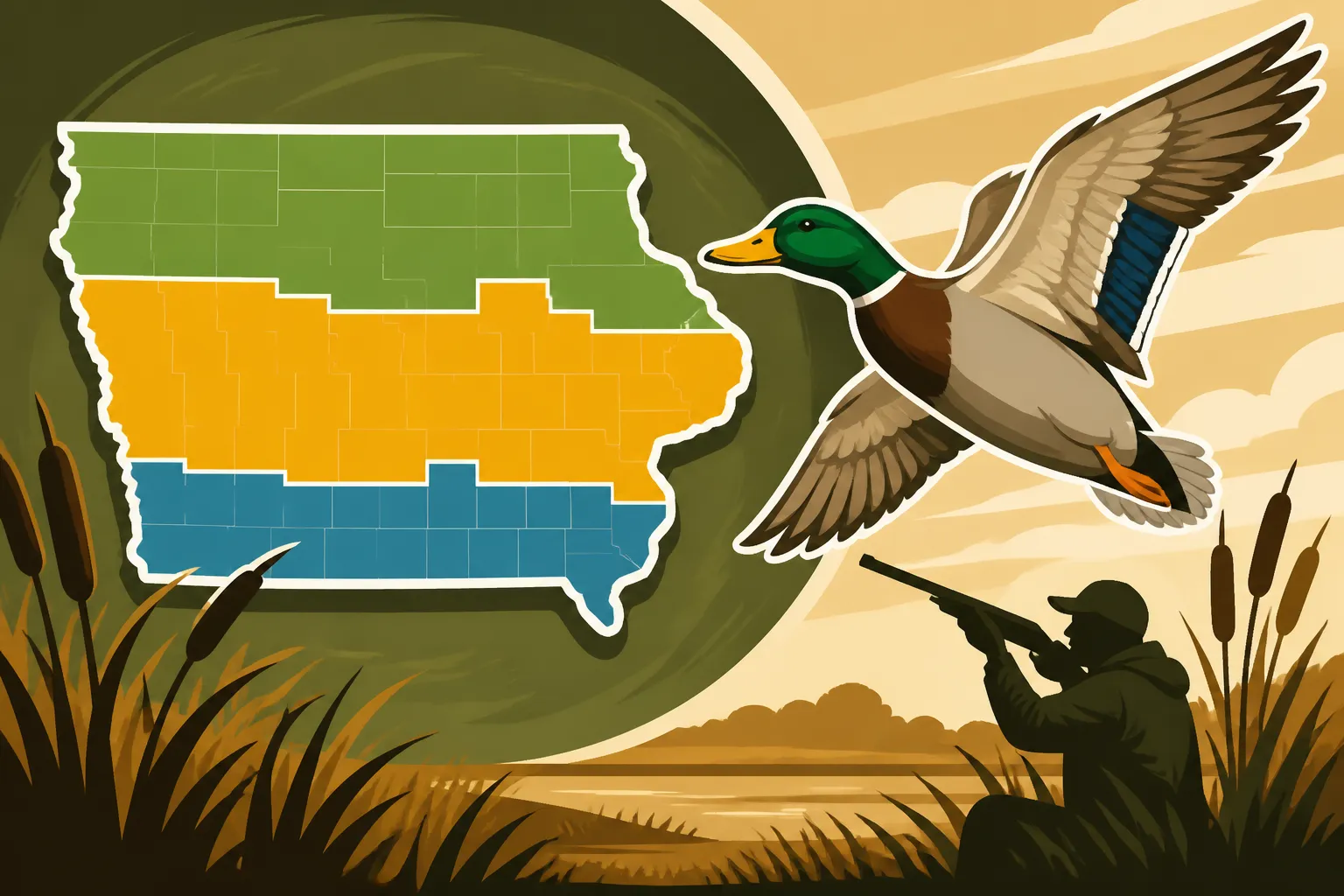
Iowa is primarily divided into three distinct duck hunting zones: the North Zone, the South Zone, and the often-overlooked but crucially important Missouri River Zone. Each of these zones has its own characteristics, drawing different kinds of hunters and offering unique experiences depending on the time of year. Knowing these differences is key to successful duck hunting in Iowa.
The North Zone
The North Zone encompasses the northernmost tier of counties in Iowa, generally stretching from the Missouri River eastward across the state. This area is characterized by its numerous natural lakes, prairie potholes, and managed marshes, especially in the "Prairie Pothole Region" of north-central and northwest Iowa. Think of counties like Dickinson, Clay, Kossuth, Winnebago, Worth, Mitchell, Howard, and Winneshiek, though the exact boundary follows specific county lines that change slightly over time.
Hunting here often kicks off earlier than in other parts of the state, typically in late September. This early start capitalizes on the migration of early-season ducks like teal, wood ducks, and pintails before the bigger pushes of mallards and divers arrive. As the season progresses, hunters here will see waves of green-winged teal, wigeon, and gadwall, with mallards becoming more prevalent as temperatures drop. Because of its colder climate, the North Zone's season also tends to close earlier than the South Zone's, as freezing water bodies force the ducks further south. Hunters in this zone often focus on Iowa Waterfowl Production Areas and state-managed wetlands.
The South Zone
Moving south, the South Zone covers the vast majority of the central and southern parts of Iowa. This zone is more dominated by large river systems, smaller man-made impoundments, and agricultural fields. Counties like Polk, Warren, Marion, Wapello, and all those below the imaginary line drawn for the North Zone are typically in the South Zone. The season here generally starts later than in the North Zone, often in early to mid-October, allowing for later migrations to fill in.
The hunting opportunities in the South Zone often revolve around the major river systems like the Des Moines, Skunk, Iowa, and Cedar Rivers, as well as the managed wetlands associated with larger reservoirs such as Lake Red Rock, Rathbun Lake, and Coralville Lake. As winter approaches, hunting can be excellent on river backwaters and open stretches of flowing water, especially for mallards feeding in cut corn and soybean fields. The season here often extends deeper into December, sometimes even into January, making it a prime destination for late-season waterfowl action as birds are pushed south by severe weather further north. Strategies often involve hunting Standing Corn and Bean Field Deer Patterns but adapted for ducks, where grain availability is key.
Missouri River Zone
The Missouri River Zone is a unique, narrow corridor along Iowa's western border, specifically encompassing the main channel and adjacent oxbows and backwaters of the Missouri River itself. This isn't just any river; it's a massive waterway and a significant migration corridor. Counties immediately bordering the Missouri River, like Monona, Harrison, Pottawattamie, Mills, and Fremont, are generally influenced by this zone's regulations.
What makes this zone special? Its season dates are often distinct from both the North and South Zones, sometimes running concurrently with one or the other, but sometimes having its own unique opening and closing dates and splits. The sheer size and nature of the Missouri River mean that even when smaller waters freeze solid, parts of the river often remain open, providing critical late-season habitat for ducks and geese. Hunting in this zone can involve different tactics, focusing on sandbars, islands, and backwater sloughs that offer shelter and food. Hunters here often need to be proficient in reading river currents and adapting to a dynamic environment, quite different from still-water pothole hunting. When planning, using a tool like GoHunt can help visualize access points and habitat along this extensive river system, though always cross-referencing with the Iowa DNR's official maps for precise zone boundaries is non-negotiable.
Navigating Season Dates and Regulations for Each Zone
Knowing the zones is one thing, but actually nailing down the specific dates and understanding the rules can still feel like a moving target. Waterfowl regulations are complex for a reason – they're designed to be responsive to dynamic bird populations and environmental conditions. So, being proactive and knowing where to get the most accurate information is just as important as knowing the zones themselves.
Checking Official Iowa DNR Resources
This cannot be stressed enough: always consult the official Iowa Department of Natural Resources (DNR) hunting regulations for the current year. While articles like this provide general guidance, season dates, zone boundaries, and bag limits are subject to change annually. The DNR publishes an annual hunting and trapping regulations booklet, often available online as a PDF, and hard copies can be found at most license vendors, county recorders' offices, or DNR field offices.
The DNR's website, particularly the "Go Outdoors Iowa" platform, is your primary source for up-to-date information. It will clearly list the specific dates for the North, South, and Missouri River Zones, including any splits. This is also where you’ll find details on federal regulations, which govern bag limits for migratory birds, and any specific state-level restrictions or requirements, like whether certain Iowa Deer Licence and Tag Costs apply only to big game or if special youth seasons affect waterfowl. Don't rely solely on word-of-mouth or last year's calendar; make it a habit to check the current year's official document before planning any waterfowl hunt. Tools like GoHunt can be fantastic for scouting and finding public land, but for legal dates and rules, the DNR website is the supreme authority.
The Importance of Migration Timing
Understanding the zones goes hand-in-hand with understanding migration timing. A duck season isn't just a set of arbitrary dates; it's an attempt to align hunting pressure with the natural ebb and flow of bird movement. In the North Zone, the season usually opens earlier to catch those initial pushes of local birds and early migrants from further north. As cold fronts sweep down from Canada, pushing ducks and geese ahead of them, the peak migration might shift south.
This means if you're hunting the South Zone, your early season might be slower, but you'll benefit from the later, larger pushes of mallards, often after the North Zone has frozen over. The Missouri River Zone acts as a major flyway, often holding birds longer due to the open water it provides. Keeping an eye on weather patterns, freeze-up dates in states to the north, and even historical migration data (which can be found on apps like GoHunt or specialized birding sites) can significantly improve your success. Knowing when the birds are actually likely to be present, rather than just when the season is open, is a crucial layer of strategy. This kind of research is vital, similar to Scouting Iowa Timber and River Bottoms for deer, but with wings.
Daily Bag Limits and Possession Limits by Zone
While zone divisions primarily affect season dates, it's also important to be clear on daily bag and possession limits. These are federal regulations, often passed down through state law, and generally apply statewide, though there might be very rare exceptions for special management areas. The table below outlines typical bag limits for various duck species. Always confirm the most current year's regulations, as these numbers can change.
| Species | Daily Bag Limit (Typical) | Possession Limit (Typical) | Notes |
|---|---|---|---|
| Mallard (drake) | 4 | 12 | Only 2 hens allowed in daily bag/possession |
| Mallard (hen) | 2 | 6 | Combined with drake limit |
| Pintail | 1 | 3 | Often a more restricted limit due to population status |
| Wood Duck | 3 | 9 | Common early-season bird |
| Teal (Blue-winged, Green-winged, Cinnamon) | 6 | 18 | Often targeted during early "teal-only" seasons, otherwise combined with other ducks |
| Gadwall | 2 | 6 | Good numbers in Iowa |
| Wigeon | 2 | 6 | |
| Redhead | 2 | 6 | Diver duck |
| Canvasback | 1 | 3 | Diver duck, often highly restricted |
| Scaup (Greater/Lesser) | 2 | 6 | Diver duck, can be challenging to differentiate in the field |
| Other Ducks (Shoveler, Ring-necked, etc.) | 6 (total for certain species) | 18 | Check specific regulations for combined limits and restrictions on certain species (e.g., mottled duck, black duck) |
Note: This table represents typical limits. ALWAYS refer to the current year's official Iowa DNR regulations for precise, legally binding information.
The possession limit is usually three times the daily bag limit and refers to the maximum number of birds you can have in your possession at home, in your vehicle, or otherwise under your control, after they have been field dressed and transported from the hunting area. This is especially important for multi-day trips or if you're hunting with a group and accumulating birds.
Tips for Hunting Success in Different Iowa Duck Zones
Now that we've dug into the 'why' and 'what' of Iowa's duck zones, let's talk about the 'how'. Each zone, given its geography and typical season dates, lends itself to certain strategies and tactics. Being adaptable and understanding these nuances will greatly increase your chances of success, whether you're chasing early-season teal or late-season mallards.
North Zone Strategies
The North Zone often means early-season hunting, and that brings its own set of considerations. When the season opens, water temperatures are usually still mild, and local birds, along with the first waves of migrants, are prevalent.
- Pothole and Wetland Hunting: This is prime territory for small water hunting. Focus on smaller, often shallower ponds, marshes, and Iowa Waterfowl Production Areas that may not hold hundreds of birds but can offer consistent action for small groups. Scouting before the season is critical to locate these smaller bodies of water that hold birds. Look for fresh droppings, disturbed mud, and birds actively feeding.
- Early-Season Species: Be ready for teal, wood ducks, and gadwall. These birds are quick and agile, so fast shooting and effective concealment are key. Decoy spreads can be smaller and less elaborate. Often, just a dozen mixed teal and dabbler decoys are enough.
- Concealment is Paramount: With lush vegetation still in full swing, brushing in blinds is easier but also more critical. Ducks aren't used to seeing hunters tucked away yet, so any exposed movement will flare them. Consider using natural cover or a well-brushed layout blind if hunting field edges near water.
- Wind and Weather: Early season typically means warmer weather. Pay attention to fronts; a strong north wind after a cold front can push new birds down. However, don't overlook calm days, especially for wood ducks in timbered sloughs.
South Zone Strategies
As the season progresses, especially from mid-October into December, the South Zone truly shines, often holding incredible numbers of migrating ducks, particularly mallards.
- River Systems and Backwaters: The major rivers are your best bet here. Look for quiet backwater sloughs, oxbows, and slower-moving sections of the main channel. Ducks will use these areas for roosting and loafing, especially if main reservoirs are getting pressured. Learning to Read an Iowa Timber Draw for Deer Sign might not seem applicable, but the concept of identifying movement corridors and loafing areas is similar for waterfowl on rivers.
- Field Hunting: This is where late-season mallards often thrive. Once corn and bean fields are harvested, ducks will move from roosting water to feed in the fields. Identifying key feeding fields and securing permission for a pit blind or layout blind hunt can be incredibly productive. This type of hunting requires excellent concealment and typically larger decoy spreads, often using full-body field decoys.
- Late-Season Water: As temperatures drop, open water becomes a magnet. Keep an eye on un-frozen creeks, small streams, and current-heavy river sections. These can concentrate large numbers of birds when shallower waters are locked up with ice.
- Decoy Spreads and Calling: For mallards, larger, realistic spreads are often effective, especially with motion decoys. Aggressive calling can work well to pull in high-flying birds, but know when to quiet down as they commit. Consider using Decoying an Iowa Whitetail Buck as a parallel for careful decoy placement and strategic calling.
Missouri River Zone Specifics
Hunting the Missouri River Zone presents its own set of challenges and rewards, largely due to the sheer size and power of the river itself.
- Safety First: This is big water. Always prioritize boat safety, wear life jackets, and be aware of currents, snags, and shifting sandbars. Navigating a large river, especially in low light, demands respect and experience.
- Sandbar and Island Hunting: Ducks and geese will often loaf and roost on large sandbars or islands in the river. This can offer excellent opportunities for layout blind hunting or building temporary blinds from driftwood. Accessing these spots often requires a reliable boat.
- Water Levels and Changes: The Missouri River's water levels can fluctuate significantly, especially depending on dam releases upstream. What was a perfect sandbar one day might be underwater the next. Staying informed about river conditions is crucial.
- Adaptable Decoy Spreads: You might need heavier anchors for decoys in stronger currents. Spreads can vary from large field spreads on sandbars to smaller, more natural groupings in sheltered backwaters. Understanding Wind and Thermals in River Breaks is useful not just for deer, but also for positioning decoys and blinds for waterfowl, as wind dictates how birds will approach.
- Focus on Divers and Geese: While dabblers are present, the Missouri River can be a fantastic place for diver ducks (like canvasbacks and redheads) and especially for Canada geese, which often utilize the open water and adjacent fields. Gear for Field Hunting Geese in Cut Corn is very relevant here.
No matter which zone you hunt, ethical hunting practices, respectful conduct, and being a responsible steward of the land and wildlife are paramount. Always pack out what you pack in, and leave no trace of your presence.
Disclaimer
Please note that hunting regulations, season dates, and zone boundaries are subject to change annually by the Iowa Department of Natural Resources. This guide provides general informational context based on typical regulations. It is the hunter's sole responsibility to consult and adhere to the most current official Iowa hunting and trapping regulations booklet before participating in any hunting activity. Failure to do so could result in legal penalties.