Blocking and Driving Iowa Grass Strips
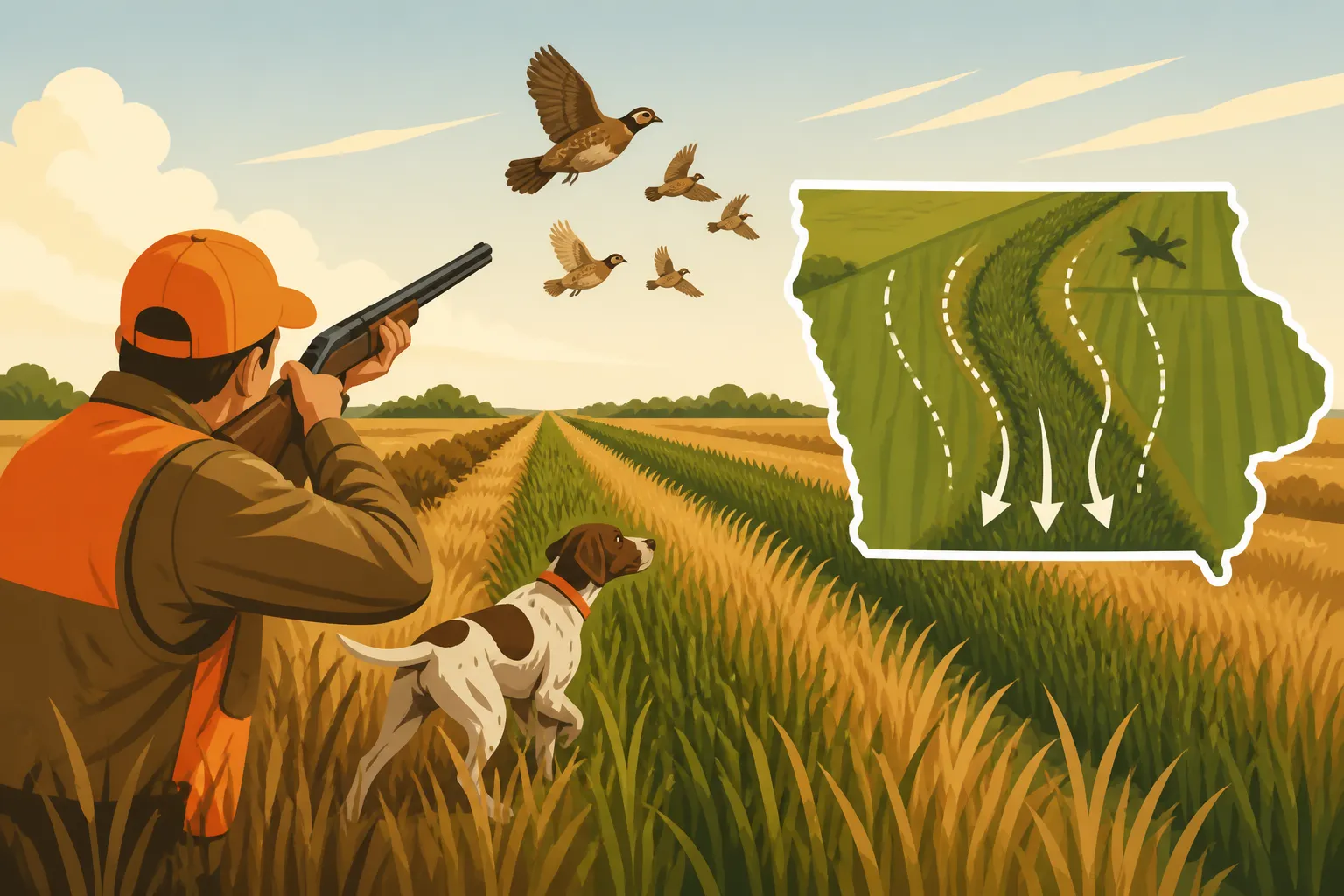
Iowa's vast agricultural landscape, while a boon for row crops, also harbors some of the finest pheasant hunting in the country. But let's be real, walking those seemingly endless strips of CRP, field edges, and creek bottoms can feel like a grueling cardio workout with very little to show for it sometimes. Roosters, especially wary late-season birds, can hunker down and disappear into cover you swore was empty. This guide isn't about aimlessly burning boot leather; it’s about a smart, coordinated strategy – blocking and driving Iowa grass strips – to effectively push those wily birds into range and put more pheasants in your vest.
Understanding Iowa's Grass Strips as Prime Pheasant Habitat
Those linear stretches of tall grass, often bordering agricultural fields, aren't just pretty scenery. They are the lifeblood of Iowa's pheasant population, providing critical cover from predators and the elements. But like any good hunting strategy, you've got to understand why the birds are there and how they use the cover.
The Allure of Tall Grass: Why Pheasants Love It
Iowa's grass strips, whether they're federally enrolled Conservation Reserve Program (CRP) fields, natural waterways, or simply un-tilled edges, offer pheasants exactly what they need: security and sustenance. Think about it from a rooster's perspective. When the corn and beans are harvested, those tall, dense grasses become the only viable hiding spot in a largely exposed world. They provide thermal cover in bitter winds, a canopy from aerial predators like hawks, and a place to loaf and escape danger. You'll often find birds tucked into the thickest, nastiest tangles of switchgrass, bluestem, and multiflora rose – places where a solo hunter might just walk right past them.
These strips are also often close to food sources, like standing corn or picked grain fields, making them ideal commute corridors and daytime bedding areas. It's a perfect blend of food, water (if a ditch or creek is nearby), and cover. Hunters who consistently find success understand this symbiotic relationship. They don't just see a strip of grass; they see a pheasant's living room, dining room, and safe haven all rolled into one. This is especially true when it comes to Late-Season Pheasants in Heavy Cover. The tougher the weather gets, the more pheasants gravitate towards the most impenetrable cover these strips offer.
Reading the Cover: Identifying Optimal Drive Locations
Not all grass strips are created equal. Some are long, thin ribbons, others are wide, sprawling fields. The key to a successful block and drive is learning to "read" the cover – identifying the areas where birds are most likely to hold, and, crucially, their probable escape routes. Start by looking for thicker patches within the strip itself. Pheasants prefer dense cover that makes it hard for predators to see them and even harder to move through. Look for areas where different types of grasses meet, or where brushy edges transition into taller prairie grasses. These "transition zones" are often hotbeds for pheasants.
When planning your drive, consider the terrain. Is there a subtle dip or rise? Birds will often follow the contours of the land. Is there a fence line, a small creek, or a ditch running through the strip? These are natural travel corridors and often places where birds will run ahead of drivers before flushing. Pay particular attention to the ends of the strips, especially where they funnel into thinner cover, a timber edge, or another field. These are prime locations for your blockers. A good virtual scouting session, perhaps utilizing a mapping platform like GoHunt, can help you identify these nuances before you even lace up your boots. You can zoom in and see the texture of the cover, even subtle changes in elevation, which might suggest a pheasant's preferred hidey-hole or escape path.
The Art of the Block and Drive: Strategy Fundamentals
A successful block and drive isn't just a bunch of guys walking through a field; it's a coordinated effort, a tactical dance between drivers and blockers. Everyone has a role, and communication is absolutely paramount. Without a clear plan, you're just taking a walk.
Defining Roles: Drivers, Blockers, and the "Push"
First things first, you need to assign roles. This usually depends on the number of hunters you have. A minimum of three to four hunters is generally ideal for a proper drive, but you can certainly make it work with fewer or more.
- Drivers: These are the folks who walk through the cover, pushing the pheasants forward. Their job is to methodically cover the ground, making enough noise and presence to encourage birds to run ahead rather than hunker down. This isn't a race; it's a steady, deliberate sweep. Drivers need to maintain a relatively straight line, adjusting their pace to the density of the cover.
- Blockers: The blockers are the strategic sharpshooters positioned at the end of the strip, or along the sides, where birds are likely to flush. Their objective is to intercept pheasants that have been pushed out by the drivers. Blockers must remain still, observant, and ready to shoot quickly and safely. They're often covering Blocking a Field End for Roosters, which requires patience and a good eye.
- The "Push": This refers to the collective action of the drivers moving through the cover. The goal of the push is not to necessarily flush birds directly in front of the drivers, but to get them moving and force them towards the blockers. Sometimes, birds will flush behind the drivers, and that's okay, but the primary focus is forward momentum.
It’s crucial that everyone understands their role and sticks to it. A driver who breaks rank to chase a bird that flushes wide can ruin the entire drive. Similarly, a blocker who gets impatient and walks into the strip too early will bump birds out prematurely. Before you even begin, have a huddle, look at a map, and explicitly point out who is doing what.
Setting Up for Success: Positioning and Communication
This is where the magic happens, or fails. Proper setup can mean the difference between an empty game bag and a successful hunt.
- Wind Direction: Always, always, always consider the wind. Pheasants prefer to flush into the wind, as it gives them more lift and control. Therefore, drivers should typically push with the wind, forcing birds to flush into the wind at the blocker's end. This gives the blockers a better, often slower, target. If the wind is blowing across the strip, you might consider having blockers on the downwind side as well as the end.
- Sun Position: Nobody likes shooting directly into the sun. Position your blockers with the sun at their backs if possible, giving them a clearer view of flushing birds. Drivers, too, will appreciate not having a blinding sun in their eyes as they navigate dense cover.
- Terrain and Escape Routes: As mentioned earlier, observe the terrain. If the strip funnels into a narrow point, that’s a perfect spot for blockers. If there’s a small timber patch nearby, birds will instinctively try to escape into it. Place a blocker strategically to cover that escape route. Utilize the mapping features of platforms like GoHunt to mark potential escape routes, parking areas, and even the direction of your drive. These details can be critical in placing your blockers in the most effective spots.
- Communication: Before the drive starts, establish clear communication signals. Yells, whistles, or even walkie-talkies (FRS radios work great) are essential. Drivers need to know if someone is falling behind, if a bird has flushed, or if a dog is on point. Blockers need to know when the drivers are approaching, and to alert others if birds are breaking wide. A simple "DRIVERS ARE CLOSE!" or "BIRD LEFT!" can make all the difference. Remind everyone to keep their safety engaged until they are ready to shoot and have identified their target and backstop.
It's not just about getting birds, it's about being safe, efficient, and working as a team. A well-executed drive is a thing of beauty, a testament to coordinated effort and understanding the game you're pursuing.
Executing the Drive: Techniques for Maximum Flush
Once roles are assigned and positions are set, it's time to put the plan into action. The execution of the drive is where strategy meets the field, and slight adjustments in technique can yield vastly different results.
The Driver's Role: Pacing, Noise, and Flushing Efficiency
The drivers are the engine of the operation. Their primary goal is to convince pheasants hiding deep in the grass that staying put is no longer an option, and that moving forward towards the blockers is their only escape route.
- Maintain the Line: This is perhaps the most critical aspect. Drivers should walk abreast, maintaining a relatively straight line across the width of the grass strip. Imagine a moving wall of hunters. If one person surges ahead or lags behind too much, it creates gaps where wily pheasants can slip through, double back, or flush out the sides unexpectedly. A consistent pace, determined by the density of the cover, is key. In lighter cover, you can walk a bit faster, but in heavy switchgrass or thick brambles, slow down and really work the cover.
- Create Noise and Presence: You don't need to be shouting constantly, but drivers should make their presence known. Talking, shuffling feet, and the occasional stomp can be enough. Some hunters even use short dog whistles or bells on their boots to create a consistent sound. The goal is to make the pheasants feel pressured and uncomfortable. This isn't about being subtle; it's about being assertive and systematic in your approach, effectively Working Pheasant Cover Without a Dog if you don't have one along.
- Work the Cover Thoroughly: Don't just skim the surface. Use your boots to kick through clumps of grass, especially in the thickest areas. Pheasants will hunker down incredibly tight, and it often takes a direct disturbance to get them to move. Zigzag slightly within your designated lane if necessary, making sure you cover every square foot. If you have a dog, let them work quartering ahead of you, but ensure they don't break too far forward and bust birds too soon.
Remember, drivers should generally not shoot birds flushing ahead of them unless they are absolutely certain of a safe shot and that no blockers or other drivers are downrange. The primary shooting opportunities are for the blockers.
The Blocker's Role: Anticipating Flushes and Safe Shooting Lanes
Blockers have the enviable, yet often frustrating, job of waiting. But it's not passive waiting; it's an active, focused state of anticipation.
- Hold Position and Maintain Spacing: Once positioned, blockers should remain as still and quiet as possible. Movement and noise can cause birds to flush prematurely or veer off course. If you have multiple blockers, maintain your designated spacing to cover the width of the strip effectively, ensuring no gaps for birds to escape through.
- Anticipate Flushes: Watch the cover ahead, but also pay attention to the drivers. As the drivers get closer, the likelihood of a flush increases dramatically. Listen for the rustling of birds running ahead of the drive, or the excited barks of dogs. Scan for any movement, even subtle ones, in the grass. Pheasants often burst out of cover with surprising speed.
- Identify Safe Shooting Lanes: This is paramount for safety. Before the drive begins, each blocker should mentally (or physically, if possible) identify their safe shooting lanes. This means knowing where the other hunters are, where the property lines are, and where vehicles or buildings might be. Never swing on a bird if another hunter is in your line of fire. Your shot should always be directed away from the line of the drive and any potential hazards. This is where a rangefinder can be helpful, not just for distance, but to identify what's beyond your target. Remember your ethical responsibility; a good resource to review is Shot Placement on a Whitetail at Twenty Yards – while it’s for deer, the principles of knowing your target and what’s beyond it are universal.
- Communicate Flushes: If a bird flushes and you don't get a shot, or if it breaks wide, immediately call out "BIRD LEFT!" or "BIRD RIGHT!" This alerts other blockers or drivers to look for the bird and potentially get a shot.
Wind and Weather Impact: Adjusting Your Strategy
Iowa weather can be fickle, and it significantly impacts pheasant behavior and therefore your driving strategy.
- Windy Days: Pheasants often hold tighter on windy days, preferring to stay low and out of the wind. This can make them harder to flush but also means they might run less, setting up better opportunities for blockers. If it’s very windy, pushing directly into a strong headwind might be less effective as birds might get too much lift at the flush, but generally you still want them to flush into the wind. Adjust your driver spacing to be tighter, and work the cover even more diligently.
- Cold Weather: In colder temperatures, especially those crisp December mornings, pheasants will gravitate towards the thickest, most protective cover. This means focusing your drives on those dense, almost impenetrable patches of grass. They’ll also be more reluctant to fly long distances, preferring to run or make short, quick flights. Consider shorter drive segments on cold days, or re-working promising sections. Dressing appropriately with good Cold Weather Stand Clothing is also crucial, even for walking, to maintain focus and comfort.
- Snow Cover: A blanket of snow can be both a blessing and a curse. It makes tracking birds easier and shows their fresh activity. However, if the snow is deep and powdery, birds can burrow into it, making them incredibly difficult to flush. If it's heavy and crusty, it might limit their mobility. Adjust your pace and noise level accordingly. On sunny, snowy days, pheasants often sit on the south-facing slopes, catching the sun, so prioritize those areas.
Understanding these environmental factors and making tactical adjustments on the fly is a hallmark of an experienced pheasant hunter.
Safety First: Essential Considerations for Group Hunts
Hunting is an exhilarating sport, but safety must always be the absolute top priority, especially when driving pheasants in a group. An accident can ruin lives, not just a hunt.
Communication is Key: Radios, Calls, and Visual Cues
Effective communication is the cornerstone of group hunting safety. It’s what prevents misidentification, accidental shots, and general confusion in the field.
- Pre-Hunt Briefing: Before you even step out of the vehicle, conduct a thorough safety briefing. Everyone needs to understand the plan, their role, and the designated shooting zones. Discuss who will be where, the direction of travel, and any potential hazards like roads, houses, or livestock.
- Two-Way Radios (FRS/GMRS): These are invaluable tools for drives. Simple, inexpensive FRS radios allow drivers and blockers to communicate constantly. Drivers can call out "Bird up!" or "Holding here, wait for me!" Blockers can report "Birds breaking left!" This real-time information is critical. Establish clear, concise language beforehand. For example, "Line clear" means no one is ahead, "Holding" means one hunter is stopped, etc.
- Whistles and Calls: If radios aren't an option, or as a backup, designate a series of whistle blasts or specific vocal calls for different situations (e.g., two short blasts for "stop," one long blast for "move forward"). These can be surprisingly effective over short to medium distances in dense cover.
- Visual Cues: Sometimes, hand signals or even just seeing where everyone is are the only options. Ensure everyone is wearing ample blaze orange (more on this below) so they are easily visible. Keep an eye on your fellow hunters and communicate visually if you see someone out of position or a potential hazard. Always know where every member of your hunting party is at all times.
Shot Zones and Fire Discipline: Knowing Your Safe Shooting Lanes
This is non-negotiable. Every hunter in a pheasant drive must be acutely aware of their safe shooting zone and adhere to strict fire discipline.
- Drivers: Generally, drivers should only shoot at birds that flush behind or directly above them, and only if they have a clear, safe shot with no blockers or other drivers in the line of fire. Never shoot forward or across the line of the drive. The primary opportunity for drivers is flushing birds they walk up.
- Blockers: Blockers have a more direct shooting role, but it comes with immense responsibility. Their safe shooting zone is typically ahead of the drive, away from the line of drivers. They should only shoot at birds flying into their designated area, never swinging a gun back towards the approaching drivers. If a bird flushes and flies low, ensure your shot isn't going to hit the ground and ricochet towards anyone. Be mindful of the trajectory of your shot.
- The 180-Degree Rule: This fundamental firearm safety rule applies strongly here. Never allow your muzzle to cross an imaginary 180-degree line drawn through your body and pointing towards your target area. This prevents you from accidentally pointing your gun at another hunter.
- Target Identification: Always positively identify your target as a pheasant before taking a shot. In the heat of the moment, with birds flushing quickly, it's easy to rush. Take that extra fraction of a second.
- Backstop Awareness: Always know what's beyond your target. Are there farm buildings, roads, or vehicles? Shotgun pellets can travel further than you think, especially larger pheasant loads. Even small pellets can cause injury at a distance.
Blaze Orange Requirements: Visibility and Legalities
Blaze orange isn't just a suggestion; it's a legal requirement in Iowa during specific seasons, and it’s a critical safety measure for any group hunt.
- Iowa Regulations: During most shotgun deer seasons, and often for upland bird seasons (check current regulations as they can change slightly year-to-year), Iowa requires hunters to wear a solid, visible blaze orange cap, hat, or vest. This isn't just for hunters; it's also for anyone else out in the field.
- Maximum Visibility: Don't just meet the minimum. Wear as much blaze orange as practical. It makes you incredibly visible to other hunters, especially in dense cover or low light conditions. The more visible everyone is, the less chance of misidentification.
- Dog Safety: If you're hunting with dogs, consider putting a blaze orange vest on them too. Many tracking collars are also blaze orange. While dogs aren't people, they are valued members of the hunting party, and their safety matters just as much.
The objective of a pheasant drive is to enjoy the camaraderie and the thrill of the hunt, and to harvest some delicious birds. But none of that is worth risking someone's safety. Prioritize the well-being of your hunting party above all else.
Gear Up: What You Need for a Successful Drive
Just like you wouldn't head into the timber for deer without your specific gear, a pheasant drive requires certain essentials. Having the right tools makes the experience more comfortable, efficient, and ultimately, more successful.
Footwear and Clothing: Staying Comfortable and Protected
You're going to be walking, potentially through wet, thorny, and uneven terrain. Your comfort and protection are paramount.
- Waterproof Boots: This is non-negotiable. Iowa's grass strips can be notoriously wet, whether from morning dew, recent rain, or melting snow. Invest in a good pair of knee-high, waterproof hunting boots, ideally insulated if you're hunting in late fall or winter. Look for boots with good ankle support to prevent twists and turns on uneven ground. Brands like Muck Boots or Lacrosse are popular choices for their waterproof qualities and durability.
- Layered Clothing: Iowa weather can change its mind quickly. Layering is key. Start with a moisture-wicking base layer, add an insulating mid-layer (fleece or down), and top it with a durable, briar-resistant, and preferably waterproof outer layer. Your outer layer should also be blaze orange to meet safety requirements. The briar-resistant part is crucial; multiflora rose and other thorny bushes can shred regular clothing.
- Gloves and Hat: Protect your hands from thorns and cold, and your head from the elements. A good pair of durable, perhaps leather-palmed, gloves will save your hands when pushing through thick cover. A blaze orange hat or cap is a must.
- Eye Protection: Safety glasses are a smart choice, especially when walking through dense, springy cover that can whip back and hit you in the face or eyes. They also protect from stray pellets or debris.
Firearms and Ammunition: Choke, Shot Size, and Responsible Selection
Choosing the right scattergun and shells is crucial for ethical and effective pheasant hunting.
- Shotgun Gauge: The 12-gauge is perhaps the most popular for pheasants due to its versatility and payload, but a 20-gauge is also an excellent choice, especially for those who prefer less recoil or are smaller in stature. A 20-gauge with appropriate loads is more than capable of taking down roosters.
- Choke Selection: Modified choke is a workhorse for pheasants, offering a good balance of pattern density and spread at typical flushing ranges (25-40 yards). If you're expecting birds to get out further, perhaps from the blocker position, a Full choke might be warranted. For closer flushes in very dense cover, an Improved Cylinder could be beneficial for drivers. Many hunters like to carry an over/under or a double barrel with two different chokes to cover varied situations.
- Shot Size: For pheasants, #4, #5, or #6 shot are the most common and effective choices. #5 shot is a fantastic all-around option, providing a good pellet count and enough energy for clean kills. #4 shot offers more energy for longer shots, while #6 has a higher pellet count for closer flushing birds. Experiment with different brands and shot sizes to see what patterns best in your shotgun.
- Ammunition Capacity: Iowa law generally limits shotguns to three shells in the chamber and magazine for migratory game birds, but for pheasants (a resident game bird), the restriction is often more lenient, allowing up to five shells. Always double-check current regulations to be sure. Most semi-automatic and pump shotguns come with a plug to limit capacity, which you'll want to ensure is appropriate for the species you're pursuing.
- Responsible Selection: The goal is a quick, ethical kill. Choose ammunition that is appropriate for the bird and the expected range. Remember, it's better to pass on a marginal shot than to wound a bird.
Mapping and Navigation: Using Tools Like GoHunt
In today's hunting world, digital maps are an absolute game-changer. They elevate your scouting and in-field navigation significantly.
- Digital Mapping Apps: Services like GoHunt, onX Hunt, or Garmin BaseCamp are indispensable. Before you ever leave home, you can "e-scout" potential grass strips, identify property lines (critical for not trespassing), locate parking areas, and plan your drive routes. These apps often show different land ownerships, including public hunting ground and Iowa's Habitat and Access Program Explained (IHAP) tracts, which can be invaluable for finding new spots.
- Offline Maps: Crucially, download offline maps of your hunting areas. Cell service in rural Iowa can be spotty at best, and you don't want to lose your navigation mid-hunt.
- GPS Capabilities: Your smartphone, combined with these apps, becomes a powerful GPS unit. You can mark your starting points, the locations of downed birds, and even where you parked your vehicle. This is especially helpful if you're Scouting Iowa Public Land Before the Opener and want to save specific features.
- Compass and Paper Map Backup: While digital is great, batteries die, screens crack, and technology can fail. Always have a physical compass and a paper map as a backup, especially when exploring new or vast areas. Knowing how to use them is even more important.
These tools, like GoHunt, provide layers of information that were once only available to long-time locals. They democratize access to critical details and empower hunters to plan smarter, more effective drives.
Post-Drive Protocol: Recovery, Reload, and Refine
The drive isn't over when the shooting stops. What happens next is just as important for both successful bird recovery and for improving future hunts.
Bird Recovery: Working with Dogs and Marking Falls
A downed bird isn't a bird in the bag until it's in your hand. Pheasants are notoriously tough and can run surprisingly far even after being hit hard.
- Mark the Fall: As soon as a bird is shot, everyone in the group should make a mental note, or even point, to the exact spot where it hit the ground. A good rule of thumb is to pick a landmark beyond the fall, like a specific tree or fence post, to help pinpoint the location. This is crucial for efficient recovery.
- Utilize Dogs: If you have a well-trained bird dog, this is their moment to shine. A good retriever can find birds in cover that would be impossible for humans to penetrate. Allow the dog to work naturally, but direct them to the general area of the fall. Keep them on a leash if necessary until you're sure of the fall location, especially if other birds are still being shot at.
- Systematic Search: If you don't have a dog (or even if you do, for cripples), conduct a systematic search. Walk in an expanding circle or grid pattern around the mark. Look for disturbed grass, feathers, or even blood. If a bird is crippled, it might try to burrow into the densest cover. Don't give up quickly; ethical hunting means making every effort to recover wounded game. Blood Trailing in CRP and Multiflora Rose might be geared for deer, but the principles of slow, methodical searching apply to pheasants too.
- Confirm the Kill: Once you find the bird, confirm it's expired. If it's still alive, dispatch it quickly and humanely. Proper field care, such as cooling the bird, should begin as soon as possible, especially on warmer days.
Evaluating Your Drive: Learning from Each Push
Every drive, whether successful or not, offers valuable lessons. Taking a few moments to debrief can significantly improve your future efforts.
- What Worked? What Didn't? As a group, discuss the drive. Did the blockers see birds? Did the drivers flush birds out the sides or behind them? Was the spacing good? Was communication clear? Sometimes, a slight adjustment to the pace of the drivers, or relocating a blocker by just a few yards, can make a huge difference in the next drive.
- Bird Behavior: Pay attention to how the pheasants reacted. Were they running far ahead? Were they holding tight? Did they try to escape specific areas? This information helps you understand their patterns in that particular piece of cover and under the prevailing conditions. For example, if birds were running the full length of a long strip, you might need more blockers at the end or consider a shorter drive.
- Cover Analysis: Re-evaluate the grass strip itself. Were there areas of particularly dense cover that held birds? Did the birds use a specific ditch or fence line as a travel corridor? Jot down notes, either mentally or on your GoHunt map, for future reference. This iterative process of learning and refinement is how true hunting knowledge is built.
Conservation and Etiquette: Leaving No Trace and Respecting Landowners
As hunters, we are stewards of the land and ambassadors for our sport. Our actions reflect on all hunters.
- Leave No Trace: Pack out everything you pack in. This includes spent shell casings, snack wrappers, and any other trash. The goal is to leave the area looking exactly as you found it, or better. This is especially important when Leaving No Trace on Iowa Walk-In Ground or other public lands.
- Respect Private Property: If you're hunting on private land, even with permission, be extra respectful. Close all gates, avoid driving on wet fields, and be mindful of crops, fences, and any livestock. A "thank you" to the landowner, perhaps with some freshly cleaned pheasants, goes a long way in securing future access. Remember, permission is a privilege, not a right.
- Share the Experience: If you were successful, consider sharing your harvest with those who helped or even those who couldn't make it. The camaraderie of a group hunt is often as rewarding as the birds in the bag.
- Follow All Regulations: Always abide by bag limits, shooting hours, and all other Iowa DNR regulations. This protects the resource and ensures future hunting opportunities for everyone.
By understanding the habitat, meticulously planning, executing with precision, prioritizing safety, equipping yourselves appropriately, and learning from every experience, blocking and driving Iowa grass strips can be an incredibly effective and rewarding way to pursue pheasants in the Hawkeye State. It's a method that combines strategy, teamwork, and a deep appreciation for the game and the land.
Disclaimer
Hunting is an inherently dangerous activity. The information provided in this guide is for informational purposes only and is not a substitute for professional instruction, proper training, or adherence to all local, state, and federal hunting laws and safety regulations. Always prioritize safety, understand your equipment, and ensure you are familiar with the area you are hunting. The author and publisher assume no responsibility for accidents or injuries that may occur.