Yellow River State Forest Deer Hunting
It's incredibly frustrating to dedicate your precious hunting days to a sprawling public land area only to feel lost, unsure of where the deer actually are, or how best to navigate the challenging terrain. Many hunters dream of the big bucks Iowa offers, but staring at a map of a place like Yellow River State Forest can feel overwhelming. This guide is designed to cut through that confusion, offering practical strategies and insights specifically for deer hunting in Yellow River State Forest, helping you turn those challenging scouting trips into successful hunting adventures.
Understanding Yellow River's Unique Landscape for Deer
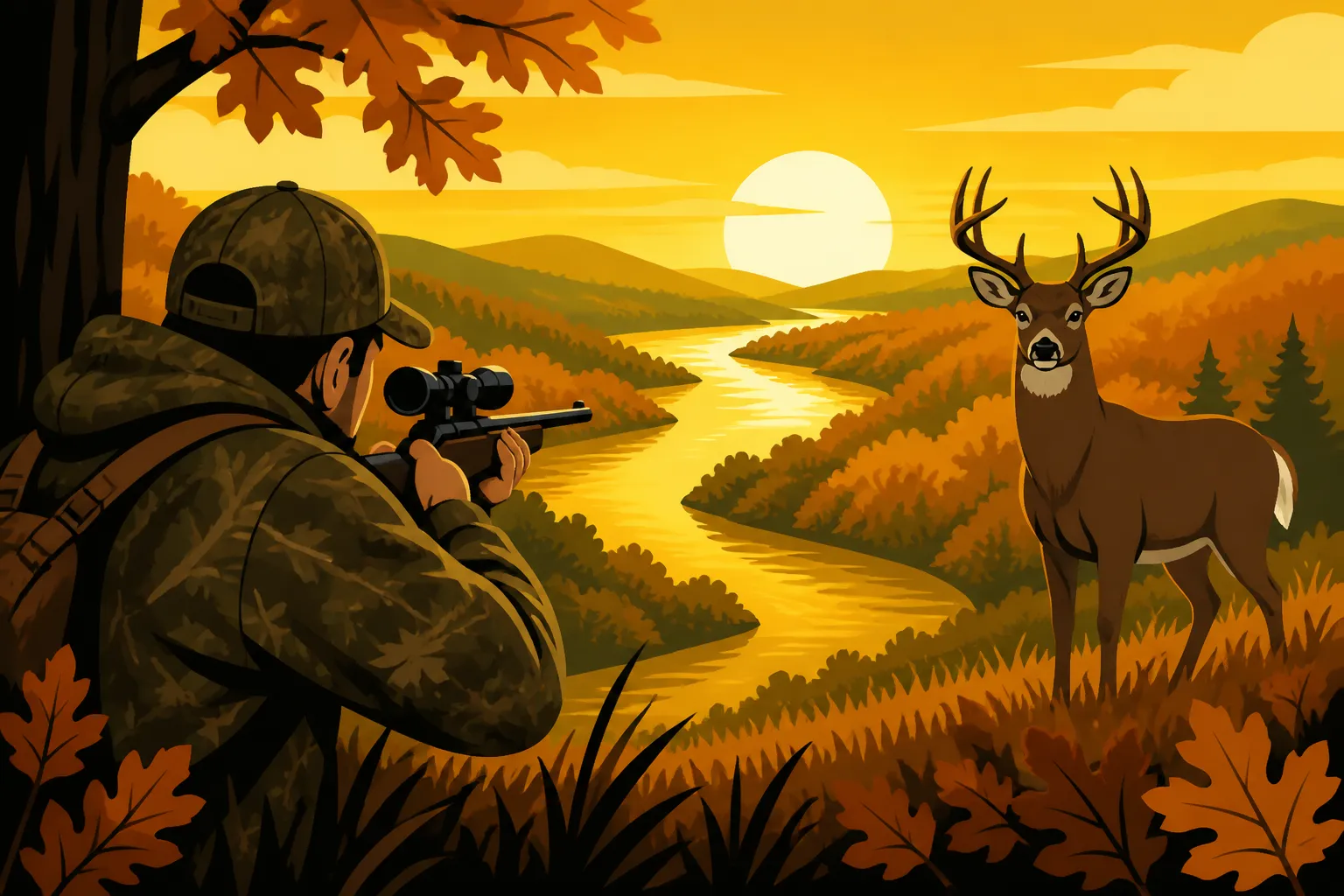
Yellow River State Forest, nestled in the rugged bluff country of northeast Iowa, isn't your typical flat agricultural landscape. This place is a beast, a beautiful, sprawling tract of timbered hills, deep ravines, and winding creeks. It's truly a gem for public land hunters, but its very nature presents a unique set of challenges and rewards when it comes to chasing whitetails.
Topography and Habitat Diversity
The sheer diversity of the terrain here is what makes it so appealing to deer, and in turn, to us hunters. You'll encounter everything from dense, almost impenetrable cedar thickets on steep slopes to mature oak-hickory stands in the bottoms, and even some scattered pines. This varied cover provides excellent bedding areas for deer, offering them security and protection from the elements, especially during brutal Iowa winters. The steep changes in elevation mean deer often travel on specific benches or across saddles, utilizing the easiest path through the challenging landscape. Recognizing these natural travel corridors is absolutely key to success.
The river itself, the Yellow River, carves its way through the landscape, creating fertile bottomlands and providing a consistent water source. These riparian areas often feature different vegetation, creating an edge effect that deer love. Understanding how deer utilize these distinct habitat types – from the high, dry ridges to the low, moist creek bottoms – will inform your scouting and stand placement. It's a constant puzzle, but one that rewards those willing to put in the time to understand the nuances of the terrain.
Food and Water Sources
Unlike many parts of Iowa dominated by corn and soybean fields, Yellow River State Forest offers a more natural food buffet for deer. Acorns from the abundant oak trees are a huge draw, especially in the fall. During a good mast year, deer will be concentrated where the acorns are dropping heavily. Beyond acorns, you'll find various browse species, wild grapes, and other natural forage that whitetails depend on. Corn and Soybeans in a Deer Diet might be the primary food source in other areas, but here, it's about connecting the dots between natural mast crops and deer movement.
Water is rarely an issue in Yellow River, with numerous small streams, springs, and the main river providing ample access. Deer, like all wildlife, need water daily, and these reliable sources can be excellent pinch points, especially during drier periods or in parts of the forest further from major water bodies. Scouting for fresh tracks around these water sources can reveal consistent travel patterns, guiding your efforts to determine Early-Season Bowhunting Over Water strategies.
Navigating Access and Terrain Challenges in Yellow River
Getting into and around Yellow River State Forest can be an adventure in itself. Its rugged nature, while a boon for deer habitat, also means that access isn't always straightforward. Understanding the different access points and how to effectively navigate the challenging terrain is crucial for a successful and safe hunt.
Identifying Access Points and Trail Systems
Yellow River State Forest has several designated parking areas and trailheads, but don't expect a neatly manicured park system. Some access points are quite obvious, located off paved roads, while others might be more subtle, tucked away on gravel roads. It's vital to study a detailed map before you go. Using a robust mapping application like onX Hunt is indispensable here. You can identify all the public land boundaries, topo lines, and potential access points, allowing you to plan your entry and exit routes meticulously. This proactive approach helps avoid accidentally trespassing on private land, which can sometimes border the state forest in unexpected ways.
Once you're on the ground, you'll find a network of hiking trails, equestrian trails, and old logging roads. While these offer great access into the deeper timber, remember that other users will also be present, especially on weekends. Smart hunters often look for lesser-used access points or are willing to walk further off these main trails to find undisturbed pockets of deer activity. It's about finding that sweet spot between easy access and low human pressure. Access Routes That Do Not Bump Deer are critical here, especially when approaching a morning stand.
Overcoming Steep Slopes and Dense Cover
The Driftless Area topography that characterizes Yellow River State Forest means you're going to encounter some serious hills. These steep slopes can be exhausting, especially when hauling gear or, even better, a harvested deer. Planning your routes to utilize benches or less severe grades can save you a lot of energy. Knowing your physical limits and being prepared for a strenuous trek is part of the deal when hunting this type of terrain. The dense cover, particularly the cedar thickets on north-facing slopes, can be incredibly difficult to push through but often hold bedded deer.
When confronted with thick cover, sometimes the best strategy isn't to fight through it, but to hunt its edges or funnel points. Deer will use the path of least resistance when traveling from bedding to feeding areas, and these thickets can create natural barriers that push deer into predictable corridors. A good topo map on your onX Hunt app will highlight these steep areas, helping you visualize potential funnels and benches that deer might use. Always carry a compass or rely on your GPS app, as it's easy to get disoriented in the maze of hills and ravines. Scouting Iowa Timber and River Bottoms before the season opens will give you a significant advantage in understanding these challenging features.
Strategic Deer Hunting Approaches for Yellow River
Hunting deer in Yellow River State Forest requires a blend of adaptability, persistence, and a deep understanding of whitetail behavior in rugged timber country. Forget the flatland field edge hunts; this is about reading the land and the deer sign it reveals.
Reading the Terrain for Deer Movement
In a landscape dominated by timber and dramatic elevation changes, deer movement is heavily influenced by topography. Instead of simply looking for scrapes and rubs, you need to think like a deer navigating these hills. Deer will almost always choose the easiest path. This means looking for saddles (low points in a ridge), benches (flat areas along a hillside), and creek bottoms as primary travel corridors. These natural funnels concentrate deer movement, making them prime locations for ambush sites.
Consider how wind and thermals will affect deer movement, especially in the undulating terrain. In the mornings, cooler air sinks into the valleys, and thermals pull scent downwards. In the evenings, as the air warms, thermals rise. This constant shift means that a stand location that's perfect in the morning might be detrimental in the afternoon. Pay close attention to Wind and Thermals in River Breaks as these principles apply directly to the steep ravines of Yellow River. Being able to adapt your setup based on the prevailing conditions is a hallmark of a successful Yellow River hunter.
Stand Placement and Mobile Hunting Tactics
Given the varying terrain and potential for hunting pressure, strategic stand placement is paramount. For fixed sets, look for those natural funnels, pinch points, or areas with heavy acorn drop. Think about where deer would want to be at different times of the day – bedding on secure slopes, feeding in oak flats, or traveling between them. Often, the best spots are those that require a bit more effort to reach, deep in the timber away from main trails. Consider using a compact hang-on stand and Climbing Sticks Versus a Climber for easier portability.
However, Yellow River often rewards a more mobile approach. With large tracts of public land and the challenge of finding deer, being able to quickly move and set up can be a huge advantage. Mobile Saddle Hunting in Iowa is an excellent tactic here, allowing you to go deep, adjust your position based on fresh sign, and adapt to changing conditions. You might scout an area in the morning, find fresh rubs leading to a specific bench, and be able to set up a saddle hunt there by afternoon. This flexible approach allows you to cover more ground and react to what the deer are doing in real-time.
Strategies for Different Seasons
The tactics you employ will shift dramatically depending on the season segment you're hunting. During the early archery season, deer are still largely in summer patterns, focused on food and water. Locating dropping acorns or hidden water sources will be key. As the pre-rut kicks in during late October, bucks start to cruise for does. Focusing on travel corridors, saddles, and pinch points becomes more effective. Hunting the Iowa Pre-Rut in Late October in Yellow River involves being patient and letting the deer come to you as they cover ground.
When the shotgun seasons arrive, hunting pressure spikes. Deer will quickly become nocturnal or seek refuge in the thickest, nastiest cover they can find. This is where those dense cedar thickets become critical bedding areas. Learning to read Hunting Pressure Patterns on Iowa Public Land is vital. For late muzzleloader or January antlerless seasons, deer will be heavily focused on the best available food sources and thermal cover to survive the cold. While Yellow River isn't known for vast crop fields, any small plots, scattered oak flats with remaining acorns, or sheltered south-facing slopes offering warmth will draw deer. This can also be a good time for small group drives in more manageable timber blocks, following Party Hunting Rules and Safe Drives.
Essential Gear and Regulations for a Successful Hunt
A hunt in Yellow River State Forest is an investment in time and effort, and being prepared with the right gear and a solid understanding of Iowa's regulations will make all the difference in turning a challenging experience into a successful one.
Weaponry and Ammunition Considerations
Iowa has specific rules regarding legal deer hunting equipment, and these vary by season. For archery season, both vertical bows and crossbows are legal. Make sure your broadheads comply with state regulations. For shotgun seasons, hunters typically use slugs, and Slug Range Limits on a Deer Drive are an important consideration, especially in dense timber where shots might be close or in more open areas where distance can be misjudged. Straight-wall cartridge rifles have also become popular and are legal during the shotgun seasons in Iowa, offering more accuracy and range than many slug guns. If you're using a muzzleloader, ensure your caliber and projectile meet Iowa's requirements for Iowa Muzzleloader Projectile Rules.
Regardless of your chosen weapon, practice is non-negotiable. Spend time at the range zeroing your firearm or tuning your bow for the distances you expect to shoot in the timber. Knowing your effective range in a high-stress hunting situation is paramount for ethical shot placement. A rangefinder is an invaluable tool for accurately judging distances in Yellow River's varied terrain, helping to make sure you're within your comfortable and ethical shooting range.
Clothing, Navigation, and Safety Gear
The weather in northeast Iowa can be unpredictable, especially during the fall and winter hunting seasons. Layering is key. For early season, breathable, moisture-wicking layers are essential, while Cold Weather Stand Clothing featuring insulation and wind-blocking properties becomes critical for late-season sits. Good quality, waterproof hiking boots with excellent ankle support are a must for navigating the steep, often muddy or snow-covered hillsides.
Given the vastness and ruggedness of Yellow River, reliable navigation tools are non-negotiable. A GPS unit or a smartphone with a robust hunting app like onX Hunt downloaded with offline maps is vital. Cellular service can be spotty in the deep ravines, so don't rely solely on live data. Always carry a physical compass and map as a backup. Beyond navigation, safety should be your top priority. A quality first-aid kit, a headlamp with spare batteries, and a way to communicate (like a fully charged cell phone or satellite messenger) are critical. If you're treestand hunting, a full-body safety harness is mandatory. Make sure someone knows your hunting plan, including your intended area and expected return time, especially when hunting alone. Iowa also has Iowa Hunter Education Requirements for certain age groups, so ensure you meet all licensing needs.
Game Recovery and Processing
Successfully harvesting a deer in Yellow River is only half the battle; getting it out can be the real challenge. The steep, often rocky terrain can make dragging a deer incredibly difficult, if not impossible, alone. Consider bringing a deer cart, especially if you plan to hunt areas with more gradual slopes or accessible old logging roads. However, many parts of Yellow River are simply too rugged for a cart. In these situations, learning how to quarter a deer in the field can be a game-changer. This allows you to pack out smaller, more manageable loads, often with the help of a good hunting pack and game bags.
Once you have your deer out, swift processing and cooling are essential, particularly if temperatures are mild. Field Dressing in Warm October Weather requires quick action to prevent meat spoilage. Having proper knives and game bags will aid in this process. Remember, you'll need to report your harvest according to Iowa Deer Harvest Reporting Rules to comply with state regulations.
| Feature | Description | Hunting Implication |
|---|---|---|
| Steep Ridges/Bluffs | Dramatic elevation changes, often covered in dense timber or cedar thickets. | Excellent bedding areas, use saddles and benches as travel corridors. Strenuous access. |
| Deep Ravines | Narrow, steep-sided valleys carved by water, often with creek bottoms. | Funnel deer movement, strong thermal influence. Difficult to traverse. |
| Oak Flats | Areas of mature oak trees, often on gentler slopes or ridge tops. | Primary food source during acorn drop. Key feeding areas. |
| Creek Bottoms | Flat or gently sloped areas along the Yellow River and its tributaries. | Consistent water, diverse browse, and natural travel routes. High deer traffic. |
| Cedar Thickets | Dense stands of cedars, often on north-facing slopes or protected areas. | Crucial bedding and thermal cover, especially in cold weather. Hard to penetrate. |
Disclaimer
This article is for general informational purposes only and does not constitute professional advice. Laws, prices and regulations vary by location and change over time. Consult a qualified professional for guidance on your specific situation.