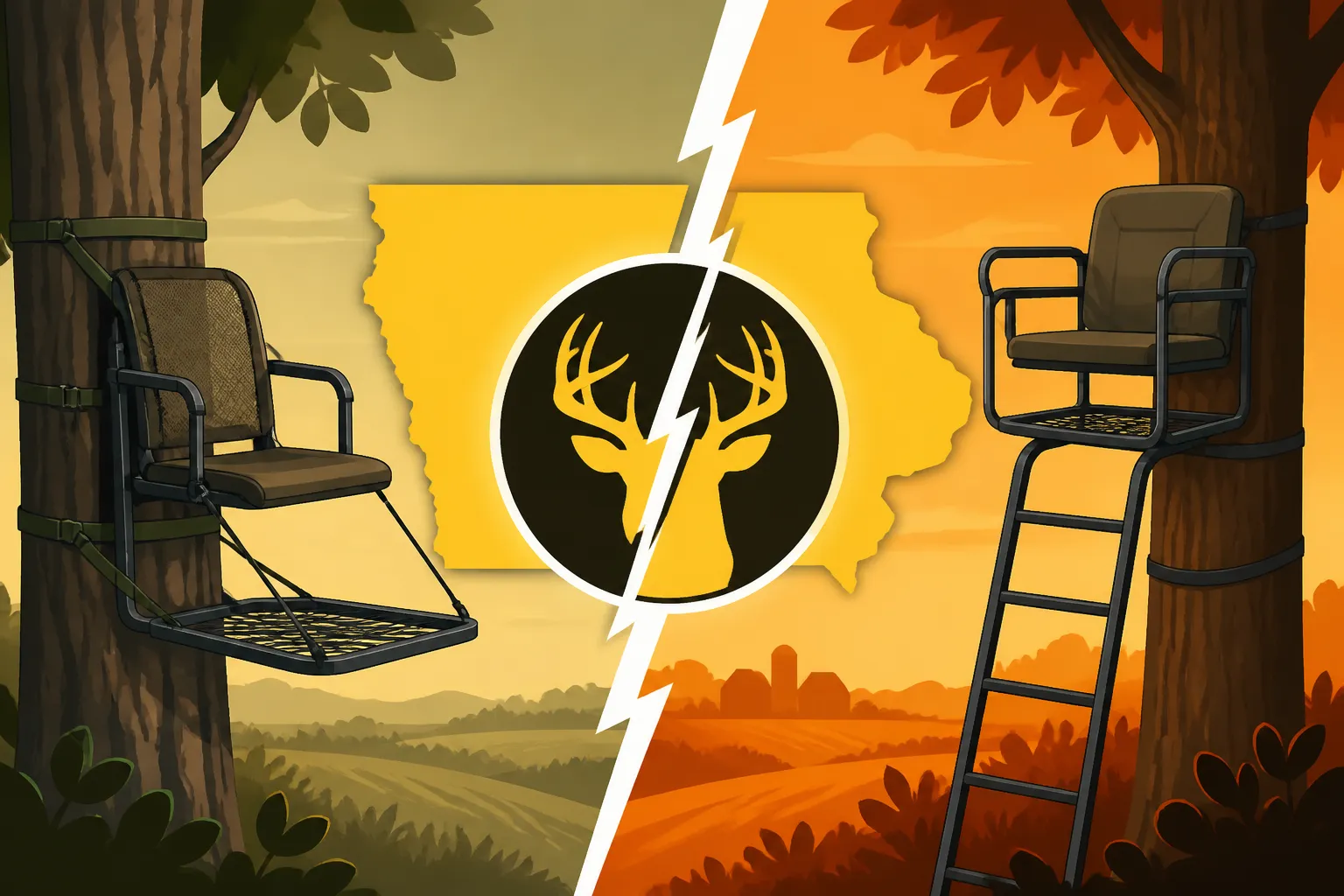
Hang-On Stands Versus Ladder Stands
Every deer season, as hunters gear up and scout their favored timber or field edges, a common dilemma emerges: what kind of treestand is going to give you the edge? The choice between a hang-on stand and a ladder stand can feel like picking between two essential tools, each with its own benefits and drawbacks depending on your hunting style, the terrain you're tackling, and even your physical capabilities. This guide will walk you through the nuances of each option, helping you decide which stand will best serve your Iowa deer hunting endeavors.
The Mobile Hunter's Choice: Hang-On Treestands
Hang-on stands, often called "fixed position" stands, are incredibly popular among hunters who value adaptability and stealth. They're designed to be lightweight and, once paired with climbing sticks or steps, offer a versatile approach to elevated hunting.
The Appeal of Portability and Versatility
One of the biggest draws of a hang-on stand is its portability. Unlike their bulkier counterparts, hang-ons are generally lighter, making them much easier to pack deep into public land or carry for a run-and-gun setup. This lightweight nature means you can access spots that are harder to reach, leaving behind fewer signs of your presence. Imagine you've been doing some early season scouting, maybe using tools like GoHunt to analyze aerial imagery and topo maps, and you've found a fresh rub line developing along a thick creek bottom that's a mile back from the road. Hauling a heavy ladder stand back there would be a grueling task, if not impossible, without disturbing the very deer you're trying to hunt. A hang-on, however, strapped to your pack with a set of lightweight climbing sticks, becomes a much more feasible option.
Their versatility is another huge advantage. Hang-on stands can be set in a wider variety of trees, often conforming to trunks that aren't perfectly straight or have tricky branches. This flexibility is gold in Iowa's diverse timber, from the sprawling oaks of the southern counties to the more rugged terrain of the northeast. You can often get higher and into denser canopy with a hang-on, allowing you to hide your silhouette more effectively and get above a deer's natural sightline and scent cone. This ability to adapt to almost any tree means you're not limited to finding the "perfect" tree, but rather can pick the best tree for the hunting situation, considering wind, deer travel, and cover. It's truly a game-changer when you're trying to stay mobile and react to changing deer patterns, especially during the Iowa rut when bucks are constantly on the move. Many hunters who embrace Mobile Saddle Hunting in Iowa also utilize hang-on platforms for their lightweight and adaptable nature.
Setup Challenges and Safety Considerations
While the portability of hang-on stands is fantastic, it comes with a trade-off: setup can be more challenging and time-consuming. You're not just setting up the stand; you're also installing climbing sticks or screw-in steps to get to your desired height. This often involves more effort, especially if you're trying to get a hang-on set 20 feet up in a big oak. There's a definite learning curve to efficiently and quietly installing climbing sticks and then hanging your stand, especially in the pre-dawn darkness when every little noise seems to echo through the woods. Many hunters spend hours practicing in their yard to perfect their silent setup technique.
Safety is paramount, and with hang-ons, it means constant vigilance. You are constantly connected to a safety harness from the moment your feet leave the ground until they touch back down. The process of ascending, installing sticks, and then hanging the stand itself all require specific safety protocols, often involving a lineman's belt to keep you secure to the tree. Ignoring these steps, even for a moment, can lead to serious injury. It's a real frustration when you're trying to be stealthy, but ensuring safety requires deliberate, often noisy, movements. The initial installation can also leave more scent on the tree and surrounding area if you're not careful with scent control, potentially tipping off mature bucks. It's a careful balance between efficiency and minimizing your impact on the hunting spot. You'll find a lot of discussion around Climbing Sticks Versus a Climber when it comes to hanging these types of stands.
Ideal Scenarios for Hang-Ons in Iowa
Hang-on stands truly shine in specific Iowa hunting scenarios. If you're primarily hunting public land, especially those hard-to-reach parcels or walk-in access areas, a hang-on stand is often your best friend. Its lighter weight allows you to pack in further and establish setups in areas that see less pressure. When you're trying to Hunting Iowa Walk-In Ground Without Burning It Out, the ability to quickly set up, hunt, and then take down your stand (or move it to another tree) is invaluable for minimizing your footprint and keeping deer guessing. This is particularly true if you are hunting an area that experiences significant Iowa Public Land Hunting Pressure as being able to move around helps you stay ahead of others.
They're also fantastic for reactive hunting. Let's say you get some fresh intel from your trail cameras or a recent scouting trip that deer are suddenly hammering a specific white oak stand, or a new pinch point has emerged due to a change in cover. With a hang-on, you can quickly move to capitalize on that information, setting up for a morning or evening sit without having to commit a heavier, more permanent stand. This agility is crucial during the peak rut, when buck movement can be unpredictable and ever-changing. You can pick out the perfect tree directly on a hot sign, rather than settling for a less-than-ideal setup just because it's easier. Many hunters use them for quick, one-off hunts in very specific locations, like a small timber point between two fields or a narrow creek corridor that bucks use to cross.
The Fixed Position Advantage: Ladder Stands
On the other end of the spectrum, we have ladder stands. These stands are often seen as the workhorses of the deer hunting world, providing stability and comfort for those longer sits, and typically offering a much easier ascent than their hang-on counterparts.
Stability, Comfort, and Ease of Access
The most immediate benefit of a ladder stand is its rock-solid stability. With legs extending all the way to the ground, a properly installed ladder stand feels incredibly secure. This stability is a huge confidence booster, especially for hunters who might be new to elevated hunting, or for youth and older hunters who appreciate the secure climb. It eliminates the minor wobbles or movements you sometimes feel in a hang-on, allowing you to focus completely on the hunt. For many, this sense of security reduces anxiety and improves their overall hunting experience.
Comfort is another major selling point. Ladder stands typically feature larger platforms, more spacious seats (often with backrests and armrests), and simply more room to stretch out. When you're planning an all-day sit during the brutal cold of late season or hunkering down during the mid-day lull of the rut, that extra comfort makes a world of difference. Being able to shift your weight, stand up, and move around a bit without feeling cramped can significantly extend your sit time, keeping you in the woods when other hunters have headed for the truck. Access is also significantly easier; you're simply climbing a ladder, which many find less physically demanding than scaling a tree with climbing sticks. This ease of access can be crucial for reaching prime spots without excessive exertion, especially if you have to carry a lot of gear. It’s akin to the comfort and concealment a well-brushed Ground Blinds in Iowa Farm Country provides, but with the added height advantage.
The Trade-Offs: Bulk and Fixed Locations
While ladder stands offer great comfort and stability, they come with significant trade-offs, primarily their bulk and the fact that they are essentially fixed installations. These stands are heavy and cumbersome. Trying to haul a 15-foot, 70-pound ladder stand through thick Iowa timber, across muddy fields, or down into a creek bottom is a monumental task, often requiring multiple people and considerable effort. The sheer size of a ladder stand means you're pretty much committed to one location once it's set up. It’s not something you can easily move to a different tree because the deer shifted their pattern. This limits your flexibility and means you need to be very confident in your chosen spot.
Furthermore, setting up a ladder stand is a project. It usually requires at least two people, sometimes more, to safely erect and secure it to a tree. The process involves lifting heavy sections, bolting them together, and then carefully hoisting the entire unit into place. This can be noisy and leave a substantial amount of human scent in the area, which can take days or even weeks to dissipate. Once it's up, it's a visible presence in the woods, and while some hunters strategically brush them in, they are still more noticeable than a discreet hang-on. The intention of leaving them in place for extended periods means you have to consider how to Leaving No Trace on Iowa Walk-In Ground if hunting public lands, or ensure you have landowner permission on private ground.
When Ladder Stands Shine in Iowa
Ladder stands really come into their own when you have a well-established, consistently productive hunting spot, especially on private land. If you own your property, have long-term permission on a farm, or are part of a hunting lease, ladder stands can be an excellent investment. Think about those reliable pinch points, secluded food plots, or a field edge where deer consistently enter and exit. A ladder stand offers a comfortable, secure perch for seasons to come. For instance, if you've identified an Hunting Inside Corners of Crop Fields that deer routinely use to funnel into timber, a ladder stand offers unparalleled comfort for those long, cold late-season sits overlooking the harvested fields.
They are also a fantastic option for family hunting. Introducing a younger hunter to the woods from the stable, comfortable platform of a ladder stand can make their experience far more enjoyable and safe. The ease of entry and exit, combined with the spaciousness, means less fidgeting and more focus on the hunt. For many, ladder stands are the go-to for their most crucial, well-scouted locations where they plan to spend many hours throughout the season. They offer a reliable, comfortable base camp in the trees, ready for action whenever you are. When you've invested time using resources like GoHunt to pinpoint a consistently active trail or feeding area, a ladder stand is often the perfect complement to maximize your time there.
Deciding Between Them: Your Hunting Style and Terrain
The choice between a hang-on and a ladder stand isn't about one being inherently "better" than the other. It's about matching the tool to your specific needs, your hunting philosophy, and the unique challenges and opportunities presented by Iowa's hunting landscape.
Terrain and Access Considerations
Iowa offers a surprisingly diverse range of terrain, and this factor plays a huge role in your stand choice. Are you hunting the sprawling corn and soybean fields of central Iowa, interspersed with small timber blocks and creek beds? Or are you venturing into the rugged, heavily wooded river breaks of the Mississippi or the steep bluffs of the Loess Hills? If your hunting spots are characterized by difficult access—steep hills, dense brush, or wet Getting a Deer Out of an Iowa Creek Bottom—a lighter hang-on stand is often the more practical choice. Trying to drag a bulky ladder stand through such conditions is not only exhausting but can also be incredibly noisy, alerting every deer for a quarter-mile.
Conversely, if your access is relatively easy—say, an ATV trail leading to a private timber edge, or a short walk across a mowed field—a ladder stand becomes a more viable option. Consider how far you're willing to walk and what obstacles you'll encounter. An in-depth look at GoHunt maps, with their detailed aerial imagery and terrain features, can really help you visualize the ground and make an informed decision about what you're physically capable of transporting. The accessibility of your stand location directly impacts how frequently you'll hunt it and how much effort you'll expend getting there.
Hunting Style and Mobility Needs
Your personal hunting style is perhaps the most critical determinant. Are you a mobile hunter who enjoys chasing fresh sign, reacting to daily changes in deer movement, and setting up in a new tree almost every hunt? If so, the agility and lightweight nature of a hang-on stand, paired with climbing sticks, is going to be far more aligned with your approach. This style is often employed when actively pursuing deer during Iowa Whitetail Hunting Tactics Through the Rut, when bucks are constantly moving and you need to be able to follow the action. You might have several hang-on stands that you rotate through, or even carry one in and out each day.
On the other hand, if you prefer a more settled approach, identifying a few prime locations and committing to them for longer sits, a ladder stand will likely be your preference. This might be the case if you're hunting a food plot, an established bedding area edge, or a specific travel corridor that consistently produces. These stands are often part of a more long-term strategy, where you scout heavily, set up your stand, and then wait for the right conditions. For a hunter who values comfort and stability over constant movement, the ladder stand is the clear winner. Many hunters also choose their stand based on the target species – a comfortable ladder stand is great for sitting all day for deer, while a more mobile hang-on might be better for quickly moving to a new turkey setup during spring season.
Budget and Long-Term Investment
Cost is always a consideration for hunters. On the surface, a single ladder stand might seem like a more significant upfront investment than a single hang-on stand. However, when you factor in the necessary accessories for a hang-on—multiple climbing sticks or screw-in steps, a durable safety harness, and potentially a specialized pack to carry it all—the costs can quickly add up. A hang-on setup for truly mobile hunting might involve more pieces of gear to purchase and maintain.
Consider the longevity and durability of each option. Many quality ladder stands are built to last for years, often left in place season after season (with proper maintenance and permission). Hang-on stands, particularly lighter aluminum models, can also be very durable, but frequent setup and takedown, or exposure to the elements if left out, can take a toll. Think about how many stands you need. If you plan to set five different spots, five ladder stands would be a massive expense and a huge logistical challenge. Five hang-on stands, on the other hand, might be more manageable both financially and practically. Ultimately, it’s about what fits your wallet and your long-term hunting strategy.
Setup, Maintenance, and Safety
Regardless of whether you choose a hang-on or a ladder stand, proper setup, routine maintenance, and unyielding safety practices are not just recommendations – they are absolute requirements for a successful and injury-free hunt.
Proper Installation Techniques
For hang-on stands, the installation begins with selecting the right tree. Look for a healthy, straight tree free of dead limbs, typically between 10-20 inches in diameter for optimal grip. Ensure the stand will be level once installed; many stands have adjustments, but starting with a relatively straight trunk helps. Hanging Stands on Iowa Public Ground often requires extra care to leave no trace. After securing your climbing sticks or steps, you'll use a haul rope to pull up your stand. Always ensure all straps are cinched down tightly, and there's no movement or wobble once you apply weight to the platform. Clear any small branches or obstructions that might impede a shot or create noise.
Ladder stands also require careful placement. While they don't need climbing sticks, selecting a level spot at the base of a strong, healthy tree is crucial. Two people are almost always needed to safely raise and secure a ladder stand, especially taller models. Make sure the ladder sections are bolted together securely according to manufacturer instructions. The stand should be cinched tightly to the tree, with no gaps or excessive movement. Again, clear shooting lanes around the stand to ensure an unobstructed shot opportunity. Always double-check all hardware and connections before you even think about climbing.
Regular Inspection and Maintenance
Your treestand, no matter the type, is a piece of safety equipment. Before each season, and ideally before each hunt, give your stand a thorough inspection. For hang-ons, check all straps and cables for fraying, cracking, or damage from rodents. Inspect the platform and welds for any signs of fatigue or rust. Ensure all bolts are tight. Do the same for your climbing sticks. Any damaged components should be replaced immediately.
Ladder stands require similar diligence. Check all bolts, nuts, and pins for tightness and corrosion. Inspect the ladder sections and platform for any bends, cracks, or rust. Look at the ratcheting straps or chains that secure the stand to the tree – are they worn or damaged? If you leave a stand out year-round, exposure to sun, rain, and snow can accelerate wear and tear, so these stands need even more frequent inspection. Replacing worn components is a small price to pay for your safety. A proactive approach to maintenance can extend the life of your stand and, more importantly, prevent a dangerous accident.
Essential Safety Practices
This cannot be stressed enough: always wear a full-body safety harness from the moment your feet leave the ground until they return. This is the single most important safety rule in treestand hunting. For hang-on stands, a lifeline is highly recommended, allowing you to stay connected to the tree from the ground all the way up to your stand and back down. Practice using your harness and lifeline at ground level to familiarize yourself with the equipment. Understanding Safety Harness Fit and Suspension Relief is vital, as a harness only works if it's worn correctly.
Never carry your weapon or any heavy gear while climbing. Use a haul rope to pull your bow or firearm up after you are safely secured in your stand. Always maintain three points of contact (two hands, one foot; or one hand, two feet) when ascending or descending. Avoid hunting from a damaged or unstable stand. And perhaps most importantly, tell someone where you are going and when you expect to return. A simple text message with your location and planned hunt duration can be a lifesaver in an emergency. Hunting in Iowa's beautiful but sometimes remote landscapes means taking personal responsibility for your safety. Services like GoHunt even incorporate features to help you share your location with hunting partners, another layer of safety in the field.
| Feature | Hang-On Stand | Ladder Stand |
|---|---|---|
| Portability | Excellent (Lightweight, easy to pack and move) | Poor (Heavy, bulky, difficult to transport) |
| Setup Time | Moderate (Requires climbing sticks, individual parts) | High (Often needs two people, multiple sections) |
| Comfort | Good (Can be less spacious, aftermarket seats help) | Excellent (Larger platform, backrest, often padded) |
| Stability | Good (Secure once properly strapped) | Excellent (Ground contact, very sturdy) |
| Versatility | High (Adapts to varied tree sizes & angles) | Low (Needs straight, healthy tree, fixed height) |
| Stealth | High (Can be discreetly placed, less visible) | Moderate (More visible, can be noisy to set up) |
| Ideal Use | Mobile hunting, deep public land, reactive setups | Fixed locations, private land, long sits, accessible spots |
Disclaimer
This article is for general informational purposes only and does not constitute professional advice. Laws, prices and regulations vary by location and change over time. Consult a qualified professional for guidance on your specific situation.