Scouting Iowa IHAP Tracts on Foot
It's incredibly frustrating to pull up to an Iowa Habitat and Access Program (IHAP) tract, look at the sea of green or brown, and feel completely overwhelmed by where to even start. Many hunters worry they'll just stumble around, push deer off the property, and effectively "burn out" the spot before the season even begins. This guide is here to alleviate that stress by walking you through effective, low-impact foot scouting strategies specifically tailored for Iowa's IHAP tracts, ensuring you gather crucial intel without compromising your future hunts.
Understanding Iowa's IHAP Program for Scouting Success
Before you even tie your boots, it’s essential to grasp the fundamentals of the Iowa Habitat and Access Program. This knowledge isn't just about following rules; it's about understanding the unique characteristics and benefits these tracts offer, which directly impacts how you should approach scouting them.
What is IHAP and Why It Matters for Hunters
The Iowa Habitat and Access Program, or IHAP, is a fantastic initiative designed to increase public hunting access on private lands across the state. In essence, the Iowa Department of Natural Resources (DNR) partners with private landowners, providing them incentives to open their properties to public hunting, fishing, and trapping. These aren't just random parcels; they're often areas with high-quality habitat that landowners might not actively hunt themselves, or they connect existing public lands, creating larger huntable blocks. Knowing How Iowa IHAP Works is fundamental to maximizing your time.
For hunters, IHAP is a game-changer, expanding opportunities beyond traditional state-owned wildlife management areas. These tracts can be diverse, ranging from CRP (Conservation Reserve Program) fields and timber stands to wetlands and river bottoms. The beauty of IHAP is that it opens up potentially less-pressured areas, offering a chance to find unpressured deer, especially on parcels that might be a little harder to access or aren't obvious from a main road. It's a crucial part of the state's efforts to increase public access, and understanding its goals can help you identify target areas.
Reading the Signs: How IHAP Land is Marked
When you approach an IHAP tract, you'll notice specific signage. Look for large, rectangular signs, typically yellow and black, clearly stating "Iowa Habitat and Access Program" and often indicating what activities are permitted. These signs are critical. They mark the legal boundaries and designated access points. Don't assume all areas within sight are open; always confirm the boundaries posted on the ground.
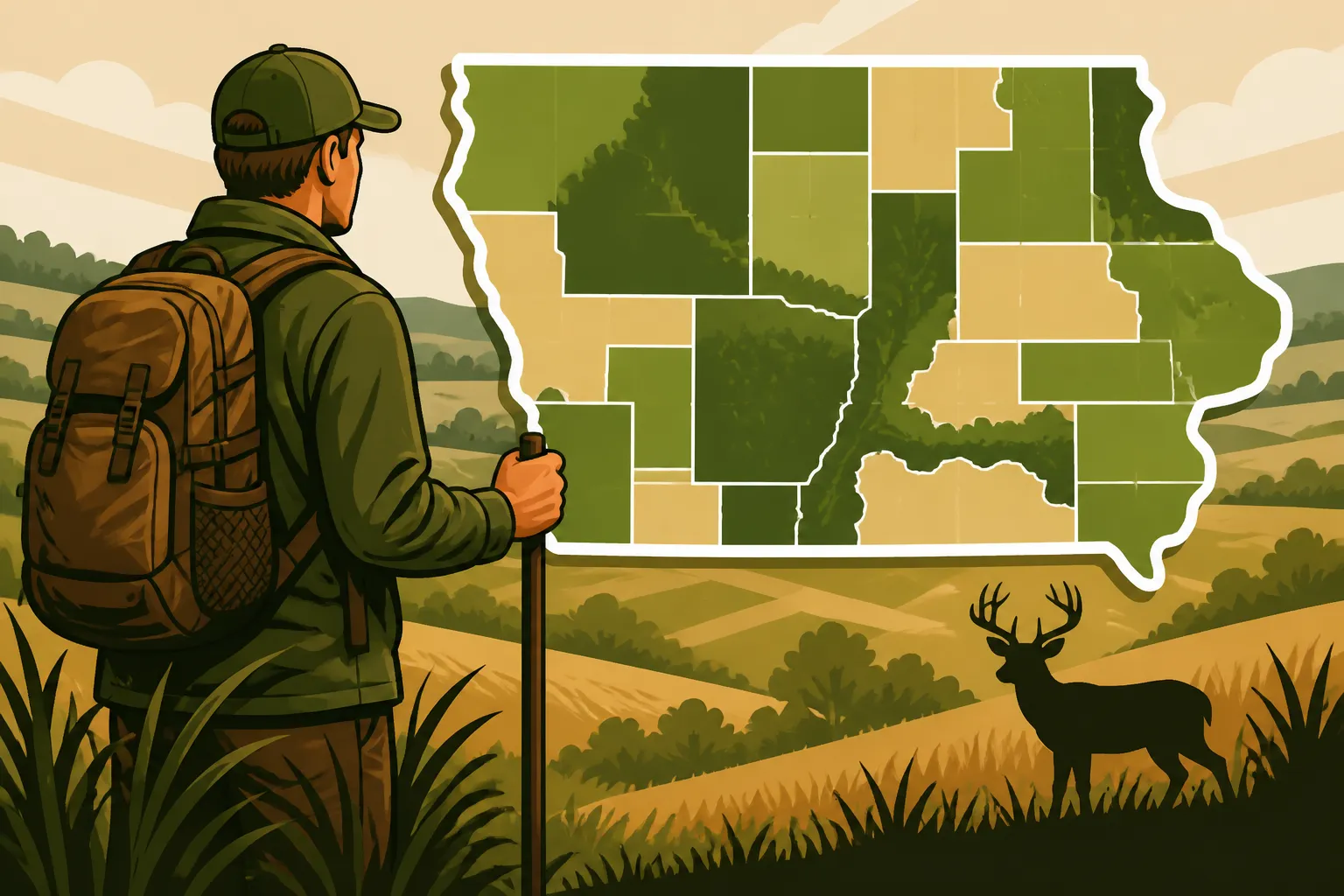
Beyond the physical signs, your most valuable tool will be the Iowa Hunting Atlas. This online resource, also often available as a mobile app, overlays public and IHAP lands on detailed aerial maps. Before you even leave the house, you should be using this atlas, or a robust mapping app like GoHunt, to identify the boundaries, designated parking areas, and any specific walk-in rules. GoHunt, for example, allows you to download maps for offline use, which is invaluable in areas with spotty cell service. Always double-check access points – some tracts might have specific entry points to minimize disturbance to adjacent private property or to guide hunters toward parking that doesn't block agricultural access.
Strategic Foot Scouting Techniques for IHAP Tracts
Once you've identified your IHAP tract on the map and understand its basic access, it's time to hit the ground. But just walking aimlessly won't cut it. You need a deliberate, strategic approach to foot scouting that maximizes your information gathering while minimizing your impact on the deer.
The Low-Impact Reconnaissance Mission
Your initial scouting trips should be exactly that: reconnaissance. Think like a military scout, observing without being observed, gathering intelligence without making a big fuss. The goal is to get a lay of the land, understand deer travel patterns, and identify potential stand locations, all while leaving as little human scent and disturbance as possible. This means choosing the right time to scout.
The absolute best times for initial low-impact scouting are typically in the off-season, like late winter after sheds have dropped but before green-up, or in early spring. During these periods, deer are less pressured, and the lack of foliage allows for much better visibility of trails, rubs, and old bedding areas. A light snow cover can be a phenomenal asset, revealing every deer track and travel route from the previous night, giving you an undeniable picture of their movement patterns. Avoid scouting too close to season opener, especially if you plan to hunt that specific tract, as you risk alerting deer to your presence.
Deciphering Terrain and Cover on Foot
Iowa’s landscape, even in IHAP tracts, is often a mosaic of timber, creek bottoms, CRP fields, and agricultural land. Learning to read these diverse habitats is key. As you walk, pay close attention to how deer might use different features. For instance, dense cedar and locust thickets often provide excellent thermal and security cover, making them prime bedding areas, especially on north-facing slopes that block cold winter winds.
Timber draws and creek corridors act as natural highways for deer, connecting bedding areas to food sources. Take your time to really understand Reading an Iowa Timber Draw for Deer Sign. Look for pinch points where deer are funneled through a narrow strip of cover, or saddles on ridges that create easier travel paths. CRP fields, especially those with taller, mature grasses, are also critical for bedding. Look for beds within these grasses, usually in thicker patches offering good concealment. Understanding CRP Grass and Where Bucks Bed can tell you a lot about how deer utilize open country. Mapping apps like GoHunt can highlight elevation changes and different vegetation types, giving you a powerful starting point to predict deer movement.
Finding the Deer Sign That Matters
Not all deer sign is created equal. When scouting on foot, you need to differentiate between old, stale sign and fresh, active sign that indicates current deer usage. Fresh rubs will be light in color where the bark has just been scraped off, often with sap still evident. Older rubs will be darkened and weathered. Similarly, fresh deer droppings will be moist and shiny, while older droppings will be dry and dull. Tracks in soft soil or mud will show crisp edges if fresh, blurring over time.
Focus your search on transition areas: the edges where timber meets CRP, where a creek bottom opens into a crop field, or where different types of cover converge. These are high-traffic zones. Look for trails that are well-worn and intersect with each other, especially those leading from probable bedding areas towards food sources or water. Scrapes, particularly during the pre-rut and rut, are also critical indicators. Look for them along established travel corridors, and always check for an overhead licking branch, which bucks will utilize repeatedly. Remember, deer are creatures of habit, and fresh, abundant sign points to recent, consistent use.
Practical Tools and Timing for Effective IHAP Scouting
Having the right gear and understanding the seasonal nuances of deer behavior will make your foot scouting efforts infinitely more productive and less disruptive.
Essential Gear for Your Scouting Expedition
Your scouting gear should prioritize stealth, utility, and efficiency. First and foremost, wear quiet, scent-free clothing and rubber boots. Rubber boots are paramount for reducing human scent transfer to the ground and keeping your feet dry in wet Iowa terrain, from dew-soaked CRP to muddy creek crossings. Secondly, a reliable GPS or smartphone with a mapping app like GoHunt or onX is non-negotiable. These apps allow you to mark potential stand locations, bedding areas, rubs, scrapes, and ingress/egress routes. You can drop pins for bedding zones you want to avoid on a hunt, or for that perfect pinch point you found.
Binoculars are also essential for observing distant areas without needing to walk into them. This reduces your footprint and allows for quicker assessment of larger areas. A good pair of 8×42 binoculars offers a wide field of view and sufficient magnification for timber and field edge observation. While not strictly "scouting" gear in the traditional sense, understanding Trail Camera Placement on Iowa Public Land is vital, as cameras can provide valuable, non-intrusive intel after your initial foot scout. Just be sure to adhere to all DNR regulations regarding their use on public and IHAP lands.
Seasonal Scouting Strategies and Timing
The best time to scout depends on what information you're trying to gather. Early spring (March-April) is ideal for "bones" scouting – understanding the land's fixed features. With no leaves on the trees and minimal undergrowth, you can easily spot old rubs, established trails, benches, saddles, and potential water sources. This is also a great time to find shed antlers, which directly indicate where bucks were spending time.
As summer progresses (July-August), switch to a focus on food. E-scouting can identify agricultural fields and natural browse, but foot scouting confirms active food plots, acorn production, or areas where deer are consistently feeding on forbs and grasses. This helps predict early-season movement. Finally, a post-rut, pre-snow scout (late November-December) can reveal late-season food sources and bedding areas, helping you understand how deer survive during the coldest months and how they react to increased hunting pressure. A fresh snow can be a game-changer for tracking active deer, offering a clear picture of their daily routines.
Managing Pressure and Leaving No Trace
One of the biggest concerns with foot scouting, especially on smaller IHAP tracts, is the potential to "burn out" the area. This means disturbing deer so much that they change their patterns or even leave the property. To avoid this, always consider Access Routes That Avoid Bedding Areas. Plan your routes to approach from downwind, move slowly, and be as quiet as possible. If you jump deer, note where they came from and where they went; this is valuable information about bedding and escape routes.
Minimizing your impact is paramount. This includes adhering to the principles of Leaving No Trace on Iowa Walk-In Ground. Pack out everything you pack in, and avoid breaking branches or cutting shooting lanes during scouting trips, unless you plan to set a stand immediately and have permission. Over-scouting, especially too close to the season, can negatively affect Hunting Pressure Patterns on Iowa Public Land, making deer more nocturnal or causing them to relocate. Scout smart, scout minimally, and prioritize observation from a distance before intruding. Remember, the goal is to learn, not to alter.
Integrating E-Scouting with Boots-on-the-Ground Verification
In today's hunting world, effective scouting is a two-pronged attack: leveraging powerful digital tools and confirming those insights with your own eyes and boots on the ground. Neither is truly sufficient without the other.
The Power of E-Scouting from Home
Before you ever set foot on an IHAP tract, you should spend considerable time with your eyes glued to a computer or tablet screen. E-scouting, or digital reconnaissance, allows you to analyze vast amounts of land from the comfort of your home, saving you countless miles and minimizing physical disturbance to the property. Utilize resources like the Iowa Hunting Atlas, GoHunt, or onX to pour over aerial imagery. Look for changes in vegetation, identifying timber stands, open fields, wetlands, and dense cover. Pay close attention to topographical maps to understand elevation changes, ridges, and valleys. Deer will almost always choose the path of least resistance, especially when traveling between bedding and feeding areas, or when moving with the wind. Identifying these natural funnels and travel corridors is a key aspect of E-Scouting Iowa Farm Country From Home.
Look for features like inside corners of crop fields, which often act as natural ambush points, or narrow creek corridors that funnel deer movement. Identify potential bedding areas like thick cedar swamps or dense sections of CRP that offer thermal and security cover. You can mark these points digitally as waypoints or "points of interest." This initial e-scouting phase allows you to narrow down vast areas into manageable segments, creating a much more efficient plan for your actual foot scouting. Think of it as creating a preliminary treasure map, highlighting where the "X" marks might be.
Confirming Digital Discoveries with Physical Presence
Once you’ve done your homework digitally, it’s time to hit the ground and verify your findings. The real world often looks different than a satellite image. That "thick timber" might be open understory, or that "perfect funnel" might be too swampy to travel. Your foot scouting mission is to confirm, deny, and refine your e-scouting assumptions.
Use the waypoints you marked on GoHunt or onX to guide your walk. Did that ridge saddle look as good in person as it did on the map? Is the deer sign consistent with what you expected? You might discover new features not visible from the air, like subtle terrain breaks, hidden water sources, or specific types of browse that deer are currently hammering. This is where you can confirm active bedding areas, identify specific trees suitable for a stand (remembering Portable Stand Rules on Iowa Public Land), and find the freshest deer sign. It’s a dynamic process of adjusting your mental map, understanding how deer are actually using the landscape, and connecting the dots between your digital insights and the undeniable reality on the ground.
IHAP Scouting Checklist & Seasonal Priorities
To help you stay organized and make the most of your foot scouting efforts, here’s a quick reference table outlining key priorities and what to look for based on the season.
| Season | Primary Focus Areas | What to Look For | Key Tools & Tips |
|---|---|---|---|
| Late Winter | Bedding, Travel Corridors, Structure | Old rubs, established trails, terrain features, shed antlers | Binoculars, mapping apps, quiet movement, focus on "bones" of the land. |
| Early Spring | Structure, Early Browse, Water | Old sign, new green growth, water sources, natural funnels | Rubber boots for wet ground, map potential stand trees, check for When Iowa IHAP Access Starts and Ends. |
| Summer | Food Sources, Early Season Sign | Crop field edges, natural food plots, limited fresh sign | E-scouting for crop types, light foot traffic, observe from a distance. |
| Early Fall | Current Activity, Rut Funnels | Fresh rubs/scrapes, active trails, current food sources | Thermal/security cover, mapping apps, identify bottlenecks, avoid over-pressuring. |
Disclaimer
Always consult the official Iowa Department of Natural Resources (DNR) regulations before hunting or scouting. Rules and seasons can change, and it is your responsibility to be aware of and comply with all current laws.