Early Muzzleloader Season Deer Behaviour
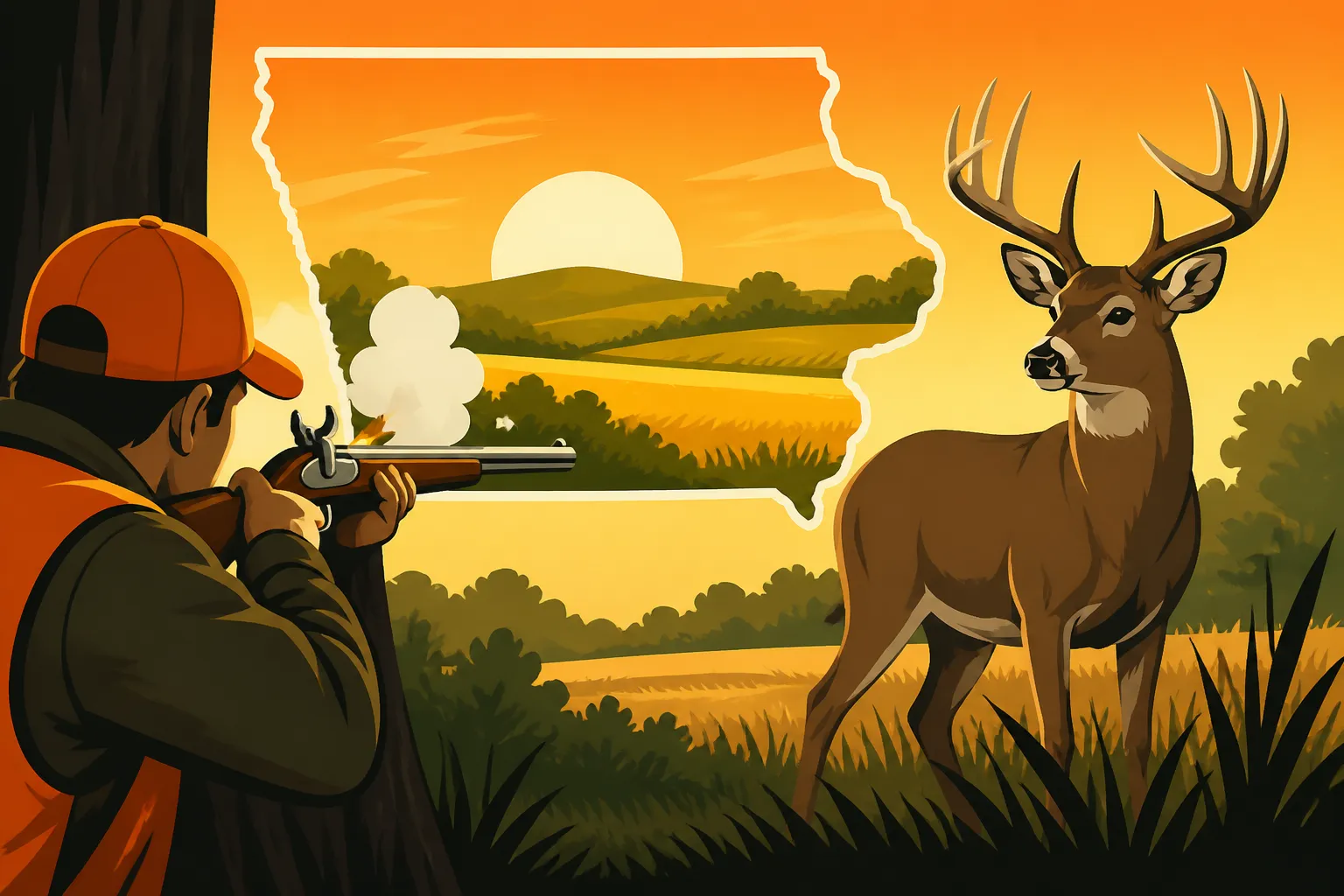
Stepping into the timber with a muzzleloader in October can feel a bit like a gamble. You're hoping for that crisp, cool weather that gets deer on their feet, but more often than not, Iowa’s early muzzleloader season throws us a curveball with unseasonably warm days and deer still largely sticking to their summer patterns. It’s frustrating when you’ve put in the work, but the deer just aren't cooperating. This guide is all about peeling back the layers of early muzzleloader season deer behavior, helping you understand why they do what they do, and giving you the insights to adapt your hunting strategy for success, even when Mother Nature isn’t playing along.
Understanding Early Muzzleloader Deer Behavior in Transition
The early muzzleloader season often falls during a fascinating, sometimes frustrating, transitional period for Iowa's whitetails. It’s not quite the full-blown rut, and it’s definitely not late season. Deer are shifting from their summer routines, but they haven't yet committed to the intense breeding-focused movements that will define November. This in-between time means you need a keen eye for subtle clues and an understanding of what truly motivates deer during this window.
Still on Summer Food Sources
When the early muzzleloader season opens, especially if we've had a warm fall, deer are still very much tied to consistent, high-energy food sources. Forget about them wildly cruising for does just yet; their stomachs are still their primary drivers. This means those sprawling agricultural fields and timbered food plots are your best friends.
Consider the vast cornfields that dominate much of Iowa’s landscape. In early October, many of these fields are still standing, providing both an incredible food source and unparalleled bedding cover. Deer will spend entire days and nights within these fields, only occasionally venturing out into adjacent timber or bean fields. Similarly, if bean fields have been harvested, deer will heavily browse the dropped beans, making those edges prime cruising lanes during low-light hours. Don't overlook natural food sources either. A good acorn crop, especially from white oaks, can pull deer out of the fields and into the timber. Pay close attention to any areas where nuts are dropping; deer will often abandon other food sources for a fresh acorn buffet.
Water, especially in drier parts of the state or during an extended warm spell, becomes a critical resource. Deer need to hydrate, and even small, isolated ponds or seeps in a creek bottom can act as magnets. If you can find a travel corridor between a primary food source and a secluded water hole, you've likely found a major piece of the puzzle. This ties directly into tactics for Early-Season Bowhunting Over Water, where understanding these hydration points is paramount.
Bedding Areas and Secure Cover
Deer in early October, particularly mature bucks, prioritize security above almost everything else. They're still wary from summer scouting pressure and haven't fully let their guard down. This means their bedding areas will be in the thickest, most impenetrable cover they can find, often adjacent to or within their preferred food sources.
Think about dense cedar thickets, multiflora rose patches, or the deep, gnarly tangles of river bottom timber. These spots offer overhead cover, thermal regulation, and a sense of security that deer crave. In farm country, standing cornfields provide incredible daytime bedding. It's not uncommon for a mature buck to spend the entire day bedded deep inside a cornfield, only emerging as shooting light fades. Understanding how to read Cedar and Locust Thickets as Bedding Cover or CRP Grass and Where Bucks Bed can be a game-changer for early season success. Identifying these areas, and then figuring out low-impact ways to hunt the travel routes leading into and out of them, is key. This is where apps like GoHunt, with their detailed aerial imagery and public land overlays, become invaluable for identifying those hidden sanctuaries that other hunters might overlook.
The transition from summer to fall means deer might also shift from more open, summer bedding to denser, more protective cover as temperatures begin to drop and hunting pressure mounts. However, in the early muzzleloader season, this shift is often not complete. They’re still prone to using those more relaxed summer beds if the weather is warm and pressure is minimal.
The Influence of Weather and Pressure on Movement
Two of the biggest factors dictating deer behavior during the early muzzleloader season are often beyond our control: the weather and the amount of hunting pressure. These elements can drastically alter deer movement, turning what looks like a promising spot into a ghost town, or vice versa.
Warm Temperatures and Suppressed Daytime Activity
Let's be honest, an "early" muzzleloader season in Iowa often means "warm" muzzleloader season. We've all experienced those frustrating October days where the mercury climbs into the 60s or even 70s, making you question why you're even out there in full camo. Unfortunately, warm temperatures are a massive suppressor of deer movement, especially during daylight hours.
When it's warm, deer simply don't need to move as much to regulate their body temperature or to find food. They'll often stay bedded in the thickest cover, conserving energy and waiting for cooler, darker hours. You might see some brief movement at dawn and dusk, but the midday lull can be absolutely soul-crushing. This is precisely why strategies for October Bow Season Heat Strategy are so relevant; the principles apply directly to early muzzleloader. Focus your efforts on the first and last hours of legal shooting light. Those mid-morning and mid-afternoon hours are often best spent back at camp, resting, or glassing from a distance. Don't expect to see a lot of cruising bucks at noon when it's 70 degrees. This period is also often associated with The October Lull and Whether It Is Real, where hunters report a significant drop in deer activity. Understanding that this lull is often weather-driven, rather than a universal deer phenomenon, can help you manage expectations and plan accordingly.
The trick is to be patient and persistent, and to be in the woods when conditions are just right – even if it’s only for a short window. A cold front, even a slight one, can trigger a noticeable increase in activity, so keep a close eye on weather forecasts and be ready to capitalize on any dip in temperature.
Early Season Hunter Pressure
Another critical, and often underestimated, factor is hunter pressure. Iowa’s archery season is typically well underway by the time early muzzleloader season opens, and deer, especially mature bucks, have already felt some level of disturbance. Even if you're hunting public land, the cumulative effect of archers, hikers, mushroom hunters, and general human activity starts to condition deer to become more nocturnal and to seek out less pressured areas.
Public lands, while offering incredible opportunities, can see significant pressure during this time. Deer on these tracts quickly learn to avoid roads, parking areas, and common access points. They will gravitate towards deep, overlooked pockets of cover, often utilizing difficult-to-access terrain like steep creek bottoms or dense draws that fewer hunters are willing to tackle. This makes Hunting Pressure Patterns on Iowa Public Land a crucial topic to understand. Using mapping tools like GoHunt or the Iowa DNR's Hunting Atlas to identify remote access points and potential sanctuary areas can give you a significant advantage. Focus on areas that require a longer walk, or that are naturally buffered by tough terrain or private land.
Private land also feels pressure, albeit often in different ways. If nearby properties are heavily hunted, deer may shift onto your ground if it offers more security. Conversely, if your private land is getting hammered, deer might bail for neighboring properties. It’s a dynamic environment, and understanding the ebb and flow of pressure is just as important as knowing where the acorns are dropping. Always prioritize low-impact access routes that minimize your disturbance and keep you undetected when going to and from your stand. Learning about Access Routes That Do Not Bump Deer can make or break your early muzzleloader hunt.
Strategies for Early Muzzleloader Success
Knowing how deer behave during the early muzzleloader season is only half the battle; the other half is figuring out how to adapt your hunting strategies to capitalize on those patterns. This season demands a blend of careful planning, diligent scouting, and a willingness to be flexible.
Meticulous Scouting and Observation
Success in early muzzleloader season hinges on thorough scouting. This isn’t just about looking for rubs and scrapes, which are often minimal this early, but about identifying consistent food sources, secure bedding cover, and the travel corridors that connect them. Pre-season scouting, well before the leaves drop, gives you the clearest picture of natural funnels, pinch points, and the overall lay of the land. This is where Scouting Iowa Public Land Before the Opener really pays off.
Start by poring over aerial maps. Use tools like GoHunt to identify standing crop fields, dense timber blocks, water sources, and any natural barriers that might funnel deer movement. Look for subtle changes in topography, like benches or saddles, that deer might use to navigate rolling terrain. Pay special attention to Reading Aerial Imagery for Bedding Cover and Hunting Inside Corners of Crop Fields where deer often transition between food and cover. Once you have some potential spots identified on a map, boots on the ground scouting becomes essential. Look for fresh tracks, droppings, and browse lines that confirm current deer activity.
Trail cameras are another indispensable tool for understanding early season deer behavior. Place them on trails leading to and from food sources, near water holes, or along suspected travel corridors. This will give you a timestamped record of deer movement, allowing you to pinpoint their preferred entry and exit times, and identify specific animals. For this season, focus on areas with consistent food and water, which deer will be frequenting even in warm weather. Knowing the best strategies for Trail Camera Placement on Iowa Public Land can provide crucial intelligence.
Smart Stand Placement and Low-Impact Access
With deer still relatively wary and often moving primarily at dawn and dusk, your stand or blind placement, combined with a stealthy access route, is paramount. You need to be able to get into and out of your hunting spot without alerting deer. This often means long walks, utilizing natural terrain features for cover, and paying obsessive attention to wind direction.
For stand placement, focus on pinch points or funnels that connect bedding areas to feeding grounds. These could be narrow strips of timber between fields, river oxbows, or even fence crossings that deer habitually use. Consider a setup that allows for an evening hunt near a food source, and a morning hunt catching deer as they return to bed. If you're targeting standing corn, setting up on a timber edge where deer might enter or exit is a classic strategy, and understanding Standing Corn and Bean Field Deer Patterns is crucial. For early muzzleloader, especially if it's warm, being closer to water sources can also be a productive strategy, similar to Early-Season Bowhunting Over a Pond.
Always, always consider the wind. During early season, thermals can be tricky, especially in river bottoms or rolling terrain. Morning thermals often fall, while evening thermals rise. Try to choose a stand site that keeps your scent out of the primary bedding and feeding areas. This might mean walking a long way around to approach from an unexpected direction. Remember, your goal is to be a silent, invisible predator, and minimizing your impact is the best way to keep deer acting naturally.
| Factor | Impact on Early Muzzleloader Deer Behavior | Strategic Adaptation |
|---|---|---|
| Warm Temperatures | Suppresses daytime movement; increases nocturnal activity. Deer conserve energy. | Focus on dawn/dusk hunts; target cooler days/cold fronts. Prioritize water sources. |
| Abundant Food (Crops/Acorns) | Deer are heavily patterned to specific food sources; less random cruising. | Scout heavily for current preferred food. Hunt transition areas leading to/from these sources. |
| Hunter Pressure | Deer become more nocturnal, seek out thicker, less accessible cover. | Target remote areas; use low-impact access; hunt weekdays if possible; consider private land. |
| Bedding Security | Deer remain in dense cover during daylight. | Identify thickest cover near food/water. Hunt entry/exit points, not directly in beds. |
| Pre-Rut Phase | Minimal rut-related cruising; bucks still in bachelor groups or solitary. | Avoid aggressive calling/decoying. Focus on food/bedding patterns. |
Limited Calling and Decoying Potential
Unlike the chaotic frenzy of the peak rut, the early muzzleloader season isn't generally the time for aggressive calling or elaborate decoy setups. Bucks are typically not yet obsessed with finding does, and their social hierarchy isn't fully established for breeding.
That said, subtle calling can sometimes work. A soft doe bleat or a few quiet social grunts might pique a buck's curiosity, especially if he's alone or feeling a bit lonely. However, loud rattling or snort-wheezes are likely to scare off deer rather than attract them. Save those for When the Iowa Rut Peaks. If you do decide to try calling, keep it conservative and realistic. Less is almost always more in the early season.
Decoying is also generally less effective, as it relies on deer being visually engaged in social or breeding behaviors. A single doe decoy might work on a field edge if you're trying to attract a cruising buck, but it's a low-percentage play. If you do use a decoy, ensure it's placed strategically to appear natural and always consider wind direction so deer approach from downwind, giving you a shot. For more on this, check out Decoy Placement and Wind Direction. Most hunters will find their time better spent focusing on proven food-to-bedding travel routes rather than relying on calling or decoying during this early window.
Ultimately, early muzzleloader season in Iowa is a test of patience and woodsmanship. It's about adapting to the conditions you're given, rather than wishing for something else. By understanding deer behavior during this transitional period, and adjusting your tactics accordingly, you'll greatly increase your odds of punching that early season tag.
Disclaimer
Always consult the official Iowa Department of Natural Resources hunting regulations for the most current and comprehensive rules and season dates before heading into the field. This guide offers general advice and perspectives, but regulations can change, and it's every hunter's responsibility to know and follow the law.