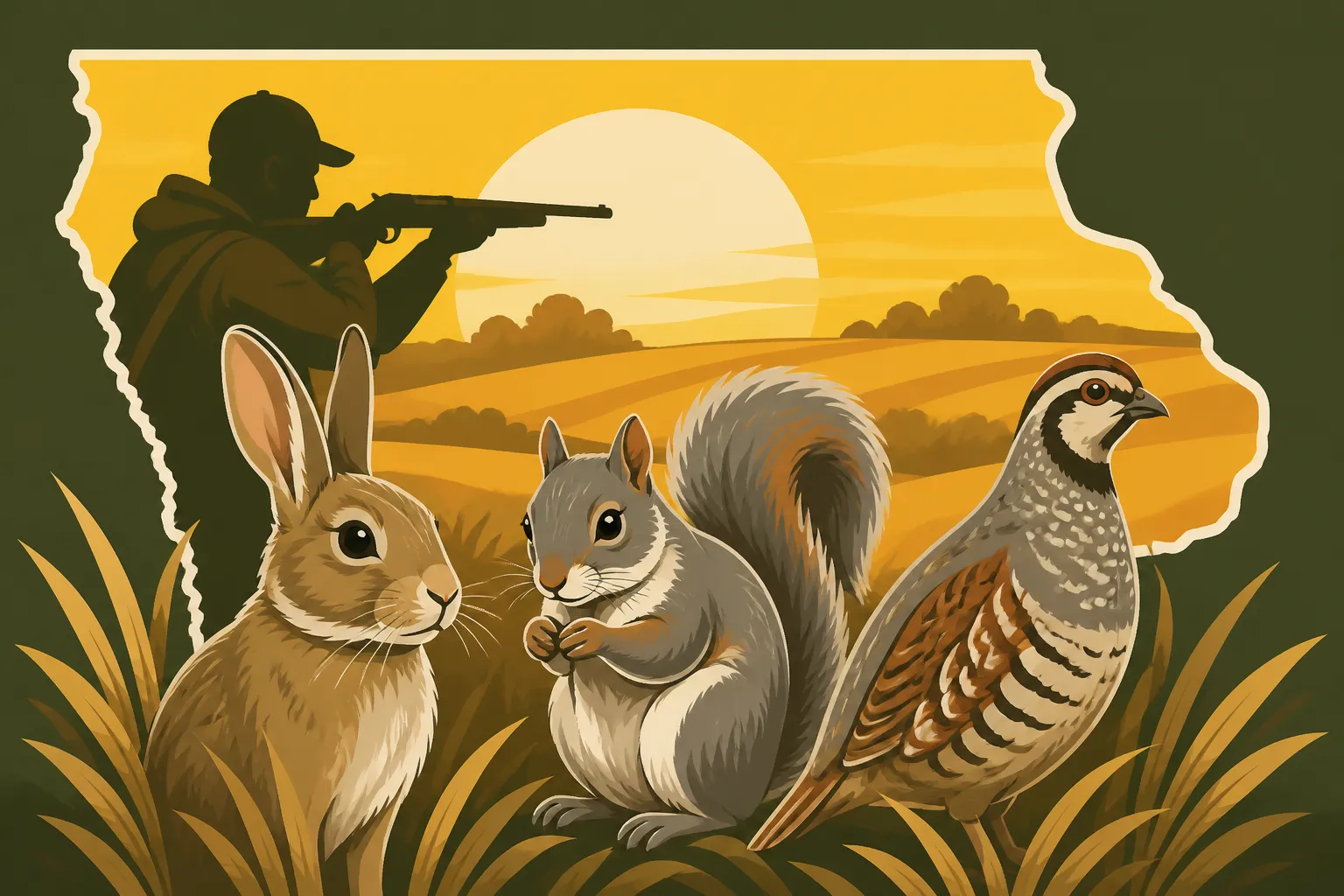
Iowa Small Game: Rabbit, Squirrel and Partridge
It's easy to get caught up in the allure of Iowa's legendary whitetail deer or the thunderous flush of pheasants, but sometimes, the best hunting experiences are found in the pursuit of smaller game. Many hunters, myself included, have felt the frustration of a slow deer season or the crowded public land during pheasant opener. This guide is here to remind you that Iowa offers fantastic opportunities for rabbit, squirrel, and partridge hunting – accessible, exciting, and often overlooked adventures that can fill your freezer and your soul.
The Undeniable Appeal of Iowa Small Game Hunting
While the big game headlines often dominate the hunting world, there's a unique charm and rewarding experience to be found in pursuing Iowa's smaller critters. For many, small game hunting isn't just a way to put meat on the table; it's an essential part of connecting with the land, honing basic hunting skills, and enjoying the outdoors without the intense pressure often associated with larger species. It offers a different pace, a chance to really slow down and observe.
Beyond the Big Game Focus
Let's be honest, everyone wants to draw that coveted Iowa nonresident deer tag or experience a phenomenal pheasant hunt. But focusing solely on big game or high-profile upland birds can lead to long periods of inactivity or disappointment if conditions aren't perfect. Small game provides a fantastic alternative, offering a longer, more flexible season and often less competition for prime spots. You can head out for a few hours on a whim, knowing you'll likely encounter game, and that's a huge stress reliever for many hunters. It’s also a perfect way to introduce new hunters to the sport without overwhelming them with complex setups or long, cold sits.
Accessibility for All Skill Levels
One of the greatest advantages of small game hunting is its accessibility. Whether you're a seasoned veteran looking for a relaxed outing or a complete novice taking your first steps into the hunting world, rabbits, squirrels, and partridge offer a forgiving and engaging challenge. You don't necessarily need specialized, expensive gear, elaborate scouting plans, or perfect camouflage. A simple shotgun or a .22 rifle, some warm clothes, and a willingness to walk are often all that's required. It's an excellent training ground for young hunters, allowing them to learn gun safety, tracking, and field craft in a low-pressure environment, building confidence before they tackle bigger game.
The Joy of the Hunt and Table Fare
There’s a deep satisfaction that comes from a successful small game hunt. The anticipation of a rabbit bursting from a brush pile, the precise shot on a squirrel high in an oak, or the explosive flush of a covey of partridge – these moments are thrilling. And once the hunt is over, the reward continues. Small game, particularly rabbit and squirrel, provides incredibly lean, flavorful, and sustainable meat for the dinner table. There’s something truly special about serving a meal that you’ve harvested yourself, knowing exactly where it came from and the effort that went into it. It fosters a deeper appreciation for nature's bounty and the cycle of life.
Chasing Cottontails: Iowa Rabbit Hunting
Rabbit hunting in Iowa is a time-honored tradition, harkening back to simpler times and providing endless excitement. The common cottontail is abundant across the state, and chasing them through brushy cover on a crisp fall or winter day is an experience every hunter should enjoy. They might be small, but they’re incredibly quick and cunning, making for a challenging and rewarding pursuit.
Prime Rabbit Habitat and Behavior
Cottontail rabbits are creatures of edge habitat. They thrive where different types of cover meet, providing them with food, shelter, and escape routes. Think about those transitional zones: the edges of crop fields, overgrown fence rows, thickets, brush piles, tall grass, and dense timber fringes. They especially love areas with multiflora rose, osage orange hedges, and old farmsteads where collapsing buildings and discarded machinery create perfect hiding spots. In winter, they'll often huddle in the thickest cover available, trying to stay warm and evade predators. Understanding their preferred habitat is key to finding them; if you're not seeing rabbits, you're likely not in the right kind of cover. When snow hits, their tracks become obvious, leading right to their hiding places, which can be an excellent way to pinpoint activity. I've often found success by walking the edges of picked cornfields that border a dense woodlot or a CRP field.
Effective Rabbit Hunting Strategies
There are a few classic ways to hunt rabbits, each with its own charm and effectiveness. The most common is simply walking them up. This involves slowly working through prime cover, flushing rabbits from their hiding spots. It's often best done with a partner or two, spreading out to cover more ground and pushing rabbits towards each other. Remember to pause frequently; rabbits often hold tight, but will bolt if they think you've passed. A good dog, especially a beagle, can be an absolute game-changer, scenting rabbits and pushing them out of dense cover that you might otherwise miss. If you're hunting without a dog, consider focusing on "Rabbit Hunting Brush Piles", as these offer prime cover. Another great tactic, particularly later in the season, is to target brush piles and other dense escape cover that deer might also use. You'd be surprised how many rabbits you'll find hunkered down in those spots. For a more detailed look at general tactics, checking out Working Cover Edges Without a Dog can also offer insights relevant to rabbit hunting.
Essential Gear for Rabbit Hunters
For rabbit hunting, you don't need a massive arsenal, but a few key items will make your hunt more enjoyable and productive. A 12 or 20-gauge shotgun with improved cylinder or modified choke is perfect, loaded with 6 or 7 ½ shot. The open patterns are great for quick shots on fast-moving targets. If you prefer a more challenging hunt, a .22 rifle can be a blast, requiring more precise shot placement. You'll also want durable, briar-resistant brush pants or chaps to protect your legs from thorns and thick cover. A good pair of waterproof boots is essential, especially when traversing damp ditches or snowy fields. And don't forget a game vest or a small backpack to carry your harvest, some water, and perhaps a snack. When planning your hunt, remember that mapping tools like the ones from GoHunt can be invaluable for identifying potential rabbit habitat on public lands or assessing access points on private ground.
Nimble Targets: Iowa Squirrel Hunting
Squirrel hunting is a fantastic way to introduce new hunters to the sport and provides hours of challenging fun for seasoned veterans. Iowa is home to both gray squirrels and fox squirrels, both offering delicious table fare and plenty of opportunities. The quiet stealth required to get close to these wary creatures hones skills that translate well to other types of hunting.
Understanding Iowa's Squirrel Species and Their Haunts
In Iowa, you'll primarily encounter fox squirrels and gray squirrels. Fox squirrels are larger, with reddish-brown fur, and tend to prefer more open timber stands, often venturing into cornfields for food. Gray squirrels are smaller, as their name suggests, and typically inhabit denser, mature hardwood forests, particularly those with a strong presence of oak and hickory trees, which provide their primary food source. Both species are most active during the early morning and late afternoon, foraging for nuts and seeds. They'll often build leaf nests high in trees or utilize tree cavities for shelter. Identifying the right tree species is crucial. Look for oaks, hickories, walnuts, and even some maple varieties. A good hunting spot will have a strong canopy for cover and plenty of mast crop on the ground or still clinging to the branches. If you're curious about specific timber patterns, our article on Reading an Iowa Timber Draw for Deer Sign can offer insights into how deer use these areas, which often overlap with prime squirrel habitat.
Stalking and Still-Hunting Squirrels
There are a couple of primary methods for chasing squirrels. Still-hunting involves moving very slowly and deliberately through the woods, pausing frequently (5-10 minutes at a time) to scan the trees and ground for movement. Squirrels are often masters of camouflage and will freeze when they detect movement, so patience is paramount. Use your binoculars to scan branches and tree trunks. When you spot one, try to get a clear shot before it disappears around the trunk.
Stalking, on the other hand, involves a more direct approach once you've identified an active area. This might mean slowly creeping toward a specific tree where you've seen activity, trying to keep the tree between you and the squirrel. Squirrels, especially fox squirrels, can be surprisingly bold when they're focused on foraging. Both methods require quiet movement, keen observation, and good woodsmanship. Early season, when leaves are still on the trees, can be tough for visibility, but as fall progresses and leaves drop, it becomes much easier to spot them. For those interested in more advanced tactics, Squirrel Hunting Iowa Oak Timber provides a deeper dive into optimal strategies for these elusive rodents.
Key Equipment for Successful Squirrel Pursuits
For squirrel hunting, a small-caliber rifle is the weapon of choice for many. A .22 long rifle is ideal, offering excellent accuracy at typical squirrel ranges and minimal meat damage. Some hunters also use small-gauge shotguns (like a .410 or 28-gauge) with light shot for squirrels in thick cover or when multiple squirrels are present, but the rifle offers a more challenging and precise hunt. Beyond your firearm, a good pair of binoculars (8x or 10x) is incredibly useful for spotting squirrels high in the canopy or detecting subtle movements. A comfortable seat cushion or small folding stool can be a lifesaver during still-hunting sessions. A small game vest or pack will hold your ammunition, water, and your harvested squirrels. Don't forget bug spray in the early season and warm layers as the weather turns colder. When preparing your hunt, online resources like the mapping functions available through GoHunt can assist in identifying public timberlands with high concentrations of oak and hickory, making your scouting efforts more efficient.
The Elusive "Huns": Hunting Hungarian Partridge in Iowa
Hungarian partridge, often simply called "Huns," are a lesser-known but incredibly rewarding upland bird to pursue in Iowa. They offer a unique challenge, often holding tighter than pheasants but flushing with explosive speed. While not as widespread as pheasants, finding a covey of Huns and working them is a truly memorable experience.
Where to Find Iowa's Hungarian Partridge
Hungarian partridge in Iowa are primarily found in the northern half of the state, particularly in the north-central and northwest regions. Unlike pheasants, which often prefer tall grass and cattails, Huns favor open, expansive agricultural landscapes with smaller fields, scattered fencerows, and areas with winter wheat or alfalfa. They thrive in areas with diverse crop rotations and often use stubble fields, corn stalks, and grassy waterways for cover and food. They are often seen feeding in the mornings and evenings in these open areas, making them slightly more predictable. When scouting, look for gently rolling terrain with a patchwork of crop fields, and pay close attention to the edges where these fields meet short, sparse cover. Understanding Iowa Pheasant Population Cycles can give you an idea of general upland bird trends, but remember Huns have slightly different habitat preferences.
Tactics for Locating and Flushing Partridge
Hunting Hungarian partridge requires a keen eye and a patient approach. They are notorious for holding incredibly tight, often letting hunters walk right past them before exploding into flight. This can be frustrating, but it also makes the flush incredibly exciting. The best way to hunt Huns is often by walking slowly and methodically, covering every inch of likely habitat. If you have a well-trained bird dog, they can be invaluable for scenting out these birds and holding point. For hunters without a dog, a line of walkers, similar to Blocking and Driving Iowa Grass Strips for pheasants, can be effective, though Huns may run rather than flush if given the chance. When a covey flushes, try to mark where individual birds fly down, as Huns often scatter but then regroup, offering opportunities for follow-up flushes. Pay attention to how the wind affects their movement and your scent dispersion. Knowing the general Iowa Upland Bird and Waterfowl Seasons will also ensure you're in the field at the right time.
Specialized Gear for Partridge Hunters
Since Hungarian partridge are typically found in open fields and require quick shots, a lighter, fast-swinging shotgun is often preferred. A 20-gauge or even a 28-gauge shotgun, choked improved cylinder or modified, loaded with 7 ½ or 6 shot, is a common choice. Because you'll be doing a lot of walking, comfort is key. Invest in a good pair of waterproof, comfortable upland boots and durable pants or chaps to protect against stubble and light brush. A blaze orange vest or hat is essential for safety, especially when hunting with others. A game vest with plenty of pockets for shells, water, and harvested birds is also a must-have. Keep a close eye on the weather, as colder, windier days can make locating these birds even tougher. Utilizing mapping applications like those offered by GoHunt can significantly aid in identifying suitable terrain and potential access points, helping you pinpoint those elusive Huns.
General Small Game Hunting Strategies for Iowa
Successful small game hunting in Iowa isn't just about knowing where to find the animals; it's about understanding the broader principles that apply across species. From leveraging the help of a four-legged companion to interpreting the subtle clues the land provides, these strategies will enhance your time afield.
Maximizing Success with Dogs and Without
Whether you hunt with a dog or prefer to go it alone, adapting your strategy is crucial. A well-trained bird dog or rabbit dog can exponentially increase your success and enjoyment. For upland birds like partridge, a pointing dog or flushing spaniel can locate scent, hold birds, and retrieve downed game, making the hunt much more efficient and ethical. For rabbits, beagles are legendary for their ability to trail and push rabbits out of cover. If you hunt without a dog, you'll need to rely more heavily on your scouting, knowledge of habitat, and slow, deliberate walking patterns. Instead of letting a dog find the game, you become the primary searcher, systematically covering likely areas. This means more walking and more keen observation, but it's incredibly rewarding when you make that first flush or spot that motionless squirrel. For example, when Working Pheasant Cover Without a Dog, many of the same principles apply to partridge, focusing on methodical grid patterns and understanding escape routes.
Reading the Landscape for Small Game Sign
Small game might be small, but they leave plenty of clues if you know what to look for. Tracks in mud or snow can tell you what animals are in the area and how recently they've been active. Droppings, chewed nuts, stripped bark on trees, or freshly dug burrows are all indicators of a healthy small game population. Beyond direct sign, understanding the types of cover and food sources available is paramount. Look for mosaics of different habitats: the transition zone where a picked soybean field meets a timber edge, a dense plum thicket bordering a grassy waterway, or a patch of mature oak timber with a good mast crop. The wind also plays a role; sometimes, animals will shelter on the lee side of a hill or dense cover. Online mapping tools, like the Iowa DNR's Hunter Atlas, are incredibly useful for e-scouting, helping you identify these promising areas before you even set foot in the field. Our article on E-Scouting Iowa Farm Country From Home offers valuable tips that apply to small game as well as deer.
Navigating Seasons and Weather Patterns
Small game seasons in Iowa are generally quite long, often opening in September and running through February or even March, depending on the species. This provides ample opportunity, but it also means you'll encounter a wide range of weather conditions. Early season hunts can be warm and buggy, requiring light clothing and insect repellent. Late season hunts, especially for rabbits, are often best after a fresh snow, which makes tracks easy to spot and pushes game into dense cover. Cold, crisp days can make animals more active as they forage for food. Always check the current Iowa DNR regulations for specific season dates and bag limits before heading out. Understanding how December Cold Front Deer Movement impacts larger game can also give you a sense of how weather influences all wildlife activity, pushing them to seek out consistent food and shelter, which is exactly where you want to be hunting.
Licensing, Regulations, and Seasons for Iowa Small Game
Before you head into the field to pursue rabbits, squirrels, or partridge, it's absolutely critical to understand Iowa's licensing requirements, season dates, and specific regulations. Ignoring these rules can lead to fines, loss of hunting privileges, and even endanger yourself or others. Iowa's Department of Natural Resources (DNR) works hard to manage these populations responsibly, and hunters play a vital role in that effort.
Understanding General Hunting License Requirements
To hunt small game in Iowa, residents and nonresidents alike must purchase a valid Iowa hunting license. Generally, this includes a general hunting license and often an Iowa Habitat Fee. For specific upland bird species like Hungarian partridge, you may also need to possess a Migratory Bird Hunting and Conservation Stamp (federal duck stamp) if you're hunting other migratory birds, and the Iowa Migratory Game Bird Fee, though these are typically not required solely for partridge. It's always best to consult the current Iowa Hunting Regulations booklet or the Iowa DNR website directly to ensure you have all the necessary permits. For a comprehensive overview, check out Iowa Hunter Education and Licensing Basics. Remember, there's also an age requirement for hunter education unless you're hunting under an apprentice license. If you're using a mapping system to plan your hunt, ensure your GoHunt subscription is current so you can access all the necessary regulation updates directly from their platform.
Species-Specific Season Dates and Bag Limits
Iowa has varying season dates and daily bag limits for each small game species. These are subject to change year to year, so always check the latest regulations.
- Rabbits (Cottontail and Jackrabbit): Cottontail rabbit season typically opens in early September and runs through February. Jackrabbit season is often shorter, closing earlier. Daily bag limits are usually generous for cottontails, with a possession limit often double the daily.
- Squirrels (Fox and Gray): Squirrel season often opens very early, sometimes as early as September 1st, and continues through January. Like rabbits, daily bag limits are usually quite high, reflecting their abundance.
- Hungarian Partridge: Partridge season generally aligns with pheasant season, opening in late October and running through early January. The daily bag limit is typically much smaller than pheasants, reflecting their more localized populations.
Here’s a simplified table illustrating typical seasons and bag limits (always verify with current DNR regulations):
| Species | Typical Season Dates (Approx.) | Daily Bag Limit | Possession Limit |
|---|---|---|---|
| Cottontail Rabbit | Sept 1 – Feb 28 | 10 | 20 |
| Jackrabbit | Oct 27 – Dec 1 | 3 | 6 |
| Fox & Gray Squirrel | Sept 1 – Jan 31 | 6 | 12 |
| Hungarian Partridge | Oct 27 – Jan 10 | 8 | 16 |
Note: These dates and limits are illustrative and may vary. Always check current Iowa DNR regulations.
For the most up-to-date details on Iowa Pheasant and Quail Season Dates and Iowa Upland Bird and Waterfowl Seasons, refer to the official Iowa DNR resources.
Important Safety Considerations and Rules
Safety should always be your top priority. When hunting small game with a shotgun, be absolutely sure of your target and what lies beyond it. Small game hunting often involves walking through dense cover with multiple hunters, so clear communication is essential. Blaze orange is required during many seasons, especially when gun deer seasons are open, and it’s a good idea to wear it even when not required for visibility among your hunting party and other land users. If hunting with a .22 rifle, be mindful of bullet trajectory and backstop. Never shoot at game on the skyline. Always follow the cardinal rules of firearm safety: treat every firearm as if it's loaded, never point the muzzle at anything you're unwilling to destroy, keep your finger off the trigger until your sights are on the target, and be sure of your target and what's beyond it. Additionally, if you're on public land, be aware of Hunting Pressure Patterns on Iowa Public Land and be extra vigilant. Before heading out, always let someone know where you're going and when you expect to return, especially if hunting alone.
Preparing Your Harvest: Field to Table for Small Game
Successfully harvesting small game is only half the journey. The real reward, beyond the experience itself, is the delicious, lean meat you can provide for your table. Proper field dressing, cleaning, and cooking techniques ensure that your efforts in the field are fully appreciated in the kitchen.
Field Dressing and Care in the Field
Getting your small game properly field dressed soon after the shot is crucial, especially in warmer weather. For rabbits and squirrels, the process is relatively quick and simple. Many hunters will simply gut them in the field, removing the entrails to allow the carcass to cool down. You can often remove the head, feet, and tail at this stage too. Some even skin them completely in the field, which can be easier when the carcass is still warm. Place the field-dressed animals in a game bag or a breathable sack, keeping them out of direct sunlight. If temperatures are high, consider bringing a small cooler with ice to get them cooled down quickly, especially if you have a long walk back to the vehicle. For a more detailed guide that applies to various situations, checking out Field Dressing in Warm October Weather can provide valuable insights into managing your harvest efficiently.
Home Processing and Storage Tips
Once you're home, the real cleaning begins. For rabbits and squirrels, skinning them usually involves making an incision across the back or stomach and peeling the hide off. A quick search online will yield many videos demonstrating easy methods. Once skinned, eviscerate if not already done, remove any remaining glands or undesirable bits, and then rinse the carcass thoroughly under cold water. Pat it dry with paper towels. For partridge, plucking or breasting out the bird are common options. If plucking, a hot water dip can help loosen feathers. Once cleaned, the meat can be cooked fresh or stored. For storage, wrap individual pieces tightly in plastic wrap, then butcher paper or vacuum seal bags, and freeze. Properly packaged small game can last for several months in the freezer without freezer burn.
Simple and Delicious Small Game Recipes
Small game meat is incredibly versatile and lends itself to a wide array of delicious preparations.
- Rabbit: Often compared to chicken, rabbit meat is lean and flavorful. It's excellent braised with root vegetables, slow-cooked in a stew, fried, or even grilled. A classic is "Hunter's Style Rabbit," braised with white wine, mushrooms, and herbs.
- Squirrel: Squirrel meat is also lean and delicious, often having a slightly richer flavor than rabbit. It shines in stews, gumbos, or chili. Fried squirrel is another popular choice, as is squirrel pot pie.
- Hungarian Partridge: This upland bird offers tender, delicate meat, perfect for roasting whole or breasting out and pan-searing. It pairs wonderfully with fruit sauces, wild rice, or simple herb and butter preparations. Consider a simple roasted partridge with apples and onions for an easy, gourmet-tasting meal. Don't be afraid to experiment with your favorite poultry or stew recipes; small game often substitutes beautifully.
Disclaimer
Please note that hunting regulations, season dates, and licensing requirements are subject to change annually by the Iowa Department of Natural Resources. Always consult the official Iowa DNR website or the most current Iowa Hunting Regulations booklet before planning any hunting trip to ensure you are compliant with all state laws and regulations. This guide is for informational purposes only and does not supersede official legal documents.