Best Iowa Counties for Pheasants
If you're an upland hunter in Iowa, or dreaming of coming here, you know the quest for ring-necked pheasants can feel like searching for a needle in a haystack – or, more accurately, a rooster in a cornfield. It’s easy to get overwhelmed trying to figure out where to focus your efforts for the best chances at a successful hunt. This comprehensive guide will pull back the curtain on the best Iowa counties for pheasants, explaining not just which counties to target, but why they consistently produce birds, and how you can use this information to plan your next successful pheasant hunt.
Understanding Iowa's Pheasant Landscape
Iowa is renowned for its trophy whitetails, but let's not forget the incredible pheasant hunting opportunities it offers. However, these aren't evenly distributed across the state. Understanding the factors that make certain areas pheasant havens is crucial to narrowing down your search.
The Role of Habitat and Agriculture
Pheasants, like all wildlife, are creatures of habitat. They need a specific mix of cover for nesting, brood-rearing, roosting, and winter survival, alongside a reliable food source. In Iowa, this habitat is inextricably linked to agriculture.
Imagine a section of Iowa farmland. You'll see vast fields of corn and soybeans, which provide abundant food in the fall and early winter. But pheasants can't live on row crops alone. They need tall, dense grassy cover for nesting in the spring, which protects their eggs from predators and farm machinery. They need different, often heavier, cover for brooding their chicks in the summer, offering insect-rich forage and escape routes. And perhaps most critically in Iowa's harsh winters, they require thick, protective cover to shelter from blizzards and extreme cold. Think cattail sloughs, dense brush, un-mowed waterways, and large blocks of Conservation Reserve Program (CRP) land. These areas provide sanctuary when the landscape is otherwise barren and windswept.
Unfortunately, modern agricultural practices, while incredibly efficient for food production, can sometimes reduce this crucial habitat. Large, clean fields with minimal fence rows or uncultivated corners offer little for pheasants. That's why counties with a good balance of productive farmland and robust conservation efforts, particularly ample CRP acres, tend to hold more birds. These conservation programs pay farmers to take marginal land out of crop production and plant it to native grasses and wildflowers, creating perfect pheasant real estate. It's a delicate dance between intensive farming and providing enough refuge for these resilient birds to thrive.
Iowa DNR's Roadside Survey: Your Key Data Point
When trying to figure out where the pheasants are, guessing games won't cut it. Thankfully, the Iowa Department of Natural Resources (DNR) conducts an annual roadside survey that is the single most reliable indicator of pheasant populations across the state. This isn't just some casual observation; it's a meticulously planned scientific effort.
Every August, DNR wildlife biologists and conservation officers drive specific 30-mile routes across all nine wildlife regions of Iowa. They drive these routes early in the morning, after the dew has dried but before the heat of the day, counting every pheasant they see. The data collected provides an estimate of the "birds per route" – a standardized metric that allows for year-over-year comparison and accurate regional population assessments. A higher number of birds per route generally indicates a healthier pheasant population in that area. This survey offers a fantastic snapshot of current trends and is an invaluable tool for any serious pheasant hunter. You can often find detailed breakdowns of these results by region, and even sometimes by specific counties, on the Iowa DNR's website. Understanding Iowa Pheasant Roadside Survey Results is critical for planning your hunt. The number of Birds Per Route in the Iowa Survey gives you a concrete metric to compare areas.
Pinpointing the Top Pheasant Counties
Now that we understand the underlying factors, let's talk about where Iowa's pheasant hunting shines. While results fluctuate annually, certain regions and counties consistently outperform others.
Historically Stronghold Regions
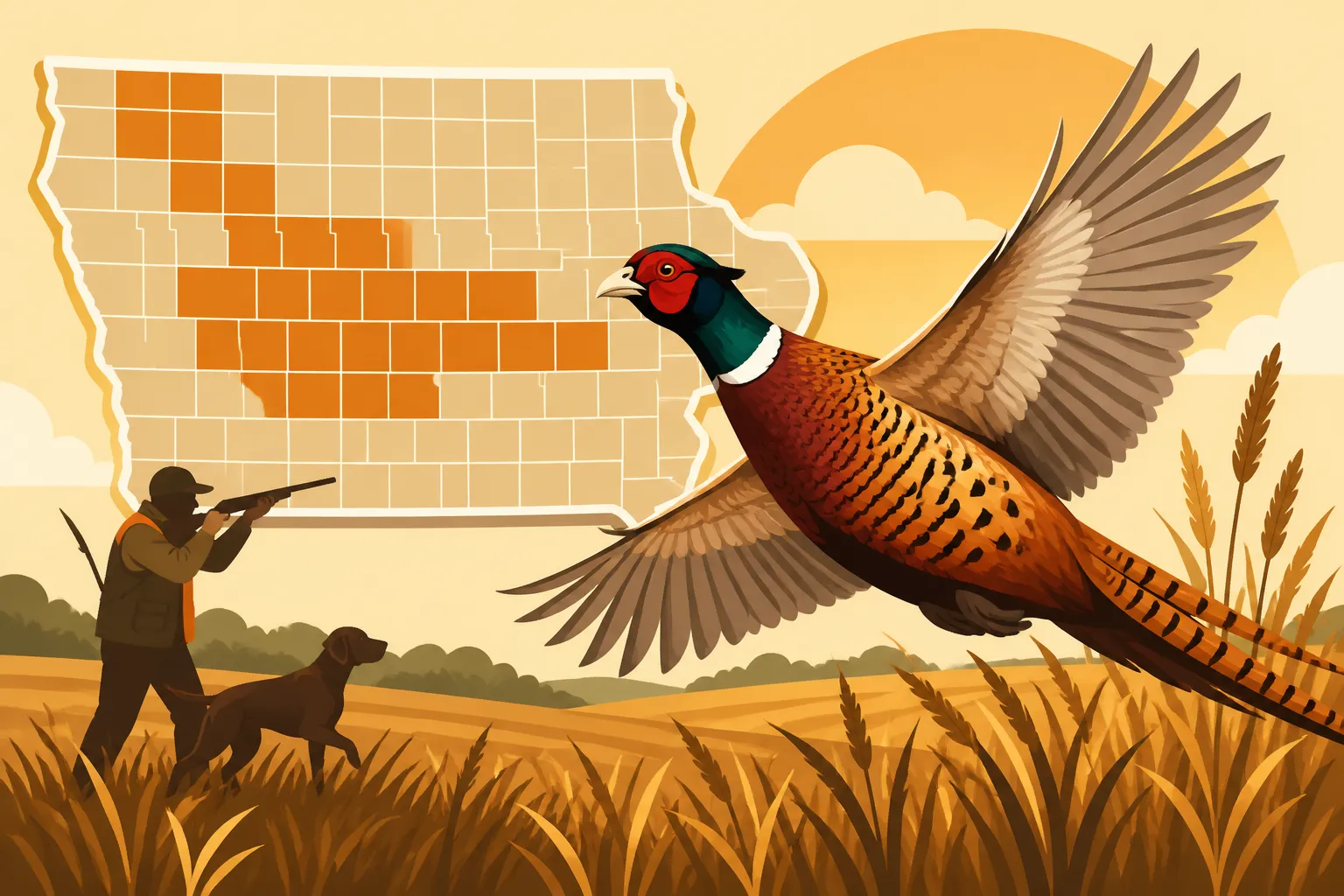
Generally speaking, the northwest and north-central regions of Iowa are often considered the traditional strongholds for pheasants. These areas tend to have a higher proportion of suitable habitat, including larger blocks of CRP, numerous wetland complexes, and a farming landscape that, while productive, still leaves enough edge cover and winter sanctuary for pheasants. Some central Iowa counties can also be very strong, especially those that have embraced significant conservation practices.
Counties that frequently appear in the top tiers of the DNR's roadside surveys, year after year, include:
- Northwest Iowa: Osceola, Clay, Dickinson, Emmet, Palo Alto, Pocahontas, Buena Vista.
- North-Central Iowa: Kossuth, Worth, Cerro Gordo, Hancock, Wright.
- Central Iowa: Sac, Calhoun, Greene, Story, Marshall, Hardin, Grundy, Butler, Franklin.
It's not uncommon to see several of these counties reporting well over 20-30 birds per route in good years, while some southern or eastern counties might hover in the single digits. This doesn't mean you can't find pheasants elsewhere, but these areas offer a higher probability of encountering significant numbers of birds.
To give you a clearer picture, here's a general idea of how different regions might compare in a decent pheasant year based on the DNR's data, which can help inform your decision on Where Iowa Pheasants Concentrate:
| Iowa DNR Region | Typical Birds Per Route (Range) | Key Habitat Characteristics | Notes on Pheasant Hunting |
|---|---|---|---|
| Northwest | 20-40+ | High CRP, wetland complexes, diverse agricultural mosaic | Often considered the best, high hunter interest. |
| North-Central | 15-30+ | Good CRP, diverse row crops, some wetlands | Very strong, good mix of private and public. |
| West-Central | 10-25 | Mix of row crops and pastures, some CRP | Can be good, but more localized pockets. |
| Central | 10-25 | Strong conservation efforts in places, varied agriculture | Hit-or-miss, but can have excellent spots. |
| Northeast | 5-15 | More timbered and rolling, less traditional pheasant cover | Spotty, focus on river bottoms and specific habitat projects. |
| East-Central | 5-15 | Highly agricultural, fewer large blocks of pheasant cover | Challenging, very localized success. |
| Southwest | 8-20 | Mix of row crops and timber, increasing CRP efforts | Improving in recent years, focus on edges. |
| South-Central | 5-15 | More timber and pasture, less ideal row crop for pheasants | Often more quail than pheasants, very specific habitat needed. |
| Southeast | 5-10 | Heavily timbered and rugged, limited pheasant habitat | Very low numbers, difficult hunting. |
Note: These ranges are illustrative and actual numbers vary annually based on weather, habitat, and other factors.
Factors Influencing County Rankings Year to Year
While certain counties are consistently strong, no year is exactly the same. Several factors can cause pheasant numbers to fluctuate even in top-producing areas.
One of the most significant influences is winter severity. A brutal Iowa winter with prolonged deep snow and extreme cold can decimate pheasant populations, especially if adequate winter cover is lacking. Birds struggle to find food and shelter, and mortality rates can soar. Conversely, a mild winter can lead to strong overwinter survival, setting the stage for a great nesting season. You can learn more about Winter Severity and Iowa Pheasant Numbers and how they influence the following year's hunting prospects.
Spring rainfall and nesting conditions are equally critical. Pheasants typically nest in grassy cover, often in early spring. Too much cold, wet weather during nesting and early brood-rearing can lead to high chick mortality. Nests can be flooded, or young chicks can succumb to hypothermia. Ideal conditions involve a warm, relatively dry spring, allowing hens to successfully hatch and raise their broods. The quality and abundance of Nesting Cover and Pheasant Broods play a huge role here.
Finally, local farming practices continue to impact pheasant numbers. While statewide trends show conservation efforts, localized decisions by individual farmers can create or destroy prime habitat. A farmer who leaves unharvested strips of corn, plants buffers along waterways, or enrolls ground in CRP is directly contributing to the local pheasant population. These micro-decisions add up, making some areas within a county far better than others, regardless of the county's overall ranking.
Beyond the County Line: Finding Huntable Birds
Knowing which counties are generally "best" is a fantastic starting point, but it's not the whole picture. Even in the most pheasant-rich counties, you still need to find places where you can actually hunt and where birds will be holding.
Access to Public and Private Land
The reality of hunting in Iowa is that much of the land is privately owned. Even in a top pheasant county, you'll encounter extensive private agricultural fields. Securing permission to hunt private land is always a great option, but it requires effort, respect, and often prior relationships with landowners.
For many hunters, especially non-residents or those without local connections, public hunting land becomes essential. Iowa offers several categories of public access:
- Wildlife Management Areas (WMAs): These are managed by the Iowa DNR primarily for wildlife, often featuring excellent habitat. You can find detailed maps of these areas.
- State Forests and County Conservation Board Areas: Many of these lands also allow hunting, though regulations can vary, so always check local rules.
- Iowa's Habitat and Access Program (IHAP): This is a fantastic program that pays private landowners to allow public hunting access on their property. These "walk-in access" areas are marked with bright yellow signs. They are a game-changer for public land hunters, providing thousands of acres of additional access. Understanding Iowa's Habitat and Access Program Explained is vital, as is knowing how to find Iowa Public Land Pheasant Ground.
This is where digital mapping tools become indispensable. Platforms like GoHunt, or other robust mapping applications, allow you to overlay public land boundaries, IHAP tracts, and even satellite imagery. With GoHunt, you can literally see the fence lines and visualize the habitat, identifying those critical pockets of cover. It's a fantastic way to scout potential areas from home before you ever set foot on the ground.
Micro-Habitat and Hunting Pressure
Just because you're in a "good" county doesn't mean pheasants are everywhere. They're going to be concentrated in specific types of cover. This is what we call "micro-habitat." You might be hunting a WMA in a top county, but if you're just walking through short, manicured grass, your chances are slim.
Instead, you need to focus on:
- Dense CRP fields: Look for older, taller stands of switchgrass, big bluestem, or other native grasses. These provide the best hiding spots.
- Cattail sloughs and wetland edges: These offer crucial winter cover and can hold birds even late in the season.
- Un-mowed waterways and ditch lines: Often overlooked, these linear strips of cover can act as travel corridors and holding areas.
- Brushy draws and timber edges: While pheasants are primarily grassland birds, they will use dense brush or the very edge of timber for escape cover, especially if it's adjacent to good crop fields. You'll want to focus on Pheasant Hunting Iowa Grass and Crop Edges.
Another significant factor, especially on public land, is hunting pressure. Iowa pheasants see a lot of pressure, particularly on opening weekend and throughout the early parts of the season. Birds on heavily hunted areas quickly become wary, running ahead of hunters or flushing wild. They learn to retreat to the densest, nastiest cover available – thick sloughs, multi-flora rose thickets, or deep timber edges – where they are much harder to flush. Understanding Hunting Pressure Patterns on Iowa Public Land can help you adapt your strategy.
This means you might have better luck on weekdays, or by targeting smaller, overlooked pockets of cover that other hunters bypass. Don't be afraid to walk into areas that look too thick or difficult; that's often exactly where the wise old roosters are hiding.
Strategizing Your Iowa Pheasant Hunt
Putting all this information together requires a solid strategy. It's not just about picking a county, it's about making informed decisions from start to finish.
Using Data and Mapping Tools Effectively
Your first step in planning should always involve the most recent DNR roadside survey results. Look for the regions and individual counties that showed the highest "birds per route" numbers. This will give you your primary target areas.
Once you have a list of promising counties, it's time to hit the digital maps. This is where tools like GoHunt really shine.
- Identify Public Land: Use your mapping app to find all the public hunting lands within your target counties. This includes WMAs, State Forests, and critically, IHAP walk-in areas.
- Analyze Habitat: Zoom in on these public parcels. Look at the satellite imagery to identify key habitat features: large blocks of dense grass (often appearing as lighter green or brown depending on the season), wetland areas, brushy draws, and crop field edges.
- Cross-Reference: Compare the habitat you see on the map with the expected pheasant behavior. For example, if you see a large CRP field next to a standing corn field, that's prime real estate. A dense cattail slough can be a late-season magnet.
- Plan Access Points: Identify potential parking areas and access routes. Think about how you'll approach the cover to maximize your chances of flushing birds effectively. Pay attention to private land boundaries to avoid trespassing. Knowing how to use these tools for Scouting Iowa Public Land Before the Opener is a significant advantage.
Remember, a high county average doesn't guarantee birds on every acre. It simply means the potential is higher. Your job is to locate those specific pockets of high-quality habitat within those counties.
Tactics for Different Cover Types
Once you're in a target area, your hunting tactics will depend on the type of cover you're facing.
- Large CRP Fields: For extensive grass fields, especially those over 40 acres, group hunting is often most effective. Line up hunters shoulder-to-shoulder, walking into the wind (if possible), pushing birds towards a blocking line of hunters at the far end. This is a classic method for Blocking and Driving Iowa Grass Strips. If hunting solo or with a small group, focus on walking the edges, fingers, and interior points of cover, paying close attention to fence rows, drainage ditches, and any changes in vegetation density.
- Wetland Edges and Sloughs: These are pheasant magnets, especially later in the season or on cold, windy days. Expect birds to hold tight. Work these areas slowly and thoroughly. For dense cattail sloughs, you'll need determined pushing, and often a good dog, to get birds to flush.
- Food Plots and Field Edges: These areas can be excellent early in the morning or late in the afternoon as birds move to feed. Walk the edges carefully, as birds might be holding in the transition zone between crop and cover.
- Smaller, Overlooked Pockets: Don't dismiss small, irregular blocks of cover. A half-acre patch of tall grass or a brushy corner might hold a surprisingly high number of birds, especially if it's less obvious to other hunters.
Whether you're hunting with a dog or trying Working Pheasant Cover Without a Dog, the key is to be methodical, cover ground thoroughly, and pay attention to where birds might run or flush. Iowa pheasants are tough, and finding the best counties and then knowing how to hunt them within those areas will dramatically increase your success.
Disclaimer
This article is for general informational purposes only and does not constitute professional advice. Laws, prices and regulations vary by location and change over time. Consult a qualified professional for guidance on your specific situation.