Iowa’s Legal Deer Hunting Equipment by Season
Navigating the myriad of rules and regulations for hunting in Iowa can feel like trying to untangle a giant knot of fishing line – especially when it comes to what gear is actually legal for each specific deer season. It's a common frustration, jumping from one PDF to another, trying to confirm if your favorite rifle or that new crossbow is good to go. This comprehensive guide is designed to cut through that confusion, giving you a clear, season-by-season breakdown of the legal deer hunting equipment in Iowa, so you can focus on the hunt itself, not the rulebook.
Understanding the Foundation: General Rules for Iowa Deer Hunting Equipment
Before we dive into the specifics of each season, it’s crucial to grasp the underlying principles that govern all deer hunting equipment in Iowa. These aren't just arbitrary rules; they're in place to ensure fair chase, promote hunter safety, and manage the deer herd effectively. Disregarding these foundational guidelines, even for a moment, can lead to serious legal consequences and, more importantly, can compromise your safety and the safety of others in the field.
Hunter Orange and Visibility Requirements
Visibility is paramount, especially during any season where firearms are permitted. Iowa has clear requirements for wearing hunter orange, which isn't just a suggestion, but a mandatory safety measure designed to make hunters easily identifiable to one another. During any gun season for deer, including the early and late muzzleloader seasons, first and second shotgun seasons, and the January antlerless season, hunters are required to wear specific amounts of solid blaze orange.
This typically means a vest, jacket, or cap that has a minimum aggregate of 400 square inches of solid blaze orange material. Crucially, at least 100 square inches of this orange must be visible above the waist, and another 100 square inches visible from the back. This isn't just for when you're walking in or out; it applies while you're actively hunting, whether still-hunting through timber or participating in a Party Hunting Rules and Safe Drives. The goal is to maximize your profile to other hunters, reducing the risk of being mistaken for game. Even if you're in a ground blind, if it's during a gun season, you need to display 400 square inches of blaze orange visible from all directions around the blind. It's a small inconvenience that provides a massive safety benefit, something every hunter should take seriously.
Prohibited Devices and Methods
Iowa's hunting regulations also clearly outline what you cannot use, regardless of the season. This often includes devices that give an unfair advantage or are deemed unsafe. For instance, any device that uses an explosive or incendiary projectile is strictly forbidden. This means no tracer rounds, no exploding tips, or anything that could start a fire or cause undue harm. Similarly, fully automatic firearms are off-limits for deer hunting, as are any weapons that are centerfire, rimfire, or smoothbore firearms other than a shotgun using slugs or a muzzleloader.
Electronic calls are generally prohibited for deer, meaning you can't use recorded sounds to lure in a buck. While some argue for their effectiveness, the state's stance is rooted in maintaining a traditional fair chase standard. There are also rules against hunting from a vehicle, aircraft, or any motorized conveyance, or using artificial lights to locate or shoot deer. This is where concepts like "headlighting" come into play – using vehicle lights at night to spot deer, which is highly illegal and dangerous. Always double-check the latest regulations regarding any new technology you might be considering, as rules can change. For up-to-date information, checking the official Iowa DNR resources or using a platform like GoHunt to cross-reference regulations is always a wise move.
Archery Season: Bows and Crossbows
The archery season is a special time in Iowa, offering extended opportunities for hunters to pursue deer with traditional methods. The equipment rules for archery are designed to ensure humane kills and maintain the challenge of bowhunting. It’s not just about flinging an arrow; it’s about using the right tool for the job.
Legal Bow Requirements
For traditional bows (recurve and compound), Iowa regulations specify minimum draw weights and maximum let-off percentages. The intent behind these rules is to ensure that bows generate enough kinetic energy to deliver a lethal blow, minimizing the risk of merely wounding an animal. Typically, the minimum draw weight for a compound bow or recurve bow is around 40 pounds at full draw. This ensures enough power to propel an arrow with sufficient force for penetration through a deer’s hide, muscle, and bone structure.
Beyond draw weight, the actual condition of your bow is critical. It must be in good working order, with no frayed strings or damaged limbs that could compromise safety or accuracy. Regular maintenance and inspection are vital. Many hunters overlook the importance of Tuning a Bow Before Iowa's Opener, which can make a huge difference in arrow flight and accuracy. Taking your bow to a pro shop for a check-up before the season is always a good idea. Remember, the goal is a clean, ethical harvest, and that starts with properly functioning and legally compliant equipment.
Crossbow Regulations
Crossbows have become increasingly popular, offering another accessible entry point into archery hunting. In Iowa, crossbows are generally legal for all hunters during the archery deer season. This wasn't always the case, and regulations have evolved to allow broader use. However, there are still specific parameters that must be met. Crossbows must have a minimum draw weight, often around 150 pounds, to ensure adequate power. The bolts used must also meet certain length and weight requirements.
The key difference for crossbows, beyond their physical characteristics, is often the legal shooting hours. While vertical bows typically have shooting hours that extend into the very last minutes of daylight, crossbows might have slightly different stipulations or be grouped with general hunting hours. It's crucial to verify this detail annually, as these specific nuances can change. Just like with traditional bows, ensuring your crossbow is properly sighted in and maintained is essential. Don't just pull it out of the case on opening day; practice with it to confirm your Crossbow Bolt Weight and Speed and accuracy from various positions.
Legal Arrow and Broadhead Specifications
The projectile you use is just as important as the device propelling it. Iowa has strict rules on arrow construction and broadhead types. Arrows must be at least 18 inches long, which helps ensure stable flight and proper penetration. The arrow shafts themselves can be made of carbon, aluminum, or wood, as long as they meet the length and weight requirements.
When it comes to broadheads, the regulations are very specific: they must be "barbed or non-barbed broadheads" with at least two cutting edges, and the cutting width must be at least 7/8ths of an inch. Mechanical broadheads are legal as long as they meet the minimum cutting width when open. This means those tiny field point-like broadheads are out. The wider cutting surface is intended to create a larger wound channel, increasing the likelihood of a quick and humane kill. Avoid broadheads that are designed to inject poison or sedatives, or those that have an explosive charge – these are unequivocally illegal. Understanding the nuances of Mechanical Versus Fixed Broadheads can help you choose the best option for your hunting style, but always ensure it's compliant with Iowa's regulations.
Early Muzzleloader Season: Traditional and Inline Muzzleloaders
The early muzzleloader season often falls in a prime time of year, offering a unique challenge with single-shot, front-loading firearms. The rules for this season are very distinct, setting it apart from modern firearm seasons and even the late muzzleloader hunt.
Muzzleloader Caliber and Projectile Rules
For the early muzzleloader season, Iowa mandates specific types of muzzleloading firearms. Generally, this means a muzzleloader that is loaded from the muzzle with black powder or a synthetic substitute, and a single projectile. The minimum caliber for a muzzleloader used for deer must be .44 caliber or larger. This ensures that the projectile is substantial enough to effectively harvest a deer.
The projectile itself is also important. It must be a single projectile, meaning no buckshot or multiple projectiles (like in a shotgun shell). Common choices include conical bullets like PowerBelts, Hornady SSTs, or saboted bullets which encapsulate a smaller projectile (like a .45 caliber bullet inside a .50 caliber sabot). It's crucial that these are specifically designed for muzzleloaders and meet the minimum caliber requirements. The use of modern rifle cartridges loaded into a muzzleloader is not permitted. Keep your Keeping a Muzzleloader Dry in Rain in mind, as early season weather can be unpredictable and impact performance.
Ignitions and Scopes for Muzzleloaders
When it comes to ignition systems, traditional cap-and-ball systems (percussion caps) are perfectly fine. So are 209 primer systems, which are more common on modern inline muzzleloaders. The key is that the firearm must be truly a muzzleloader, loaded from the front of the barrel.
For optics, the early muzzleloader season historically had limitations on scope magnification, or even disallowed scopes altogether, favoring open sights. However, this has changed, and illuminated reticle scopes are now typically allowed, and magnification is generally permitted. It's always best to check the current year's regulations for any changes, especially regarding specific features like illumination. While many hunters still prefer open sights for the challenge, modern scopes can significantly improve accuracy, especially at longer ranges or in low light conditions. A good scope, properly mounted and zeroed, can dramatically increase your effective range and confidence. If you're using a scope, ensure it's robust enough to handle the recoil of a muzzleloader and can maintain its zero through rough treatment in the field.
Shotgun Seasons: Slugs, Straight-Wall Cartridges, and Handguns
Iowa's shotgun seasons (First and Second) are incredibly popular and offer a wide range of legal equipment, including traditional slug guns, modern straight-wall cartridge rifles, and certain handguns. This flexibility aims to accommodate different hunting styles while maintaining safety in agricultural landscapes.
Legal Shotgun Gauges and Slugs
For traditional shotgun hunting, Iowa regulations allow shotguns 10 gauge, 12 gauge, 16 gauge, and 20 gauge. The critical component here is the projectile: shotguns must be loaded with single slugs. This means no buckshot, birdshot, or any other multiple-pellet load. The reasoning is clear – a single projectile is less likely to wound and more likely to deliver a clean, ethical kill, and its energy dissipates more quickly than a rifle bullet, making it safer in populated areas.
The type of slug matters. Both rifled slugs (designed for smoothbore barrels) and sabot slugs (designed for rifled barrels) are permitted. If you have a smoothbore barrel, rifled slugs are your go-to. If you've invested in a rifled barrel, sabot slugs will offer superior accuracy and range. Understanding the differences and practicing with your chosen ammunition is paramount. Many hunters zero their slug guns at 50 to 75 yards, which is a practical range for most Iowa timber and field edge shots. For information on optimal performance, research Best Slug Loads for Iowa Deer that perform well with your specific firearm.
Straight-Wall Cartridge Rifle Regulations
This is a game-changer for many Iowa hunters. Recognizing the desire for increased accuracy and effective range beyond what slug guns typically offer, Iowa introduced the allowance of straight-wall cartridge rifles for deer hunting during the shotgun seasons. These rifles bridge the gap between muzzleloaders and traditional high-powered rifles, offering a flatter trajectory and more consistent accuracy.
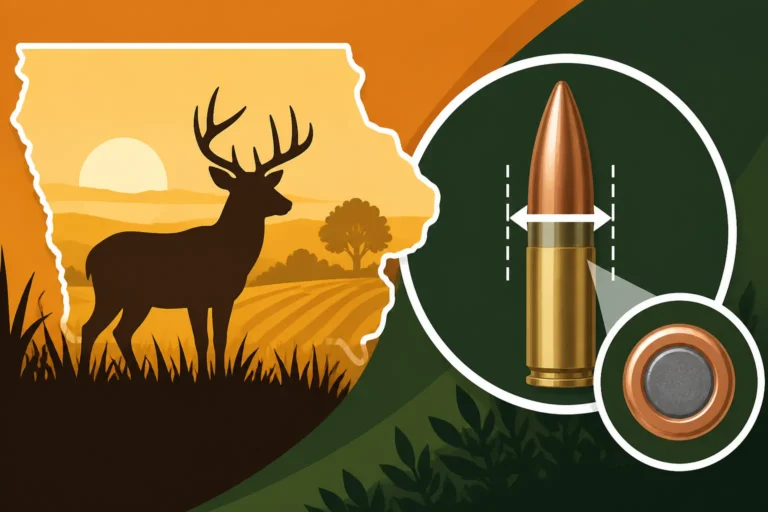
To qualify, a rifle must use a straight-wall cartridge with a bullet diameter between .357 and .500 inches. The case length must be a minimum of 1.285 inches and a maximum of 1.800 inches. Additionally, the bullet must generate a minimum of 500 foot-pounds of muzzle energy. Common legal cartridges include .350 Legend, .450 Bushmaster, and .444 Marlin, among others. These specifications are designed to ensure sufficient power for a clean kill while limiting the maximum range to suit Iowa's mixed terrain. This opens up options for hunters who prefer a rifle platform but still need to adhere to the "straight-wall" criteria. If you're considering this option, ensure your chosen cartridge adheres to all Iowa's 500 Foot-Pound Energy Rule and dimensional requirements.
Legal Handguns for Deer Hunting
Yes, you can legally hunt deer with certain handguns during Iowa's shotgun seasons. This option appeals to hunters looking for a unique challenge or those who prefer the compact nature of a handgun. However, the rules are very specific and designed to ensure sufficient power and ethical harvesting.
Legal handguns must be centerfire, with a barrel length of at least 4 inches. The cartridge must be a straight-wall type, with a bullet diameter between .357 and .500 inches, and a case length of at least 1.285 inches. This essentially aligns them with the straight-wall cartridge rifle rules regarding bullet diameter and case length. Common legal handgun calibers include .357 Magnum, .44 Magnum, and .50 Action Express, provided they meet the minimum barrel length and energy requirements. Hunting with a handgun requires significant practice to ensure proficiency and accuracy, especially given the recoil and inherent difficulty of shooting a handgun accurately at typical deer hunting distances. It's not a choice for the faint of heart, but for those who master it, it's a deeply rewarding experience.
| Season Type | Primary Legal Weapons | Caliber/Gauge | Projectile Type | Special Considerations | Hunter Orange Required |
|---|---|---|---|---|---|
| Archery Season | Vertical Bows (Compound, Recurve) | N/A | Broadheads (min 2 cutting edges, 7/8" width) | Min 40lb draw weight. | No |
| Crossbows | N/A | Bolts (min 18" length), Broadheads (min 2 cutting edges, 7/8" width) | Min 150lb draw weight. | No | |
| Early Muzzleloader | Muzzleloading Firearms | .44 Caliber or larger | Single Projectile (loaded from muzzle) | Black powder or synthetic substitute. | Yes (400 sq in) |
| Shotgun Season (1st & 2nd) | Shotguns (10, 12, 16, 20 gauge) | 10, 12, 16, 20 Ga. | Single Slug (rifled or sabot) | Yes (400 sq in) | |
| Straight-Wall Cartridge Rifles | .357 – .500 Cal. | Single Projectile | Case length 1.285"-1.800", min 500 ft-lbs muzzle energy. | Yes (400 sq in) | |
| Handguns | .357 – .500 Cal. | Single Projectile | Barrel length min 4", straight-wall case min 1.285". | Yes (400 sq in) | |
| Late Muzzleloader | Muzzleloading Firearms | .44 Caliber or larger | Single Projectile (loaded from muzzle) | Black powder or synthetic substitute. | Yes (400 sq in) |
| January Antlerless | Shotguns (10, 12, 16, 20 gauge) | 10, 12, 16, 20 Ga. | Single Slug (rifled or sabot) | Primarily for antlerless deer. | Yes (400 sq in) |
| Straight-Wall Cartridge Rifles | .357 – .500 Cal. | Single Projectile | Case length 1.285"-1.800", min 500 ft-lbs muzzle energy. | Yes (400 sq in) | |
| Muzzleloading Firearms | .44 Caliber or larger | Single Projectile (loaded from muzzle) | Black powder or synthetic substitute. | Yes (400 sq in) | |
| Handguns | .357 – .500 Cal. | Single Projectile | Barrel length min 4", straight-wall case min 1.285". | Yes (400 sq in) |
Always refer to the current year's official Iowa DNR regulations for the most up-to-date information, as rules can change annually.
Late Muzzleloader Season: What Changes, What Stays the Same
The late muzzleloader season in Iowa presents unique challenges with colder weather and often snow-covered landscapes. While the allowed equipment for muzzleloaders remains largely consistent with the early season, the hunting conditions certainly shift, making specific gear considerations even more critical.
Consistent Muzzleloader Specifications
In terms of the firearm itself, the late muzzleloader season adheres to the same core rules as the early season. You're still required to use a muzzleloader that is loaded from the muzzle, uses black powder or an approved synthetic substitute, and fires a single projectile of .44 caliber or larger. This means your inline or traditional muzzleloader that was legal in October will also be legal in December and January. The intention is to keep the "muzzleloader experience" consistent, focusing on the historical method of loading.
However, the late season often brings freezing temperatures and precipitation, which can affect the performance of your black powder firearm. Moisture is the enemy of black powder, so keeping your powder and primers dry becomes paramount. Investing in a good waterproof case or a well-sealed powder flask can make a huge difference. Many hunters will also carry a small piece of electrical tape to cover the muzzle and breech during snowy or rainy conditions, easily removed before a shot. Practicing Keeping a Muzzleloader Dry in Rain is valuable, but in the late season, it's about staying dry in harsher conditions.
Optics and Hunter Orange in Late Season
Just like the early muzzleloader season, scopes are generally allowed, including those with illuminated reticles. This is a significant advantage in the often dim, overcast days of late season, or when you find yourself hunting right up to legal shooting hours. The ability to clearly see your target and your aiming point can mean the difference between an ethical shot and a missed opportunity. Ensure your scope is fog-proof and has good light-gathering capabilities for those low-light conditions.
Hunter orange requirements also remain the same for the late muzzleloader season as they do for all gun seasons. A minimum of 400 square inches of solid blaze orange is mandatory, with specific portions visible above the waist and from the back. This becomes particularly important as more hunters may be out in the field during the colder weather, and visibility in snow or sparse timber is still critical. Layering your blaze orange over warm clothing is common, but always ensure the minimum surface area is visible, even with extra bulk. For extreme cold, consider options like insulated orange vests or parkas.
January Antlerless Season: Extending Your Opportunity
The January antlerless season is Iowa's last hurrah for deer hunting, offering a chance to fill additional tags, particularly for does. This season typically occurs after the general firearm seasons have concluded, and the rules are geared towards population management while still allowing a variety of weapon choices.
Legal Weapons for Antlerless Deer
One of the great aspects of the January antlerless season is its flexibility regarding legal weapons. Essentially, any firearm that was legal during the shotgun seasons – that includes shotguns with slugs, straight-wall cartridge rifles, and legal handguns – is also permissible during this season. Additionally, muzzleloaders meeting the state's specifications are also allowed. This broad allowance means hunters aren't forced to buy special equipment just for this late-season hunt.
The primary focus of this season is to harvest antlerless deer, which helps manage the overall deer population and balances the herd's sex ratio. While you might be able to find antlered deer, your primary target here is the doe. This means you can utilize the same trusty slug gun or straight-wall rifle you used in December. Many hunters appreciate this continuity, as it means less gear to acquire and more time spent practicing with what they already own. This season is also a great opportunity for youth hunters or those with limited time during earlier seasons.
Hunter Orange and Cold Weather Gear
Just like all other gun seasons, the January antlerless season requires hunters to wear 400 square inches of solid blaze orange. Given the typical January weather in Iowa, this means layering your orange over heavy, warm clothing. Keeping warm and dry is paramount for an enjoyable and safe late-season hunt. Temperatures can plummet, and bitter winds can make a long sit unbearable without proper insulation.
Consider high-quality thermal base layers, insulated bibs and parkas, and a good set of waterproof, insulated boots. Hand warmers and toe warmers can be a game-changer, especially for long waits in a stand or blind. Your focus should be on staying comfortable enough to remain alert and focused for extended periods. Beyond clothing, having gear like a reliable thermos with hot coffee or soup, and snacks that provide sustained energy, can make a huge difference. Don't underestimate the impact of extreme cold on your mental and physical endurance. Learning Staying Warm on a December Sit can really save a late-season hunt.
Prohibited Equipment and Common Misconceptions
Understanding what is not allowed is just as important as knowing what is. Iowa's hunting regulations are designed to ensure fair chase, promote safety, and prevent unethical practices. Many common questions or assumptions about gear can actually lead to violations if not properly clarified.
Illegal Devices and Practices
Beyond the obvious prohibitions like fully automatic firearms or explosives, there are other devices and practices that are strictly forbidden for deer hunting in Iowa. For instance, any device that electronically amplifies animal calls is generally illegal for deer. While they might work for coyotes, they're a no-go for whitetails. Similarly, the use of drones or other aircraft to locate or harass deer is a serious offense. This falls under the general rule of not using aircraft or motorized vehicles to pursue game.
Another critical prohibition is baiting deer. Placing out bait, minerals, or any substance to attract deer is illegal for hunting in Iowa. This includes corn piles, mineral blocks, or food plot mixes not grown naturally. The rule is broad to prevent any artificial attraction of deer to a specific hunting location. This regulation can be confusing, as what constitutes "bait" can sometimes feel like a gray area, but the intent is to avoid direct feeding or luring. For more clarity on this, always consult the official Iowa DNR regulations or check resources like GoHunt for their interpretations of current rules. Remember, ignorance of the law is not a valid defense.
Clarifying Common Misconceptions
Many hunters, especially those new to Iowa or returning after a long break, harbor misconceptions about what's legal. One common one is about night vision or thermal optics for deer. While thermal and night vision are legal for certain species (like coyotes), they are explicitly illegal for hunting deer in Iowa. You cannot use any device that amplifies natural light or utilizes infrared or thermal imaging to locate, surveil, or shoot deer. This is a clear fair chase rule.
Another area of confusion can be the use of tree stands on public land. While portable stands are generally allowed, there are often rules about how long they can be left up, whether screw-in steps are legal, and how they must be marked. For example, portable stand rules on Iowa public ground usually dictate that stands must be identified with the hunter's name and address or DNR customer ID number and removed by a certain date. Always check the specific regulations for the public land you are hunting, as rules can vary between state forests, WMAs, and county lands. Never assume that what's legal in one state or on private land is automatically legal on Iowa public ground.
Ensuring Your Gear is Hunt-Ready and Ethical
Having legal equipment is only half the battle. The other half is ensuring that your gear is properly maintained, sighted in, and that you understand how to use it ethically and effectively. A legal piece of equipment that isn't ready for the field can lead to missed opportunities, wounded animals, and a frustrating experience for everyone involved.
Pre-Season Equipment Checks and Maintenance
Before any season kicks off, give all your hunting equipment a thorough once-over. This isn't just about legality; it's about reliability and safety. For firearms, this means cleaning them, checking for any wear or damage, and ensuring all mechanisms are functioning smoothly. For bows and crossbows, inspect strings, cables, limbs, and cams for any signs of fraying, cracking, or misalignment. A damaged bow string can snap under tension, causing injury and a ruined hunt.
Beyond the weapon itself, check all your ancillary gear. Are your binoculars clean and focused? Is your rangefinder functioning with fresh batteries? Are your broadheads sharp? Dull broadheads will not penetrate effectively, leading to unnecessary suffering for the animal. Taking the time for these pre-season checks can prevent equipment failures in the field and ensure you're ready when that moment of truth arrives. Many hunters even have a specific A First-Year Iowa Hunter's Gear List to ensure they cover all the bases.
Sighting In and Practice Regimens
Perhaps the most critical step after ensuring your equipment is legal and functional is sighting it in and practicing. A rifle that's off by a few inches at 50 yards can mean a clean miss or a poor hit on a deer. Dedicate ample time at the range to zero your shotgun, rifle, or muzzleloader. Practice from realistic hunting positions – not just from a bench rest. If you hunt from a treestand, practice shooting from an elevated position. If you use a ground blind, practice shooting from a seated position with the blind's windows open.
For bowhunters, this means shooting at various distances, from different angles, and in varying weather conditions. Practice with the broadheads you intend to hunt with, as they can sometimes fly differently than field points. Knowing your effective range, both ethically and accurately, is paramount. Never take a shot in the field that you haven't confidently practiced at the range. GoHunt resources can help you find local ranges or practice spots, emphasizing the importance of ethical shot placement over raw distance. It’s not about how far you can shoot, but how far you can shoot accurately and ethically. This commitment to practice honors the animal and the hunting tradition. Shot Placement on a Whitetail at Twenty Yards and understanding anatomy are skills developed through practice, not just reading.
Disclaimer
This article is for general informational purposes only and does not constitute professional advice. Laws, prices and regulations vary by location and change over time. Consult a qualified professional for guidance on your specific situation.