Hand and Toe Warmers That Last
Hunters often face the frustrating reality of hand and toe warmers that promise hours of heat but fizzle out just when you need them most, especially during those bitter cold Iowa deer hunts. There's nothing worse than sitting in a freezing treestand, your fingers and toes numb, only to realize your "long-lasting" warmer gave up the ghost two hours ago. This guide isn't about magical solutions, but realistic strategies to get the most out of your warmers and keep you comfortable when the mercury plummets and the whitetails are on the move.
The Frustrating Reality: Why Warmers Seem to Fail You in Iowa's Cold
It’s a common complaint amongst Iowa hunters: you bought the warmers, you followed the instructions, and yet, a few hours into your sit, your fingers and toes are turning to ice. This isn't just bad luck; there are very real reasons why warmers sometimes fall short of their promises in the brutal conditions of an Iowa winter.
The Iowa Difference: Damp Cold and Raw Wind
Iowa's winter weather isn't just cold; it's often a damp, biting cold that seeps into your bones, compounded by relentless winds, especially in open crop fields or exposed timber. Many warmers are designed for drier, less intense cold, and they struggle when faced with high humidity or cutting wind that constantly robs heat from the chemical reaction. You might be tucked into a draw, thinking you're sheltered while Hunting Saddles and Pinch Points in Rolling Timber, but that sneaky wind still finds its way through your layers and across the surface of your warmers, chilling them prematurely. This raw, penetrating cold makes it incredibly difficult for the subtle heat of a warmer to truly make a difference if it's not working optimally.
The Oxygen Paradox: Too Much or Too Little
Air-activated warmers, the most common type, rely on a precise chemical reaction that needs oxygen to work. It’s a delicate balance. Out in the open, especially on a blustery ridge during Iowa Whitetail Hunting Tactics Through the Rut, they might burn too fast, rapidly depleting their chemical fuel before their advertised time. This happens because the constant rush of fresh, cold air accelerates the oxidation process. Conversely, if you bury them too deep in a tightly laced boot or a snug glove without enough air circulation, they can "suffocate," slowing the reaction and offering minimal heat. The warmer might still be producing heat, but it’s such a low level that you barely feel it, leaving you with cold extremities and a sense of disappointment.
Static vs. Active Use: The Hunter's Dilemma
Most warmers are tested in ideal, static conditions – think a controlled laboratory environment with consistent temperatures and no movement. But as hunters, we're rarely truly static. We walk in for miles to a stand, sit for hours in a biting wind, maybe shiver uncontrollably, pull fingers from gloves to use a rangefinder or adjust a scope, or even track a deer through deep snow. These variations in activity level, combined with the constant need to interact with gear, create scenarios where warmers just can't keep up with the real-world demands we place on them. The constant exposure to cold air when your hand exits your glove, or the compression of a toe warmer when you shift your weight in your boot, all contribute to less than ideal performance compared to the manufacturer's claims. It’s a completely different environment than sitting on a porch enjoying a still winter morning.
Decoding Warmer Types and Their True Potential
Understanding the different types of warmers available and their specific strengths and weaknesses is the first step toward choosing the right tools to combat Iowa's cold. Each has its place, and often, a combination works best.
Air-Activated Warmers: The Disposable Workhorses
These are the classic, tear-open pouches that have been a staple for hunters for years. They contain iron powder, salt, activated charcoal, and other ingredients that react with oxygen to produce heat through an exothermic oxidation process. The key to their success is consistent, but not excessive, airflow.
Understanding the "Hours" Rating
When a package says "up to 10 hours" or "18 hours," that's usually under ideal, laboratory conditions. Think about it – sealed in a perfect environment, at a consistent temperature, with perfectly measured airflow. In the real world of a freezing Iowa December stand, especially during Late Muzzleloader Food Source Hunting on a day with a stiff breeze, you should realistically expect less. A good rule of thumb is to mentally shave off 20-30% of the advertised time. Many experienced hunters even bring multiple pairs, planning to swap them out mid-day. Don't fall into the trap of thinking one pair will magically last you from sunup to sundown if the conditions are truly brutal.
Preparation is Key
Don't wait until your fingers are numb to activate them. Open the package and expose them to air for at least 5-10 minutes before you even head out to your stand, or at least before you need them. This "primes" the chemical reaction, allowing it to start slowly and build heat. A common mistake is to open them in the truck and immediately shove them into cold boots or gloves, expecting instant, robust warmth. The chemicals need time to get going, and pre-warming them can significantly improve their initial output and overall longevity. Some savvy hunters even "pause" the reaction by sealing an activated warmer in an airtight ziploc bag, although this isn't foolproof and should be experimented with.
Rechargeable Electric Warmers: The Modern Contender
These battery-powered devices offer consistent, controllable heat. They're excellent for hands and can be a game-changer for those who find disposable warmers unreliable or wasteful.
Pros and Cons for Hunting
The ability to turn them on and off, adjust heat levels, and recharge them is a huge plus. You can keep one in your Packs for a Day in an Iowa Stand and only activate it when you truly need it, conserving battery life. This on-demand heat is fantastic for those quick warm-ups after adjusting your position or getting ready to shoot. However, they're typically bulkier than a thin disposable packet, can be expensive upfront, and need to be charged. Running out of battery in the middle of a Staying Warm on a December Sit can be a major letdown, especially if you rely on it for critical warmth. Many experienced hunters, including those I know who consult resources like GoHunt for detailed gear reviews, swear by the reliability of a fully charged electric warmer for their hands, but might still pair them with disposable toe warmers for a balanced approach.
Battery Life and Cold
Just like your phone, electric warmers lose battery power faster in extreme cold. To extend their life, keep them insulated in an inner pocket when not in use. Some models even double as power banks for charging phones, which can be incredibly useful when trying to navigate with Offline Maps for Iowa Public Ground or checking trail cameras. Always start your hunt with a fully charged unit and consider carrying a small, lightweight power bank as a backup for both your warmer and your phone.
Fuel-Based Warmers: A Niche Option
These traditional warmers typically use lighter fluid (like Zippo hand warmers) or charcoal sticks. They offer very consistent, long-lasting heat, often for longer durations than air-activated packets.
Considerations for the Field
Fuel-based warmers do involve an open flame (for ignition) or burning charcoal, which carries a small fire risk and produces a slight, though often minimal, odor. While some hunters claim the odor isn't a significant deterrent to deer, it's something to consider for highly scent-conscious hunters. The heat can also be quite intense, making them more suitable for an outer pocket or wrapped in a cloth rather than directly against your skin. They require careful handling and can be messy with fuel, so they aren't for everyone. However, for sheer, consistent warmth, they are tough to beat and certainly last. Always ensure proper ventilation and never use them in enclosed spaces where carbon monoxide can build up.
Here's a quick comparison of common warmer types:
| Warmer Type | Activation Method | Heat Duration (Claimed) | Pros | Cons | Best Use for Iowa Hunter |
|---|---|---|---|---|---|
| Air-Activated (Hand) | Air exposure | 8-18 hours | Inexpensive, lightweight, compact | Shorter actual duration, inconsistent heat | Gloves, outer pockets, backup heat |
| Air-Activated (Toe) | Air exposure | 5-8 hours | Slim design, adheres to socks | Can suffocate in tight boots, heat fades | Boots (with enough space), moderate activity |
| Rechargeable Electric | Battery powered | 4-12 hours | Reusable, adjustable heat, no waste | Requires charging, expensive, bulkier | Jacket pockets, quick warm-up after activity |
| Fuel-Based (Zippo) | Lighter fluid ignition | 6-12 hours | Consistent, intense heat, reusable | Slight odor, ignition risk, hot to touch | Outer pockets, less scent-sensitive hunts |
Strategies to Maximize Your Warmer's Lifespan and Output
Even the best warmers won't perform to their full potential if not used strategically. How you place them, how you prepare them, and how you integrate them into your overall cold-weather system can make all the difference between numb extremities and comfortable hunting.
The Right Placement: Where to Put Them (and Where Not To)
This is probably one of the most overlooked aspects of using hand and toe warmers effectively. Correct placement directly impacts their efficiency and how long they genuinely warm you.
Hands
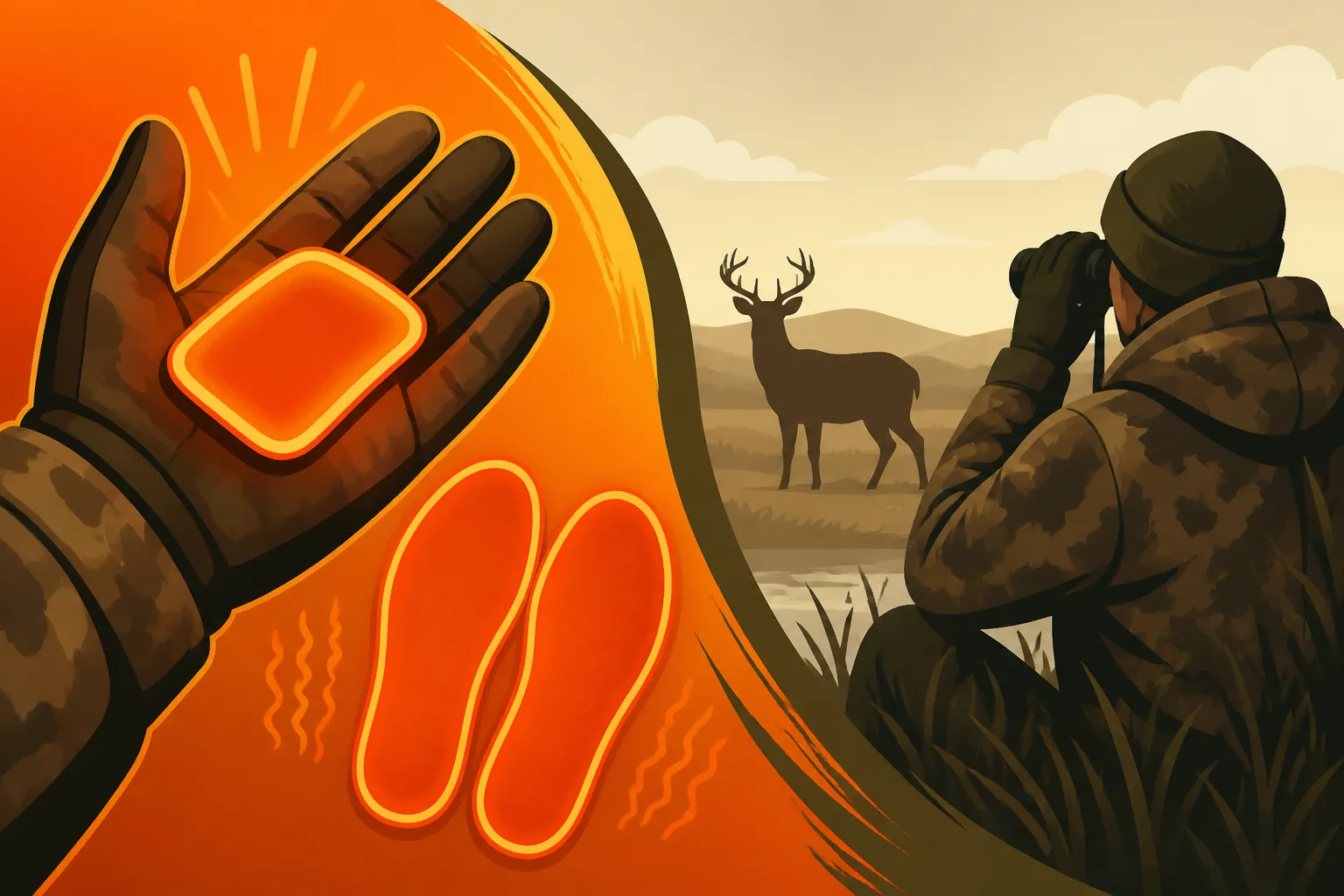
For air-activated hand warmers, placing them on top of your hands inside your gloves or mittens, or even better, on the back of your wrist, allows for optimal airflow and distributes heat more effectively to your fingers and the blood flowing through your hand. Don't ball them up in your palm where they'll be compressed. If you're wearing heavier outer gloves and a thin inner glove, placing the warmer between the two layers can work wonders. Many hunters find that a larger pocket warmer, occasionally pulled out and rubbed to reactivate, is more effective than trying to keep a smaller one consistently hot inside a tight glove, especially if you're frequently exposing your hands to manipulate your bow or shotgun. A hand-muff with a warmer tucked inside is often the best solution for consistent hand warmth in an elevated stand.
Feet
Toe warmers are specifically designed to stick to your socks, on top of your toes, directly under the joint where your toes meet your foot. This is crucial. If you stick them on the bottom of your foot, you'll feel the heat, but the constant pressure from your foot will restrict airflow, severely reducing their efficiency and lifespan. Make sure your boots aren't so tight that they completely compress the warmer. There needs to be a little air pocket. Consider using a slightly larger boot size for thick socks and warmers, or even a specialized cold-weather boot with ample toe box room. You might be surprised how much better they perform when they're not suffocating.
Core Heat for Extremities
Remember that your body prioritizes sending warm blood to your vital organs. If your core is cold, your hands and feet will suffer no matter how many warmers you use. Focus intently on Cold Weather Stand Clothing and proper layering for your torso. A warm core means better circulation to your extremities, helping warmers do their job more effectively because they aren't fighting a losing battle against a cold body. This means a good moisture-wicking base layer, a quality insulating mid-layer, and a protective windproof outer shell are indispensable when you're waiting for that late-season buck during December Cold Front Deer Movement.
Insulation and Airflow: A Delicate Balance
It sounds contradictory, but both insulation and proper airflow are essential for air-activated warmers. Insulation helps trap the heat they produce, while airflow fuels the chemical reaction.
Insulate Your Warmers
Keep unused warmers inside your pack or an inner pocket to keep them from getting too cold before activation. Once activated, good insulation helps trap the heat they produce. For toe warmers, pairing them with high-quality, moisture-wicking wool socks and insulated, waterproof boots provides the best environment for them to work. This isn't just about protecting your feet from the elements; it's about creating a warm, but not completely airtight, microclimate for the warmer to operate efficiently within your Boot Insulation for Long Sits. Don't let your warmers lose heat to the environment faster than they can produce it.
Allow for Airflow
If your warmers seem to die quickly or aren't getting hot enough, try pulling them out for a minute or two, shaking them, and exposing them to fresh air. This often kick-starts the chemical reaction. If you're wearing very snug boots or gloves, you might need to periodically wiggle your toes or fingers, or even gently remove your hand from your glove for a few seconds, to create a tiny bit of air movement around the warmer. This is especially true if you find your footwear or handwear is so good at sealing everything in that it inadvertently suffocates the warmers.
Strategic Use: Don't Waste the Heat
Warmers aren't an unlimited resource, especially the disposable kind. Using them strategically ensures you have heat when you need it most.
Timed Deployment
If you know you'll have a particularly cold period, like first light or the last hour of daylight when deer are most active, save a fresh pair of warmers for those critical times. Use less potent methods or less heat-intensive warmers for the milder parts of the day. Some hunters even set a reminder on their phone, perhaps after checking a hunting strategy article on GoHunt, to swap out their hand warmers every few hours if they're on a particularly long sit. This proactive approach prevents you from being caught off guard with a dead warmer just as that monster buck steps out.
Combine and Conquer
Don't be afraid to use a mix of warmer types. A reliable rechargeable hand warmer for your jacket pockets, coupled with disposable toe warmers for your boots, can offer a balanced and effective strategy. For extreme conditions, you might even consider a larger body warmer placed over your kidneys or chest, as warming your core significantly helps the extremities. This layered approach to warmth, much like your Layering for Iowa December Sits, provides redundancy and adaptability for changing conditions.
Beyond the Pack: Holistic Cold Weather Management for the Hunter
Warmers are a fantastic tool, but they are just one piece of the puzzle. True cold weather mastery for an Iowa hunter involves a holistic approach, ensuring every part of your system works together to keep you warm and effective.
Layering: Your First Line of Defense
Warmers are a supplement, not a substitute, for proper layering. Starting with a good moisture-wicking base layer is critical for staying dry, which is paramount for warmth. Next, an insulating mid-layer (fleece, wool, down) traps body heat. Finally, a windproof and waterproof outer shell protects you from the elements. Layering for Iowa December Sits is an art, not a science, and finding the right combination for your activity level and the day's forecast is essential.
The Power of Wool
Wool socks, specifically merino wool, are incredibly effective. They wick moisture away from your skin, keeping your feet dry even if you sweat, and crucially, they retain a significant amount of warmth even when wet. This creates a much more hospitable environment for toe warmers to function effectively. Avoid cotton socks at all costs in cold weather; they absorb moisture, hold it against your skin, and completely lose all insulating properties, making your feet feel colder faster.
Keeping Dry
If your hands or feet get sweaty, they will get cold, often much faster than if they were simply exposed to cold air. Carry extra pairs of gloves and socks in a waterproof bag in your pack. A fresh, dry pair can feel like a miracle when your extremities are chilling, especially after a long walk into your stand. It's often moisture, whether from sweat or precipitation, not just cold air, that defeats warmers and leaves you miserable. This is a common challenge when you're doing a lot of hiking into Hunting Iowa Walk-In Ground Without Burning It Out.
Nutrition and Hydration: Fueling Your Internal Furnace
What you put into your body directly impacts its ability to generate heat. Your body's internal furnace needs fuel to burn to keep you warm.
Calorie Intake
Eat a good, high-calorie breakfast before heading out. Pack calorie-dense snacks like nuts, trail mix, and energy bars for your hunt. Your body burns calories to stay warm, so keep that internal furnace stoked, especially if you anticipate being out all day for Late-Season Food Source Hunting in Iowa. Simple carbohydrates offer quick energy, while complex carbs and fats provide sustained warmth.
Warm Drinks
A thermos full of hot coffee, tea, or cocoa can do wonders for your core temperature. Sip on it throughout your sit to provide internal warmth, though be mindful of needing to leave your stand for nature's call. The warmth it provides from the inside out is immediate and comforting.
Stay Hydrated
Dehydration can impair your body's ability to regulate temperature. Even in cold weather, it's important to drink water. Don't neglect your hydration simply because you don't feel thirsty like you would on a hot summer day. Dehydration makes you more susceptible to the cold.
Activity and Movement: When to Wiggle Your Toes
While stillness is often key for deer hunting, if you're starting to feel the chill, gentle, subtle movement can help. Wiggle your toes, flex your fingers, or subtly clench your fists. This increases blood flow, which in turn carries warmth to your extremities. If you're really getting cold, a brisk, silent walk on a well-planned Access Routes That Do Not Bump Deer can often get the blood flowing again, though this is usually a last resort to avoid bumping game or alerting nearby deer. For those utilizing a mobile hunting setup like Mobile Saddle Hunting in Iowa, the ability to move and stay active can be a significant advantage in staying warm.
The Role of Footwear and Handwear
Your primary defense against cold extremities starts with quality gear designed for the conditions.
Boots
Choose boots rated for extreme cold, with ample insulation and waterproof construction. Ensure they fit well, with enough room for thick socks and a toe warmer without being so loose that your foot slides around. Cramped feet restrict circulation, making them colder faster. Consider the type of terrain you'll be on; often, for Scouting Iowa Timber and River Bottoms, you need flexibility and ankle support as much as warmth, so choose wisely.
Gloves/Mittens
A layering system for your hands works best. Thin, touch-screen compatible gloves for dexterity, covered by a heavy insulated mitten, are a common and effective choice. The mittens provide superior warmth by keeping your fingers together, while the thin liner gloves allow you to maintain some tactile feel when needed. A hand-muff, especially one with a built-in pocket for a warmer, is an invaluable piece of gear for cold Iowa hunting, allowing you to keep your hands warm and ready while waiting for that crucial moment. When researching specific brands or styles, GoHunt's community forums often have detailed discussions on what works best for various extreme cold conditions and specific hunting styles.
By combining reliable warmers with smart preparation, appropriate gear, and mindful self-care, you can significantly extend your comfort and effectiveness in the field, turning those bitter cold Iowa hunting days into successful, memorable experiences instead of miserable ones. Don't let cold hands and feet cut your hunt short.
Disclaimer
This article is for general informational purposes only and does not constitute professional advice. Laws, prices and regulations vary by location and change over time. Consult a qualified professional for guidance on your specific situation.