Iowa First Shotgun Season Dates
Many Iowa deer hunters find themselves scratching their heads when it comes to the exact dates and nuances of our state's shotgun seasons. It can be a real headache trying to juggle work, family, and precious hunting time, especially when you're not sure which season offers the best chance at tagging a deer. This comprehensive guide is here to cut through the confusion, clearly laying out the Iowa First Shotgun Season dates and what you can expect when you hit the timber and fields.
Iowa's First Shotgun Season Dates Explained
Navigating the Iowa deer seasons can feel like a puzzle, especially for those new to the state or non-residents looking to experience our renowned deer hunting. The shotgun seasons are particularly popular, drawing a large number of hunters eager to fill their freezers and, hopefully, tag a trophy. Understanding the exact window for the First Shotgun Season is the crucial first step in your planning process.
Official Season Dates and How They're Set
Iowa's First Shotgun Season consistently falls in early December, typically spanning a short five-day period. For the 2023-2024 hunting season, for example, the Iowa First Shotgun Season ran from December 2nd to December 6th. These dates are generally fixed year-to-year, usually starting on the first Saturday of December, offering a concentrated burst of hunting opportunity. This short window means every single day counts, and careful planning becomes paramount.
The Iowa Department of Natural Resources (DNR) sets these dates annually, balancing hunter opportunity with herd management goals. These decisions are rooted in extensive data collection, including harvest reports, deer population estimates, and feedback from hunters and landowners. It’s a delicate balance to ensure a sustainable deer population while providing ample recreational opportunities. Unlike some other states, Iowa divides its general shotgun season into two distinct periods, a choice that impacts everything from hunter pressure to deer behavior. Knowing these dates well in advance allows you to block out time on your calendar, arrange necessary travel, and get your gear dialed in for the highly anticipated season opener.
Understanding Tag Requirements and the Application Process
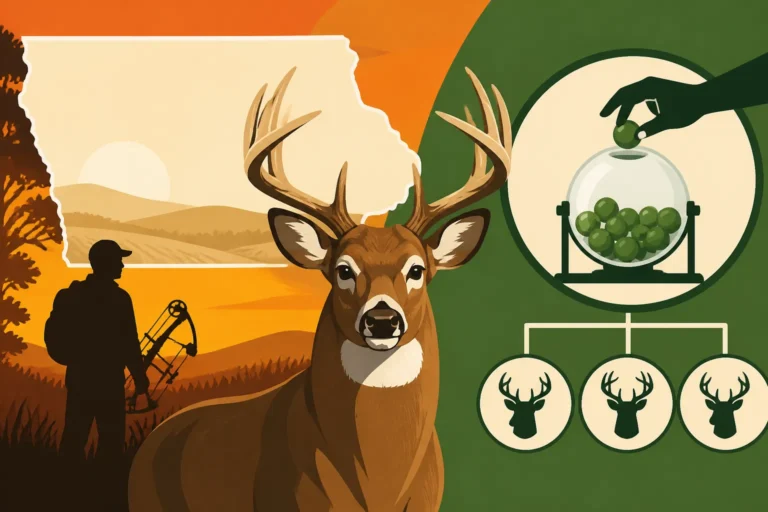
Securing a tag for Iowa's First Shotgun Season, especially as a nonresident, is often a matter of planning and patience. Iowa is known for its world-class whitetails, and demand for tags is high. For residents, "any deer" tags are generally more accessible, often available over the counter or with less stringent application processes. However, nonresidents face a competitive draw system to obtain one of the coveted "any deer" tags.
The application window for nonresident tags typically opens in May and closes in June. Missing this critical window means you'll have to wait another year, a frustrating prospect for many dedicated hunters. Nonresidents apply for specific zones and seasons, and success in the draw often hinges on accumulating preference points. You can dive deeper into the complexities of this process by checking out our guide on Iowa Nonresident Deer Draw Explained. It’s vital to understand the costs involved as well; our article on Iowa Deer Licence and Tag Costs breaks down all the fees you can expect. For many, utilizing resources like GoHunt to research draw odds and historical data can provide a significant advantage in planning their application strategy, especially when aiming for those harder-to-draw zones or seasons in future years. Even if you're a resident, keeping an eye on updates through resources like GoHunt's news feeds can help you stay current on regulation changes that might impact your hunting plans.
The Strategic Advantage of First Shotgun Season
Choosing which shotgun season to hunt, or deciding to hunt both, involves more than just looking at the calendar. Each segment presents its own set of challenges and opportunities, influenced heavily by deer behavior, hunter pressure, and the always-unpredictable Iowa weather. Many hunters prefer the First Shotgun Season for specific strategic reasons, hoping to capitalize on a particular stage of the deer's annual cycle.
Deer Behavior During Early December
By early December, the frenetic energy of the peak rut has largely subsided, but deer are far from sedentary. This period marks a crucial transition for whitetails; bucks are recovering from the exhaustive breeding season, and all deer are intensely focused on replenishing fat reserves for the coming winter. Their primary objective shifts to food, making consistent food sources absolute magnets. You’ll find deer concentrating around accessible nutrition, whether it’s picked corn and bean fields, lingering acorns in timber, or even green food plots if they're still viable.
While the "seeking" and "chasing" phases of the rut are mostly over, bucks can still be encountered. They might be traveling more cautiously, often alone or forming small bachelor groups as they regain strength. Does and fawns will also be heavily reliant on abundant food sources. Understanding this post-rut, pre-winter phase is key. It means your scouting efforts should be heavily focused on identifying prime feeding areas and the thick cover they retreat to for bedding. This is precisely why tactics centered around Late-Season Food Source Hunting in Iowa become incredibly effective during this time. Deer are moving with a purpose, often on predictable patterns between food, water, and bedding, making them vulnerable to well-planned ambushes.
Comparing First vs. Second Shotgun Season
Deciding between Iowa's First and Second Shotgun seasons often comes down to personal preference, available dates, and an understanding of the subtle differences in hunting conditions. While both offer fantastic opportunities, there are distinct factors that might make one more appealing than the other for certain hunters. The First Shotgun Season, being earlier, often catches deer before they've experienced the full brunt of gun season pressure.
Hunter pressure is a significant differentiator. The opening weekend of any Iowa deer season sees a surge of activity, but the First Shotgun Season, while busy, can sometimes feel marginally less crowded than the more extended Second Shotgun Season, especially if you hunt during the weekdays. Deer will be less educated by gun hunters initially, though this quickly changes after the first few days. Our deep dive into Which Iowa Shotgun Season Is Better can help you weigh these pros and cons more thoroughly. Ultimately, both seasons are excellent, but the First Shotgun Season can offer a slight edge in terms of deer not yet being completely driven into hiding, making them potentially more responsive to traditional hunting methods like drives or focused stand hunting around food.
Typical Weather Considerations
Iowa weather in early December is notoriously unpredictable, presenting hunters with a dynamic environment that can range from surprisingly mild to brutally cold. You might experience crisp, sunny days with temperatures in the 30s or 40s, making for comfortable hunting conditions. However, it's just as likely you'll encounter biting winds, freezing rain, or even the season's first significant snowfall.
Snow cover, if present, can be a game-changer. It not only aids in tracking deer movement but also makes spotting deer in open timber or against agricultural fields much easier. However, snow also means colder temperatures and can make access more challenging. Hunters must be prepared for anything, from muddy fields and slick trails to frozen ground and icy winds. This variability underscores the importance of proper layering and high-quality gear to stay warm and dry, allowing you to remain in the field longer and more comfortably.
Gearing Up for Success in First Shotgun Season
Stepping into the field for Iowa's First Shotgun Season requires more than just a hunting license and a willingness to brave the elements. Having the right equipment, understanding its legal use, and preparing for the unique conditions of early December hunting are paramount. From your firearm to your boots, every piece of gear plays a critical role in your success and safety.
Weapon Requirements and Legalities
For Iowa's shotgun seasons, the primary legal firearms are, as the name suggests, shotguns. This includes 10, 12, 16, and 20 gauge shotguns, all of which must be loaded with single projectiles, commonly known as slugs. Beyond traditional slug guns, Iowa also permits the use of straight-wall cartridge rifles during the shotgun seasons. Popular calibers like .350 Legend, .450 Bushmaster, and .45-70 Government have become increasingly common, offering greater accuracy and range than many slug setups. Handguns are also permissible, provided they meet specific caliber and minimum energy requirements. It's absolutely crucial to review the Iowa's Legal Deer Hunting Equipment by Season regulations before heading out to ensure your chosen firearm complies with all state laws.
Beyond the firearm itself, safety is a non-negotiable. During any gun season in Iowa, hunters are required to wear blaze orange. This includes a minimum of one outer garment (like a vest or jacket) and a head covering (like a hat or cap) that is solid blaze orange. This highly visible color is vital for preventing accidents, especially in party hunting scenarios or areas with high hunter density. Before the season kicks off, make sure your shotgun or straight-wall rifle is sighted in properly. Our guide on Sighting In Before Shotgun Season offers valuable tips for achieving optimal accuracy, which is essential for ethical harvesting.
Essential Cold Weather Clothing
The unpredictable nature of early December weather in Iowa means that your clothing system needs to be adaptable and robust. Layering is not just a suggestion; it's a necessity. Start with a moisture-wicking base layer that pulls sweat away from your skin, preventing chills. Next, add insulating mid-layers, such as fleece or synthetic puffy jackets, to trap warmth. Your outer layer should be both windproof and waterproof, capable of shedding rain, sleet, or snow while blocking bitter winds. Brands like Sitka Gear or First Lite offer excellent systems specifically designed for varied conditions.
Don't neglect your extremities. A warm, blaze orange hat is mandatory for safety and helps retain significant body heat. High-quality insulated gloves or mittens are critical, especially if you're sitting for extended periods. When it comes to footwear, waterproof, insulated boots are a non-negotiable. Walking through wet timber or sitting in a freezing treestand can quickly lead to cold feet, ruining a hunt. Investing in good wool socks and perhaps even chemical hand and toe warmers can make a world of difference. Our article on Cold Weather Stand Clothing provides a deeper dive into optimizing your layers for maximum comfort and warmth. Being prepared for the cold ensures you can focus on the hunt, not on shivering.
Navigating Public and Private Land
Iowa offers a mix of public and private hunting opportunities, each with its own set of challenges and rewards during the First Shotgun Season. Public lands, including State Forests, Wildlife Management Areas (WMAs), and IHAP (Iowa Habitat and Access Program) lands, will undoubtedly see significant hunter pressure. To maximize your chances, consider hunting weekdays, arriving well before legal shooting light to get to your spot, and often walking further than others are willing to. Information on these areas can be found in our comprehensive guide on Public Land Deer Hunting in Iowa.
For private land access, building relationships with landowners well in advance is key. Many Iowa farmers are generous with permission, but it's a privilege, not a right. Always ask respectfully, adhere to their rules, and offer to help out where you can. The Hunting Pressure Patterns on Iowa Public Land article offers insights into how deer react to human activity, helping you strategize on both public and private ground. Regardless of where you hunt, the Iowa DNR Hunter Atlas is an indispensable tool, available online or through mobile apps. It clearly delineates public and private boundaries, identifies walk-in access areas, and often provides aerial imagery crucial for e-scouting. Using a mapping application like GoHunt's mapping tools can further assist in pre-season scouting, allowing you to mark waypoints, identify potential access routes, and locate thick cover or pinch points from the comfort of your home.
Hunting Tactics for Iowa's First Shotgun Season
With the dates locked in and your gear ready, the next step is developing a solid hunting strategy. The First Shotgun Season demands adaptable tactics, as deer behavior is influenced by post-rut recovery, intense focus on food, and rapidly increasing hunter pressure. Successful hunters understand these dynamics and adjust their approach accordingly.
Finding Productive Deer Sign
During early December, deer sign tells a story primarily centered around food and bedding. The rut's scrapes and rubs are largely historical by now, though you might find some lingering activity. Instead, focus your scouting on identifying areas with abundant natural food sources like acorns in oak timber, or the ever-present draw of picked corn and soybean fields. Even after harvest, residual grains provide crucial calories. Look for deer droppings and tracks concentrated along trails leading from dense cover to these food sources.
Thick thermal cover is where deer will spend the majority of their day, especially as temperatures drop. Cedar thickets, multiflora rose patches, dense river bottom tangles, and unharvested standing corn or bean fields are prime bedding areas. Pay close attention to transition zones between these bedding areas and preferred food sources. These natural funnels or travel corridors are where you're most likely to intercept deer moving during legal shooting hours. Our article on Standing Corn and Bean Field Deer Patterns can offer specific insights into how deer utilize these agricultural landscapes, and Reading an Iowa Timber Draw for Deer Sign will help you decipher the subtle clues deer leave behind in wooded areas.
Effective Deer Drives and Party Hunting
Deer drives are a time-honored and highly effective tactic during Iowa's shotgun seasons, especially in areas with significant timber blocks or dense cover. This method involves a coordinated effort where "drivers" push deer out of cover towards "blockers" strategically positioned along escape routes. Success hinges on precise planning, clear communication, and above all, safety. Everyone involved needs to understand their role, the boundaries of the drive, and safe shooting lanes.
The First Shotgun Season often presents prime conditions for drives, as deer are often still somewhat patterned around food sources and haven't yet been completely driven into nocturnal patterns. However, as the season progresses and pressure mounts, deer become savvier and harder to push. If you're considering a drive, make sure you thoroughly understand Party Hunting Rules and Safe Drives, as Iowa has specific regulations regarding group hunting and tagging. For smaller groups, even just two or three hunters, effective drives are possible. Our guide on Small Timber Drives With Two Hunters provides excellent advice for making the most of limited manpower. The ability to coordinate and legally share tags under Iowa Party Hunting and Group Tagging rules makes these efforts even more rewarding for groups of hunters.
Still Hunting and Stand Hunting Opportunities
While deer drives are popular, many hunters prefer the quiet solitude of still hunting or sitting in a stand. Both methods can be highly effective during the First Shotgun Season if adapted to the conditions. Still hunting involves moving slowly and deliberately through cover, pausing frequently to observe and listen. This technique is particularly potent in dense timber or brushy creek bottoms where deer might be bedded down. The key is to move at a snail's pace, often taking an hour to cover a hundred yards, allowing you to spot deer before they spot you.
For stand hunting, whether from a treestand or a ground blind, focus on high-traffic areas connecting bedding to primary food sources. Funnels, pinch points, and inside corners of crop fields are all excellent choices. With the cooler temperatures, an all-day sit can be very productive as deer might move multiple times throughout the day, especially if they feel less pressured. Setting up a ground blind along a field edge or in thick cover can offer excellent concealment, particularly for party hunting or if you prefer hunting from the ground. Read up on Ground Blinds in Iowa Farm Country for tips on maximizing their effectiveness. Remember, the deer's primary motivation is food and security, so positioning yourself between these two elements significantly increases your odds of encountering a deer.
Disclaimer
This guide is intended for informational purposes only and is not a substitute for official Iowa Department of Natural Resources hunting regulations. Always consult the current Iowa hunting regulations booklet before participating in any hunting activity, as rules and dates can change. Hunter safety should always be your top priority.