Hunting Deer After the Guns Are Done
Many Iowa deer hunters pack up their gear with a sigh of resignation once the primary shotgun and late muzzleloader seasons wrap up, feeling like their chances are over for another year. But that couldn't be further from the truth! If you're willing to brave the cold and adapt your tactics, significant opportunities still exist to fill your freezer, especially when targeting antlerless deer during the often-overlooked late-season windows. This guide will dive deep into how you can successfully hunt deer in Iowa even after the guns have fallen silent.
The Late-Season Shift: Understanding Deer Behavior After Gun Pressure
Once the final echoes of shotgun season fade and the late muzzleloader hunters hang up their smoke poles, the Iowa landscape for deer hunting undergoes a dramatic transformation. It's not just the dropping temperatures; it's the cumulative effect of months of hunting pressure that reshapes deer behavior. If you approach this period with the same mindset as the early season or the rut, you're likely to come up empty-handed.
Deer Seeking Sanctuary and Solitude
By late December and into January, whitetails in Iowa have run the gauntlet. They've been pushed by bowhunters, driven by shotgunners, and spooked by muzzleloaders. This intense pressure makes them incredibly wary, and their primary focus shifts dramatically. Survival becomes paramount. They're no longer thinking about breeding, and even food takes a back seat to security for brief periods. Deer will gravitate towards the thickest, nastiest cover they can find – cedar thickets, multiflora rose patches, dense river bottoms, and CRP fields that haven't been disturbed. They've learned that these places offer respite from human intrusion. When you consider Hunting Pressure Patterns on Iowa Public Land, you'll realize this late season pressure is at its peak.
This wariness means deer movement often becomes highly nocturnal, especially in areas with moderate to heavy hunting pressure. They'll spend daylight hours bedded in extremely dense cover, only emerging under the cloak of darkness to feed. Your challenge, then, is to find those few, fleeting windows when they feel safe enough to move during shooting light. This often means catching them right at first light, as they're returning to their beds from a night of feeding, or in the last hour of daylight, as they venture out.
The Critical Role of Food Sources
While security is key, deer still need to eat, especially in the harsh Iowa winter. The late season boils down to finding the most attractive, high-energy food sources available and then figuring out how to intercept deer moving to and from them. By this time, many crop fields have been picked clean, and natural browse is dwindling. What remains becomes a magnet.
Think about standing corn, picked bean fields that still have some waste grain, brassicas, or late-season food plots. These are gold mines. Even small, overlooked patches of timber with remaining acorns or honeysuckle can draw deer. The key is to scout relentlessly, looking for fresh tracks, droppings, and browse lines around these last-ditch food sources. Often, deer will minimize their travel distance between their secure bedding areas and these food sources, creating very predictable, albeit short, travel corridors. This is a perfect scenario for Late-Season Food Source Hunting in Iowa, where identifying these key areas is half the battle.
Changing Human Presence and Access
One often-overlooked aspect of late-season hunting is the change in human presence. Many hunters, as mentioned, have given up. This can mean public lands that were once swarming with orange vests during shotgun season might be eerily quiet. This reduction in pressure can sometimes work in your favor, allowing deer to relax slightly and move more naturally. However, areas that receive constant pressure throughout the entire fall will likely see deer remaining extremely wary.
Additionally, access might change. Snow and ice can make some backroads impassable, limiting access to certain areas. On the flip side, a good snow cover makes tracking deer sign incredibly easy, allowing you to quickly identify high-traffic areas and even follow fresh tracks to bedded deer, especially during December Cold Front Deer Movement. Always check the Iowa DNR website or local county conservation board for any specific closures or access changes due to winter conditions.
Iowa's January Antlerless Season: Your Last Chance
For many, the Iowa deer season seems to conclude with the late muzzleloader season, but a crucial opportunity often goes underutilized: the January Antlerless Season. This is your absolute final shot at filling a tag, and it's specifically designed to help manage the deer herd by increasing the antlerless harvest.
Understanding the January Antlerless Rules
The January Antlerless Season typically runs from January 11-26, though specific dates can vary slightly year to year, so always confirm with the current Iowa hunting regulations. Crucially, this season is for antlerless deer only, meaning any deer that does not have at least one antler three inches or longer. The beauty of this season is that it's open statewide, but you must possess a valid antlerless deer license for the county you are hunting in. These licenses are bought over-the-counter and are generally available after the main draw, sometimes well into the season. You can learn more about this by researching Iowa January Antlerless Hunts.
The weapons allowed vary, but typically include archery, muzzleloader, and centerfire straight-wall cartridge rifles, where legal. Shotguns with slugs are also generally allowed. This flexibility allows hunters to use the equipment they are most comfortable with for precise shot placement on wary deer. Keep in mind that wearing blaze orange is often required during this season, even for archery hunters, because of the concurrent muzzleloader and straight-wall rifle options. Always double-check the exact rules for your chosen weapon and the specific dates.
The Importance of Antlerless Tags
From a deer management perspective, the January Antlerless Season is vital. It allows the Iowa DNR to achieve specific harvest quotas, especially for does, which helps keep the overall herd healthy and in balance with the available habitat. For you, the hunter, it's a fantastic opportunity to contribute to conservation while putting venison in the freezer.
These tags are relatively inexpensive compared to other deer licenses, and sometimes, after all the main seasons have passed, there are still quite a few available. You can usually find information on Iowa Antlerless Tags and Quotas on the DNR website, which will show you which counties have tags remaining. Don't assume all tags are gone; a quick check of the GoHunt portal or the DNR's license vendor site might reveal a county near you still has open slots. For example, some southern Iowa counties known for higher deer densities might still have tags even later in the season.
Finding Counties with Available Tags
The key to successfully hunting the January Antlerless Season is knowing where to find an available tag. Iowa manages its antlerless tags by county, with specific quotas set for each. These quotas are released months in advance, and resident hunters often purchase them early. However, due to various factors, some counties don't sell out completely.
Your best bet is to frequently check the Iowa DNR's licensing system. You'll often see a map or list indicating how many Iowa Antlerless Quota by County remain. Counties with significant public land holdings, or those with large agricultural areas where depredation is a concern, might have more tags available. Don't overlook these areas. While some might be a longer drive, the opportunity to hunt unpressured deer (or at least less-pressured by this point) on accessible public land can be well worth the effort.
Summary of January Antlerless Season Key Information
Here's a quick overview of what to remember for the January Antlerless Season:
| Feature | Details |
|---|---|
| Season Dates | Typically January 11-26 (verify annually) |
| Target | Antlerless deer only (no antler > 3 inches) |
| License Type | Antlerless deer license (over-the-counter, county-specific) |
| Weapon Types | Archery, Muzzleloader, Shotgun (slug), Straight-wall rifle (verify rules) |
| Blaze Orange | Often required for all hunters (verify regulations) |
| Where to Check Tags | Iowa DNR licensing system, GoHunt portal |
| Goal | Herd management, venison acquisition |
Adapting Your Tactics for Extreme Cold and Wary Deer
Hunting in late December and January in Iowa is a totally different ballgame than the warm days of early bow season or the chaotic rut. The cold is biting, the wind howls, and the deer are practically ghosts. Success demands a complete shift in strategy, focusing on their most basic needs: food and security from the elements and predators (that's you!).
Prioritizing Food and Bedding Proximity
As discussed, food is king. Deer are expending massive amounts of energy just to stay warm, so they need consistent, high-calorie intake. Your scouting should revolve entirely around identifying these primary food sources. We're talking standing corn, leftover soybean stubble, brassica plots, or even persistent pockets of acorns in timber. Once you've located a prime food source, your next step is to find the thickest, nastiest bedding cover immediately adjacent to it.
Deer in late season are incredibly efficient. They will bed as close to their food as possible to minimize energy expenditure and exposure to the cold. Look for dense cedar thickets, brushy creek bottoms, south-facing slopes that catch more sun, or even deep ditches within CRP fields. The distance between bed and feed might only be 100-200 yards. This tight connection creates predictable travel routes – often a single trail leading from the cover to the food. This knowledge is crucial for placing your stand or blind effectively. Think about the principles of Reading an Iowa Timber Draw for Deer Sign, but apply them with an even more intense focus on the immediate vicinity of winter food.
Stealth, Scent Control, and Patience
By January, any remaining deer have a PhD in hunter evasion. They’ve seen, heard, and smelled it all. Your approach needs to be absolutely impeccable. This means an almost fanatical dedication to scent control – washing clothes, using scent-elimination sprays, and playing the wind flawlessly. A thermal updraft that might carry your scent away in October can be a swirling, unpredictable mess in cold, still air. Always be acutely aware of Wind and Thermals in River Breaks and other terrain, as they are amplified in cold weather.
Stealth is equally important. Snow can be a blessing for tracking, but it can also make every step a crunching symphony. Plan your entry and exit routes meticulously to avoid detection. Walk slowly, pick your feet up, and use natural contours or existing fence lines to break up your silhouette. Speaking of stealth, using a Ground Blinds in Iowa Farm Country can be a fantastic way to break up your outline and keep you warm on long, cold sits, allowing for minimal movement. Patience is your ultimate weapon. Deer might only move for a short window at dawn or dusk. You need to be in your spot well before light and stay until after dark, enduring the cold, knowing that one slight misstep can ruin the hunt.
The Power of Observation and Glassing
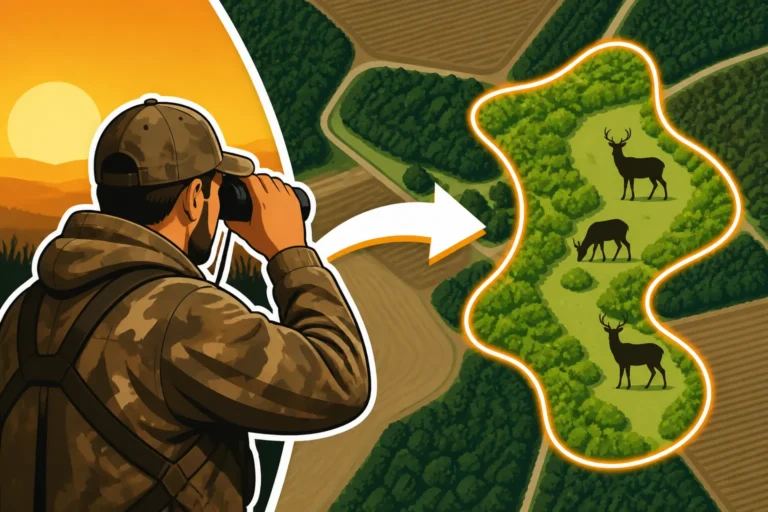
In wide-open farm country, or even along timber edges, late-season hunting often becomes a game of observation. High-quality binoculars and a spotting scope are indispensable. Get to a vantage point before sunrise or in the early afternoon and spend hours glassing fields, timber edges, and creek bottoms. Look for subtle movements, a flick of an ear, or a deer emerging from cover.
When you're dealing with wary deer, often the first sign you'll get is a distant silhouette or a movement at the very edge of your vision. A good pair of optics, like those offered by brands like GoHunt, allows you to identify these animals without moving, potentially spoiling your approach. Once you spot deer, you can then plan a stalk or adjust your stand location for the next sit. This strategy is particularly effective on large private land tracts where you can scout from a distance, but it also applies to large public areas where you can identify movement patterns before committing to a setup.
Gear and Preparation for the Deep Winter Hunt
Facing down an Iowa winter for deer hunting is no joke. The cold can be brutal, and being unprepared isn't just uncomfortable; it can be dangerous. Your gear choices and pre-hunt preparation are paramount to success and safety.
Layering for Extreme Cold
This isn't just about wearing a heavy coat; it's about a strategic layering system that allows you to manage moisture and adapt to changing conditions. You'll often walk in warm, especially if you're carrying a stand, but then sit for hours in freezing temperatures.
- Base Layer: Start with a good moisture-wicking base layer, preferably merino wool or a synthetic blend. This pulls sweat away from your skin, which is crucial because wetness in cold weather leads to hypothermia.
- Mid-Layers: Add insulating layers like fleece or puffy jackets. These trap air and provide warmth. Multiple thinner layers are often better than one thick one, as they create more air pockets for insulation and allow for better temperature regulation.
- Outer Layer: Your outer layer needs to be windproof and water-resistant (or waterproof if snow/sleet is expected). This protects you from the elements. Look for quiet fabrics that won't rustle and scare deer.
- Extremities: Don't forget your head, hands, and feet. A warm hat, insulated gloves or mittens (with finger access for shooting), and heavy-duty, insulated boots are non-negotiable. Chemical hand and foot warmers are your best friend on those long, frigid sits. For more tips on staying warm, check out Cold Weather Stand Clothing and Staying Warm on a December Sit.
Stand Selection and Setup Considerations
Your choice of stand or blind for late season will depend on the terrain and your hunting style.
- Ground Blinds: As mentioned, a well-brushed-in ground blind can be excellent. It provides warmth, conceals movement, and breaks up your silhouette. They are especially good for Brushing In a Ground Blind to maximize concealment. They excel when hunting field edges or areas with limited suitable trees. Just be sure it's secured against high winds and heavy snow.
- Hang-On Stands: For mobile hunting and accessing tight bedding areas, a hang-on stand with climbing sticks is a versatile option. You can set it up quickly and quietly. However, remember that Portable Stand Rules on Iowa Public Land often dictate that stands must be removed daily. The benefit of a mobile setup like this is that you can adjust your position based on fresh sign or shifting winds.
- Saddle Hunting: Increasingly popular, saddle hunting offers ultimate mobility and stealth. A saddle hunter can get into places a treestand hunter can't, often providing unique shot angles in dense cover. If you're exploring this, researching Mobile Saddle Hunting in Iowa could give you a significant edge.
Regardless of your choice, safety is paramount. Always use a full-body safety harness, even for ground blinds where falling out isn't the concern, but falling over might be on icy terrain. When using treestands, a lifeline is essential for safe ascent and descent.
Recovery Challenges in Winter
Successfully shooting a deer in January is only half the battle. Recovering it can be significantly more challenging than earlier in the season.
- Blood Trailing: While snow can make a blood trail easier to follow, it can also get quickly covered by fresh snowfall or drift. Furthermore, cold temperatures can cause wounds to clot faster, leading to less blood on the ground. Waiting before taking up the trail might still be wise, but be mindful of extreme cold potentially stiffening the deer quickly, making it harder to drag. For more, read up on Waiting Before Taking Up a Blood Trail.
- Hauling: A deer cart becomes an invaluable tool, especially if you're hunting on public land with long walks. Dragging a heavy deer through deep snow can be exhausting and dangerous if you're far from your vehicle. Consider quartering the deer in the field to make it lighter, then pack it out in game bags. Learning Getting a Deer Out of an Iowa Creek Bottom is particularly useful, as late-season deer often seek refuge in these tricky areas.
- Meat Care: While spoilage is less of a concern in freezing temperatures, protecting the meat from scavengers (coyotes are very active in January!) and keeping it clean is still important. Have game bags ready, and ensure you have a plan for getting the deer to a locker plant or processing it yourself promptly. Remember to file your Iowa Deer Harvest Reporting Rules immediately after recovery.
Making the Most of Leftover Tags
The opportunity to hunt deer in Iowa after the main gun seasons are done is often defined by the availability of leftover antlerless tags. These aren't just for filling a freezer; they're a strategic tool for herd management and a testament to a hunter's dedication.
The Strategic Value of Leftover Antlerless Tags
For many, the allure of Iowa hunting is centered around big bucks. And while the late season can occasionally offer a chance at a cruising buck, it's realistically about antlerless deer. This is where the true strategic value of leftover tags comes into play. They allow you to extend your season, learn new areas, and refine your cold-weather hunting skills without the intense pressure of a buck tag.
Think about it: an antlerless tag lets you focus solely on deer movement patterns, food sources, and bedding areas. You're not distracted by antler size or trying to outsmart a mature buck during the rut. This focused approach can make you a much better hunter overall. It teaches you patience, resilience in harsh conditions, and a deeper understanding of deer ecology during a critical time of year. Plus, venison is delicious, and filling your freezer with healthy, organic meat is a fantastic reward for enduring the cold.
Scouting for Success: Not Just an Early-Season Activity
Just because it's late in the season doesn't mean scouting should stop. In fact, late-season scouting is arguably even more critical. With leaves off the trees and snow often on the ground, deer sign is incredibly visible. You can see trails, rubs, and scrapes that might have been hidden earlier. More importantly, you can identify those key, persistent food sources and the dense bedding cover right next to them. This is the time to really put your boots on the ground (or study aerial maps through services like GoHunt) and confirm deer patterns.
Use the GoHunt mapping layers to pinpoint known thickets, cedar groves, and south-facing slopes. Then, verify these areas on foot. Look for fresh tracks in the snow leading from bedding to feeding. Pay attention to how deer are navigating pinch points and creek crossings. This kind of detailed scouting in late December and January gives you invaluable information, not just for the current season, but for planning your hunts next year. Remember, Scouting Iowa Public Land Before the Opener applies year-round, as the principles of identifying high-traffic areas remain the same.
The Mindset of a Late-Season Hunter
Successfully hunting deer after the guns are done requires a particular mindset. It demands grit, determination, and a willingness to be uncomfortable. The days are short, the nights are long, and the weather can be brutal. You might sit for hours without seeing a single deer, only to have a brief, frenetic encounter at the last minute.
Embrace the challenge. See each cold sit as an opportunity to learn, to push your limits, and to connect with the wild. The deer you harvest in January are often hard-earned trophies, regardless of antler size, because they represent your commitment to the hunt even when most others have given up. This is truly the essence of Iowa Whitetail Hunting Tactics Through the Rut and beyond – adapting, persisting, and respecting the animal and the environment. So, don't let the calendar dictate when your season ends. There's still hunting to be done!
Disclaimer
Please remember that hunting regulations in Iowa can change. Always consult the official Iowa Department of Natural Resources (DNR) hunting regulations guide for the current year before planning any hunt. This guide is for informational purposes only and does not replace official state regulations.